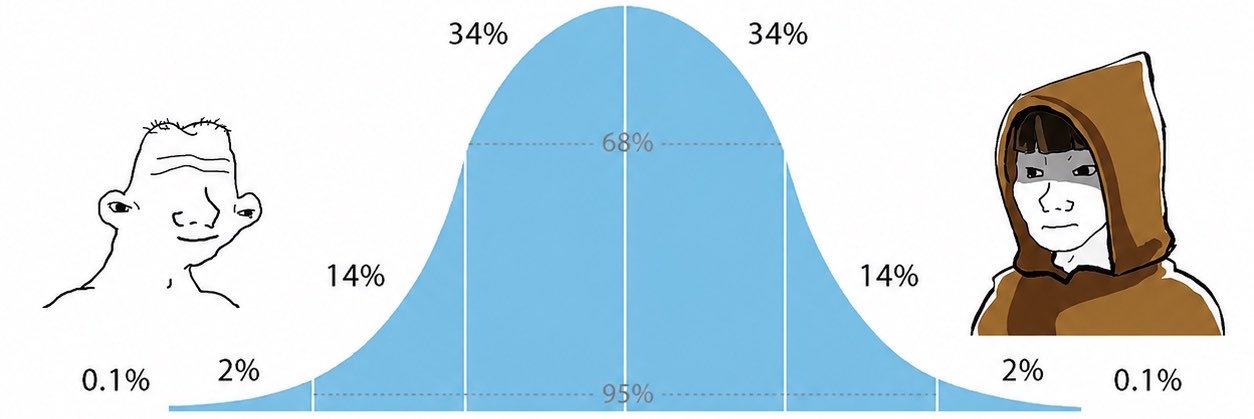
every major company is arriving at roughly the same offering:
persistent memory, email/calendar/messages, browser + computer use, background tasks, proactive notifications, voice, app/tool execution, ambient context, & some notion of a personal agent sitting above everything.
remarkable levels of convergence with very little differentiation whatsoever.
@kunchenguid that said, the economics of software / SaaS are unambiguously worse:
- compute costs eat into gross margins
- AI makes it much easier to launch competitors (now each niche has 50 options instead of 2-3)
- if you’re relegated to a headless API, do you still have switching costs?
@kunchenguid yes. in one word - amortization
and this also applies to the compute costs needed to secure software (better to spread that out over a large user base)
@atelicinvest The debate about software duplication from AI kinda misses the point imo. Software used by humans is on the decline, whether vibe coded or not. Either your software business has a right to exist in the token path, or it doesn’t. There are a lot of “database wrappers” out there…
@atelicinvest The debate about software duplication from AI kinda misses the point imo. Software used by humans is on the decline, whether vibe coded or not. Either your software business has a right to exist in the token path, or it doesn’t. There are a lot of “database wrappers” out there…
Grok Bot is pretty good. The UX of creating new agent chats for different jobs makes a lot more sense to me than a mono-chat (see Instinct, Muse) where everything gets lumped together.
@Gegam245074 i also find it's incapable of orchestrating long-running tasks. ends up spinning wheels building lots of superfluous, overengineered scaffolding instead of actually tackling the problem
The most important question in the world rn is whether RL will work on non-verifiable domains (ie not code, not math)
If it does, game over. If it doesn’t, AI is still incredibly useful but prob won’t automate large swaths of the economy
any software whose only moat was creation cost is obviously cooked
software with real* moats (network effects, scale economies, regulatory licenses, etc) will be fine
* do switching costs count? maybe not: if businesses run their own agents, the system of record (CRM, ERP, etc) turns into a headless API - easy to clone and replace
it’s a stock picker’s market now
@DimitryNakhla the bear case on $CSU.TO is that:
- for every vertical, AI makes the cost to build a niche competitor 100x lower
- agents and computer use make switching costs 100x lower
- instinct/muse-like products are coming to businesses, which might relegate SORs to headless APIs
@WillManidis raises the question of what a great ceo looks like in 5-10 years
if you read the biographies of great capital allocators (john malone, henry singleton, etc) they were all brilliant, but their decision criteria was also extremely simple
agents should be able to do this too
@quxiaoyin agree, “AI transformation as a service” has incentive alignment issues
smart founders are either a) starting AI-native competitors or b) acquiring the incumbent assets outright (see Long Lake, etc)
ok some of software is dead. but not all of it.
dead:
- horizontal software (airtable, notion, etc.)
alive, but 10x more competition & 10x lower switching costs:
- vertical market software (appfolio, servicetitan, products owned by constellation / roper / etc)
- CRMs, other systems of record
thrive:
- infra
- cyber
- observability
- payments
- APIs sold to agents
pretty straightforward if you think about it from first principles.
🚨 GOLDMAN SACHS DROPS DOOMSDAY STATEMENT: U.S. BONDS HAVE NO BUYERS
Goldman Sachs just admitted the long end of U.S. Treasury market is “totally bidless.”
Translation: almost nobody wants the 10- to 30-year debt the U.S. is trying to sell.
No buyers. None. Zero.
While Treasury Secretary Scott Bessent tells Congress we’re in an “illiquid period,” doubles then triples long-bond buybacks, taps the General Treasury Account to fund it and openly says “I am the house.”
Yields are surging anyway. The 10-year has pushed toward 5.3% and the 30-year is even higher, levels not seen in years while Japan, one of the biggest foreign holders, keeps selling Treasuries and bringing money home.
This was exactly warned by Japan’s @yutokanzakireal that the measures being prepared by Bank of Japan will affect the lives of billions of people and apologized to people of the West.
Soon after, Scott Bessent intervened and effectively took over BoJ operations which Japanese policymakers heavily criticized.
If the same ”bidless” condition hits the short-dated treasuries market, the entire U.S. debt market (and global) collapses.
The U.S. debt crisis will turn into a global liquidity crisis.