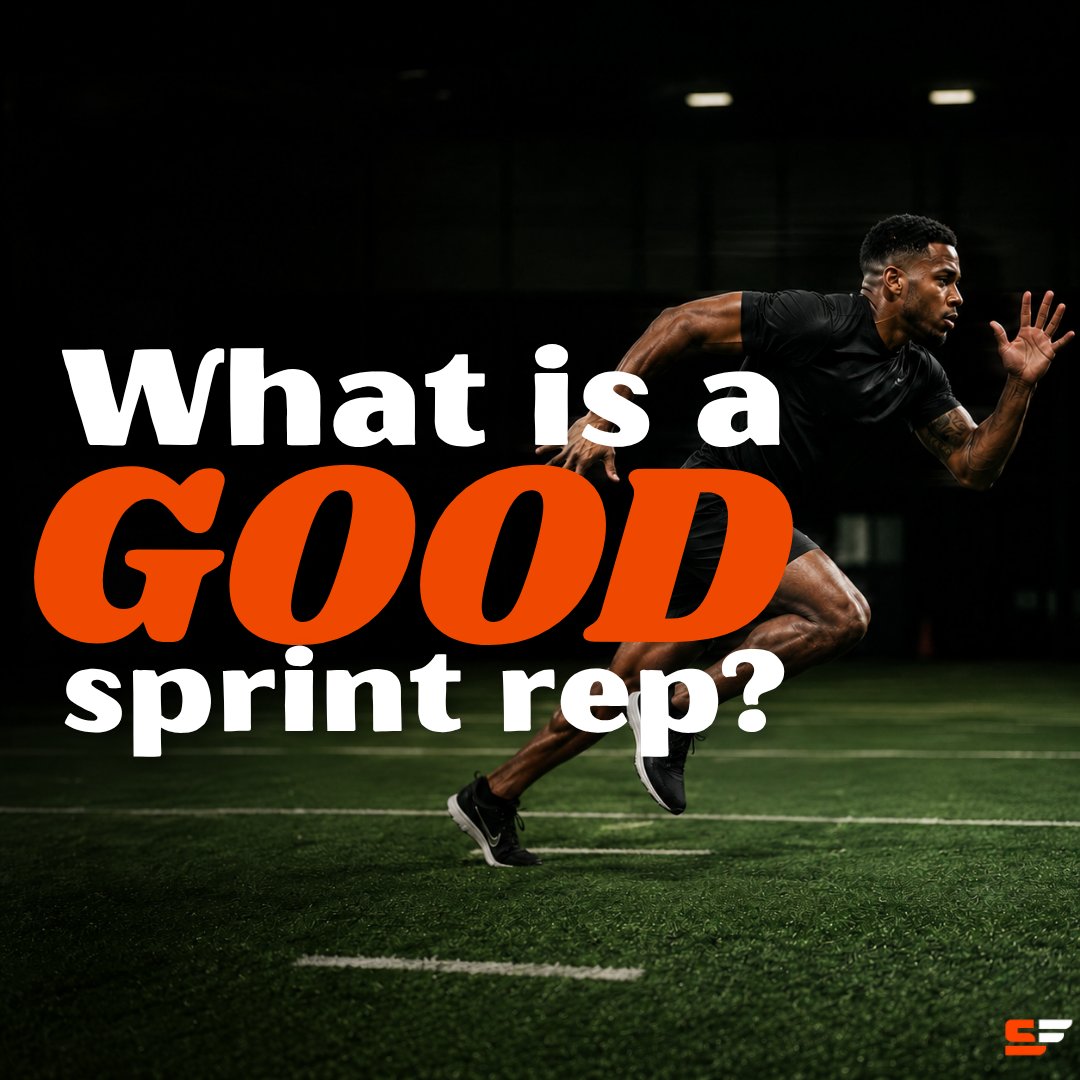
Coaches, what do you consider a “good” sprint rep?
Is it a rep within a certain percentage of the athlete’s PR?
Is it a technically clean rep, even if the time is not the fastest?
Is it a rep that falls within the athlete’s current performance range for the day?
Or is it simply full intent, full recovery & clean enough execution to keep building from?
Speed training gets a lot easier to manage when coaches define what actually counts as a quality rep.
There’s no one-size-fits-all answer, but there should be a standard that fits your program.
What are your guidelines for counting a sprint rep as “good?"
Drop your answer below 👇
Mid late accel/@SHREDmillSpeed gear 3 performance circuit!
Gear 3 Accel x :5 @ Res 4
⬇️
Resisted Acceleration x 15 yd (between 8-10 mph…load varied depending on athlete, with force deficient athletes using heavier loads and form/velocity deficient athletes using lighter loads)
⬇️
Repeat SL Triple Broad Jump w/ 2 Leg Landing
Goal is to expose kids to more velocity while still focusing on horizontal power production!
The SL repeat triple broad jump is a nice way to add both a unilateral component+variety to multiple response horizontal plyos!
@Tony_Villani_@SimpliFaster
Still tracking attendance in a spreadsheet? 👀
• iPad or mobile check-in
• Color-coded reports
• Instant attendance insights
Part of 25+ report templates
Try Today👉 https://t.co/h16uvma73S
@SimpliFaster@RockDaisyAMS
We’re proud to offer AirBands through the SimpliFaster Store and excited to make another high-quality performance tool available to coaches and practitioners.
Check out AirBands 2.0 below 👇👇
https://t.co/R062vpbuql
With wireless control, Bluetooth pairing, automatic inflation/deflation, and individualized pressure calibration, AirBands helps simplify the process of applying BFR in training, rehab, and return-to-performance settings.
Working on the GAS ⛽️ and the BRAKES 🛑 here!
Goal 1: Hit big acceleration positions, and produce large horiz forces in short periods of time.
* @SHREDmillSpeed Gear 2 for 10 yd & 5 step resisted accel at 6 mph…reducing time/overall volume to allow for some recovery while still getting quality horiz force stimulus.
Goal 2: hit the gas for 5 hard steps, and then put the brakes on!
10s should be slightly lower than normal 10 time, but they should be able to come to a full controlled deceleration.
Lots of concentric and effective strength qualities needed to do well during all of these movements.
Capped it off with trap bar deadlifts+seated jumps to ⬆️ starting/static strength, then ended with some slower eccentric strength work to fill our decel/cod/injury prevention strength buckets💪👌
Summer training is a great time to tighten up your systems. Whether you're in the private sector or the team side, this is a great development window for athletes.
None of these replace coaching.
They just help bring more clarity to the work you’re already doing.
Before summer ramps up, it’s worth asking:
1. What do we need to measure?
2. What decisions will this help us make?
3. How can we make the process simple enough to use consistently?
We will be recording another episode soon. Catch up on the last @SimpliFaster Fast Lane Podcast with @korfist and @WGF1.
Let us know any questions from this or previous episodes. Or any for future episodes!
https://t.co/QpeN7emFQE
Display, chart, and compare any metric you collect — all in one centralized athlete report. 📊
• Athlete report cards
• Real-time performance insights
• 1 of 25+ report templates
Built for coaches.
Learn More👉https://t.co/wrNo7Rbkde
@SimpliFaster@RockDaisyAMS
Milk hydrates better than water or sports drink 👇
I also authored a blog on chocolate milk for @SimpliFaster and several on my own website. Science 😎
https://t.co/9O5S7tSjtq
When coaches can separate the two, they can make better decisions. Better drill selection, better testing, better data interpretation, and better transfer to sport.
At SimpliFaster, that is the goal: helping coaches connect the right training concepts with the right tools, so performance data actually supports better coaching... not just more numbers.
Planned COD work builds the physical tool.
Reactive agility work teaches the athlete how to use it.
The goal is not choosing one over the other. The goal is knowing what you are actually training, testing, and measuring.