Building does not equal success.
Over the last decade I realized most of my projects failed.
That’s on me. We chose impact over the safer path.
Three years ago, I started Be a Good Bot Labs with a simple mission: help create the future we’d be proud to pass down to the next generation.
That project actually worked:
- 65+ hackers
- 10+ apps built
- and several members running successful startups
Even better, some of the work created real jobs for artists and engineers.
So here’s where I’ve landed:
We’ll keep building.
We’ll keep learning.
We’ll keep aiming for 100x value and impact-
no matter the impact ratio.
On a good day, the moment an engineer realizes understanding can’t be outsourced could release a candlelight of anxiety relief ahead of the AI tsunami coming our way
Jam coding = pair + programming/vibe coding.
One of the most productive ways to take your project to the next level is jam coding. Want to take it a step further? Add a voice input orchestrator and a common goal.
Jam coding optimization for that same goal not only helps you reach it faster but also practice your human skills.
Join a rocket ship with the team at Listen Labs. 🚀
And believe it or not they are just getting started.
Cheers for their journey and more success to come.
Today, Listen crossed $100M in funding.
Building is easy now. Knowing what to build isn't.
Our AI finds and talks to your users so you don't have to guess.
See how Sweetgreen, Microsoft, and Replit use it:
It is said that the bison is the only animal to turn and face a storm. To get through the blizzard faster. To not hide. To face difficult times head on. To meet the moment.
For the moment is all we have.
Google just did the unthinkable.
They built a voice search model that doesn’t understand words it understands intent.
It’s called Speech-to-Retrieval (S2R), and it might mark the death of speech-to-text forever.
Here’s how it works (and why it matters way more than it sounds) ↓
RIP fine-tuning ☠️
This new Stanford paper just killed it.
It’s called 'Agentic Context Engineering (ACE)' and it proves you can make models smarter without touching a single weight.
Instead of retraining, ACE evolves the context itself.
The model writes, reflects, and edits its own prompt over and over until it becomes a self-improving system.
Think of it like the model keeping a growing notebook of what works.
Each failure becomes a strategy. Each success becomes a rule.
The results are absurd:
+10.6% better than GPT-4–powered agents on AppWorld.
+8.6% on finance reasoning.
86.9% lower cost and latency.
No labels. Just feedback.
Everyone’s been obsessed with “short, clean” prompts.
ACE flips that. It builds long, detailed evolving playbooks that never forget. And it works because LLMs don’t want simplicity, they want *context density.
If this scales, the next generation of AI won’t be “fine-tuned.”
It’ll be self-tuned.
We’re entering the era of living prompts.
Nagaland University just found snowflake-like fractals in quantum systems — revealing Aharonov–Bohm caging. Nature’s patterns repeat in the quantum realm. The future of quantum tech feels otherworldly
We should build tech for good impact, not just to make money.
We should build tech like this. It may serve as an inspiration for future generations.
Let’s try our best. Tech deals the cards.
The majority of energy for solving a difficult technical problem comes from thinking you can solve it.
Work on growing your earned confidence. Even if it’s just attitude, it makes a big difference.
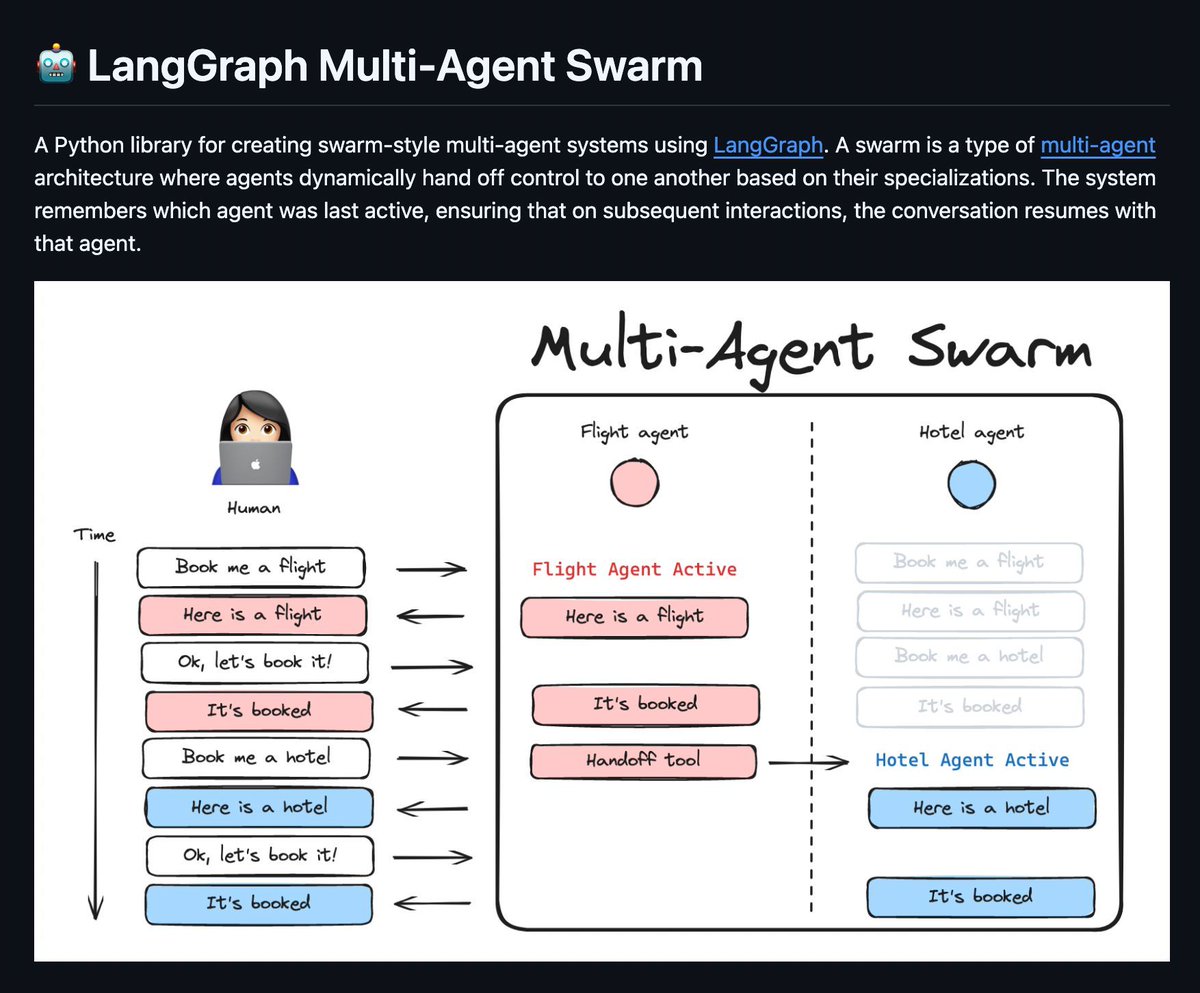
LangChain released a library to build autonomous armies of multi-agents.
Each agent handles tasks it’s best suited for, then hands off control while preserving memory and context.