🚀 Athena is on its way to the Moon and sending back breathtaking views of Earth.
Launched on February 26, 2025, aboard a SpaceX Falcon 9, the lander has successfully established stable solar charging and radio communications with mission control in Houston. As it continues its journey, Athena captured a stunning selfie featuring the Falcon 9’s upper stage drifting below.
The next major milestones include lunar orbit insertion on March 3, followed by a highly anticipated landing attempt on March 6. These images are just the beginning—soon, Athena will be making history on the lunar surface. Stay tuned for more updates from this incredible mission!
.
.
.
#space #astrofact #astronomy #news #astrophotography #nasa #spacex #astrophysics #telescope #science #hubble
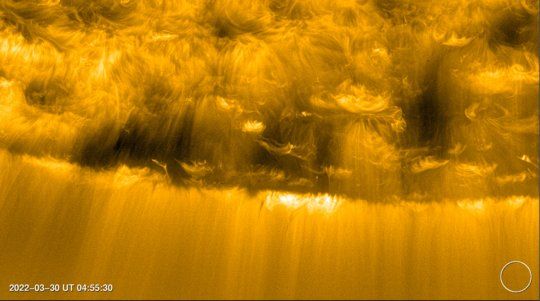
For decades, scientists have wondered how the sun’s solar wind—a constant stream of charged particles—travels across the solar system, shaping space weather and impacting everything from satellites to Earth’s atmosphere. Thanks to the European Space Agency’s Solar Orbiter, we now know tiny plasma jets on the sun’s surface are the driving force behind this incredible phenomenon!
These jets, no bigger than a fraction of the sun’s surface, release bursts of energy that propel both fast and slow solar winds outward into space. This groundbreaking discovery reveals how even the smallest solar processes contribute to vast cosmic events, helping us better understand the sun’s influence on the universe.
Understanding solar winds is also critical for predicting space weather, protecting astronauts on deep-space missions, and ensuring the stability of modern technologies like GPS and power grids on Earth.
#space #astrofact #astronomy #news #astrophotography #nasa #spacex #astrophysics #telescope #science #hubble
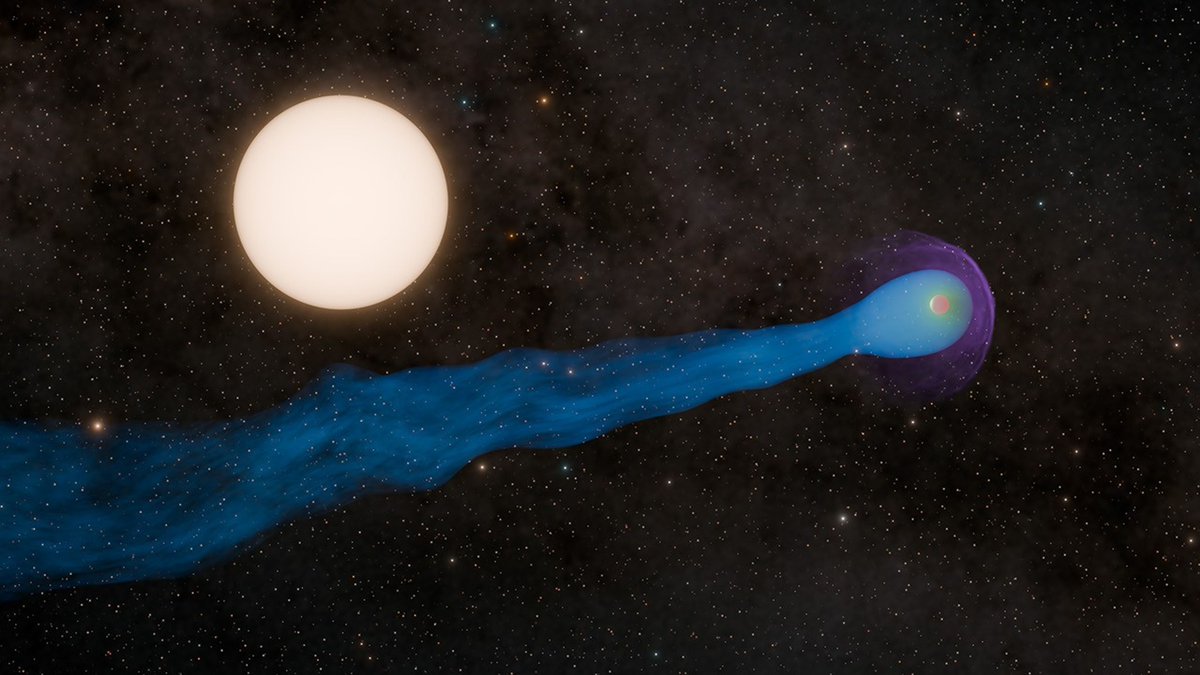
Astronomers have observed a remarkable phenomenon: the gas giant exoplanet WASP-69 b exhibits a 350,000-mile-long tail of escaping atmospheric gas, resembling a comet. This “hot Jupiter” orbits close to its host star, where intense stellar radiation drives a process known as photoevaporation. Lighter gases, such as hydrogen and helium, are energized and stripped from the planet’s atmosphere.
Stellar winds further shape the escaping gas, forming a trailing structure that extends over 7.5 times the planet’s radius. This discovery provides valuable insights into the dynamic interactions between exoplanetary atmospheres and their host stars, offering clues to planetary evolution and atmospheric loss over time.
The findings underscore the complex processes at work in exoplanet systems, highlighting the influence of stellar radiation and winds on planetary development. ☄️ 🔭
.
.
.
#space #astrofact #astronomy #news #astrophotography #nasa #spacex #astrophysics #telescope #science #hubble
✨ Meet the JuMBOs! ✨
Astronomers using the James Webb Space Telescope have discovered mysterious objects in the Orion Nebula called Jupiter-mass binary objects (JuMBOs). These pairs of celestial bodies, weighing 0.7 to 30 times Jupiter’s mass, orbit each other but aren’t tethered to any star.
Scientists hypothesize these objects are remnants of embryonic stars, stripped of their outer layers by intense radiation from massive nearby stars—a process known as photo-erosion. They were not quite large enough to be deemed true main-sequence stars, nor were they small enough to be labeled as brown dwarfs, placing them somewhere in between.
This discovery challenges current models of star and planet formation, highlighting the need for further research into the unique processes shaping star-forming regions.
.
.
.
#space #astrofact #astronomy #news #astrophotography #nasa #spacex #astrophysics #telescope #science #hubble
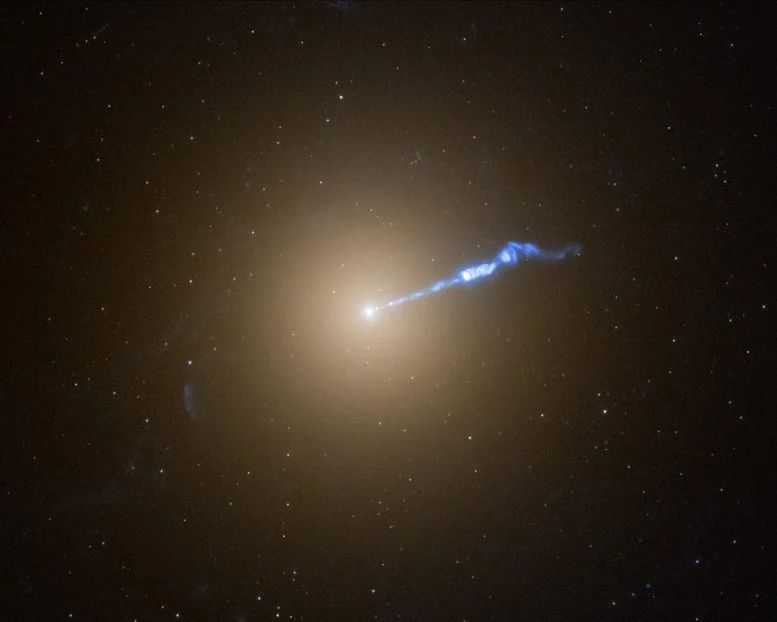
🌌 M87’s Black Hole: A Gamma-Ray Showstopper!
Astronomers just captured a massive gamma-ray flare from M87’s supermassive black hole—the same one that made history in 2019 with the first-ever black hole image! 🕳️✨
This flare, 10+ years in the making, unleashed photons billions of times more energetic than visible light. It likely came from a tiny region just 15 billion miles across near the black hole’s blazing jet.
Gamma rays like these give us a front-row seat to the extreme physics of particle acceleration around black holes. .
.
.
#space #astrofact #astronomy #news #astrophotography #nasa #spacex #astrophysics #telescope #science #hubble
NGC 922 🌌 🔭 😍
Type: Peculiar galaxy
Distance: 142 million light-years
Constellation: Fornax
Observation of its features suggest it has undergone a merger with a gas-rich dwarf galaxy.
.
.
.
@NASA@NASAhubble#space#astrofact#astronomy#news#astrophotography#nasa#spacex #astrophysics #telescope #science #hubble
M1-92 (Minkowski's Footprint) 🌌 🔭 🦶
Source: Protoplanetary nebula
Type: Reflection nebula (visible only by light reflected by central star)
Star: Quickly becoming a white dwarf, will be hot enough to make it a fully-fledged planetary nebula.
Constellation: Cygnus
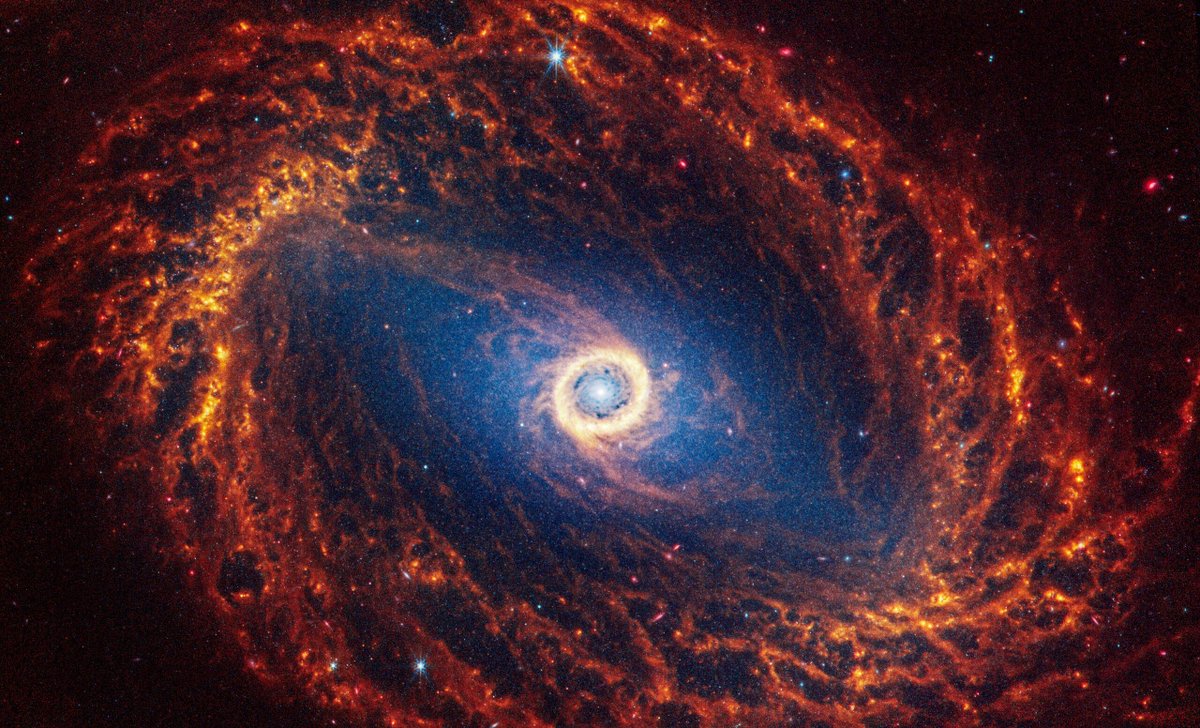
NGC 1512 Galaxy 🌌 🔭 😍
Type: Barred spiral galaxy
Distance: 38 million light-years
Constellation: Horologium
The galaxy displays a double ring structure, with a (nuclear) ring around the galactic nucleus and an (inner) further out in the main disk.
.
.
.
@NASAhubble@NASA@NASAWebb #space #astrofact #astronomy #news #astrophotography #nasa #spacex #astrophysics #telescope #science #hubble
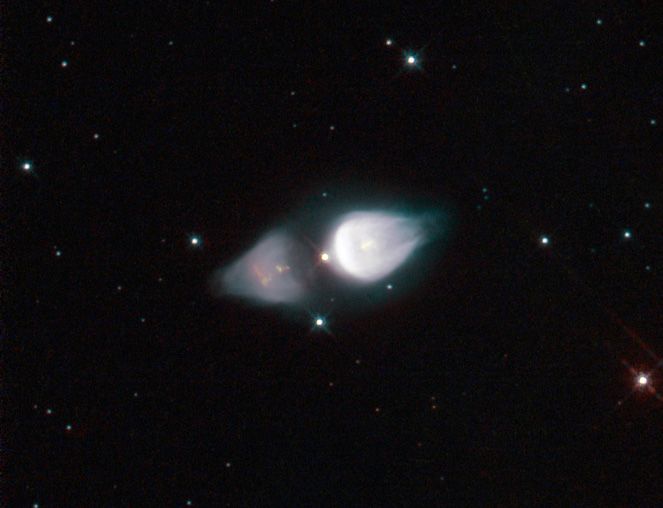
Minkowski's Butterfly Nebula 🌌 🔭 🦋
Source: Planetary nebula
Type: Bipolar nebula
Central star: Central red giant contracting into a white dwarf
Distance: 2,100 light-years away
Constellation: Ophiuchus
The Spiderweb Galaxy 🌌 🔭 🕸️
Type: Irregular
Distance: 10.6 billion light-years
Constellation: Hydra
Observations in the spectrum of visible light indicate that, in reality, this is a galaxy being formed through the fusion of galaxy groups and clusters, but in a continuous structure, like a spiderweb, with a massive central nucleus and various smaller ones on the periphery.
.
.
.
@NASAhubble #space #astrofact #astronomy #news #astrophotography #nasa #spacex #astrophysics #telescope #science #hubble
Comet galaxy 🌌 🔭 ☄️
Type: Spiral galaxy
Distance: 3.2 billion light years
Constellation: Sculptor
It has an extended stream of bright blue knots and diffuse wisps of young stars. It rushes at 3.6 million km/h (1000 km/s) through the cluster Abell 2667 and therefore, like a comet, shows a tail, with a length of 600,000 light-years.
.
.
.
@NASA@NASAhubble #space #astrofact #astronomy #news #astrophotography #nasa #spacex #astrophysics #telescope #science