Not a small handle, Gaurie.
You anchor at one of the biggest channels in India and can impact public opinion every day.
That’s actual power.
When NDTV misuses that privilege, people should speak up.
Long time back I had heard a priest say -
Blood lines end naturally after 7 generations, in olden times people knew that & would often adopt a relative's child or practice niyog to keep the lineage going, but the blood ends after 7 generations,
Which is why it is mentioned in our scriptures that one must not marry within 7 generations of father & 7 generations of mother, because of blood closeness,
He also mentioned that -
Those who have a lot of karmic debt & are supposed to incur further debts in this birth, beget sons,
Those who are supposed to repay all their past debts in this birth, beget daughters, kanyadaan is the biggest repayment & that's why our scriptures say that one who gets to do kanyadaan becomes fit for liberation,
Those who have no past debts, & are already fit for liberation, do not beget children, they remain childless either by circumstances or for medical reasons.
Peak Dictatorship Happening At Safdarjung Hospital By Govt
Sonam sir’s wife is not allowed to take her phone inside hospital room. His medical reports are not shared with the family. No personal lawyers or doctors are allowed to meet
What fault did this innocent baby have? She doesn’t even know the meaning of enmity, yet her aunt broke her leg.
Now she is getting a plaster in a hospital in Rajasthan.
Her merciless aunt has been arrested
A delivery guy thought the girl is alone at the home, somehow he tried to get inside.. but the mother was there and she confronted the guy.. Hat's off 🙌
Never ever trust anyone for the sake of delivery proof or something, because you don't know their intention..
ASHUTOSH RANKA TAKES THE BAIT AND BREAKS IT 🔥
REPORTER: Why only Sonam Wangchuk fasting? Why not CJP too?
RANKA 🎯: Ridiculous question. Abhijeet, Saurav and I wanted to fast too. Sonam sir stopped us: “Then who will run the protest?” Media, stage, security, mobilisation. Someone has to keep it alive.
REPORTER: But...
RANKA 🔥: Ask why the govt has not met even one fasting student. Ask why Pradhan is still protected when even BJP voters want accountability.
REPORTER: Manoj Tiwari commented...
RANKA 😂: Stop. We are talking education. Don’t drag “Rinkiya ke Papa” here and lower the conversation.
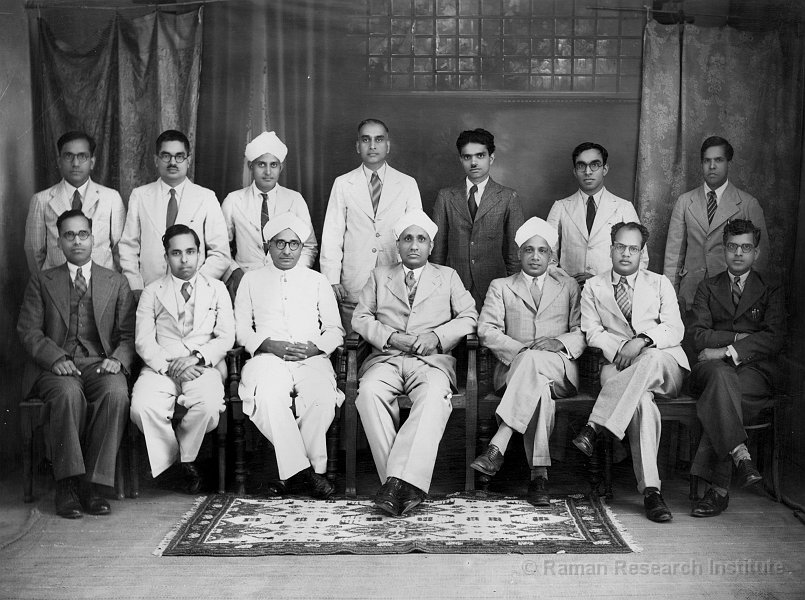
In 1930, the dark, cavernous inner sanctum of the Brihadeeshwara Temple in Thanjavur holds a massive secret. For nearly a 1000 yrs, a series of exquisite, large-scale murals painted during the height of the Chola Empire had been completely lost to history. They were buried under a thick, crude layer of 17th century Nayak era paint & centuries of black soot from oil lamps.
When historians finally discovered the hidden Chola paintings beneath the top layer, the ASI faced a terrifying technical nightmare: How do you peel away a 300 yr old layer of paint to reveal a 1000 yr old masterpiece beneath it, w/o destroying either one?
Traditional archaeologists were completely out of their depth. They tried scraping it, but the ancient plaster crumbled into dust. They needed a scientist. Specifically, they needed a young man named Srinivasan Paramasivan, who had just been hired as a mid level chemical assistant at the Government Museum in Madras.
Paramasivan did not treat ancient art as a matter of aesthetics; he treated it as a problem of pure chemistry, material science & geology. Working inside a tiny, damp lab at the Madras Museum with next to no budget, he realized that to save the paintings, he had to reverse engineer exactly how the ancient masters created them.
He pioneered a highly meticulous method of micro-chemical analysis. He chipped off microscopic flakes of the plaster, smaller than a grain of sand & subjected them to rigorous tests to analyze the binding media, the moisture content & the chemical composition of the pigments.
His findings completely rewrote the history of Indian art. He proved that unlike the secco technique (painting on dry plaster) common in later Indian periods, the Chola masters used the incredibly difficult true fresco (fresco buono) technique. They painted directly onto wet, freshly laid lime plaster, causing the pigment particles to chemically fuse inside the limestone as it dried.
Armed with this chemical truth, Paramasivan designed a delicate, specialized solvent mixture. He carefully brushed it onto the top Nayak layer, softening it just enough so it could be mechanically separated & rolled back like a sticker, exposing the pristine, brilliant 1000 yr old Chola colors underneath. It was the 1st time in global archaeology that a dual layer of ancient frescoes had been successfully separated w/o losing the art.
Paramasivan's next massive, hidden triumph involved India's iconic Chola Bronzes. By the late 1930s, ancient bronze statues of Nataraja & other deities stored in museums & temples across South India were actively dying. They were covered in a bright green, flaky crust known to curators as "Bronze Disease."
This is not ordinary rust. It is a highly destructive electrochemical reaction that occurs when buried copper alloys come into contact with chlorides & moisture. Left unchecked, the metal literally eats itself from the inside out, turning priceless, intricate sculptures into piles of green powder.
Western museums solved this by scraping the statues down/using aggressive acid baths, which stripped away the beautiful, historic "patina" (the dark, protective skin the metal naturally develops over centuries). Paramasivan flatly refused to deface the statues. Instead, he pioneered an incredibly elegant electrolytic restoration method.
He submerged the fragile, corroded bronze deities into a customized chemical solution, wrapped them in a gentle wire mesh & ran a highly controlled, very low-voltage electrical current through the bath for weeks at a time. The electrical current reversed the chemical oxidation process, forcing the destructive chloride ions to detach from the statue & migrate toward the wire mesh.
When the statues emerged from his bath, the destructive disease was completely eradicated, but the gorgeous, original, dark historic patina remained perfectly intact. He had saved the soul of the bronze using basic electrochemistry.
Paramasivan eventually rose to become the Archaeological Chemist of the ASI, publishing his groundbreaking research in elite global journals like Nature & Technical Studies in the Field of the Fine Arts.
Yet, to his neighbors & his domestic circle, he never looked like a pioneer. He lived a fiercely disciplined, intensely quiet life, rarely boasting about his international publications.
Long before modern universities offered degrees in "Archaeological Science," a quiet man in a modest house in Madras was using electrochemistry, geology & physics to rescue India's greatest artistic legacies from turning into dust.
"அரபு மதம் மாற மறுத்ததால் படுகொலை செய்யப்பட்ட ஹிந்து சகோதரி சாவரியா வசந்த்-க்கு நீதி கேட்டு கேரள மாநில இந்து முன்னணி மற்றும் ஹிந்து மக்கள் ஊர்வலம்"🙏🏻
#JusticeForSawariya
Biscuits being prepared using production trays dipped in contaminated water at a manufacturing unit in Hyderabad.
H-FAST raids on units producing Osmania biscuits, maska buns, cream rolls, Mysore Pak, sweets, cakes and cookies uncovered serious food safety violations, including heavy pest infestation, unhygienic conditions, mislabelled edible oil and unauthorised synthetic food colours.
Notices have been issued and action initiated under the Food Safety and Standards Act, 2006.
Remembering Shri Vishal Kumar, a brave ABVP Kerala activist who was hacked to death by PFI goons in 2012 for organising Saraswati Pooja in his college. He was born in gulf and had returned back to serve his motherland.