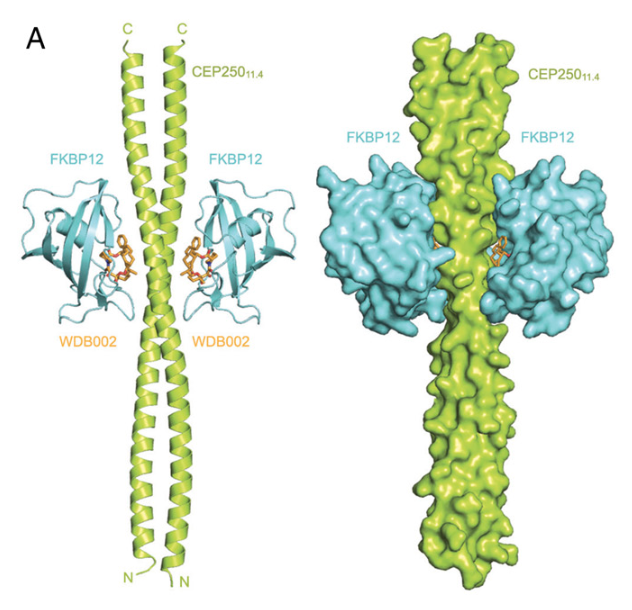
RevMed just doubled overall survival in pancreatic cancer by using CypA-targeting molecular glues to potently drug oncogenic KRAS-ON, long deemed untouchable.
One funny thing is that probably the most fundamental insight for daraxonrasib sits in a PNAS paper that's been cited merely 84 times. This showed that molecular glues can coax an endogenous protein to wrap itself around utterly featureless surface. The other is a 2017 Cell Reports paper (just 68 citations) on how Sanglifehrin A can be used to repurpose CypA's surface. A lot of the game-changing stuff seems niche and unglamorous at first.
Greg Verdine is having a chembio Annus Mirabilis for his 2025-2026 streak: FOG-001, Daraxonrasib. He provided much of the foundational conceptual work behind taking out both Beta-catenin and KRAS*.
*of course many others contributed immensely, but let's give some credit where credit is due!
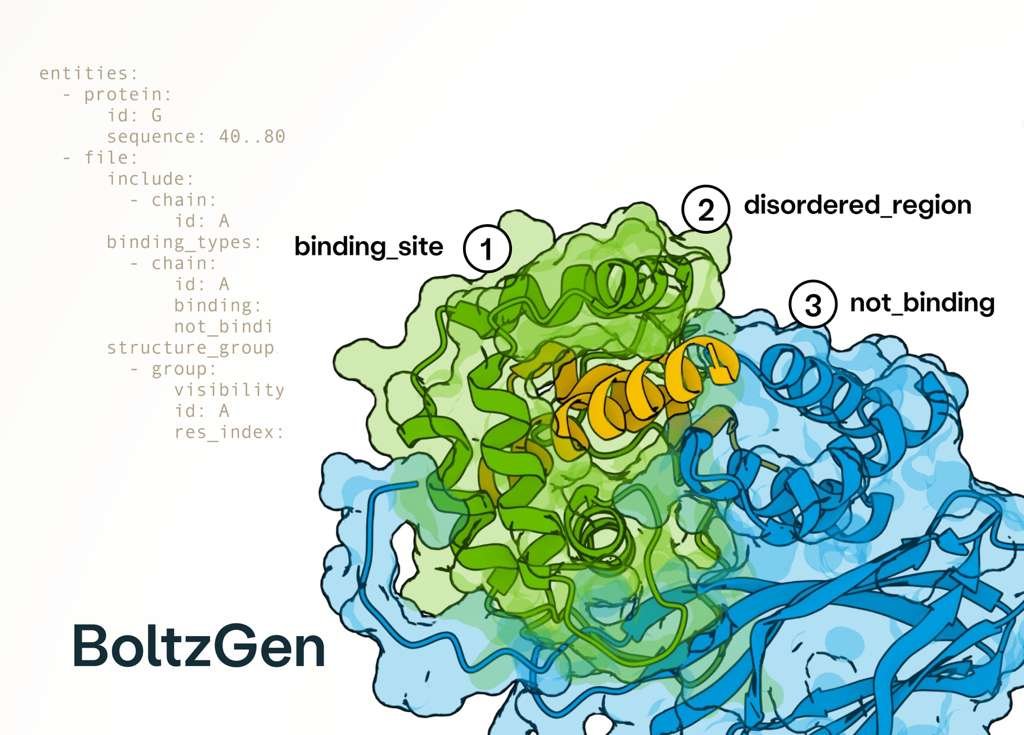
Excited to release BoltzGen which brings SOTA folding performance to binder design! The best part of this project has been collaborating with many leading biologists who tested BoltzGen at an unprecedented scale, showing success on many novel targets and pushing its limits! 🧵..
Ok I’m just gonna say it before someone else does… Tom Muir (@MuirLab) is the LeBron of chemical biology right now 🧪👀🫢 He’s playing in a league of his own
Excited to unveil Boltz-2, our new model capable not only of predicting structures but also binding affinities! Boltz-2 is the first AI model to approach the performance of FEP simulations while being more than 1000x faster! All open-sourced under MIT license! A thread… 🤗🚀
Oh… but defunding @NIH, @NSF, and @Harvard has no negative impact??? While I don’t totally disagree with this point, it’s still at least slightly satisfying to see @elonmusk face the same wrath he unleashed on the rest of us 🤣😭
1/ ¿Sabías que ahora podemos ver la actividad del sistema inmunitario en todo el cuerpo en tiempo real?
Un nuevo avance llamado CD45-PET lo hace posible. Te cuento más en este hilo 🧵
As the govt slashes research funding at Harvard, what’s missing from the conversation is this: those grants didn’t just support researchers — they verifiably ensured public access to life-changing discoveries. Cutting them risks turning groundbreaking work into private privilege.
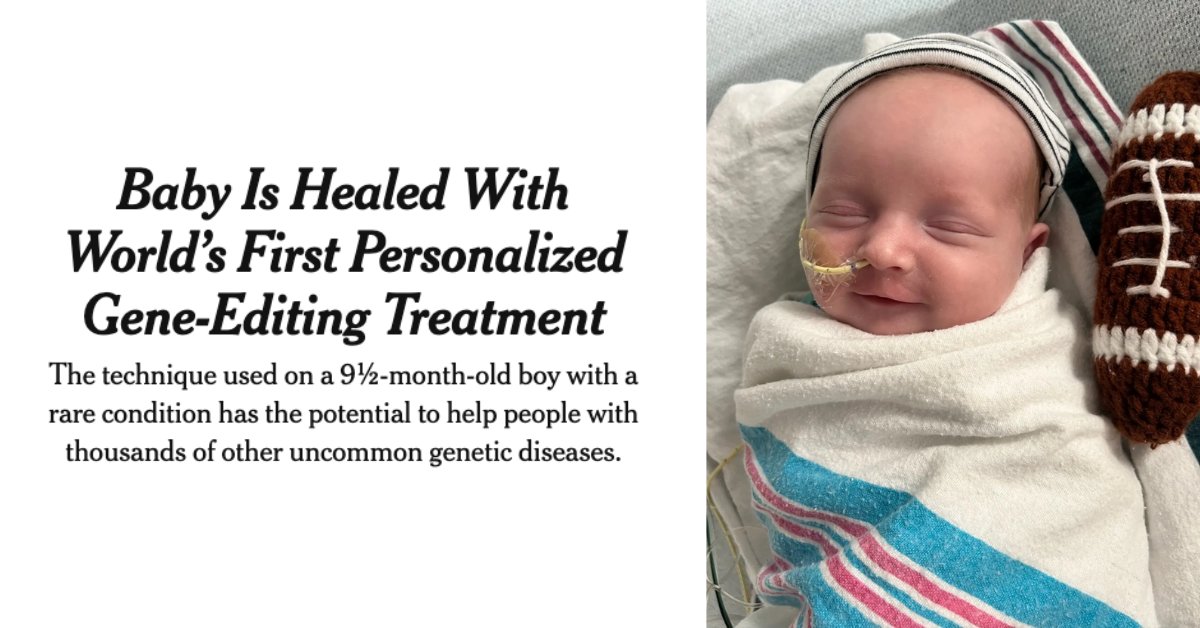
A baby named KJ, who was born with a rare genetic disorder – CPS1 deficiency – is healed thanks to doctors at the @ChildrensPhila who administered the world’s first personalized gene-editing treatment. The research team used base editing, a gene-editing method invented by HHMI Investigator @davidrliu and his lab at @Harvard University in 2016.
Earlier this year, Liu received the @brkthroughprize for developing both base editing and prime editing. These gene-editing technologies enable the correction or replacement of virtually any genetic mutation, including those that cause countless human genetic diseases.
Read more about Liu's work here: https://t.co/NlE25O7wJR
A pair of split inteins—small protein segments that can undergo a self-sustained protein splicing reaction—enables endogenous protein editing in living mammalian cells, according to a new study in Science.
📄: https://t.co/s8Oz1zFvWf
#SciencePerspective: https://t.co/7qggLI9bSu
Most work on glues focuses on targeted degradation. But nature shows they can do more—like initiating signaling cascades, as seen in plants. Therapeutically, glues could amplify native pathways or spark de novo responses. A potent, underexplored tool for reprogramming cells.
CD45-PET is a game-changer for basic and translational immunology—finally letting us track immune dynamics in vivo. Its clinical potential is huge: from diagnosing immune-driven diseases to monitoring therapy response in real time. Excited to help unlock more of its potential!
I’m incredibly excited to share that I’ll be doing my PhD in @chemical_phd at @DanaFarber with @m_rashidian1. I’ll be working on next-gen diagnostic tools & immunotherapies—and learning a ton of cool immunology along the way!
Bonus: I also attended my first dept retreat!