-THE FIRST PICTURE IS OF THE MOTHERS OF MEITEI (MANIPUR) RESPECTING INDIAN FLAG, AND TO SAFEGUARD THE NATIONAL GEOGRAPHIC MAP OF INDIA.
-THE SECOND VIDEO IS OF ILLEGAL IMMEGRANTS TAKING DOWN THE INDIAN FLAG AT POLICE STATION.
SAVE #Indian from #KukiZoNarcoTerrorists#KukiLies
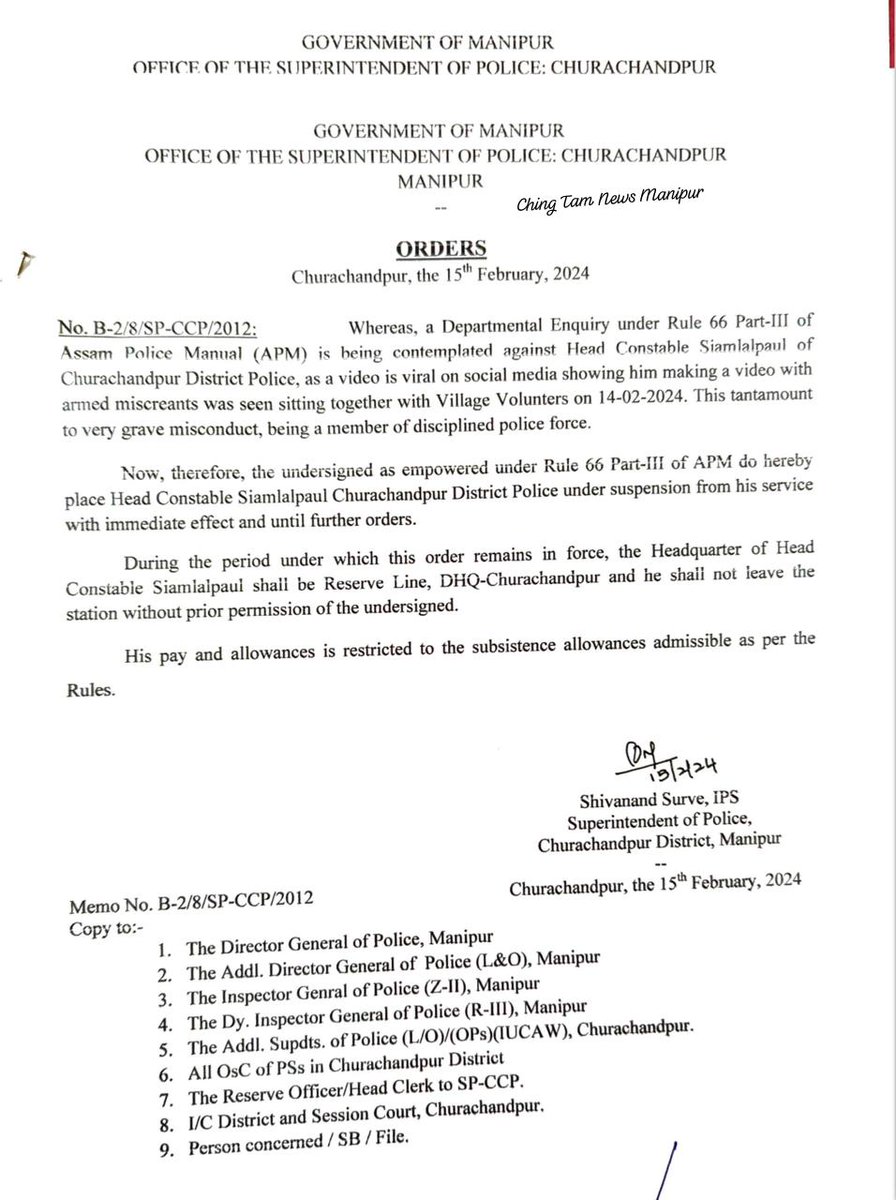
🚨 If betraying their brothers in arms wasn't shameful enough, #KukiZo tribals now try to seize @manipur_police SP Office in #Churachandpur, #Manipur.
‼️ All for suspending the Manipur police personnel, a #Kuki, who broke ranks with his brothers to join #KukiMilitants.
https://t.co/CSkdaEby54
‼️ #Kuki_Zo militants now attack children, death of humanity.
‼️ The boy in the video narrates how they were attacked while playing football.
‼️ One hallmark of #KukiMilitants is the abuse of small children as several viral videos have shown, instead of shielding them as normal human beings do during such conflicts.
#Manipur: Video surfaces showing armed miscreants pushing back #AssamRifles convoy in #Moreh
A sensational video has come to the fore that has depicted an alleged standoff between the convoy of the Assam Rifles & armed miscreants amidst a troubled situation in border town Moreh.
Read more: https://t.co/B4UCOiItTT
#ManipurFightsBack#ManipurViolence
Clear message to Union India 🇮🇳
Never had such unity among Manipuris in particularly among Meitei.
Caught by surprise from external aggression yet we’ve grown and rise above now. ✊
The National Foundation of Kangleipak (Manipur) has demonstrated remarkable resilience against external and internal forces attempting to undermine its national identity. Despite facing invasions through religion, military, and politics, Manipur consistently rises up, asserting itself as a tangible nation with a rich history, distinct land, vibrant people, and a unique culture and civilization. With a legacy spanning over 10000 years, Manipur's first constitution, Loyumba Sinyen, was introduced in the 11th Century under the reign of Meidingu Loyumba.
Notably, the modern democratic and republican constitution, enacted on 18 October 1948, stands as one of the oldest in the entire Southeast Asian region. The pride of every Meetei is deeply rooted in the script, language, culture, and identity that have existed since time immemorial. Across generations, Meetei individuals express a profound commitment to defending these elements, ready to sacrifice with a smile.
In contrast to nations built on imaginary foundations, Manipur's identity is firmly grounded in its historical roots. The patriots within Meetei society, suppressed for 75 years, have now awakened and show no signs of fading away. As reflected in the popular saying among Meetei Patriots defending the idea of Manipur, "Ima Nangi damakta amuktang sibase pendedako, chammarak siningee Ima" — the sentiment is clear: the love for the motherland runs so deep that dying once for it is not sufficient; one would willingly die a hundred times for the cherished homeland.
MARK MY WORDS:
Manipur's history is marked by resilient defiance in the face of adversity, from surviving the Greatest Imphal Battle in 1945, the largest in Second World War history, to overcoming the challenges of the Anglo-Manipuri War in 1891 and a devastating period from 1819-1826. The state has consistently reclaimed its sovereignty and identity.
Today, Manipur faces a new threat with the Kuki aggression, seemingly under the guise of Indian state policy to suppress the Manipur insurgency movement. However, this policy has backfired, causing serious repercussions for the Indian state and its proxy armies of Kuki, once considered expendable. The failure of this strategy is evident, and the repercussions may pose challenges for the very groups India sought to support.
The attempt to use Kukis as a proxy force has not only failed but is becoming increasingly counterproductive. The notion of trading Manipur's territory to foreign powers is vehemently rejected, as it infringes upon Manipur's rights. India's proxy war in Manipur has not only failed to achieve its objectives but also risks tarnishing its own reputation on the international stage.
The creation of an imaginary Kuki homeland through Lebensraum inside Manipur territory is deemed a significant mistake that will haunt them for generations. As Manipur faces these critical challenges, it stands resilient, refusing to succumb to external pressures or compromise its territorial integrity.
24-1-24 is a day of RECKONING for peace stability and security in the region.
INDIA MUST ACT BEFORE ITS TOO LATE.
@BDUTT@sardesairajdeep@ndtv@TimesNow@DeccanHerald@DeccanChronicle@newslaundry@aajtak@republic@hornbilltv@ImpactTvManipur@NELiveTV@NBirenSingh@News9Tweets@thewire_in@ttindia@timesofindia@AmitShah@narendramodi@PMOIndia@ITLFMedia_Cell@ITLFMediaCell@paolienlal@ImphalFreePress@ImphalTimes
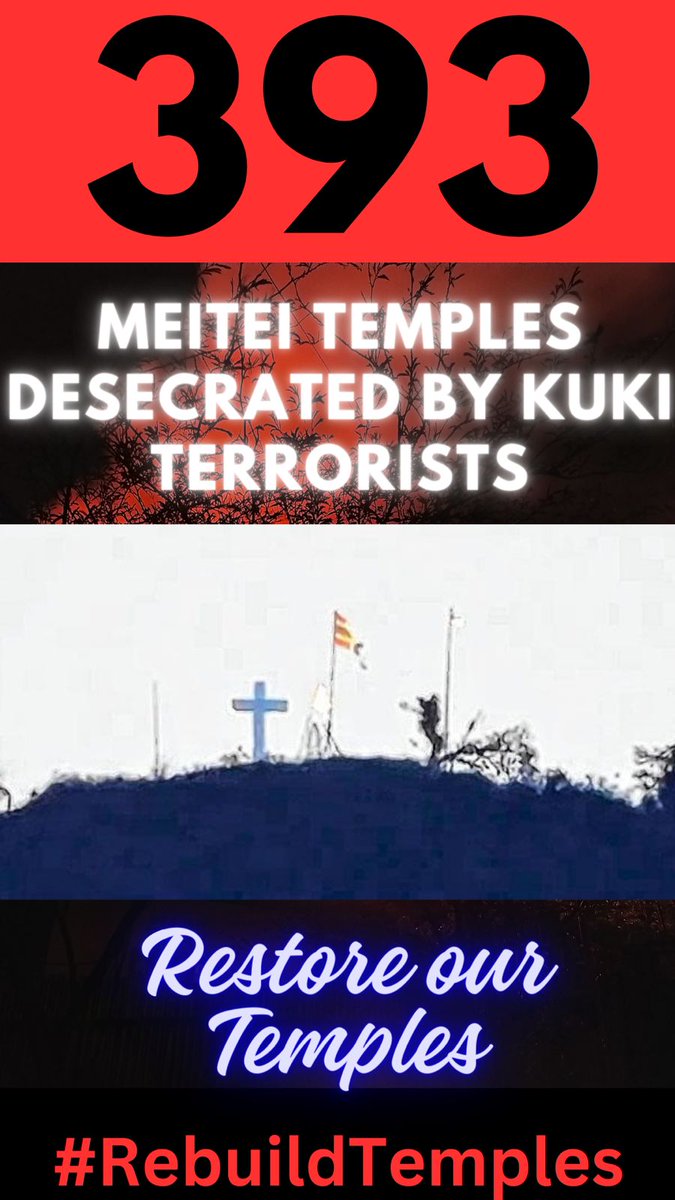
‼️On this historic #RamMandirPranPrathistha kindly spare a thought for the 393 #Meitei temples burnt and desecrated by #Kuki_Zo Militants in #Manipur.
‼️This include the 200 years old Shiva Mandir (built before many of the migrants set foot in our jewelled land) and desecration of sacred pilgrimage site of Mount Thangjing, the ancestral deity of Moirang by planting a ✝️ and flag of #KukiMilitants group ZRA.
#RamLallaVirajman
#RebuildTemples #Stand4Manipur
The Manipur conflict has two phases.
Phase 1: The first phase began on April 27 with the destruction of state properties, Meitei's temple & properties, in Churachandpur. On May 3rd, an attempt was made to involve the Naga community in the conflict through the 'Tribal Solidarity March,' which failed due to the Nagas' awareness of Kuki history. Until around May 15, this phase constituted an ethnic conflict orchestrated by #ChinKukiZoNarcoTerrorists led by ITLF.
In this phase, more Kukis died than Meiteis due to the intense emotional reaction of the Meitei community in the densely populated Imphal area. This was triggered by the unexpected violence, arson attacks, and ethnic cleansing of Meiteis initiated by the Chin-Kuki people in their dominated areas. The miscalculation of the Meiteis' potential reaction by these Chin Kuki terrorists stems from their assumption that Meiteis are excessively kind and noble, underestimating the strong historical ties Meiteis have with Manipur's boundaries.
Phase 2: After a brief lull following the first phase, the second phase commenced just before HM @AmitShah's visit to Manipur. In this phase, #ChinKukiZoNarcoTerrorists executed the plan they had engineered. The objective was to cause maximum collateral damage between the two communities and convey to visiting central government authorities that the two communities cannot coexist. Leaders of these groups, mostly newcomers to Manipur (see below on image 1), lack sentimental attachments to the indigenous communities, suggesting the beginning of an armed conflict they may have prepared for since 2005.
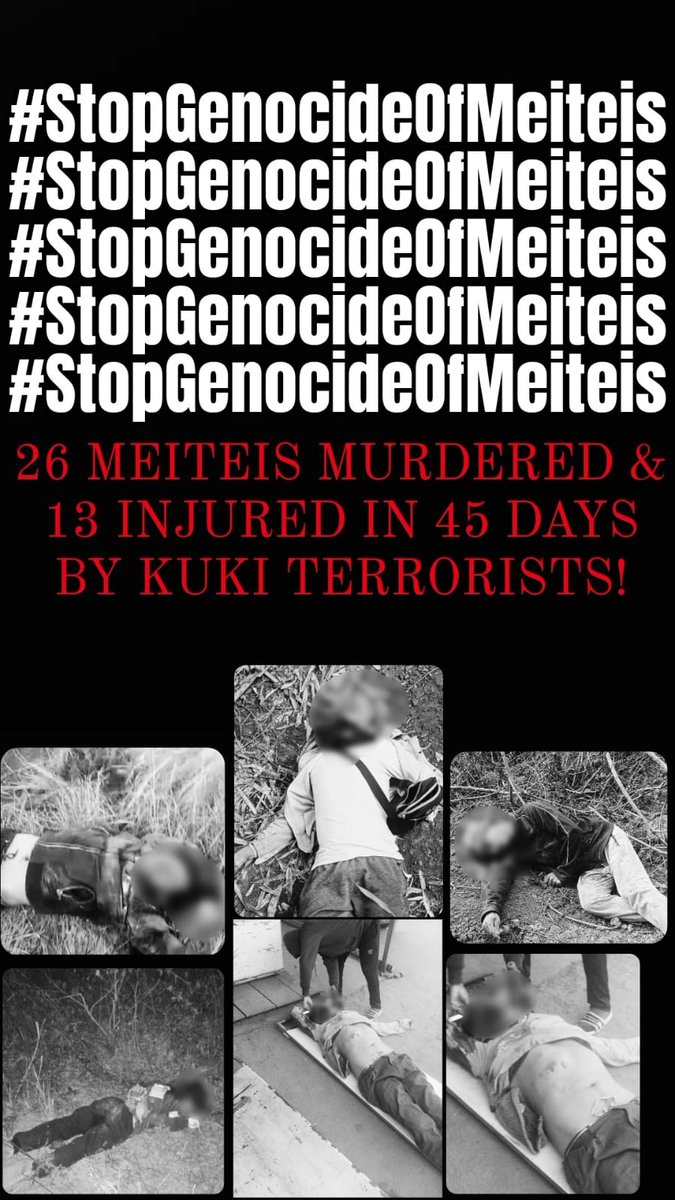
Exploiting the presence of SoO camps surrounding the Manipur valley, like a necklace, they attacked and killed Meitei innocent people and hardworking peasants in the outskirts of the Imphal valley. In this second phase, many more Meiteis were killed than Kukiis, including the 26 people in the last 45 days. Although Manipur residents were aware of the transnational #ChinKukiZoNarcoTerrorists' involvement in these heinous crimes, it's noteworthy that the unified command has finally acknowledged this undeniable truth. It is hoped that the central government takes this national security issue very seriously now.
Raising awareness about the escalating violence is essential, especially as evidence of Meitei ethnic cleansing surfaces. The international community must unite to address this urgent issue. #StopGenocideOfMeiteis#IndiaUnderAttack