Dear politicians everywhere: if your energy depends on fossil fuels, you aren’t a sovereign nation; you’re a hostage.
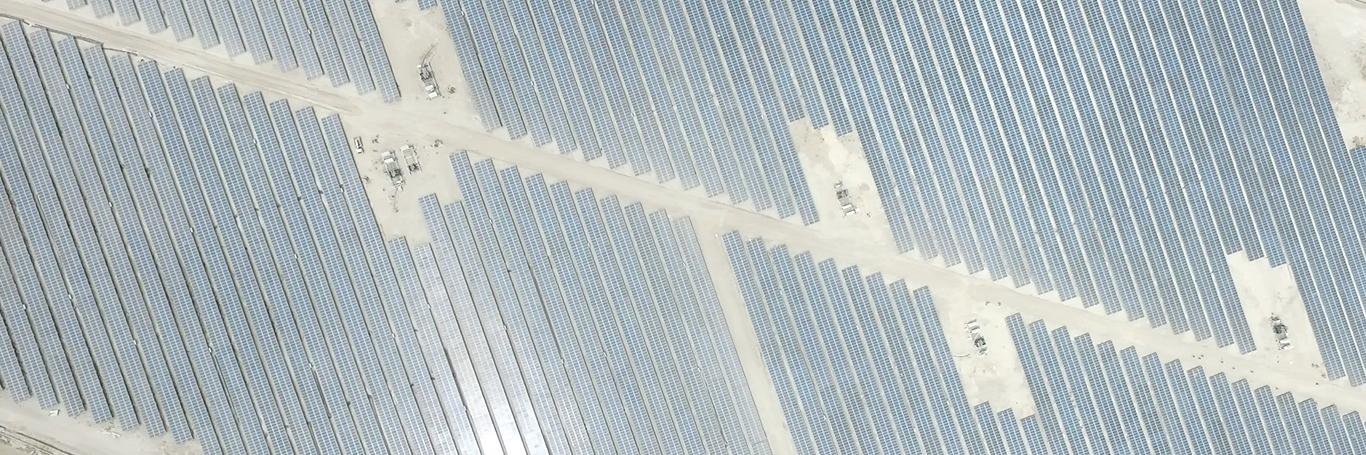
N.B.: The sun doesn't send a bill and the wind doesn't charge for delivery. Forever.
Battery storage is growing at record speed, with 2025 additions 40% higher than in 2024
From balancing grids to shifting solar power across the day, storage is emerging as a versatile tool for modern day power systems around the world
The full analysis: https://t.co/KoR561QiKH
We don’t need to replace 600 EJ of fossil energy. We need to stop wasting it. Fossil systems lose ~2/3 as heat. Electrification delivers energy directly into work, cutting total demand ~40–50%. The transition isn’t bigger than we think. It’s smaller. #SWB
https://t.co/gJOVbP1NE9
Good climate news this (and last week)
1 UK: Emissions fall 2.4% in 2025 as coal hits 400-year low
2 EU: Countries give final approval to 2040 climate target for 90% emissions cut
3 China: More than 80% of crude steel capacity achieved ultra-low emissions by end of 2025
4 US: Renewables hit record high despite Administration pushback
5 China: Solar generation up 40% y-on-y to 1,170 TWh in 2025
6 US: Battery storage installations up 29% last year
7 South Korea: Revamped regulations remove administrative barriers to solar
8 China: Utilisation rate of wind and solar reached 94.5% and 94.3%
9 Global: Net Zero Asset Managers initiative relaunches after wave of US defections
10 China: Stricter national air quality standards issued
11 US: Billions in climate grants, frozen for a year, are back in court
12 France: Air France, Accor to pay bond penalty for missing climate goals
13 US: Colorado, environmental groups sue US EPA to reinstate coal plant carbon emission limits
Fossil fuel wars are taking over and climate anxiety is everywhere. This 6+ years weekly thread⬆️aggregates good climate news to prove climate action has momentum. Just click for a big dose of good climate news
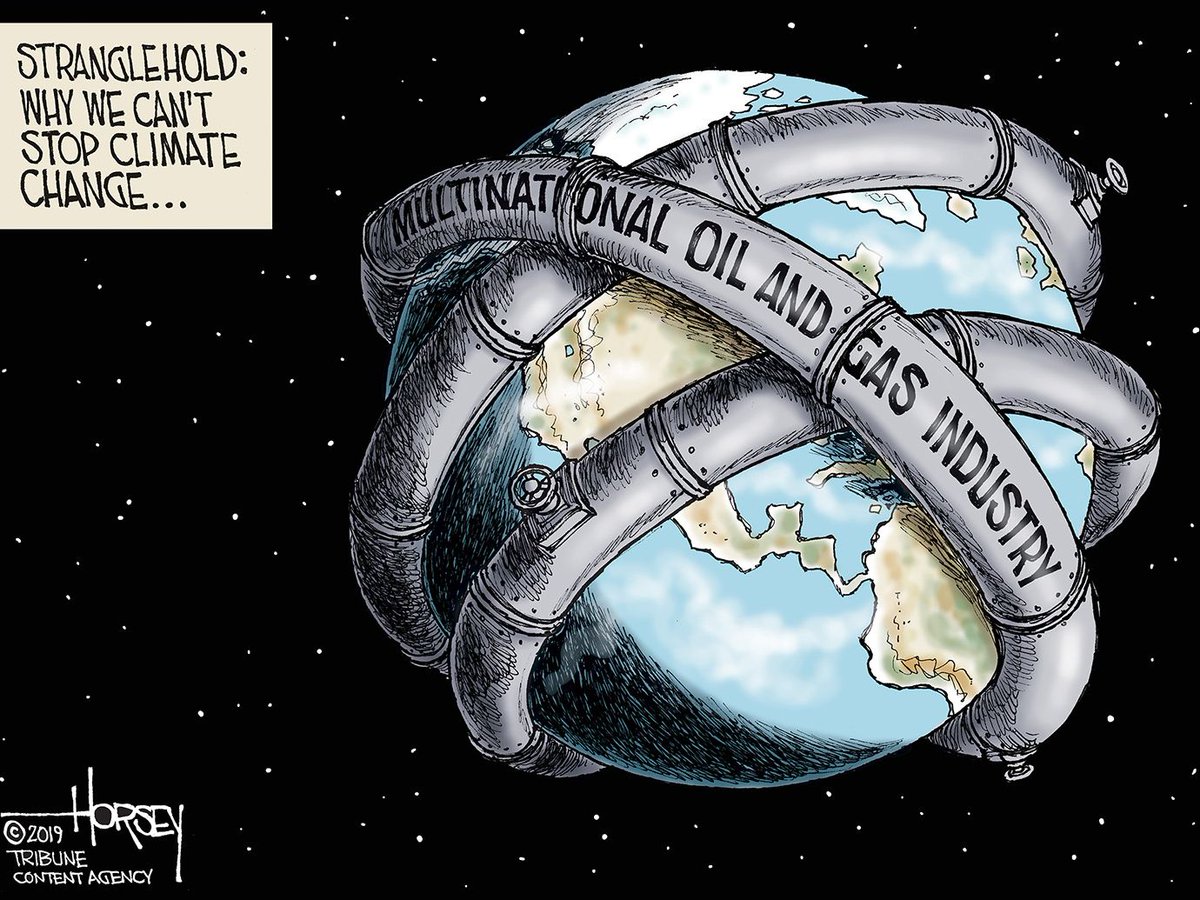
Cartoon by David Horsey
Sources: https://t.co/k4YySMB26f
Rising renewables limit gas and its price-setting role in #Britain’s wholesale power market 🔒💷
When gas is at its lowest, wholesale prices fall ☔
In 2025,
📉 hours with gas <20% of the mix averaged £60/MWh, VS
📈 hours with gas >50% averaged £130/MWh
https://t.co/02Dh9mpeCT
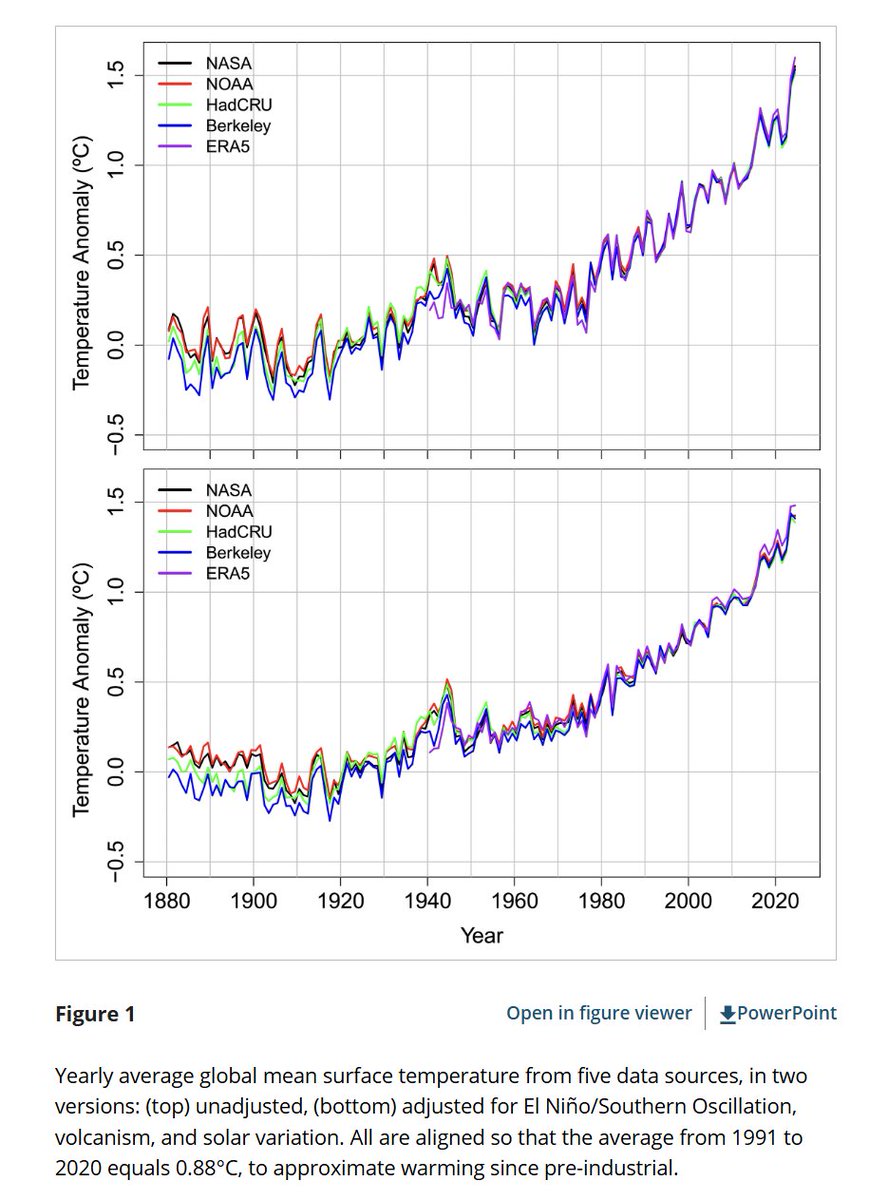
Never-ending fossil fuel wars are a lethal distraction: New study shows global warming doubling in speed since 2015, to 0.35°C/decade, while we fight over the last drop of oil
Apocalyptic warming isn’t coming; it’s here. Almost no one is looking up
https://t.co/FQZ25Vor3R
The world’s largest sand battery got through Finland’s harshest winter in years. 2,000 tonnes of sand, heated to 500-600°C by cheap power, feeding district heating in Pornainen.
And it worked.
Industrial process heat is the real prize.
We probably shouldn't assume billions of tons of Carbon Dioxide Removal (CDR) to happen in the decades ahead, which is what the new low emissions scenerios do, in order to "keep global warming below 2°C"
Find the current level of CDR in this figure:
The last time an El Niño this strong hit, it killed 50 million people. That was 3 to 4% of the entire world population. Scale that to today and you're looking at 250 million equivalent.
The 1877 Super El Niño triggered simultaneous droughts across India, China, Brazil, and East Africa. Crops failed on four continents at the same time. The famine lasted three years. Researchers have called it "arguably the worst environmental disaster to ever befall humanity."
NOAA's latest update gives a two-in-three chance this one reaches strong or very strong by fall. European models are even more aggressive. Sea surface temperatures need to exceed 2°C above normal to qualify as "super." The trajectory is pointing directly at that threshold.
Here's what makes 2026 structurally different from every previous Super El Niño: there are two independent supply shocks converging on the same crop cycle.
The Iran war has shut down roughly a third of the world's seaborne fertilizer trade through the Strait of Hormuz. US fertilizer supply was at 75% of normal in mid-March, right when the Corn Belt needed it most. Fertilizer prices hit their highest level since 2022. That input shortage is already baked into the 2026 growing season.
The El Niño yield shock operates on a 6 to 12 month lag. India is forecasting below-normal monsoons for the first time in three years. Indonesia and Malaysia carry 90% of global palm oil, and El Niño production declines in those countries take 6 to 24 months to peak. Every strong El Niño in the past 55 years has reduced global cocoa production.
So the fertilizer shortage weakens the crops El Niño is about to stress, and the El Niño yield collapse hits in 2027 on fields that were already under-fertilized in 2026. Two shocks with nearly identical lag structures, converging on the same harvest window.
The difference between 1877 and 2026: we can see this one coming six months out. The commodity futures curve is barely pricing either shock. Whether that's rational discounting or willful denial depends entirely on what the Pacific Ocean does between now and October.
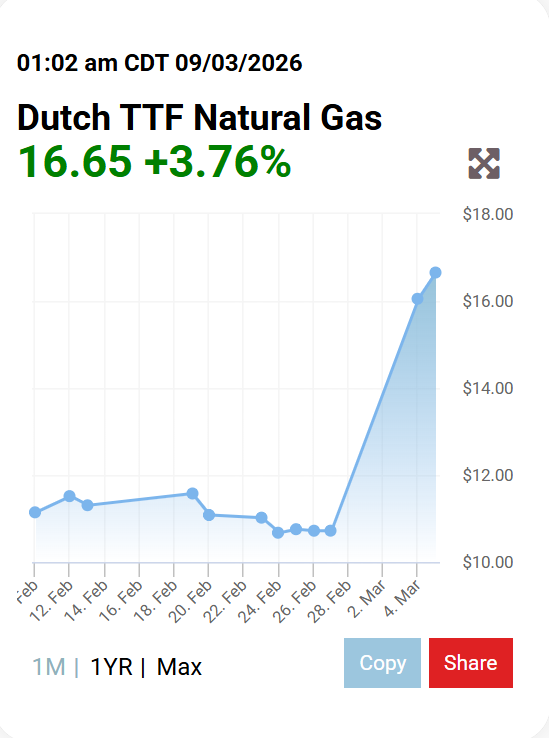
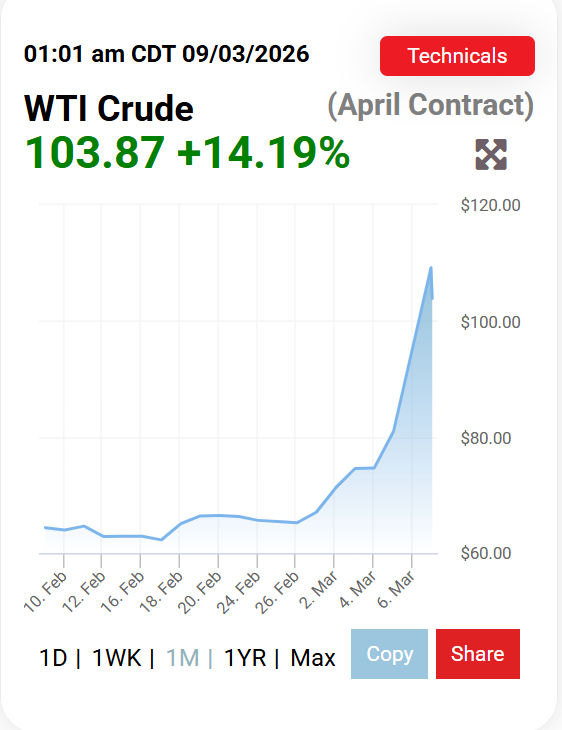
A few more days of Israel and the US attack on Iran and expect oil and/ or gas rationing in multiple Asian countries
1 Pakistan: In crisis. 0 to 5 days of reserves. Already considering mandatory WFH and weekly price hikes. With only 25 days of petrol, rationing is imminent
2 Bangladesh: In crisis. With 14 to 15 days of diesel, the government is already prioritizing power plants over transport to avoid a total blackout
3 Thailand: Market stressed. Already banned petroleum exports to protect its 60-day buffer. Voluntary rationing likely within a week
4 Singapore: Market stressed. As a hub, it feels the squeeze early. Bunker fuel is already being restricted to existing contracts only
5 India: Vulnerable. While holding ~74 days total, its physical "strategic" caverns are small. Rationing could start to preserve stocks for the military/farming. Gas cuts to industry of 10 to 30% already implemented
6 Taiwan: Vulnerable.Oil is stable (~120 days of reserves), but Gas (LNG) is critical at 11 days. Power rationing for industry likely to start within days
7 China: Large reserves (~120 days) allow it to "wait and see," but some rationing (eg internal quotas for non-essential travel) could appear within a month. Already halted diesel exports to protect what it has
8 South Korea: Rationing could start if the conflict appears permanent (6+ months)
9 Japan: The most resilient, with a world-leading 254-day oil reserve, but only has 3 weeks of LNG inventories and industry already asking for strategic reserves to be opened
This is on track to be worse than 1973, 53 years ago, and shows, again, how if your energy depends on fossil fuels you aren’t sovereign; you’re a hostage.
Renewables are the only exit strategy. Accelerate their deployment!
(Cartoon by David Simonds)
EVs are actually better than gasoline cars for extreme rural areas for a very specific reason: you can generate electricity anywhere, but you have to have fuel shipped in.
Putting solar out in the yard is far, far, FAR easier than driving hours to the nearest fuel station.
Confused by media reports about the tipping point of the Atlantic Ocean's overturning circulation #AMOC?
Carbon Brief has an excellent explainer about a serious risk which might strongly impact your future: 🌊
https://t.co/wWZxioObdr
So many of the replies below are genuinely funny 😂. No amount of ignorance, bad faith or bot farms, though perhaps also just an inability to read simple tweets, can change the fact that the fuel for solar and wind energy, sunlight and air, is free, incredibly abundant and inexhaustible
This is truly scary. The breakup of Antarctica’s Thwaites glacier would raise levels by over three meters and inundate coastal cities worldwide. And yet we continue to slow efforts to combat global warming.
https://t.co/PTBx7ibEbR
254 days of reserves don't mean a thing when the pressure hits on day 7. This isn’t a "market adjustment" - it’s a math-driven massacre
Fossil fuel reliance is a trap door, and the floor just fell out for half the world. If your energy depends on a chokepoint, you aren’t a country; you’re a hostage.
Renewables are the only exit strategy. Stop being a casualty of geography. Cut the cord.
Over 85% of California's industrial heat demand is below 600°C. That's the threshold where electrification starts to look commercially viable. New research puts a facility-level number on just how much of the "hard-to-abate" sector might not be that hard.