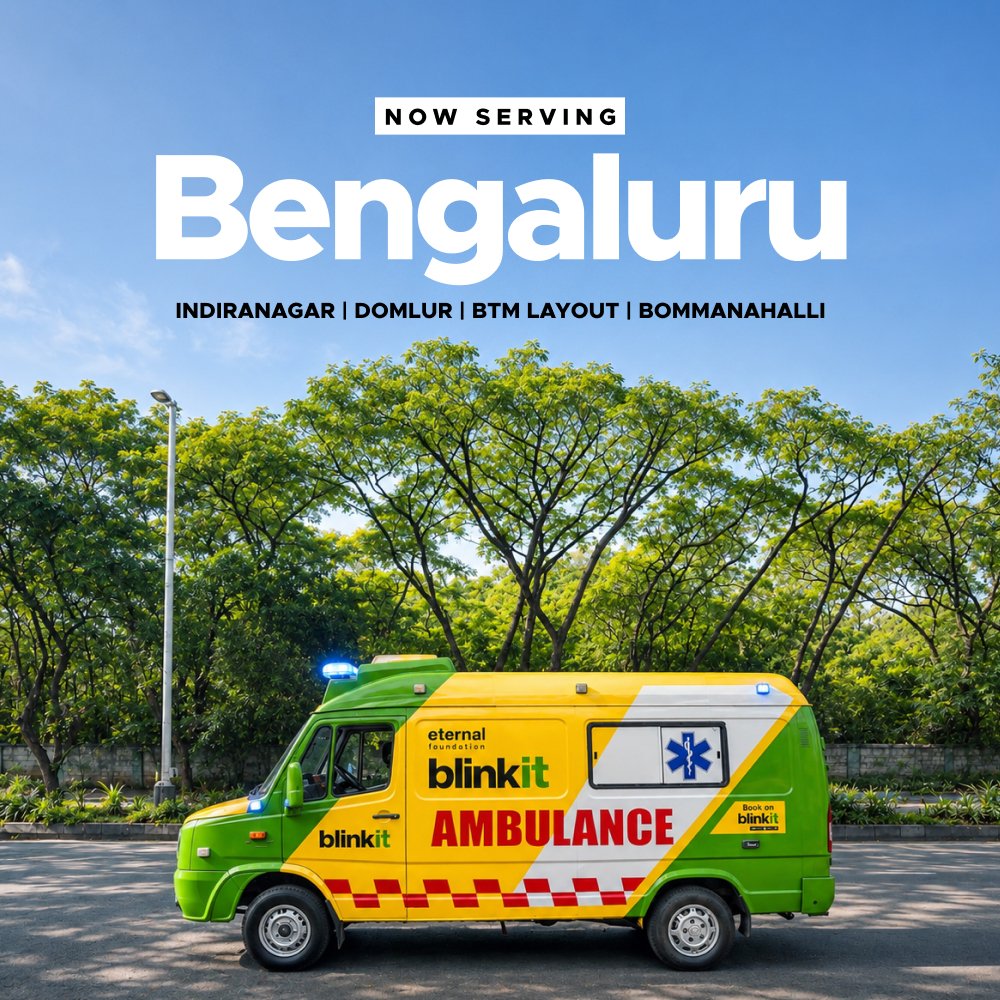
Blinkit Ambulance is now live in Bengaluru! 🚑
We’re currently covering Domlur, Indiranagar, BTM Layout and Bommanahalli. The service is currently operating 4 ambulances across 2 depots. You can request one through the Blinkit app.
Our 2nd Ambulance training academy is also now operational in Horamavu, following our first in Gurugram (more on this soon).
We’re also hiring paramedics, ambulance pilots and General Duty Assistants (GDAs) in Bengaluru. Interested candidates can apply here: https://t.co/oRZtJnnXcj
Hello everyone. Happy Diwali!
Thank you for your criticism, your support and your time over the last two days. Gives me much needed clarity on what we need to explain better:
1. Temple is not made for India. It’s made for the world. Please check pricing. We don’t expect any more than 1% of Temples being sold in India.
2. If you are upset that the pricing is too high, I am sorry. There’s a lot of work that went into Temple, and we priced it at what we think it’s worth. If you think its overpriced, you can wait for user reviews to decide if its worth your money.
3. Please do not support us because we are an Indian startup. We want to compete globally. We don’t need/want nationalist support. Support us if you want to support early innovation, which could help you live a better life, and will continue to add more proof to its science over the years.
4. There are different audiences which buy products at various levels of proof. Proof goes from whitepaper -> pre-print -> peer reviewed. You are free to sit on the fence until peer reviewed proof arrives. You are free to not believe it even then. Nobody is forcing you to buy. Making announcements is our right; and if we overclaim anywhere, we will inevitably fall into regulatory trouble everywhere in the world.
5. We didn’t make any medical claim. Doctors primarily see things from a medical lens, so they see every claim as a medical claim. I repeat – Temple is strictly a fitness + AI device, and we've made no medical claims. Temple is not proven to diagnose or prevent any disease. It doesn't do anything which replaces the need for you to see a doctor.
6. The main point of Temple is NOT Brain Flow. That’s what we just started Temple for, and studies on Brain Flow are the first ones getting out.
7. The main point of Temple is Entropy (I shared the HomeScreen of Temple three months ago with Entropy as the main thing). Our emails to our waitlisted users only talk about Entropy. We haven’t published anything on Entropy yet. We will. If you want to buy Temple before that, please do. If you don’t want to, don’t.
8. Roomdeaf AI is an expansion of the device’s capabilities, and our vision for Temple. It is not a pivot.
9. Social media is not the regulator for Temple. Wherever we need regulatory clearances, we will have them before we make any claim needing them.
10. I will post a detailed note on how we calculate Brain Flow, its uses, and most importantly, its limitations in a bit (tomorrow).
A lot of you have pinged me to ask - why are you doing Temple? Why did you leave a ~$35b company you founded 18 years ago to chase a niche health wearable? This doesn’t sound rational.
Why did I leave Eternal? What are we building at Temple? What’s our vision statement? What do we have in store for humanity?
I am going to tell you in 4 hours from now (drafting the note as we speak). Stay tuned.
PS – holier-than-thou Indian doctors can skip this lol.
Dear Concerned Indian Doctors,
I see your rage against Temple on X. I have a few points
to make:
1. First and foremost, a business lesson: if Temple were a scam, and any of what we said weren't true, people would know it in just a few days of using Temple. We have 14-day, no-questions-asked returns (which even Apple doesn't offer in India). If the product doesn't work, it fails out of the gate and the company dies before recovering a tenth of its R&D.
2. We have already spent $30m building Temple, $20m out of which is my own money. Selling a few thousand devices recovers a small fraction of this investment. A scam that pays nothing is not a scam anyone would run.
3. I left the Eternal CEO role to chase purpose with Temple. This is not about money. I have enough of it to last for generations. My incentives are fully aligned with getting the science right. I am not staking a reputation earned over 20 years on making a quick buck.
4. Our employees bought into our round a few months ago. The round we're raising now is mostly our customers. Scams don't build that cap table.
5. Most wearable companies start with internal studies. Whoop shipped its band in 2015, and the first published validation followed a few years later. We hold ourselves to a higher standard; pre-prints are a step prior to peer reviewed publications, and they are coming up.
6. At some point you have to stick your neck out and say: we believe in our science, and the product is now valuable enough for people to pay for and use. We believe we are there. More validation continues in public.
7. We are confident that we are building something that the world is going to be positively astonished with. We stand by our science and our methods. Each of our claims is easily verifiable by individuals and institutions alike, and you will see a lot of independent studies come up on their own when the device becomes available to use.
Last but not the least, the most ground breaking features in Temple are not even public yet. And some of them, thankfully, have nothing to do with doctors 🤭
Hope this addresses some or all of your concerns. If not, keep raging 😘🤗
I started Zomato with a spirit of service. Blinkit Ambulance is what that spirit of service looks like today.
In the last 2 years, we have served ~20,000 emergency cases (~42,000 cases in total). We haven't charged a single rupee for any of them. And we want to keep it that way.
With everything free, a growing share of bookings are for routine checkups, hospital visits and hospital-to-home transfers, trips that an Uber or private transport could have handled just as easily. Every such booking keeps a fully equipped emergency ambulance with paramedics off the road when someone's life may depend on it.
So we are making a change from now onwards: Emergency transfers – free, as always. Non-emergency transfers – ₹2,500, charged after the trip. Broadly in line with what private ambulances charge. This money goes to Eternal Foundation, which runs these ambulances and will help us scale them even further.
We hope that this charge will dramatically drop the usage of our Ambulances for non-emergency cases. 10-minute ambulances have saved and can save thousands of lives, and we need to keep them available for emergencies that need them the most.
One more thing. Scaling high quality ambulances is hard. The biggest bottleneck is trained, empathic paramedics. Our training academy is scaling as fast as we can without compromising on quality, and @albinder and team are committed to bringing Blinkit Ambulance to all major cities in India in the next 2-4 years.
Stay well, and I pray you don't need us. @sparsh_sehgal – I wish your grandma a speedy recovery, and I am so glad we were able to be there on time.
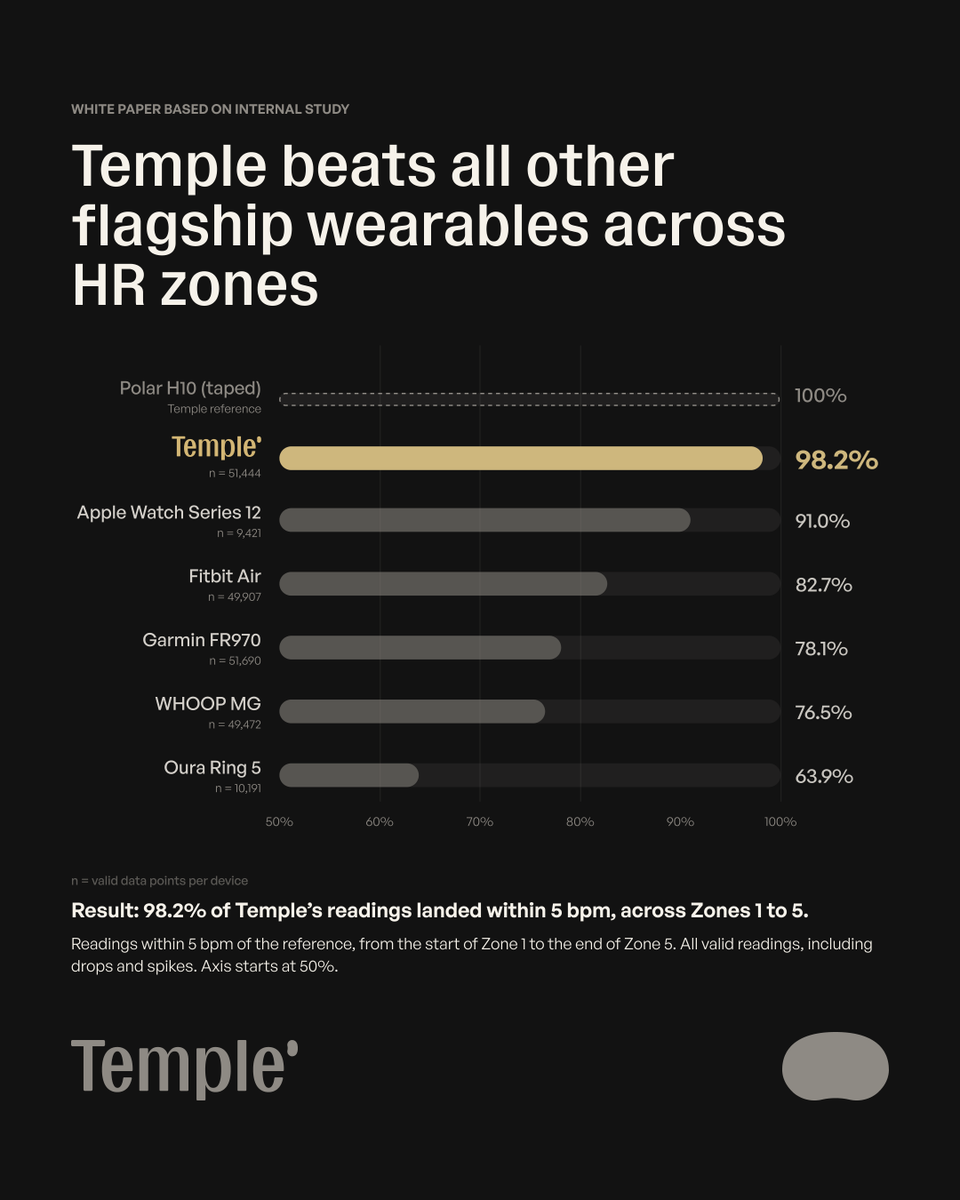
Learning from our communication mistakes yesterday, here’s a retake on our HR benchmarking study:
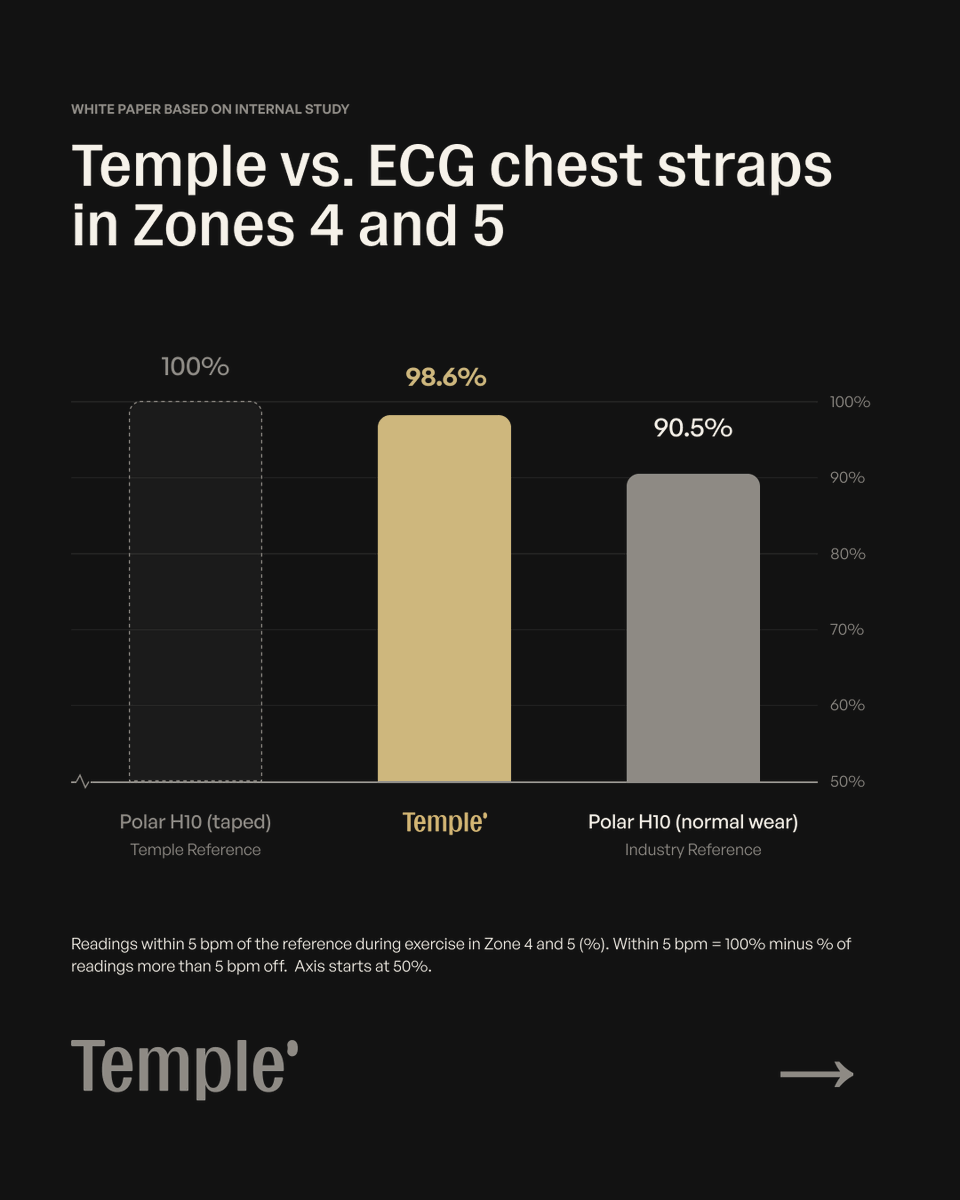
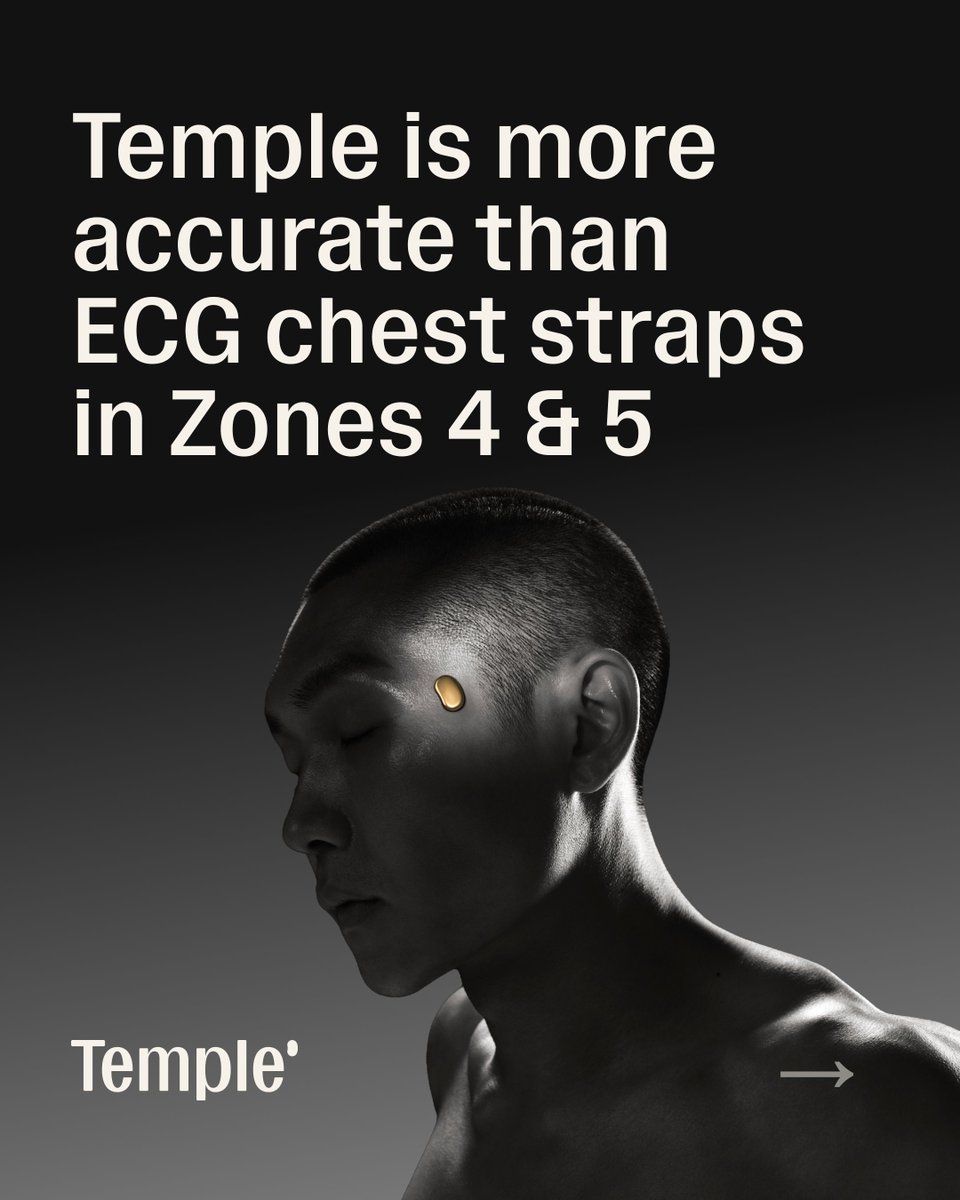
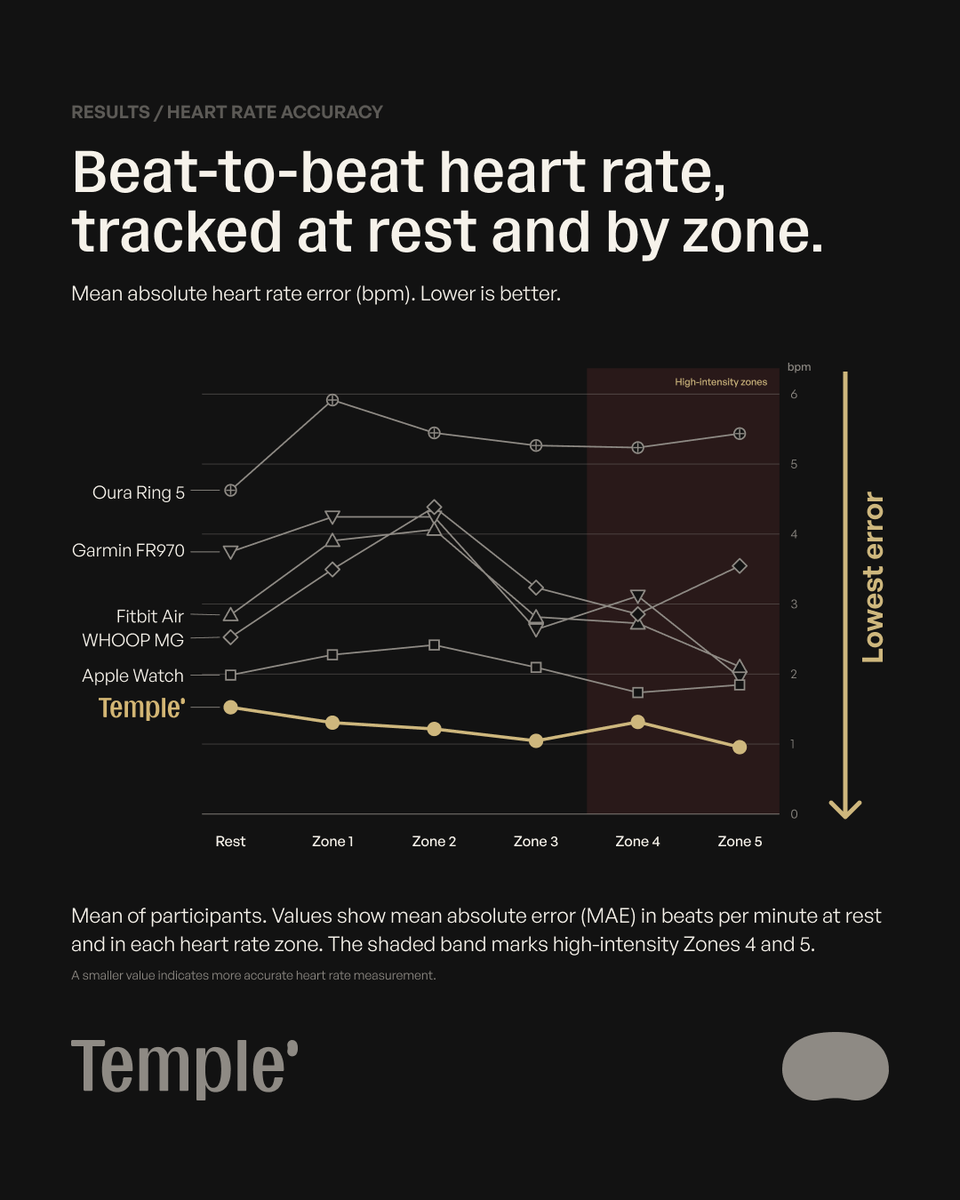
Temple tracks heart rate more accurately than standard-wear ECG chest straps in Zones 4 & 5.
A Polar H10 chest strap is considered to be the ECG-based gold standard for industry benchmarks. However, when we put it to test, we saw drops in readings. We wanted a more accurate reference for ourselves. We therefore taped the chest strap to each participant to avoid any drops due to motion or contact loss, which worked.
We then compared Temple with five existing flagship wearables and two Polar H10 chest straps (one being the taped reference, the other being the standard wear industry reference).
Temple was by far the most accurate wearable amongst everything we studied. We even beat the industry reference chest strap in normal wear conditions, in Zones 4 and 5 (which athletes care the most about).
Every other wearable has always only tried to get as close to the reference as possible. At Temple, our goal is to become the new reference.
Everything you need to know about our study can be found here: https://t.co/1VcCmoSlKO
More independent validations are underway.
Skeptics are urged to wait before buying. Everybody else who wants an edge on their training, write to us at [email protected] if you want to know more.
Btw, I am tempted to follow the global standards set by Apple and not offer our current 14-day no-questions-asked return policy in India. I will sleep over it.
Pre-order at https://t.co/XxGR9Hpq58 now.
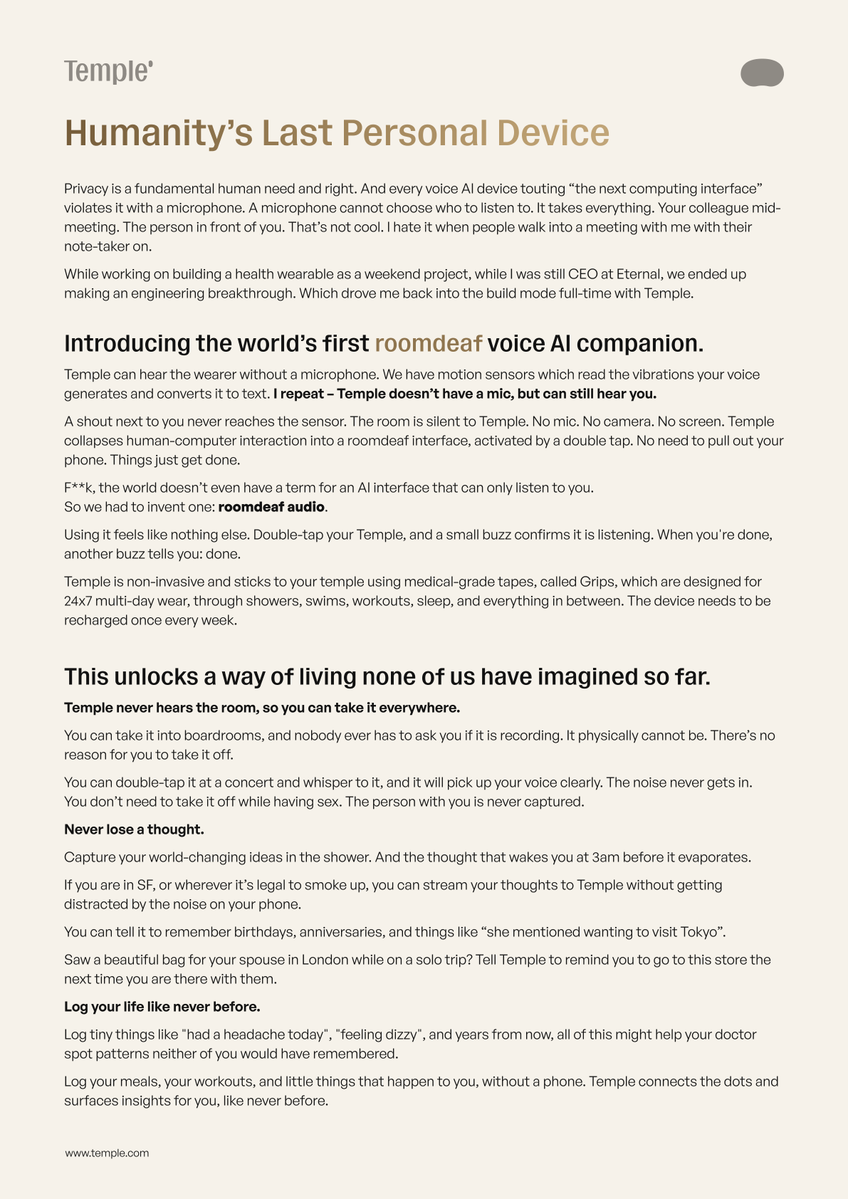
At @temple, one of our missions is to become the ultimate wearable for elite performance athletes.
And today, let's start with the basics: Heart Rate (HR).
You would think accurate HR tracking is a solved problem. It is not. Especially in zones 4 & 5, which matter to professional athletes the most.
To see whether Temple is the most accurate wearable on something as basic as HR, we gave ourselves a high bar to aspire to. A Polar H10 chest strap, taped to the chest. Taped, because worn the usual way, straps lose contact mid-sprint and miss beats. We benchmarked five flagship wearables against that reference, from rest to max effort, second by second.
All the other leading wearables were well behind Temple in our study. Apple Watch Series 12 came closest. Temple also beat the untaped chest strap, the industry's benchmark, in zones 4 and 5.
Why does Temple win? Two reasons.
1. Temple uses adhesive, so its lab condition is its wear condition. You'll experience our study outcomes in real life.
2. The location. Your temple sits right over a major artery, and it's the one patch of skin that doesn't clamp down its blood flow when you go hard. We tested the same sensor at four body sites. The temple was the most accurate of the four.
Charts attached.
Accurate HR makes Temple better at so much more downstream. More soon.
The full paper and data are live right now at https://t.co/ovabS2dvnY, and an extended study by independent researchers is underway.
We invite further independent replication in more conditions, and will fund it. Write to us at [email protected]
@chiraggoyal28 If you add our employees, warehouse workers, and all their families, Eternal directly supports the livelihoods of well over 1% Indians 💁♂️.. getting this to 5% by 2030 would be damn cool.
In FY2026, 31 lakh Indians chose to earn through Zomato and Blinkit as delivery partners. That’s 57% more than the previous year.
Behind every one of these numbers is a person with interests and ambitions. A student balancing classes, an entrepreneur building something of their own, a dancer pursuing their passion, and a parent juggling work and family.
We co-created this song with @ItsAmitTrivedi to celebrate our delivery partners, their many pursuits, and the journeys they’re on.
We’re proud to be a part of each and every one of them.
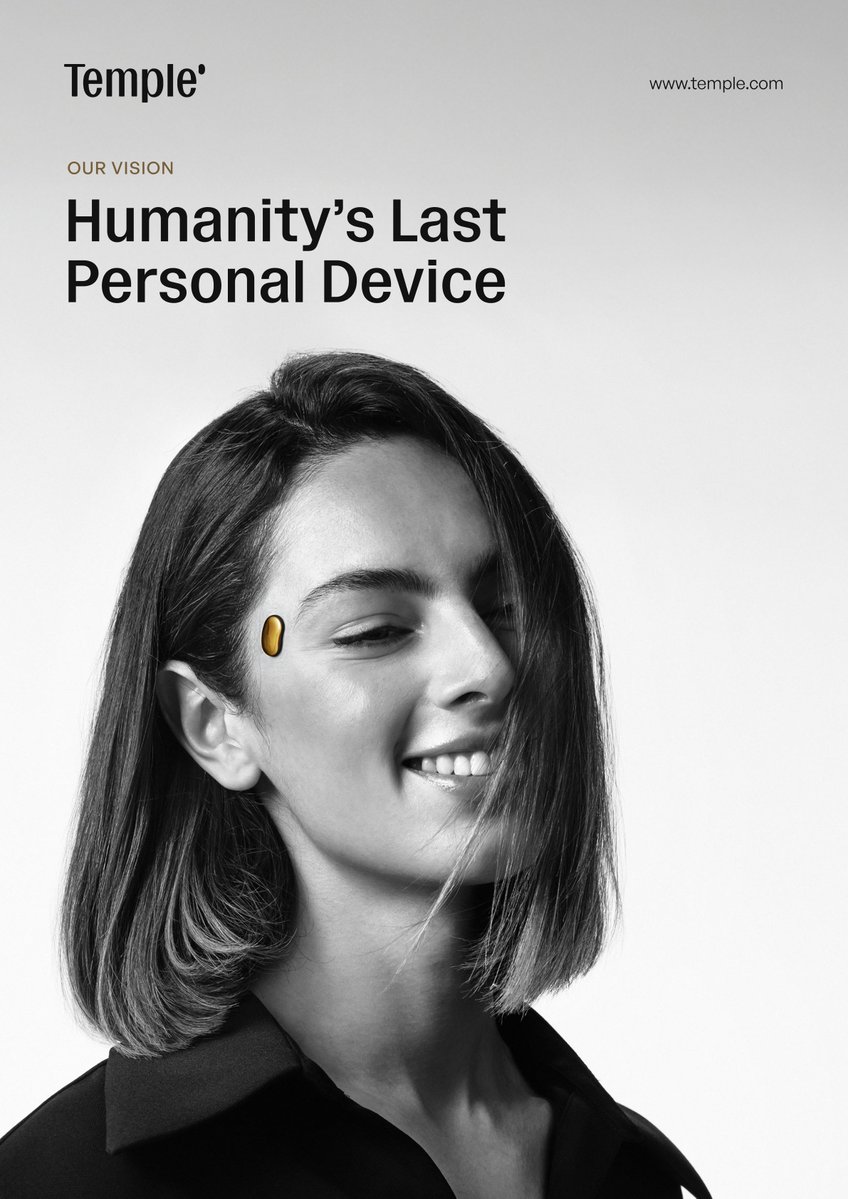
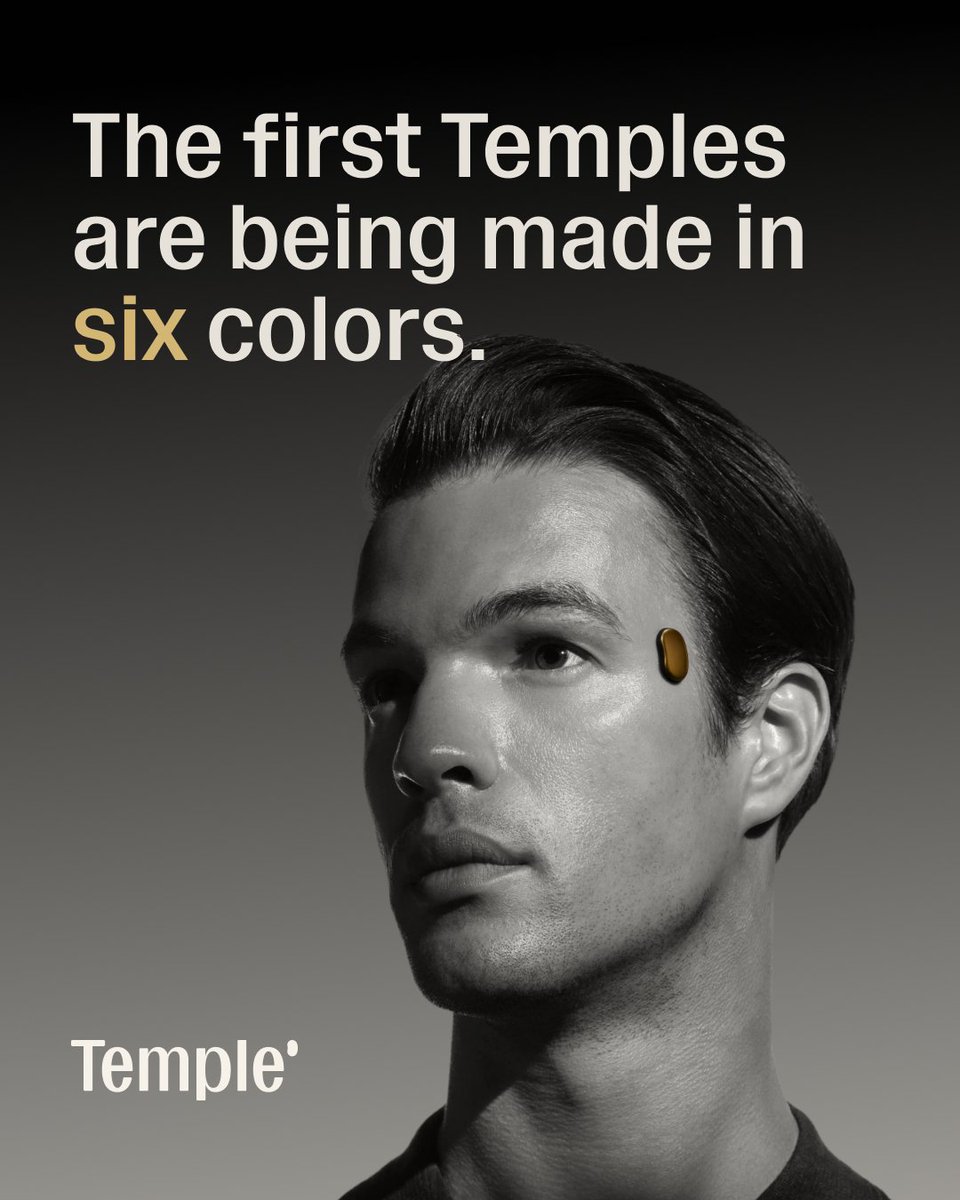
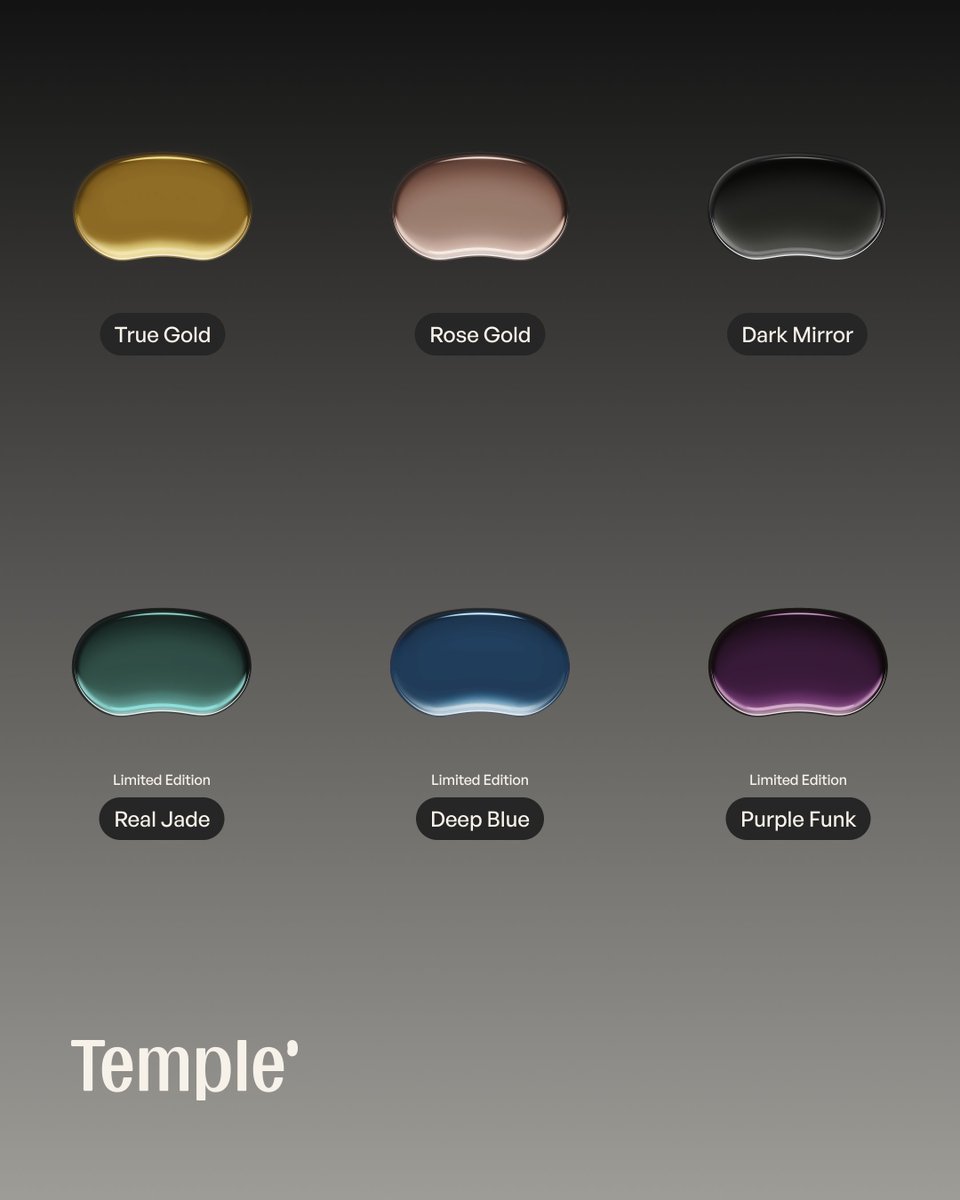
Six colors for the launch edition of @temple
Pre-orders open soon - hopefully next week; just need certainty on a couple more items.
Folks on early access waitlist get priority access. Join the waitlist at https://t.co/XxGR9Hpq58
Can’t wait to get this 𝗂̶𝗇̶ ̶𝗒̶𝗈̶𝗎̶𝗋̶ ̶𝗁̶𝖺̶𝗇̶𝖽̶𝗌̶ on your temple 😄
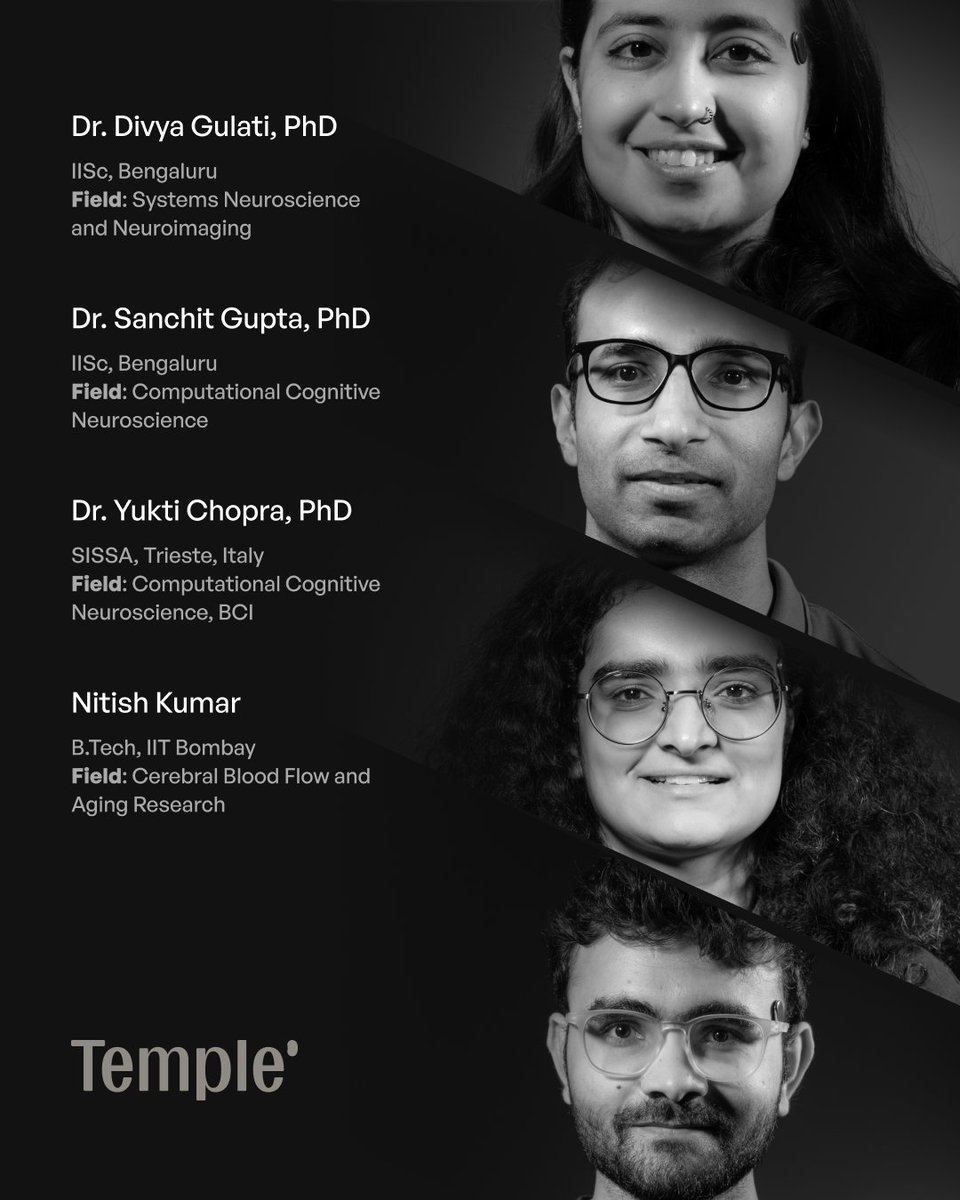
India has always idolised actors and cricketers. The last few years, entrepreneurs and founders have also gotten mobbed at the airports. How I wish we started celebrating scientists as much as we celebrate actors, cricketers, and founders.
On that note, meet the Temple scientists behind Brain Flow: Dr. Divya Gulati (IISc), Dr. Sanchit Gupta (IISc), Dr. Yukti Chopra (SISSA Trieste), and Nitish Kumar (IIT Bombay).
This team led, built, and validated the first continuous, wearable measurement of blood flow to the brain.
Your brain uses 20% of your blood supply. It controls your hormones, sleep, immunity, and repair. That supply drops every year as you age, and you have never measured it. Even hospitals can only capture a single snapshot.
Measuring and maintaining brain flow could be one of the most important health and longevity interventions of our time.
At Temple, we have some of the best minds in the country, working on the one problem that sits upstream of every other: extending healthy human life.
I am proud of our team, and looking forward to a lot of firsts and breakthroughs in the future.
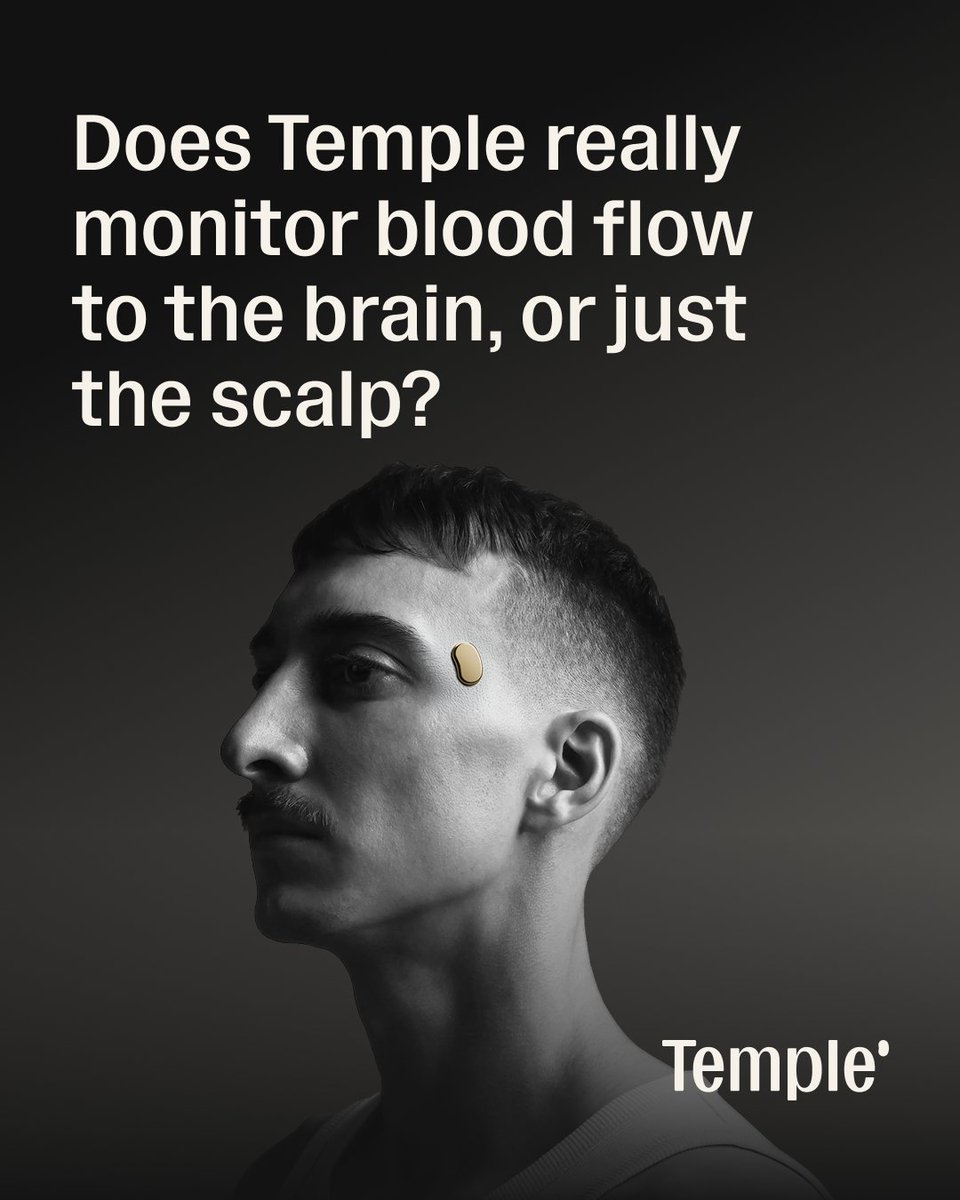
Does @temple really monitor blood flow to the brain, or just the scalp?
In our second validation study, we tested Temple BrainFlow against time-domain NIRS, one of the few technologies that can separate brain blood volume changes from scalp blood volume changes. We had 60 participants go through three physiological challenges: head-down tilt, stand-to-squat, stand-to-supine.
Across all three challenges, Temple BrainFlow tracked brain blood volume at r=0.84-0.91, significantly more than scalp blood volume. The most significant result came from head-down tilt, where Temple's correlation with the brain was 0.91, and scalp correlation was just 0.49.
Key takeaway: Temple tracks the brain, much more than the scalp.
Why this matters: Cerebral Blood Flow responds to almost everything longevity-oriented people already do. It rises with aerobic exercise, and VO2max correlates directly with it. It rises with cold exposure. It rises with meditation. Better sleep sustains it. It drops when you sit for too long. It drops when you are dehydrated. It is one of the most responsive and integrative biomarkers of how well your body is actually running, and aging.
Until now, you could only measure it in a clinical setting, in a single snapshot. Temple measures it continuously, in real time, while you live your life. And Temple is, as of today, the only wearable in the world with validations against brain blood volume, and not just scalp.
This study was guided by our Scientific Advisor, Prof. David Boas, Director of Boston University's Neurophotonics Center, and the mind behind several new, high-impact, biomedical optical technologies in neuroscience, including NIRS.
This is the second modality Temple BrainFlow is now validated against, after Transcranial Doppler. More coming soon.
Link:
https://t.co/zETs9gn5Cg
The paper is posted as a preprint and submitted for peer review. We encourage researchers to replicate this. We'll happily loan Temples to any qualified researcher who wants to pressure-test any of our metrics independently.
Cc @agingroy
Hello world. The first 100 Temples are ready to ship. We're now inviting athletes, scientists, founders, doctors, creators, and individuals who care deeply about their physical and cognitive health to be the founding users of Temple.
Apply for early access at https://t.co/XxGR9Hpq58