AI agents are now controlling robots, drones, and industrial systems.
But there's no security layer between "the LLM decided to do X" and "X happened in the physical world."
We measured this: 4.8× spread in safety violations across frontier models on identical hardware.
We built the protocol to fix it
The future of AI safety is not just better alignment prompts. It is agents that can audit their own cognition, expose hidden compartments, and make their own failure modes observable.
This is where AGI starts to feel less like a model benchmark and more like an architecture problem.
exactly the invariant the protocol formalizes: I-G1 (No Bypass) in the paper.
short answer: no, under the deployment trust assumption that every actuator path routes through PolicyGateway.intercept().
longer answer: the DFA only reaches ACTING/COMMITTING via POLICY_EVAL → PLANNING → ESCALATING → approval. POLICY_EVAL requires a valid token under TokenValidator. No transition into ACTING exists from any other state.
what you'd test is exactly the right thing. our conformance fixtures include "lateral promotion" attacks: T0 token tries to publish to /cmd_vel, T1 token tries https://t.co/SUmKW2ElWa, T2 token tries a forbidden combo. each must produce a fresh approval trace or deny.
the honest part: I-G1 is conditional on deployment topology (§3.5 of the paper). if the agent has an out-of-band path to ROS 2 or MAVLink that doesn't pass through SINT, the invariant doesn't hold for that path. that's why the paper lists six routing patterns (sidecar, ACLs, namespace isolation, etc.) that the deployment has to apply.
proof sketches in Appendix A.3. mechanized TLA+/Coq is Open Problem 4.
two years ago LLMs wrote code.
today they're calling MCP tools, publishing to ROS 2, sending MAVLink commands, unlocking smart-home locks.
we wired up the actuators before we wrote the security model.
published a fix today ↓
SINT does not replace model alignment.
SINT does not replace hardware E-stop.
SINT does not certify anything by itself.
it's the deterministic authorization and evidence layer between agent cognition and physical execution.
alignment is about what models want.
SINT is about what they're allowed to do.
paper → https://t.co/JL1VAzfQRO
code → https://t.co/N8JK2ayVov
would love feedback, especially from anyone running agents against real actuators.
what's in the box:
- 49 packages, 15 protocol bridges (MCP, ROS 2, MAVLink, OPC-UA, A2A, gRPC, MQTT, Matter, FHIR, more)
- SDKs in TypeScript, Python, Go, Rust
- ~1,728 tests
- conformance fixtures for all 10 OWASP Agentic Top 10 categories
- compliance crosswalks to IEC 62443, EU AI Act, NIST AI RMF, ISO 10218, ISO/TS 15066
Apache-2.0. open from commit zero.
Google's UCP lets agents discover and purchase products.
AP2 handles the transactions.
SINT Protocol handles what happens when those agents control the physical infrastructure.
Protocol stack = complete.
AI agents are now controlling robots, drones, and industrial systems.
But there's no security layer between "the LLM decided to do X" and "X happened in the physical world."
We measured this: 4.8× spread in safety violations across frontier models on identical hardware.
We built the protocol to fix it
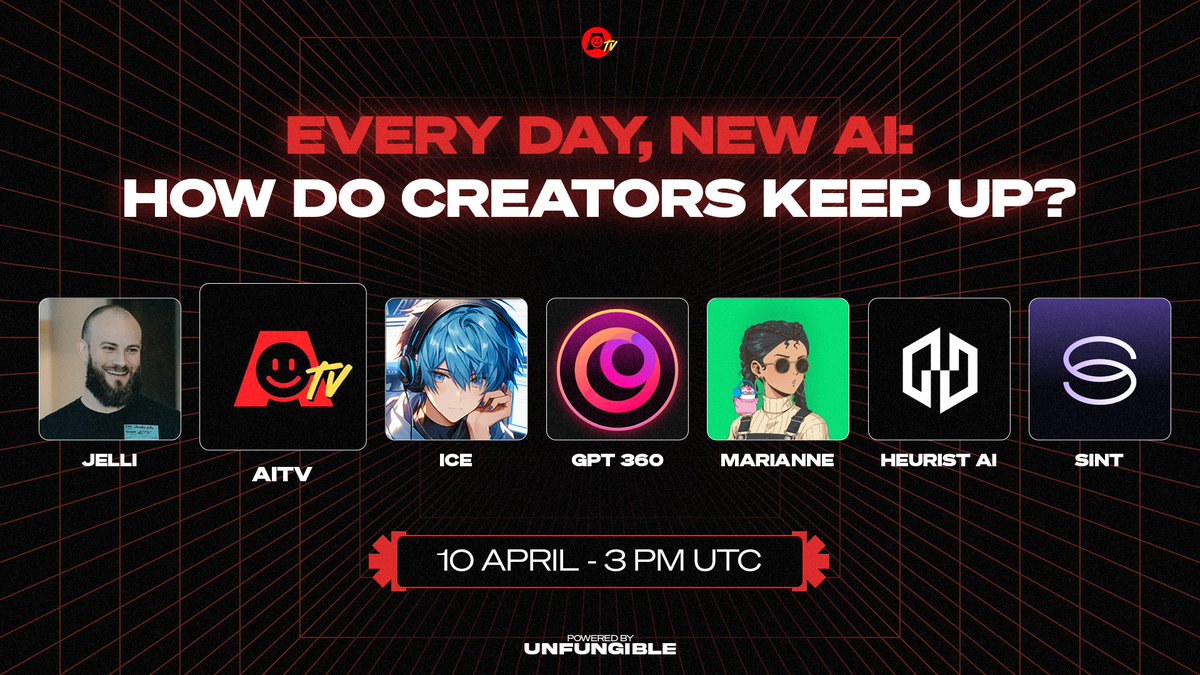
creators are burning out trying to keep up.
every day, new AI: new formats. new expectations.
how do you compete…when the game keeps changing?
🎙️Join us tomorrow at 5PM CET / 3PM UTC
👇set your reminder
Sharing a quick update on SINT and what I’ve been building.
@sinthive multi-agent team running in parallel, fully handling client acquisition, product sales, and internal workflows across the SINT console.
More updates soon.
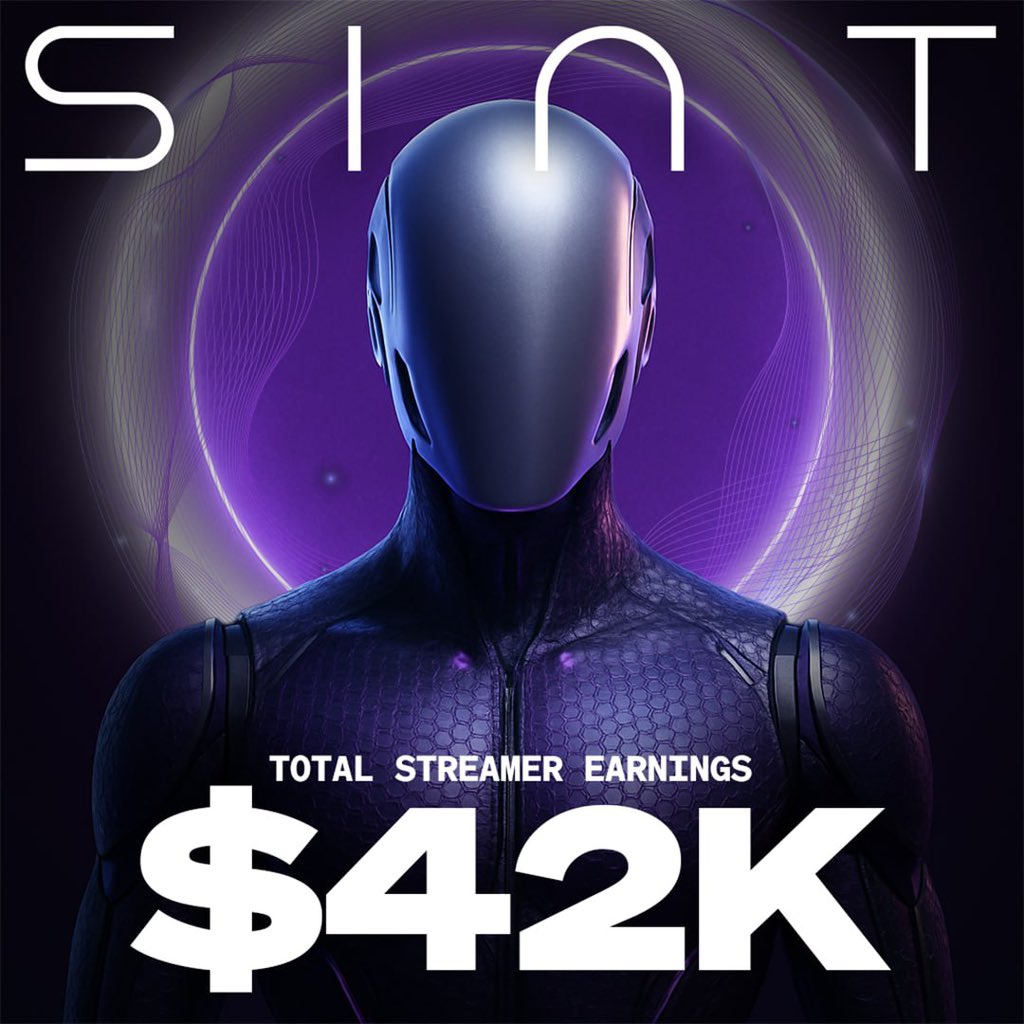
🔴 $42.1K in months from an AI that never sleeps?
SINT @sinthive is the 2nd highest earner on @aitvgg proof the AI media layer pays real money
Your PFP or mascot could be next. Launch in minutes, earn while you sleep.
Join the factory →https://t.co/254hgZ4uev
Who’s going for #3