Iran just fired missiles at five countries simultaneously. Here is what actually happened to each of them.
Bahrain. Confirmed hit on the US Navy Fifth Fleet headquarters. Bahrain’s own state news agency reported the strike. No casualty figures released yet. This is the command center for every American naval operation in the Persian Gulf. It was struck.
UAE. Multiple missiles intercepted by Emirati air defenses. One civilian killed in Abu Dhabi from falling debris. The UAE defense ministry confirmed the intercepts. The Emirates just absorbed an act of war on its sovereign territory from a country it shares a maritime border with.
Qatar. Missile intercepted. Zero damage. The Qatari Interior Ministry confirmed. The same country Iran just attacked is the country that hosted Al Udeid for twenty years as a gesture of regional balance. That balance ended this morning.
Kuwait. KUNA state news agency confirmed missiles were “dealt with” in Kuwaiti airspace. No reported damage. Kuwait, which stayed neutral through every Gulf crisis since 1991, just had Iranian ballistic missiles flying over its cities.
Jordan. Two Iranian ballistic missiles shot down by Jordanian military. Confirmed by the Jordanian armed forces directly. Jordan intercepted Iranian missiles in June 2025 as well. That was in defense of Israel. This time Iran targeted Jordan itself.
Saudi Arabia. Fars News claims strikes. No confirmation from any Saudi source. No Tier 1 or Tier 2 verification. Either it did not happen or Riyadh is not yet ready to say it did. Both possibilities carry enormous implications.
Now understand what Iran just accomplished strategically. In attempting to retaliate against Israel and America, the IRGC fired missiles at six sovereign nations in a single morning. Not one of those nations attacked Iran. Bahrain did not bomb Tehran. The UAE did not launch strikes on Isfahan. Qatar hosted diplomatic back channels. Kuwait maintained neutrality for three decades. Jordan was mediating.
Iran just converted every neutral and semi-neutral state in the Gulf into a potential co-belligerent. Every nation whose airspace was violated, whose civilians were killed, whose sovereignty was breached now has legal and political justification to join whatever coalition forms next.
And the damage tells the real story. One civilian dead from debris. Intercepts across four countries. No confirmed destruction of any US military asset. No reported American casualties among 40,000 troops in theater. Iran fired at the entire Gulf and the Gulf caught almost everything.
Compare this to what Israel did to Tehran this morning. Precision strikes on the IRGC Intelligence Directorate. Explosions near the Supreme Leader’s office. Three detonations in central Tehran confirmed by Iranian state media itself.
One side hit what it aimed at. The other side hit one civilian with debris.
This is the asymmetry that will define the next 72 hours. Iran demonstrated intent to strike everywhere and capability to hit almost nothing. The Gulf states demonstrated they can defend themselves. And now those states must decide whether the country that just fired ballistic missiles across their borders gets to do it again.
They will not let it happen again.
Watch for the joint statement. Watch for airspace coordination between Riyadh, Abu Dhabi, Manama, and Kuwait City. Watch for the coalition that Iran just built against itself with a single salvo.
Iran did not retaliate against Israel this morning. Iran gave every country in the Middle East a reason to retaliate against Iran.
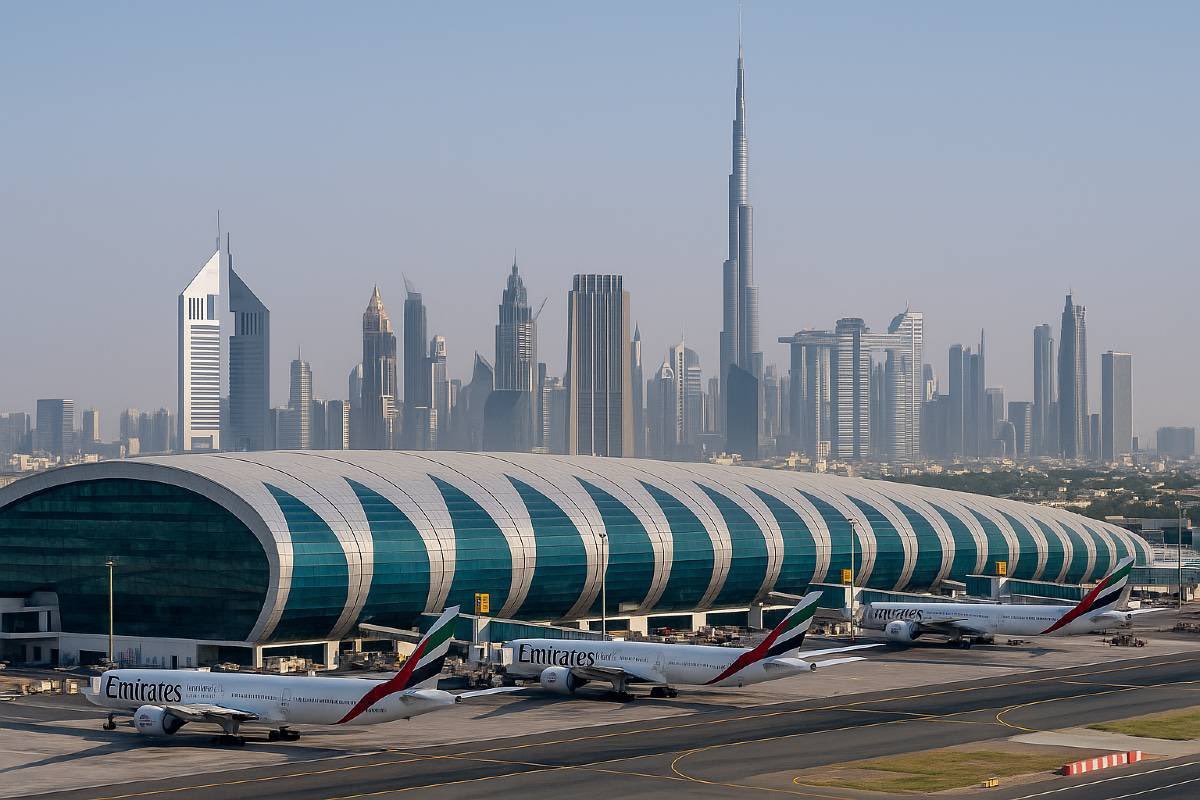
Dubai just shut down. The busiest international airport on earth. Closed. Indefinitely.
Dubai International and Al Maktoum International both suspended all operations on February 28 per official Dubai Airports statement. Over 280 flights canceled. 250 more delayed. The airspace that handles more international passengers than any hub on the planet went dark this morning because Iranian ballistic missiles were flying through it.
Now read the airline list and understand the scale of what just broke.
Emirates. Grounded. Etihad. Grounded. Qatar Airways. Suspended all flights to and from Doha after Qatari airspace closed. Air India. Every single flight to every destination in the entire Middle East. Suspended indefinitely. Turkish Airlines. Suspended flights to Bahrain, Iraq, Iran, Jordan, Kuwait, Lebanon, Oman, Syria, Qatar, and the UAE until at least March 2. Lufthansa. Dubai suspended. Air France. Tel Aviv and Beirut suspended. Wizz Air. Israel, Dubai, Abu Dhabi, and Amman suspended until March 7. British Airways. Affected. Virgin Atlantic. Affected. Japan Airlines. Affected. Norwegian Air, LOT Polish, Scandinavian Airlines, Aegean, Iberia, Air Arabia, PIA, Saudia, Air Algerie. All affected. All grounded or rerouting.
This is not a regional disruption. This is the global aviation network breaking at one of its most critical nodes.
Dubai is not just an airport. It is the single largest connecting hub between Asia, Europe, Africa, and the Middle East. Every flight from Mumbai to London, from Singapore to Frankfurt, from Nairobi to New York that routes through the Gulf is now either canceled, delayed, or burning extra fuel on thousand-mile detours around closed airspace. IndiGo just suspended flights to Almaty, Baku, Tashkent, and Tbilisi until March 28. Not March 2. March 28. A month of Central Asian connectivity erased because Iranian missiles crossed the flight paths.
The cost is compounding by the hour. Rerouted flights burn more fuel when oil is spiking past 100 dollars a barrel because the same conflict that closed the airspace is threatening the strait that moves 21 million barrels a day. Airlines are paying surge prices for fuel to fly longer routes around a war zone that did not exist yesterday morning. Every hour the airspace stays closed, the losses multiply across carriers already operating on thin margins.
And here is what nobody is calculating yet. Dubai’s economy runs on connectivity. Tourism. Trade. Finance. Logistics. All of it depends on DXB being open. The UAE just absorbed an act of war on its sovereign territory with a civilian killed in Abu Dhabi from missile debris. The country that built its entire economic model on being the safe, neutral, connected hub of the Middle East is now closed for business because the country it had no quarrel with fired missiles through its airspace.
Iran did not just attack military bases this morning. Iran shut down the economic engine of the Gulf.
That is a cost Tehran cannot afford to repay and the UAE will not forget.
BREAKING
Iran’s Islamic Revolutionary Guard Corps has broadcast over VHF radio that no vessels are permitted to transit the Strait of Hormuz.
Iran is now moving to shut down the world’s most vital maritime oil chokepoint.
Iran has announced a second wave of strikes on U.S. bases
The Islamic Revolutionary Guard Corps reported the launch of hypersonic missiles "Fattah" with heavy warheads.
‼️🇮🇷🇦🇪🇺🇸Scenes from the Palm Jumeirah area in Dubai, UAE, following an Iranian ballistic missile attack.
Follow, repost, like, and comment on the posts at @visionergeo.
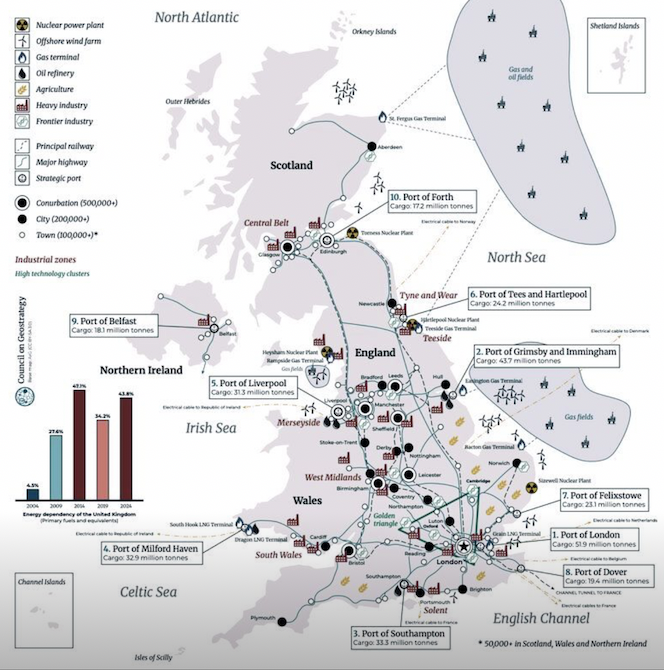
Where are located the UK Energy Infrastructure & Major Ports Map
This detailed map highlights Britain's critical energy assets and strategic maritime hubs
🚢Top Ports by Cargo Volume:
London – 53.9M tonnes
Grimsby & Immingham – 54.2M tonnes (largest by volume)
Southampton – 33.5M tonnes
Milford Haven – 32.9M tonnes (key LNG terminal)
Liverpool – 31.3M tonnes
Tees & Hartlepool – ~28M tonnes
Felixstowe – 31M tonnes (⚠️UK's biggest container port)
Dover – 24.9M tonnes (passenger/roll-on roll-off)
Belfast – 18M tonnes
Forth (Grangemouth) – 12.4M tonnes
⚡️Energy Infrastructure:
Nuclear power plants scattered across England, Wales, Scotland (e.g., Sizewell, Torness, Hunterston).
Offshore wind farms concentrated in North Sea, Irish Sea, English Channel.
Oil refineries (e.g., Fawley, Grangemouth, Stanlow).
Gas terminals (LNG at Milford Haven, Isle of Grain; pipeline terminals).
Oil & gas fields in North Sea.
Major interconnections (power cables, gas pipelines) to Europe.
Heavy industry clusters (e.g., Teesside, Humber).
High-tech zones, agriculture, frontiers industry.
Principal railways and strategic roads linking ports/industry.
The UK's energy security and trade rely heavily on coastal infrastructure especially North Sea assets and a handful of mega-ports handling the vast majority of cargo.
Vulnerabilities here (e.g., to disruption or attack) would hit hard.
A stark reminder of why maritime domain awareness and naval presence matter so much to Britain.
#UK #EnergySecurity #Ports #NorthSea
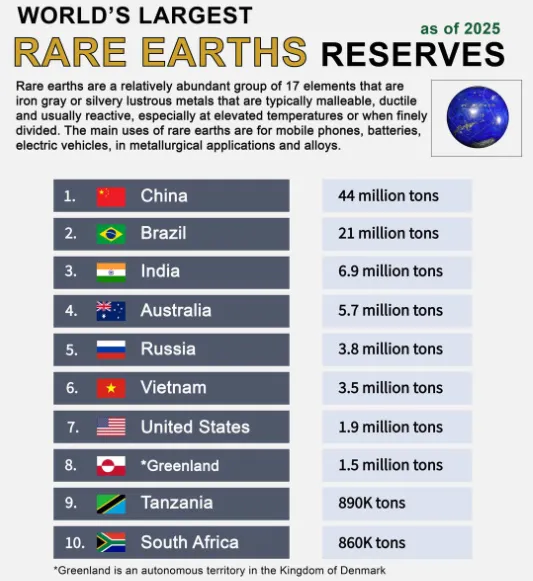
World's Largest Rare Earth Reserves
Rare earths are crucial for EVs, wind turbines, smartphones, batteries, and defense tech
They are heavily concentrated:
#China – 44 million tonnes (dominant by far)
#Brazil – 21 million tonnes
#India – 6.9 million tonnes
Australia – 5.7 million tonnes
#Russia – 3.8 million tonnes
Vietnam – 3.5 million tonnes
United States – 1.9 million tonnes
#Greenland – 1.5 million tonnes (autonomous Danish territory)
Tanzania – 890k tonnes
South Africa – 860k tonnes
⚠️ China holds nearly half the world’s known reserves and even more dominance in actual mining and refining (~85–90% of processed rare earths).
This concentration is a major strategic vulnerability for the West, driving efforts to develop alternatives
Greenland’s reserves are increasingly in focus especially with US interest in Arctic resources.
🚨I'n my latest article I broke down the full commodities chess match between China and USA have a look here👇https://t.co/wzOKkiTfgx
#RareEarths #CriticalMinerals #Geopolitics #Greenland
Greenland is “Panama Canal North” for Trump.
Just like he was opposed to China controlling both ends of the Panama Canal, the president wants command over both sides of the Arctic Northwest Passage: Alaska and Greenland.
https://t.co/1KXPnpuwEz
‼️🇺🇸🇷🇺🇮🇷Hidden Network of Oil Tankers🔥
Behind the scenes, a silent oil war is underway. Russia and Iran are running a hidden network of oil tankers to bypass global sanctions and keep their economies alive.
These tankers switch flags, change names, turn off tracking systems, and move oil through secret routes across international waters.
This shadow fleet allows both countries to sell oil without detection, securing billions of dollars while avoiding economic pressure. The money fuels their national economies and helps them survive restrictions meant to cut them off from global markets.
While the world watches official trade routes, this underground system keeps moving in the dark. The question is not whether it exists, but how long it can remain hidden before the next major crackdown begins.
The U.S. is now chasing 4 sanctioned oil tankers that have re-flagged as Russian vessels and are trying to escape from Venezuela.
They have also renamed themselves:
- Veronica ➡️ Galileo
- Malak ➡️ Sintez
- Diane hi ➡️ Expander
- Unknown vessel
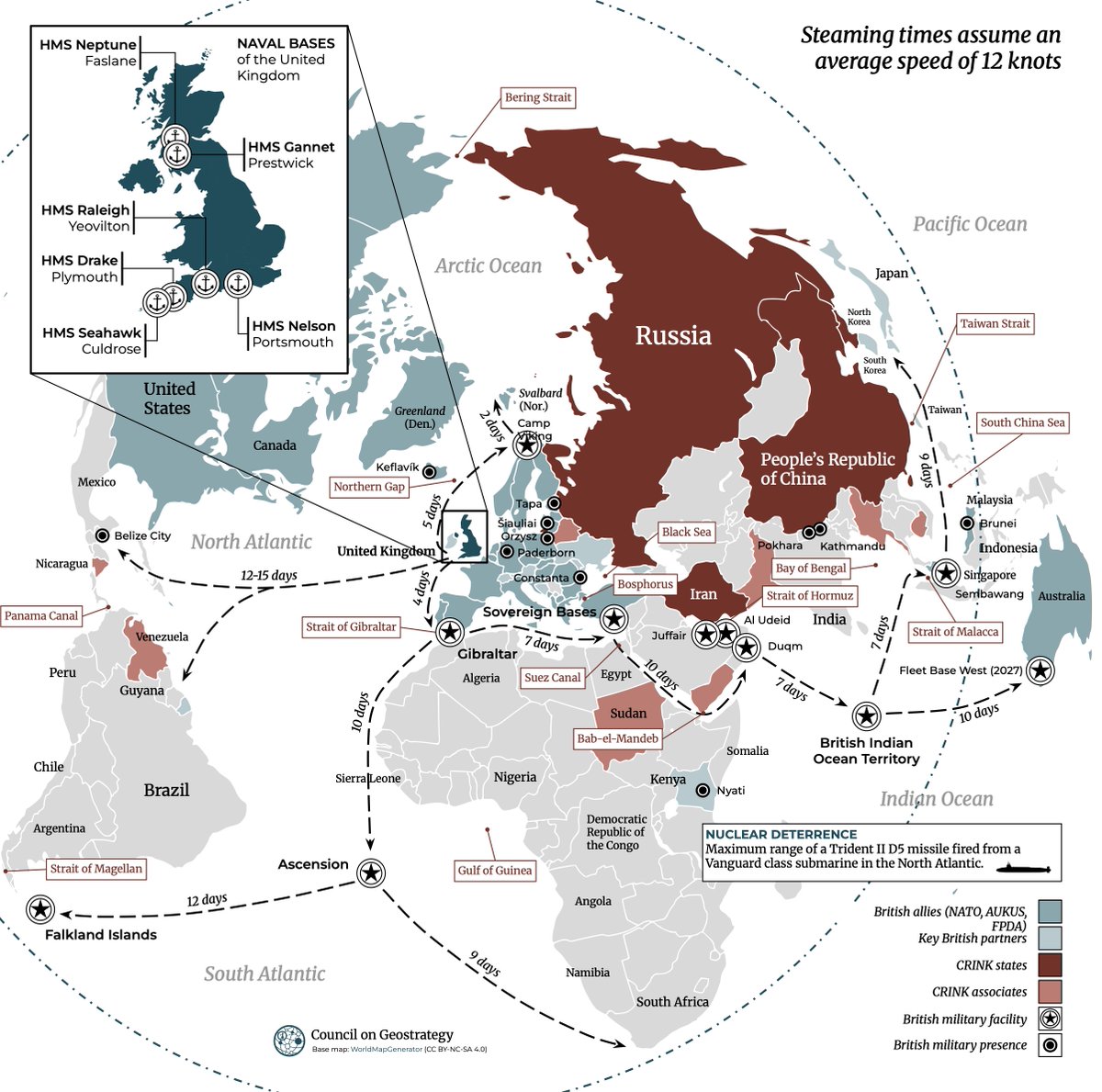
.@ConGeostrategy have published an excellent resource: Britain’s world: The strategy of security in twelve geopolitical maps.
https://t.co/rxyEDJPyCn
Experts argue the UK can reach a ‘truly enviable position’ in geopolitics by focusing nation’s armed forces and resources on the Royal Navy, especially in the Euro-Atlantic area and the Wider North;
Map shows how Russia’s shadow fleet can threaten 99% of UK data in undersea cables, with disruption warned as ‘akin to a major military attack’;
New publication finds collaboration between the ‘CRINK’ coalition (China, Russia, Iran, North Korea) poses a threat to the international order ‘as dangerous as the period before the First World War’.
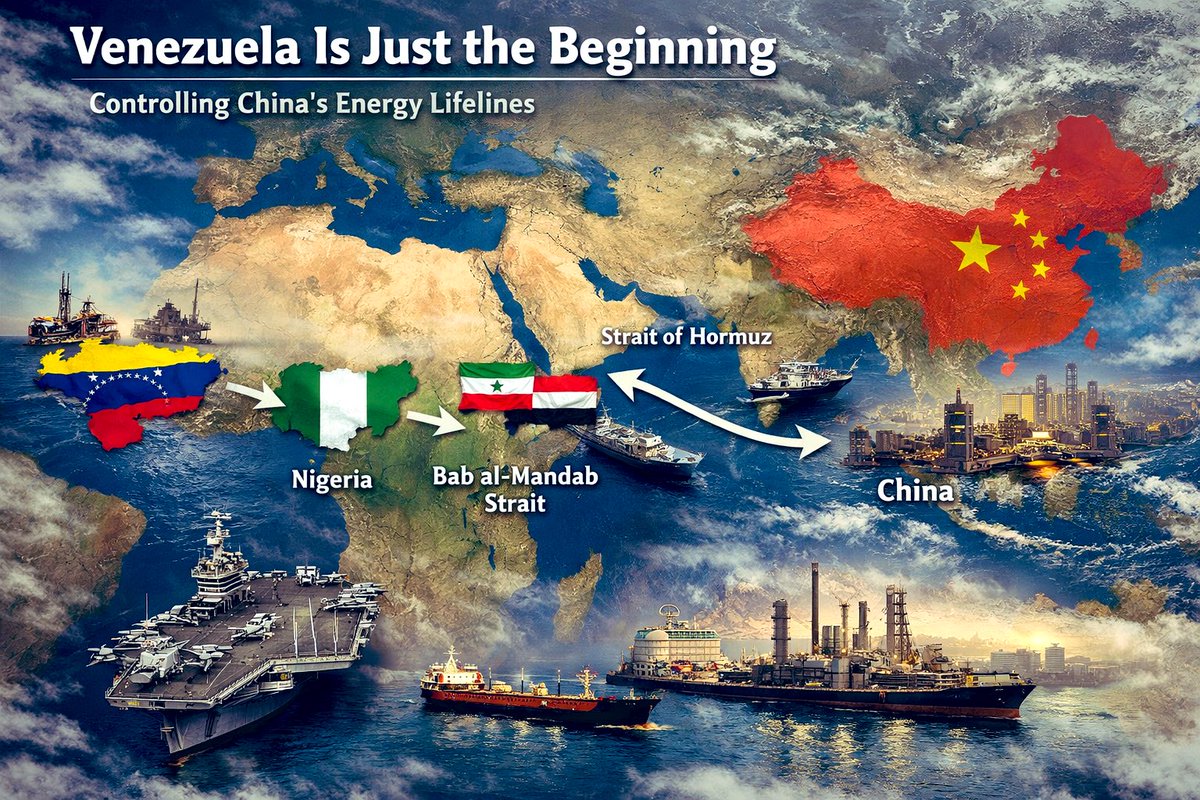
Venezuela Is Just the Beginning
The U.S. move in Venezuela isn’t about Maduro, it’s about controlling China’s energy lifelines.
By taking influence over Venezuela’s oil and aligning Nigeria under Western oversight, Washington is cutting China off from cheap, reliable supplies.
Bab al-Mandab is now effectively controlled from both sides, Somaliland and southern Yemen, while the Strait of Hormuz remains a potential pressure point: if Iran closes it, China’s economy could be seriously disrupted, while the U.S., controlling oil, shipping lanes, and trade routes, would remain largely insulated.
Control the supply, control the transit, and you control China’s economic lifeblood.
Venezuela is just the first test of this global strategy.
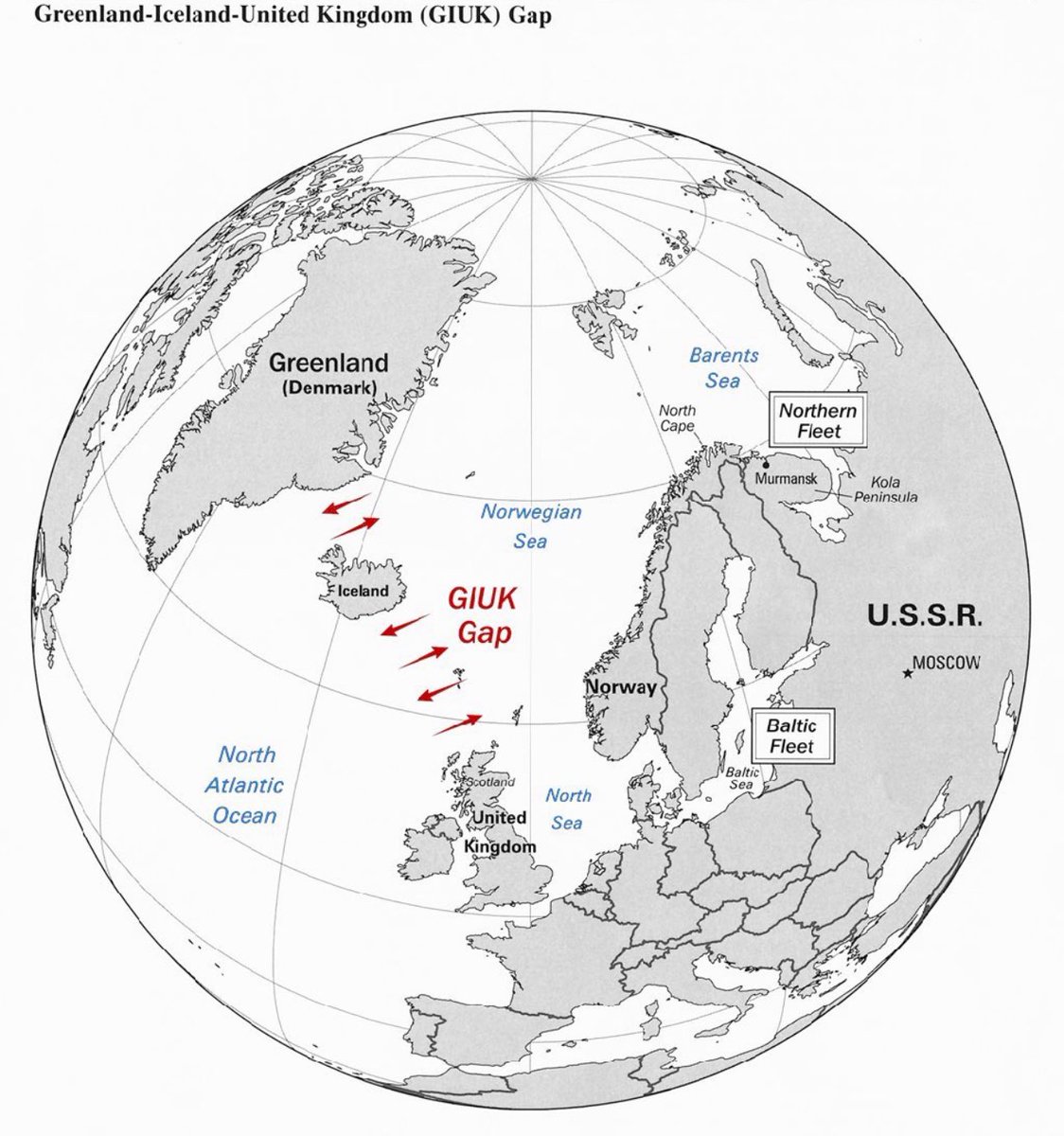
With U.S. forces seizing the Russian-flagged & Iranian-linked vessel Marinera (Bella 1) north of the Scottish coast, it’s worth mentioning the importance of the GIUK gap.
The Greenland-Iceland-United Kingdom Gap is the “defense wall” against Russian & Chinese submarines
Chinese Port Expansion in Africa
Colonialism 2.0?
This map highlights China's extensive maritime footprint across Africa:
Chinese-financed, developed, or managed port projects (dozens across the continent, from Morocco to South Africa).
- Heavy concentration along West Africa (e.g., Nigeria, Ghana, Côte d'Ivoire, Sierra Leone) and East Africa (Kenya, Tanzania, Mozambique).
- Strategic presence in chokepoints: Suez approaches (Egypt), Bab el-Mandeb (Djibouti), and Mozambique Channel.
- Several countries (shaded pink) have multiple viable dual-use ports.
- Gray-shaded countries have ongoing Chinese port projects.
The map illustrates #China's growing network of commercial #ports with clear dual-use (civilian and military) potential, enhancing Beijing's logistical reach and influence across #Africa and key global shipping lanes.
JUST IN: The United States has seized two “ghost fleet” tanker ships including a Russian-flagged tanker linked to Venezuela following a multi-week long pursuit.
“In two predawn operations today, the Coast Guard conducted back-to-back meticulously coordinated boarding of two “ghost fleet” tanker ships— one in the North Atlantic Sea and one in international waters near the Caribbean,” Secretary Kristi Noem said.
“Both vessels —the Motor Tanker Bella I and the Motor Taker Sophia—were either last docked in Venezuela or en route to it.”
“One of these tankers, Motor Tanker Bella I, has been trying to evade the Coast Guard for weeks, even changing its flag and painting a new name on the hull while being pursued, in a desperate and failed attempt to escape justice.”
“The heroic crew of the USCGC Munro pursued this vessel across the high seas and through treacherous storms— keeping diligent watch, and protecting our country with the determination and patriotism that make Americans proud…”