The Color Guesser game sounds dull but is great fun for a few minutes. You are giving the name of a color and have to pick the right color. The game gives you a proximity score. Even better here is data showing how the community of guessers did.
Play it here for free: https://t.co/1m4hTfFxZw
@LowHeroLodger Rest In Peace mein Lieber. Zehn Jahre warst du einer der vielen Wegbegleiter in der @stabiberlin - wir sehen uns auf der anderen Seite. 🎸
Behind the songs part 11:
Love Will Eat You Alive
Enjoy this talk through the writing process and then get your copy of the new limited double vinyl
Memories Under A Microscope
via https://t.co/4NqSovueGt
https://t.co/NR69P8GBfm
🎉 To celebrate #PokemonGOTour, we’re giving Trainers the chance to earn codes to encounter Unown X, Y, Z, and A!
Subscribe to any of our official Pokémon GO YouTube channels to help unlock Timed Research featuring Unown!
⭐ 2.5K subscribers → Unown X
⭐ 5K subscribers → Unown Y
⭐ 10K subscribers → Unown Z and A
📅 You have until 2/27 to help unlock the Timed Research.
Episode 3 of our breakfast pudding FAN edition podcast, Danielle, Bex and I chat for a full hour on our favourite @lostalone memories, our favourite shows, LostAlone tattoos, Mcfly and more
https://t.co/oQUdJfUopF
(This was recorded April 25 hence no chat about the new stuff)
@pest_imistisch@HerrRebelein Welche Studis? Also ganz in Ernst gefragt: Die Stabi hat eine andere Zielgruppe (Forschende, Wissenschaftler*innen und Allgemeinheit), es gibt genug Unix-Bibliotheken in Berlin, die teilweise relativ leer sind.
Folks, I don’t do this often, but I’m actually going to do a little giveaway for Now You See Me, Now You Don’t. I’ll pick 3 winners who repost this tweet. What do you get? A steelbook & signed poster by the entire cast. AKA I take care of my followers!
Toss a retweet to enter; window to enter is 24 hours.
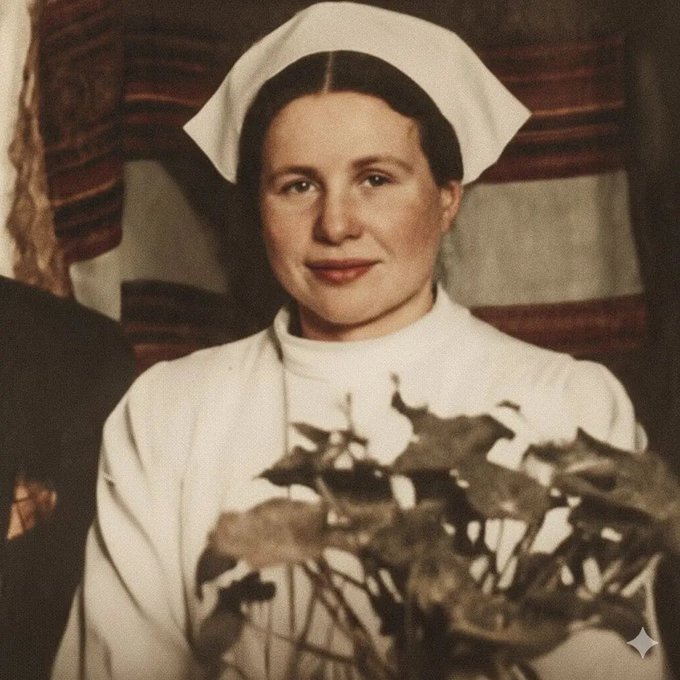
In the autumn of 1942, a slight, 32-year-old Polish social worker named Irena Sendler passed through the gates of the Warsaw Ghetto with a carpenter’s toolbox in her arms. Beneath the hammers and nails lay a drugged six-month-old infant, breathing softly, utterly silent. One cry would have meant instant death for both of them. Irena smiled at the guards; they waved her through. They never suspected that this quiet woman would repeat the journey 2,499 more times.
The ghetto was a slow-motion extermination. Starvation, disease, and random murder stalked every street. Jewish parents faced a choice no human being should ever have to make: keep their child and watch them waste away, or hand them to a stranger who promised a chance—however thin—at life.
Irena came officially to inspect for typhus. In reality, she came to steal children from death.
Babies left in toolboxes or ambulances under false bottoms. Toddlers sedated and tucked into potato sacks. Older children led by the hand through the stinking, lightless sewers while German boots marched overhead. “Not a sound,” she whispered as rats scurried past their feet.
She knew that the rescued children would be given new names, new religions, new families. Their pasts would vanish unless someone remembered. So, on fragile scraps of tissue paper, Irena wrote each child’s real name, their parents’ names, and their new hiding place. She rolled the papers tight, slipped them into glass jars, and buried them beneath an apple tree in a neighbor’s garden. If she were caught and killed, the truth might still survive.
She was caught.
On October 20, 1943, the Gestapo kicked in her door. They took her to Pawiak Prison and demanded the list. When she refused, they smashed both her legs with iron bars. Then her feet. Then her arms. For weeks the beatings continued. She never spoke. They scheduled her execution. On the appointed morning, guards dragged the broken woman from her cell.
Instead of a firing squad, she found herself outside the prison walls—alive. The Polish underground council Żegota had bribed a guard to mark her file “shot while trying to escape.” Officially dead, Irena Sendler limped back into the shadows to keep working.When the war finally ended, the first thing she did was dig up the jars under the apple tree. She spent years trying to return the children—now scattered across convents, farms, and foster homes—to whatever family might remain.
Almost no parents had survived. But the children had. Because of her, 2,500 Jewish boys and girls lived to grow up, to marry, to have children and grandchildren of their own—an entire secret branch of the human family tree that the Nazis never managed to cut down.For decades her story stayed buried deeper than the jars themselves. Then, in 1999, four high-school girls in rural Kansas stumbled across a brief mention of her name. They found the old woman still living quietly in Warsaw and brought her courage back into the light.
Journalists called her the greatest rescuer of the Holocaust. Irena only shook her head.“I could have saved more,” she said. “That regret follows me to the grave.”Irena Sendler—armed with nothing but a ghetto work permit, a toolbox, and a refusal to look away—proved that even in the heart of the worst evil humanity has ever devised, one determined person can still keep the darkness from winning completely.
This New York Times story is not paywalled, and it shows a second-by-second breakdown of what happened. Please scroll through it.
This is not what America, or anywhere, should be
https://t.co/fXbS3FOWZc