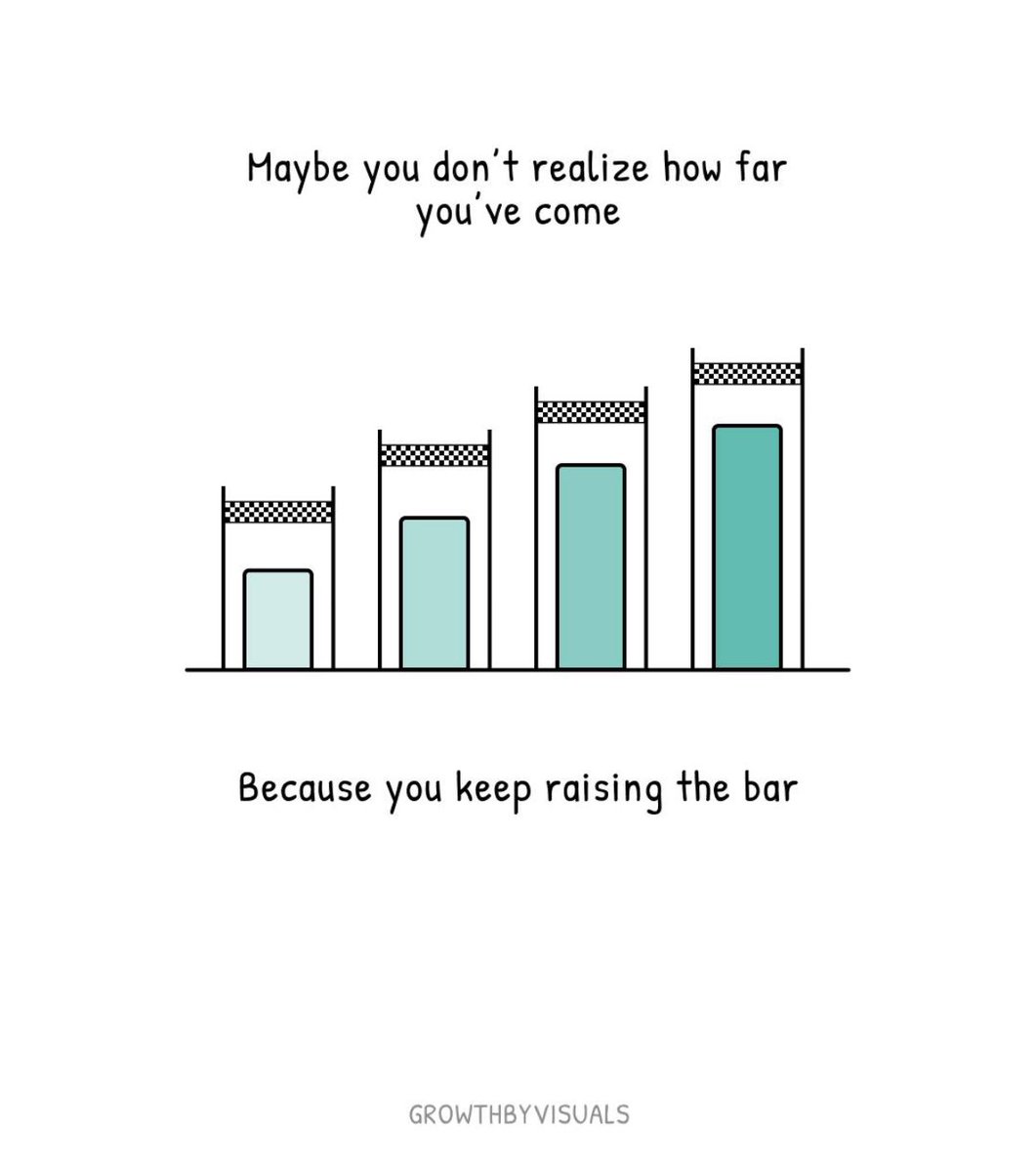
Quote from “There is no Antimemetics Division” - “We form these plans, and something unexpected happens, and the plans go out the window. And, under great pressure, we are forced to demonstrate creativity.”
@PatrickHeizer If it’s difficult to generalize the treatment for humans, can it be personalized for a human? Since it’s trivial to make a single mRNA vaccine, this could be the start of personalized medicine
Andreessen is describing an organizational physics problem that most people misread as a leadership platitude.
Every person inside a company who isn’t the CEO is being evaluated on execution against existing commitments. Their incentive is to protect current revenue, hit quarterly targets, and avoid blame for things that go wrong. New products threaten all three simultaneously. They cannibalize existing lines, they pull engineers off shipping commitments, and if they fail, the person who championed them gets punished while the person who said “we should focus” gets promoted.
This creates a specific organizational gravity. In a 10,000 person company, roughly 9,950 people wake up every morning with the rational incentive to prevent new things from happening. Product managers are measured on shipped features for the current product. Sales wants tools that close this quarter’s pipeline. Finance models next year based on this year’s revenue mix. Engineering leads protect their headcount by showing utilization against existing roadmaps.
The CEO is the only person in the entire org chart whose incentive structure rewards creation over maintenance. They’re the only one who can absorb the political cost of pulling 40 engineers off a revenue-generating product to build something with zero customers. They’re the only one who can tell the CFO that Q3 is going to look ugly because they’re funding a bet. They’re the only one who doesn’t get fired for a failed product launch.
This is why “product-led” companies die the moment the founder leaves. Look at Apple post-Jobs 1985-1997. Look at Microsoft from 2000-2014 under Ballmer. Revenues grew. The stock was flat for 14 years. The company shipped zero new product categories. Ballmer optimized the existing machine. Nadella came in and forced Azure, forced the cloud pivot, forced the GitHub acquisition, forced the OpenAI bet. Every one of those moves had internal opposition. Every one required someone with termination-proof conviction.
The “wills them into existence” framing is the accurate part. Will as in overriding the immune system of a large organization that treats new products the way a body treats a foreign organ. The CEO is the only one with enough immunosuppressant authority to keep the transplant alive long enough to take.
tl;dr Today, we’re announcing our new company @EntireHQ to build the next developer platform for agent–human collaboration. Open, scalable, independent, and backed by a $60M seed round. Plus, we are shipping Checkpoints to automatically capture agent context.
In the last three months, the fundamental role of the software developer has been refactored. The incredible improvements from Anthropic, Google, and OpenAI on their latest models made coding agents so good, in many situations it’s easier now to prompt than to write code yourself. The terminal has become the new center of gravity on our computers again. The best engineers can run a dozen agents at once.
Yet, we still depend on a software development lifecycle that makes code in files and folders the central artifact, in repositories and in pull requests. The concept of understanding and reviewing code is a dying paradigm. It’s going to be replaced by a workflow that starts with intent and ends with outcomes expressed in natural language, product and business metrics, as well as assertions to validate correctness.
This is the purpose of our new company @EntireHQ, to build the world's next developer platform where agents and humans can collaborate, learn, and ship together. A platform that will be open, scalable, and independent for every developer, no matter which agent or model you use.
Our vision is centered on three core components: 1) A Git-compatible database that unifies code, intent, constraints, and reasoning in a single version-controlled system. 2) A universal semantic reasoning layer that enables multi-agent coordination through the context graph. 3) An AI-native user interface that reinvents the software development lifecycle for agent–human collaboration.
In pursuit of this vision, we’re proud to be backed by a $60M seed round led by @felicis, with support from @MadronaVentures, @m12VC, @BasisSet, @20vcFund, @CherryVentures, @picuscap, and @Global_Founders alongside a global group of builders and operators, including @GergelyOrosz, @theo, Jerry Yang, @oliveur, @garrytan, and many others, who all recognize that the time is now to take such a big swing.
And we begin shipping today with Checkpoints, a new primitive that automatically captures agent context as first-class, versioned data in Git. When you commit code generated by an agent, Checkpoints captures the full session alongside the commit: the transcript, prompts, files touched, token usage, tool calls, and more. It’s our first crack at the semantic layer, as open source CLI on GitHub.
From here on out, no more stealth. We are building in the open and as open source! More to come soon, in the meantime check out all the details in our blog.
Having seen AI platform teams struggle with SLURM as they scale, this post hits home.
Getting the same ssh/jupyter workflows on any cloud/k8s is a game changer - Abridge moves 10x faster with it.
Shout out to @sisilmehta and the incredible Abridge team for sharing this story!
Pattern I’m seeing now - most foundation models are built by a handful companies. They also allow Finetuning these models and eventually RL on these models - So then does the business model of inference SaaS companies work in the long term?
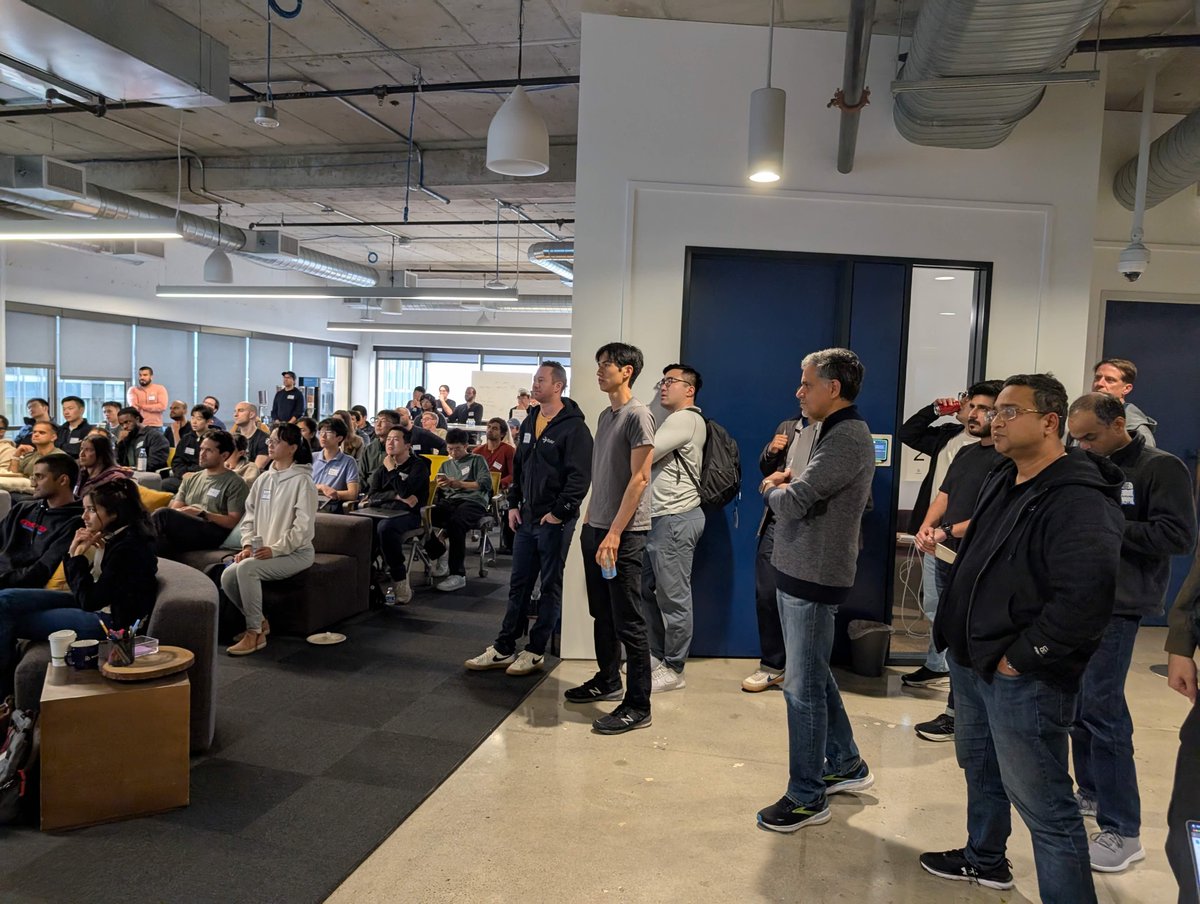
What a night! Huge thanks to everyone who came out to our first SkyPilot meetup — a packed house of builders and insightful convos.💥
Thanks to all speakers (@sisilmehta@AbridgeHQ, @woosuk_k@vllm_project, @istoica05, et al) for sharing SkyPilot use cases, and @anyscalecompute for hosting.
Grateful for this amazing community. More soon! 🙌