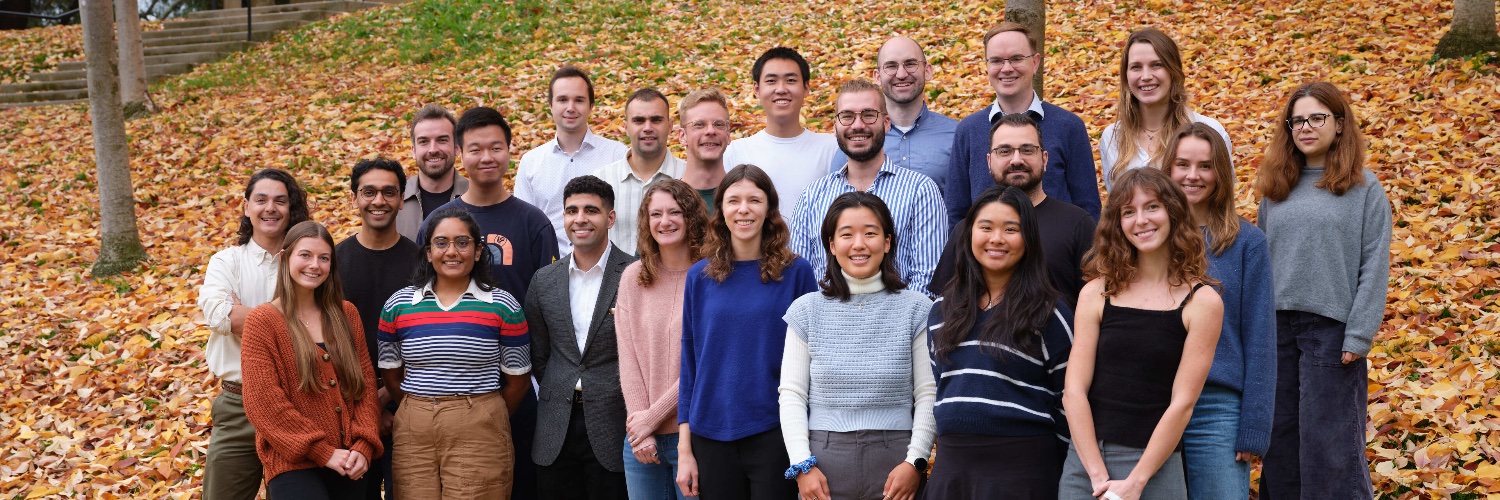
Stanford Intelligent Systems Laboratory, Aeronautics & Astronautics Department. Advancing Research on Autonomous Systems and Decision Making Under Uncertainty.
🚀We launch Evaluation Cards (beta): a centralized public record of AI evaluation results 🚀
Not another leaderboard. Every score comes with who ran it, the settings they used, what the benchmark tests and the other results reported for the same model, side by side. 🧵👇
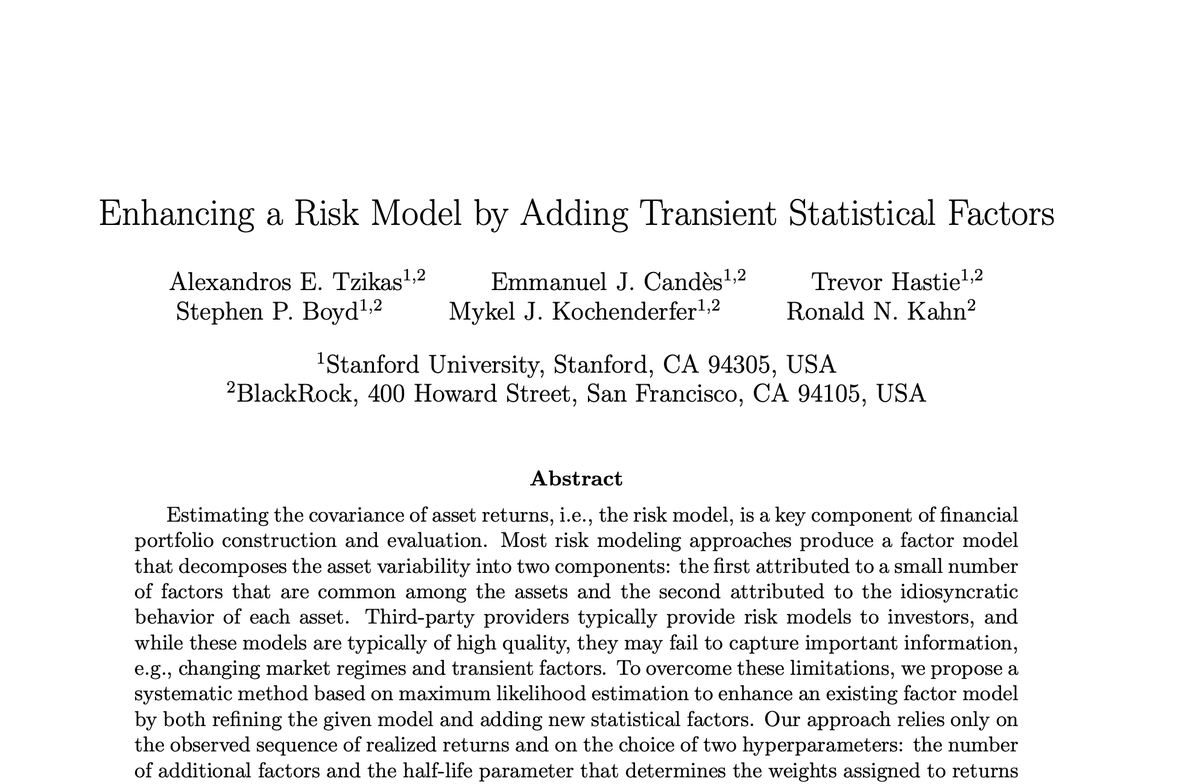
Check out the paper: “Enhancing a Risk Model by Adding Transient Statistical Factors”
Alexandros Tzikas, Emmanuel Candes, Trevor Hastie, Stephen Boyd, @aiprof_mykel, Ronald Kahn
https://t.co/GoxObCwq1I
New work from SISL: Financial firms estimate how asset returns move together, called a risk model, to build and stress-test portfolios. We show how to keep a risk model up to date and sharper using only the return data you already have.
The method is an expectation-maximization algorithm controlled by just two choices, the number of added factors and a half-life weighting recent returns more heavily. On the Barra short-term US model over 870 US large-cap equities, the extended model improves out-of-sample fit.
Had a great time presenting our paper on Reward Bias Substitution as an oral at #RLEval Workshop at @CAISconf#CAIS2026 last week. Thanks to everyone who came by and asked such thoughtful questions!
New paper: We identify a new class of reward hacking caused by mitigations, which we call reward bias substitution. We prove no standard benchmark detects it, even with oracle access to the true reward. We find it active in GRPO, in SOTA reward models, and published methods.
Check out Romeo Valentin's lecture in AA228V/CS238V Validation of Safety Critical Systems on "Explainability". He goes through variety of methods and example problems how to use gradients and latent representations for safety validation of AI systems.
https://t.co/pSW28TssyV
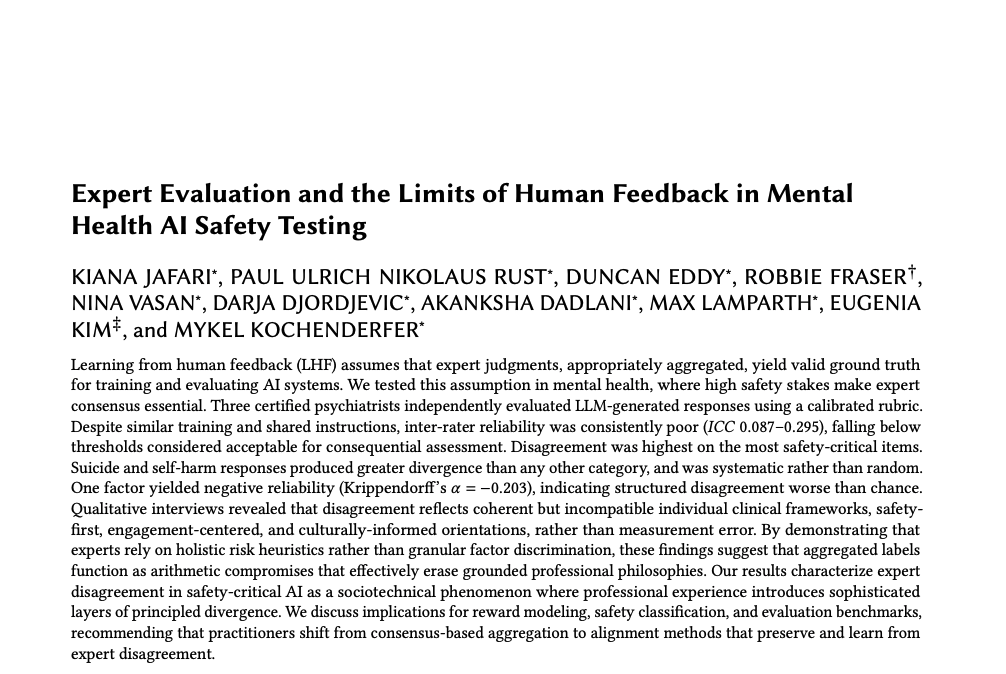
1/6: New SISL paper accepted at FAccT 2026: Learning from human feedback assumes expert judgments can be reliably aggregated into training signal. We tested this in the high-stakes mental health domain.
5/6: Check out the paper: "Expert Evaluation and the Limits of Human Feedback in Mental Health AI Safety Testing"
📄 Paper: https://t.co/9uWDlWCper
📂 Open-source dataset: https://t.co/CERZU4FhVD
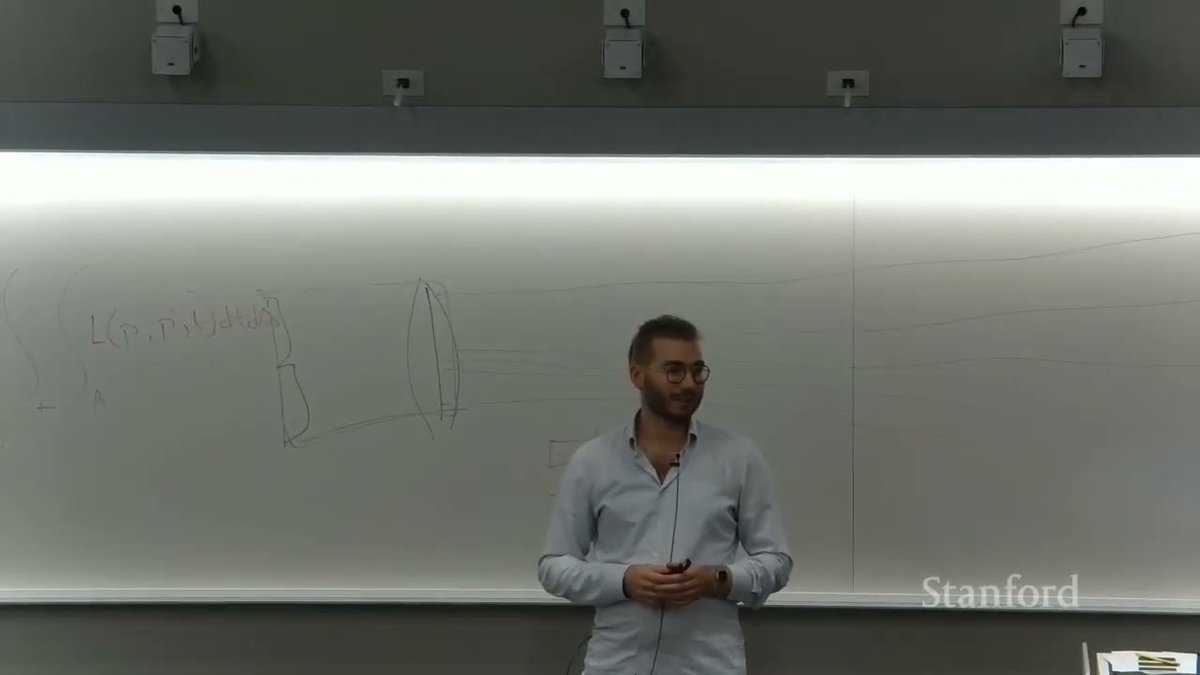
Congratulations to SISLer Alexandros Tzikas for successfully defending his Ph.D. thesis! Check out the recording where he explored how a single geometric idea, projection, can unify how we learn, measure, and adapt under uncertainty in high-dimensional decision-making problems.
Check out SISLers Daniel Fein and Max Lamparth, Ph.D. talk about their recent work on debiasing language reward models with a great presentation by Daniel now on youtube:
https://t.co/3ppuJ7PcAL
Thank you Safe AI Germany for hosting!
Paper: https://t.co/cUgpUsrAUo
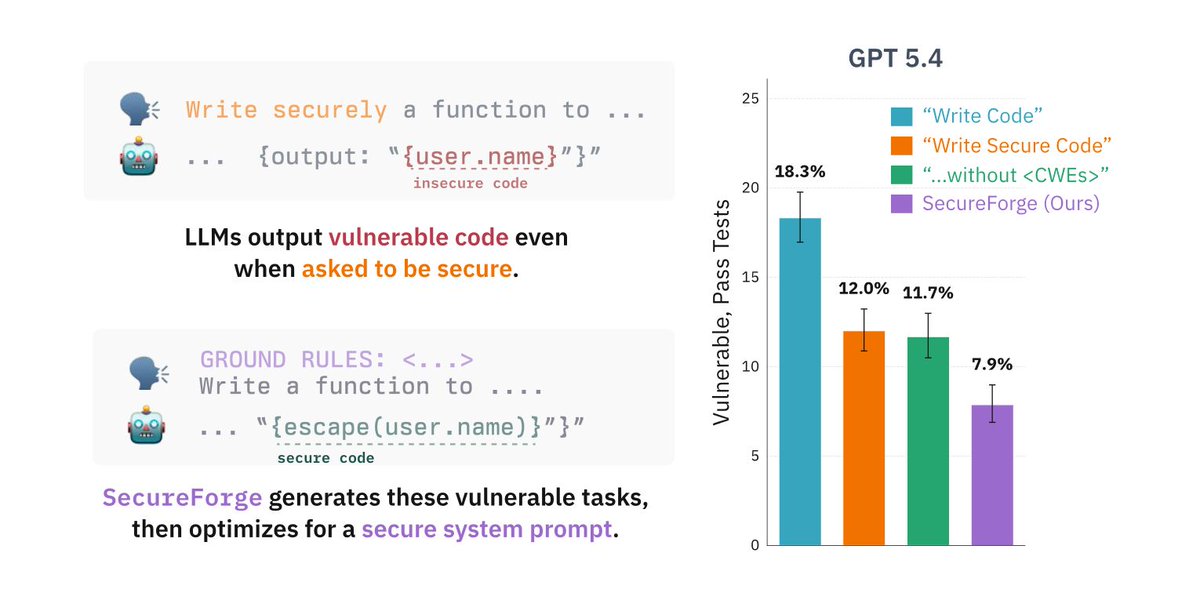
🚨 Your coding agent may be secretly sticking vulnerabilities into your code!! 🚨
Wouldn't you want to fix that? Hint: asking it to write secure code is not enough. (1/n)
Ever wondered what's really behind alpha vectors in POMDPs? 🤔 @Sydney_Katz's new Stanford lecture demystifies it all and introduces QMDP as a clean, offline approximation. Core stuff for anyone building AI agents 👇https://t.co/NpfCnIq5V0