@jacobi_torsten@FrancoisChauba1 interesting. my supervisor did some work on it a long time ago. the randomness in the connections makes the network hard to inspect.
The little things that show how the Codex team cares. Much easier to see token usage vs. the competitor that shall not be named. It's right there, 2 clicks max. Thanks @thsottiaux & the Codex team
@balajis NS has a protocol for Burn (intervals, reps) but Learn is mostly unstructured. Why isn't there an interval-training equivalent for thinking? I've adapted the focused-burst + rest structure for thinking https://t.co/yRIGDRvkjF. Could it work at NS?
@dwarkesh_sp@reinerpope In the lecture, somewhere around 1h 40m, @reinerpope mentions why outputs of the kv heads and not q heads are stored. This note goes spells it out in a bit more detail:
https://t.co/54Fz7MX6vB
5/
And that's why you never cache Q: the next prediction only uses the newest query. The old ones are never asked anything again.
I'm doing a short live walkthrough of the full derivation 15 mins.
https://t.co/hKMFwfHQxb
4/
For the newest token you need: one new query, and all the past keys and values.
But the old keys and values don't change when you append a token. Appending token t+1 doesn't touch it.
So you save them once and reuse them. That saved memory is the KV cache.
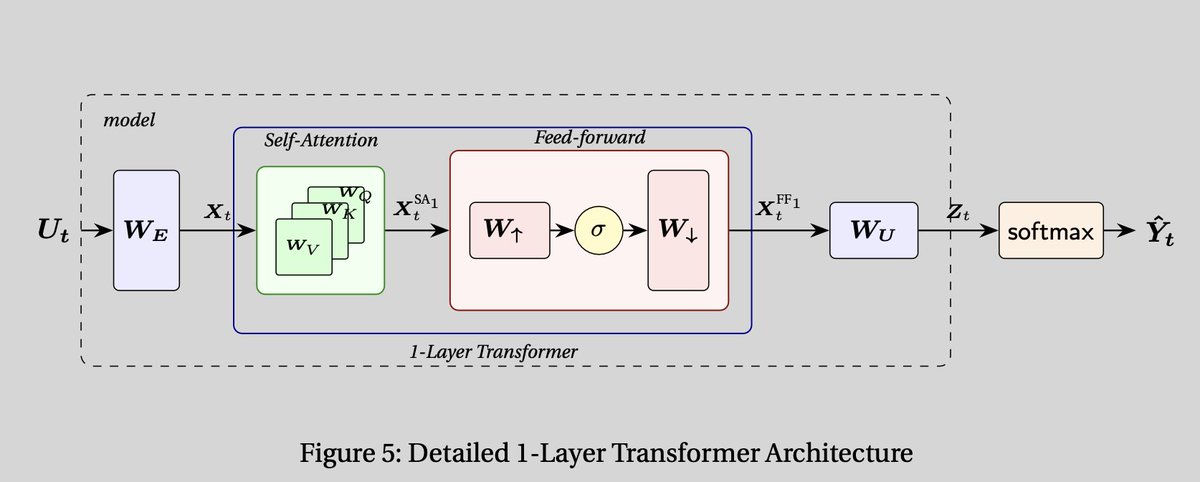
My notes on Why KV cache and not QKV cache. Explained using a simple 1-Layer Transformer. Using karpathy's setup (ignoring the Batch dimension)
https://t.co/UmJLR1RnXG
@garrytan@RickRubin@tetranow Listening to this just after doing HDIT in San Francisco is the way 🇺🇸
(For HDIT see this - https://t.co/pdJW0NEdat - and talk to @sithankanna)