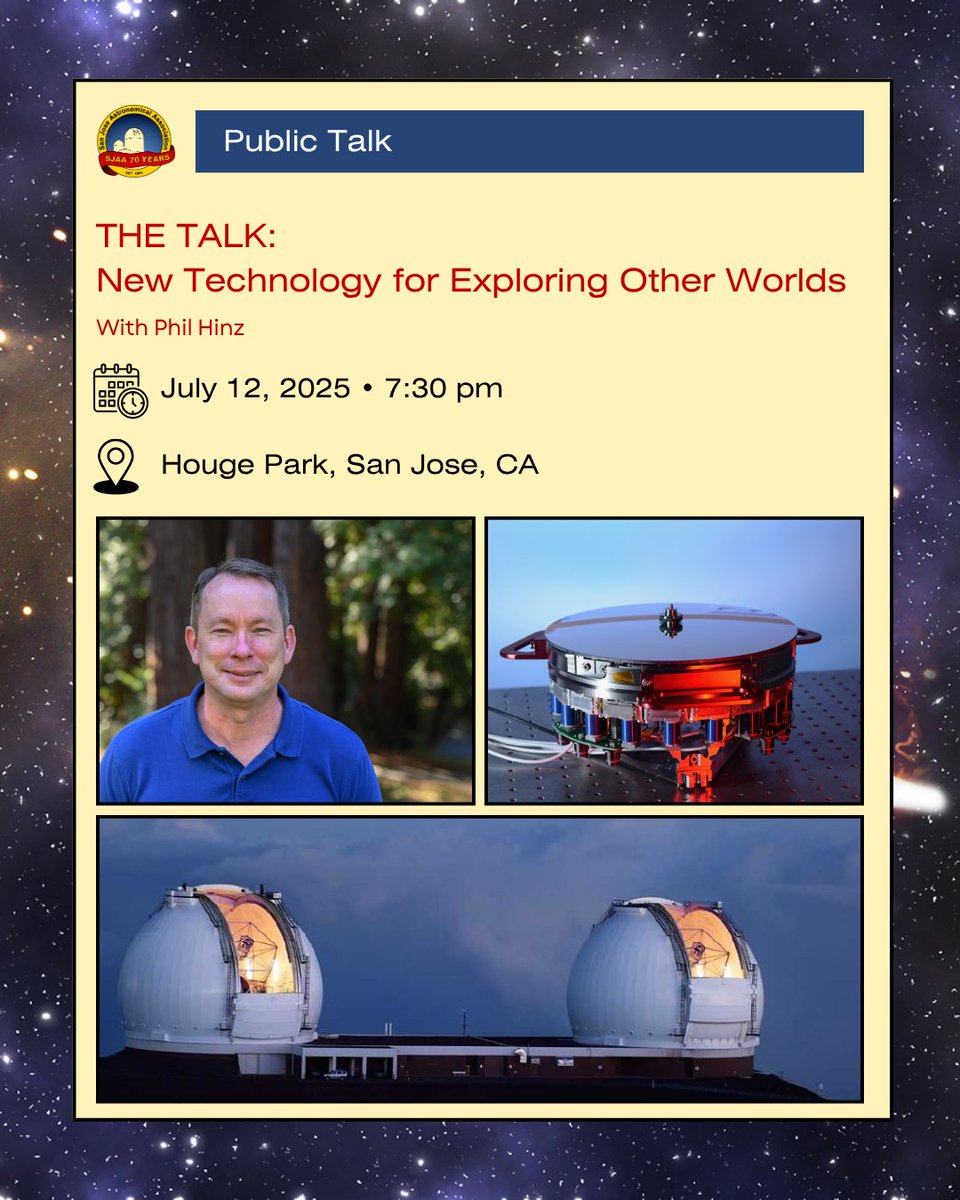
PUBLIC TALK: July 12, 2025, 7:30 pm
Phil Hinz will discuss the technology development being carried out at the UC Observatories to integrate adaptive optics (AO) and the development of large segmented mirror telescopes (LSMT).
Sign up: https://t.co/LbPJ51PI7c
#astronomy
Exciting #comet news! ☄️ A potentially large Kreutz 'sungrazer' comet, discovered 13 Jan & currently registered as 6AC4721 by @MinorPlanetCtr, is speeding its way to a perihelion encounter during the first week of April.
The story so far👉 https://t.co/6qk4QwVEep
📷 Alan Hale
A new week! Member Brad Haakenson took this picture of Messier 104, the Sombrero Galaxy, during the recent new moon using fifty minutes of data from his Vaonis Stellina telescope. Seen edge-on, astronomers are unsure if M104 is a spiral or an elliptical galaxy. #astrophotography
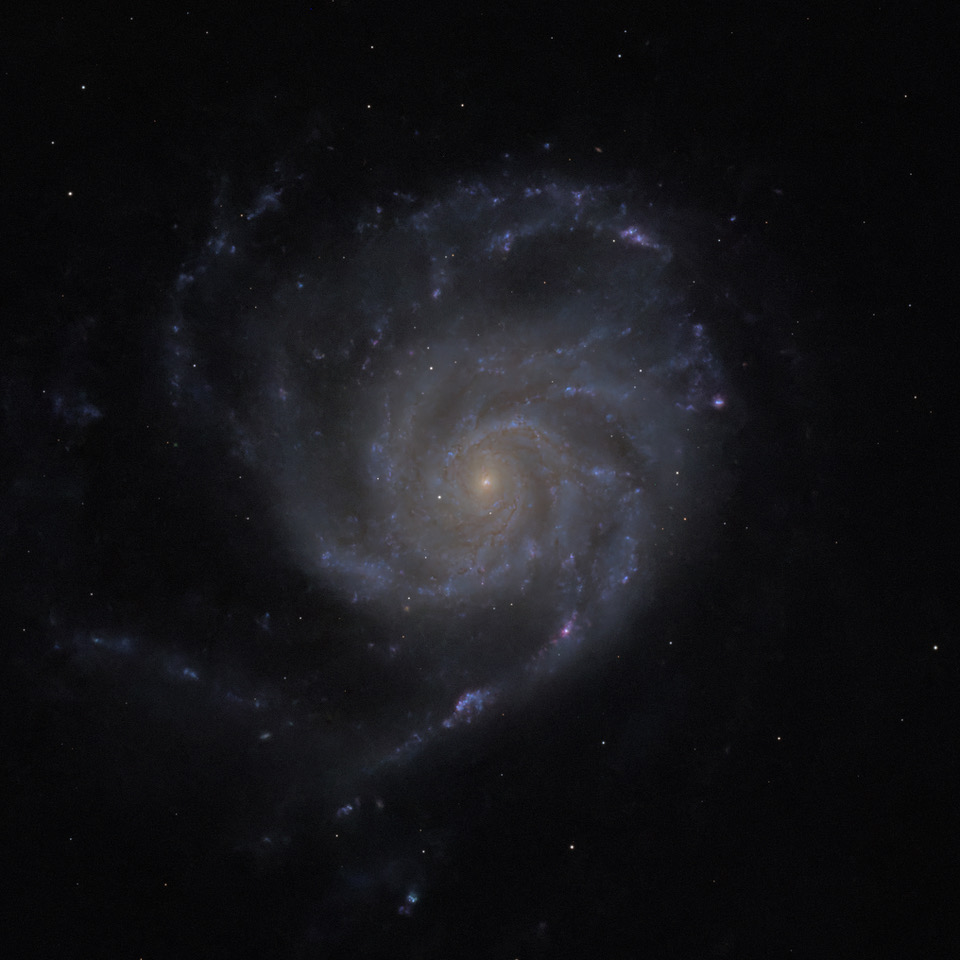
Member Richard Seely processed 18 minutes of data captured from his new William Optics Pleiades 181 telescope (congrats on first light!) of M101, the Pinwheel Galaxy, while at Rancho Cañada del Oro Open Space Preserve last month.
Happy Friday! Member Kal Krishnan took this image of the Seagull Nebula (IC 2177) in March at Rancho Cañada del Oro Open Space Preserve. Because it is such a large object, he only used his 200mm Canon Prime lens (no scope) and processed it recently. #Astrophotography
This weekend, we are holding our semiannual "All-About-Telescopes Workshop!" This event is open to all members and the public and starts at 1:30 p.m. on Sunday, May 18th.
Details: https://t.co/pQdwGpTbMA
𝗛𝗼𝘄 𝗱𝗼 𝗮𝘀𝘁𝗿𝗼𝗻𝗼𝗺𝗲𝗿𝘀 𝘂𝘀𝗲 𝗰𝗼𝗹𝗼𝗿 𝘁𝗼 𝗱𝗲𝗰𝗼𝗱𝗲 𝘁𝗵𝗲 𝘂𝗻𝗶𝘃𝗲𝗿𝘀𝗲?
Join our free, online, interactive workshop to explore filters, light, and hands-on astronomy with just your phone & paper!
Wed, May 21 @ 6p ET
Register: https://t.co/pv2LP2UQmY
Tonight is a great night for some lunar photography! The moment of last quarter moon will fall at 4:59 AM PDT. It’ll rise after midnight and set around noon. Look for it high in the sky before dawn.
https://t.co/BtX98YyXln
𝗛𝗼𝘄 𝗱𝗼 𝗮𝘀𝘁𝗿𝗼𝗻𝗼𝗺𝗲𝗿𝘀 𝘂𝘀𝗲 𝗰𝗼𝗹𝗼𝗿 𝘁𝗼 𝗱𝗲𝗰𝗼𝗱𝗲 𝘁𝗵𝗲 𝘂𝗻𝗶𝘃𝗲𝗿𝘀𝗲?
Join our free, online, interactive workshop to explore filters, light, and hands-on astronomy with just your phone & paper!
Wed, May 21 @ 6p ET
Register: https://t.co/pv2LP2UQmY
This weekend, we are holding our semiannual "All-About-Telescopes Workshop!" This event is open to all members and the public and starts at 1:30 p.m. on Sunday, May 18th.
Details: https://t.co/pQdwGpTbMA
Unable to attend our May talk? We have a video! Our guest speaker, Dr. Bryan Gaensler, takes us on a journey through the discovery and rediscovery of Fast Radio Bursts, and the state of the art in detecting and analyzing them.
https://t.co/Dm9uj7m213
This weekend, we are holding our semiannual "All-About-Telescopes Workshop!" This event is open to all members and the public and starts at 1:30 p.m. on Sunday, May 18th.
Details: https://t.co/pQdwGpTbMA
TONIGHT
h/t @earthskyscience
This month’s full moon is called the Flower Moon. All full moons have unique characteristics, and this one is particularly interesting … What is special about this full moon? It’s a micromoon, or very distant full moon.
https://t.co/BtX98YypvP
PUBLIC TALK: May 10, 2025, 7:30 pm
Professor Bryan Gaensler will explain how fast radio bursts were discovered, why they’re so enigmatic, and how they could be key to understanding some of the fundamental properties of the Universe.
Sign up: https://t.co/sRngPoivmd
During the last week of April, member Francesco Meschia collected a grand total of 24 hours of light (10 hours in L, 10 hours in RGB, and 4 hours in H-alpha) from the pair of peculiar galaxies NGC 4631 and NGC 4656, known as the Whale and the Hockey Stick galaxies.
PUBLIC TALK: May 10, 2025, 7:30 pm
Professor Bryan Gaensler will explain how fast radio bursts were discovered, why they’re so enigmatic, and how they could be key to understanding some of the fundamental properties of the Universe.
Sign up: https://t.co/sRngPoivmd
Visible planets and night sky guide for April and May
Tonight, see Jupiter near the Moon. Then, the Eta Aquariids shower peaks May 5-6. May's full moon is the Full Flower Moon on May 12-13.
Plus so much more!
https://t.co/BtX98YyXln
PUBLIC TALK: May 10, 2025, 7:30 pm
Professor Bryan Gaensler will explain how fast radio bursts were discovered, why they’re so enigmatic, and how they could be key to understanding some of the fundamental properties of the Universe.
Sign up: https://t.co/sRngPoivmd
Join the NASA Night Sky Network on Wednesday, April 16, 2025, at 6:00 PM Pacific Time (9:00 PM Eastern) along with Dr. David Williams, where we’ll discuss the current status of NASA’s Psyche Mission.
YouTube Livestream: https://t.co/uWVeKizxpg