I moved from New York to San Francisco after making the decision in just two weeks (thanks to @vincentzhu for planting the seed last year, @anamitra for pushing me, and Jums for the support)
It was a huge, scary leap months ago, but it’s been nothing short of phenomenal since
Now I’d love to help someone else make the move
If you’re an engineer/technical leader in NY who wants to start a company in SF, DM me. I’ll be in NY from Sat, Oct 31 through Fri, Nov 6 -- I’d love to meet, hear what you’re thinking about building, and share anything useful from my own move
And if you’re not ready to found a company but are considering joining an early-stage startup in SF, reach out anyway
The energy and ambition in SF is unmatched right now. If you’re curious about being part of it, let’s jam!
Largely confirms what I’m seeing across companies @SavneetS
More and more people are driving via MCP/agents, and so the interface, while initially important, rapidly shifts to agentic legibility
“the brand is the sum of your quote latency, claims accuracy, uptime, fee transparency, and the machine-readable surface you expose”
@ethanehrenberg@CamiloBAcosta@gamechangersvc This is basically the pressure for mark ups and ‘hitting the AI winner’ inside the ranks of Series A+ firms… But new early-growth firms (eg Ventana) are popping up to fund these cos nowadays, bullish on that strategy
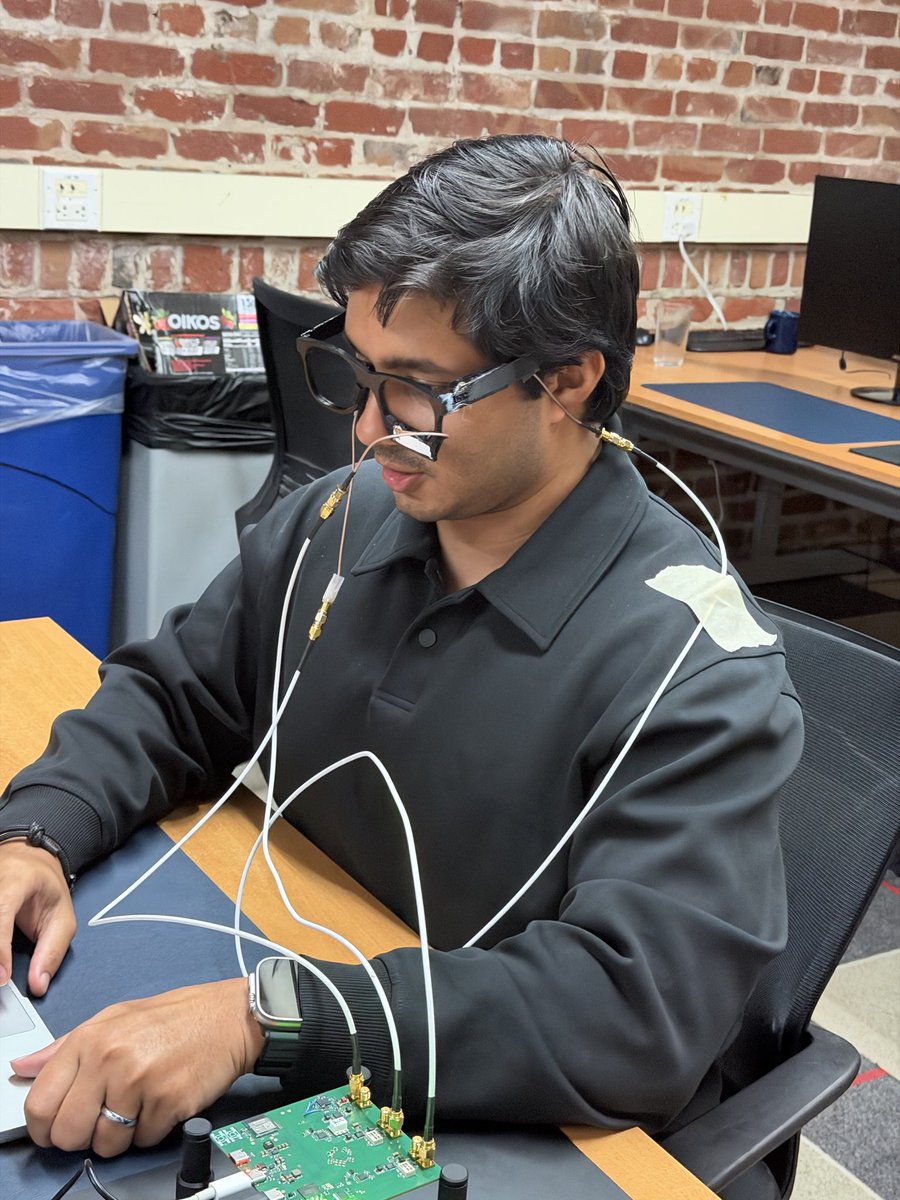
We’ve raised $1.3M from YC & Afore Capital so you never have to type or speak again.
Typing is slow. Talking into your computer is awkward. Subvocal fixes both
Our glasses give you the speed of speech without you making a sound or touching a keyboard.
It tracks your internal speech muscles with non-contact sensing and decodes silent, almost invisible mouthing into text at more than 200 words/min.
Pre-orders are now live at:
https://t.co/DzrwIpg3GR
@jaredzel@JasonrShuman@JoshuaKushner@jon_kogan So smart. It’s really hard to recreate the trust and promise of a ‘secured by ADT’ placard in your front yard. Partly why I love the Watchful play
Startup investing hierarchy:
- Be in the right company
- Own enough of it to matter for your fund size
- Pay a sensible price
And it's hard to skip a step. Ownership in the wrong company doesn’t work, and a great price on a sub-scale position doesn't move the needle either
Lots of signal in the type of people a company attracts. @javiercorrea was an outlier even in college and I’m not surprised he’s early on a rocket ship - congratulations!
Today, @FoundryRobotics raised an oversubscribed $100M Series A.
In January, I wrote a thesis on physical AI and sent it to @adarshkulkarni. A month later, I joined as employee #4.
The thesis hasn't changed. And now we get to build it at scale.
VC is “get rich slow.”
We are living in a “get rich quick” market cycle, which also seems to be the greatest wealth creation period in human history.
This does two things when you game theory out a career:
1) If you don’t think you’re a top-tier investor, it’s better to leave ASAP while startups are still GRQ.
2) If you think you are [smart enough to be a] top-tier investor, you likely also think you’re smart enough to GRQ via startups with fewer blockers/less bureaucracy.
So — unless you think you are [smart enough to be a] a top-tier investor & you are not held back in your development such that you miss out on the economics in the greatest wealth creation period in human history while “paying your dues” — it makes perfect sense to join or start a startup.
@credistick You’d be surprised - a wide array actually for biz dev/GTM, chief of staff and ops roles, and in some occasions FDE since some are engineers or former product folks
So more VCs should look like @deedydas to evaluate these product risks, and not just read usage patterns/old playbooks. If you're more of the latter, you better go earlier or build a raison d'être. In this asset class, the company needs to choose you as much as you pick them!
The way startups are building nowadays is different from a few years ago. Founders ran the lean playbook and do the customer discovery -> MVP -> iterate on usage process
But that only worked when building was hard and demand was unknown. Imo demand is 'easy' to discover nowadays, but the harder part is to build trust that you can deliver the result or build the thing itself
We're back to the derisk the technical 'white-hot risk' playbook from vintage Tom Perkins / Genentech
Today, I think the first milestone is actually more of an experiment vs. a product. Name the technical breakthrough and proof points to get there (this is higher risk but whatever, we're all risk on! for now...)
The good news is that the loop is 10x faster than in 1970s. Simulation, rented compute, contract manufacturing etc. can help you prove things out faster