Digitally Built Engineer, historian, infrastructure enthusiast, CSM/RSWO/SO3 & professional sillyman. NED @COMobileIT & Digital Advisory #Sapper#BIMbrew
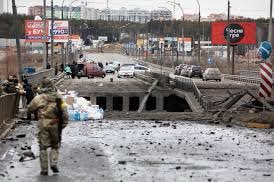
The National Infrastructure of Ukraine is under attack & understanding what is Critical & what is Vulnerable will help them prioritise reconstruction & protection from future disasters.
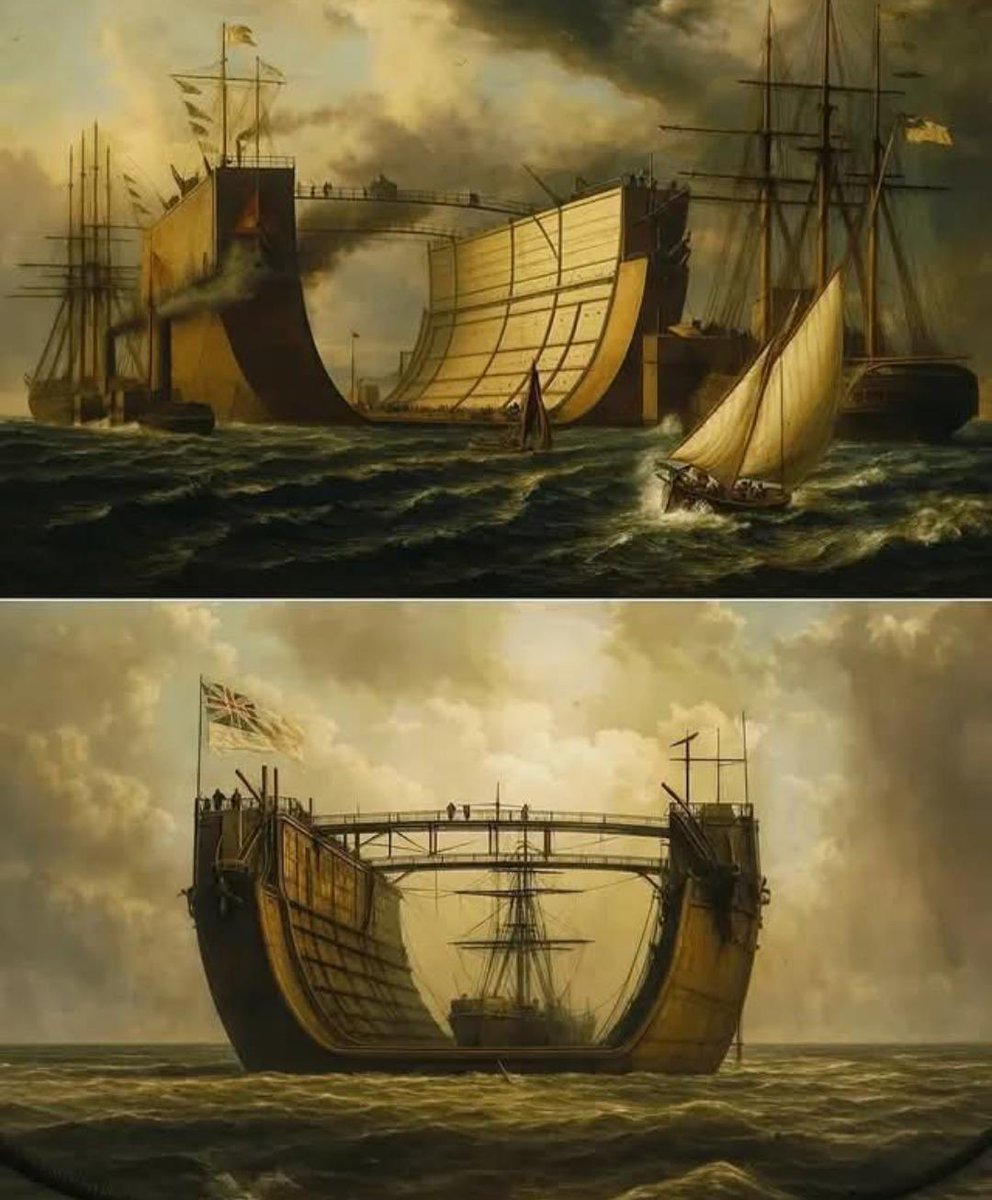
The Royal Navy has a long history of building Floating Dry Docks to maintain the Fleet around the world. In the 1869, the world’s largest floating Dry Dock was towed across the Atlantic to Bermuda to support the Ironclads which at the time was the largest ever built. 🧵1/3
The Home Guard protected bridges, railways, reservoirs & power stations. Today’s threats look different:
Drones.
Sabotage.
Cyber attacks.
Coordinated disruption.
"I don't know how much value I have in this universe, but I do know that I’ve made a few people happier than they would have been without me. And as long as I know that, I’m as rich as I’ll ever need to be."
- I'm with you Mr Robin Williams!
🇬🇧 In chains..
An ancient Briton stood before the slave empire of Rome. 🇮🇹
And asked them a question that shamed them into silence. ❓
His name was Caratacus.
His people called themselves the Pretannoi. Greek explorers wrote their name down in 325 BC. The Romans would later call them Britanni.
The name of this island was older than the empire that came to break it.
⚔️ In 43 AD, Rome invaded. Caratacus and his people fought. They lost their lands.
But Caratacus did not stop. He fled west to the mountains of what is now Wales. He rallied two more tribes. The Silures and the Ordovices.
For 9 years he fought Rome from the Welsh mountains. The Romans called him the most dangerous enemy in Britain.
In 51 AD they finally cornered him. His army was destroyed. He fled north for sanctuary and was put in chains and given to Rome.
They marched him 1,500 miles. His wife, his daughter, his brothers, all in chains.
The Romans expected him to beg. They had heard the others beg.
🏛️ They brought him before the Roman Senate. The most powerful body of men in the known world. And one Briton stood before them in chains.
He spoke:
"Had your ancestors been more moderate, I might have come to this city as a friend, not a captive."
"Why, when you wish to rule the world, must it follow that the world should welcome slavery?"
"Grant me life, and I shall be an everlasting example of your mercy."
The Senate sat in silence.
Claudius ordered his chains struck off.
The Briton who had fought Rome for 9 years would live the rest of his life a free man in the heart of it.
He was the first Briton on record to refuse Slavery. He would not be the last.
⚖️ In 1772 a London court ruled no man could be held as a slave on English soil.
⚖️ In 1807 the House of Commons banned the slave trade.
🔥 The slave empire of Rome could not make the world welcome Slavery. And the British have been refusing it ever since.
━━━━━━━━━━━━━━
2,000 years on, his question still stands in us.
Help us carry it further. 👇🙏
👉 https://t.co/rih7iKwnvf 👈
Be part of us. ☝️🇬🇧
Be Proud Of Us. 🙏🇬🇧
“Congratulations, Australia! You have just trumped Canada (aka Tranada to some of us) on gender madness – and laughable though it may seem, it really isn’t funny. This madness must end” - @bindelj
If you want to hear more about infrastructure resilience analysis & will be at the Excel centre next week for DCW/ Geo Business - I shall be presenting at 15:30 on the 3rd on the Infrastructure & Utilities stage!
#GEOBusiness#DCW#Resilience#Infrastructure
With a heatwave predicted over the next few days, the need for providing fresh water is even more critical for our precious wildlife. Please help if you can, providing fresh water in clean shallow heavy dishes will help to save so many lives. Thank you 🙏 #hedgehog#wildlife
The £20m loan taken out to compensate slave owners when slavery was abolished across the British Empire in 1835 wasn't fully paid off by UK taxpayers until 2015
In 1827, Michael Faraday told him to patent it. 🇬🇧
He refused.
He thought the invention should belong to mankind. 🙏
His name was John Walker. An Englishman from Stockton-on-Tees.
He had just invented the friction match. 🔥
Before him, fire was flint and steel. Tinder and patience. Every morning, in every home.
After him, fire was one strike. ✨
Faraday personally travelled to Stockton and urged Walker to patent the design. Walker said no. He believed the invention should belong to mankind. 🙏🇬🇧
Others took the idea. They patented their own versions. They called them Lucifers. 😤
By 1830, Walker had stopped making matches. He had been out-competed by the men who took what he gave freely.
He returned to being a chemist. He never asked for the fame his invention had won.
He never married. He lived with his niece in Stockton. He died on the 1st of May 1859, aged 78. 🕊️
The credit only came after his death.
He had given the world its instant flame. He had given it freely. He had asked for nothing. 🔥🙏
He was an Englishman who gave the world its instant flame.
And he is one of many. 🇬🇧
Britain has given the world much. Most of it without a patent. Most of it without a fee. 🙏🇬🇧
Help us give our history to them too. 👇🙏
👉 https://t.co/rih7iKwnvf 👈
Be part of us. ☝️🇬🇧
Be Proud Of Us. 🙏🇬🇧
In November 1841, nineteen enslaved men took an American slave ship in the middle of the Atlantic.
They sailed it to the nearest British port. ⚓
128 of them walked off into freedom that day. 🇬🇧
And America wanted them back. 🇺🇸
Madison Washington had been born enslaved in Virginia. He escaped to Canada in 1840 and made it to freedom. Most enslaved people who reached Canada never went back.
Madison Washington went back. His wife Susan was still in Virginia. He couldn't leave her there.
He didn't reach her. He was recaptured. Sold. Put on the Creole, bound for the New Orleans slave markets.
So were eighteen other men who had decided this voyage would not end the way it was supposed to.
One of them was called Ben Blacksmith. Ben Blacksmith had heard a story.
The year before, an American slave ship called the Hermosa had run aground in the Bahamas. The Bahamas were British. ⚓ British magistrates had boarded the ship, taken the 38 enslaved people off, and freed them under British law.
That was the story Ben Blacksmith carried with him onto the Creole.
On 7 November 1841, the rebels took the ship. They killed one slave trader. They wounded the captain but kept him alive. They needed him to navigate.
Their first instinct was Liberia. The captain told them they didn't have enough food or water to cross the Atlantic.
That was when Ben Blacksmith spoke.
They turned the ship toward the Bahamas.
When the Creole sailed into Nassau harbour, something extraordinary happened. Small boats put out from the shore, rowed by Black Bahamian mariners. Most of them had once been enslaved themselves. All of them were now free under British law.
They surrounded the Creole. They were there to make sure the rebels could not be taken back.
A British colonial officer came aboard. He was clear. Under British law, slavery was illegal. Anyone aboard the Creole who had been enslaved was, from that moment, free. ⚖️
A hundred and eleven walked off the Creole into freedom that day. The Friendly Society of Nassau housed them, fed them, found them work.
Madison Washington and sixteen others were held to face trial.
In Washington, the news arrived with fury. The Secretary of State, Daniel Webster, demanded the rebels back to face charges of mutiny and murder. Southern politicians demanded compensation. Some called for war with Britain.
Britain refused. 🇬🇧
For five months. Through every threat.
In April 1842, the Admiralty Court in Nassau ruled. The men had been illegally held as slaves under British law. They had the right to use force to free themselves. They were not pirates. They were not murderers. They were free men who had escaped illegal captivity. ⚖️
On 16 April 1842, Madison Washington and his fellow rebels walked out of the Nassau jail into the Bahamian sun. ☀️
The Creole was not the first.
In 1830, the Comet wrecked off the Bahamas. Britain freed 164 people from it. In 1834, the Encomium. 45 freed. In 1835, the Enterprise. 78 freed. In 1840, the Hermosa. 38 freed. In 1841, the Creole. 128 freed.
Across twelve years, British colonies had freed nearly 450 enslaved Americans from American ships in British waters.
The most successful slave revolt in American history had ended on a British dock. 🇬🇧
Britain abolished slavery. Then refused to hand a single soul back, no matter who demanded it.
We exist to put stories like this back into the story of Britain.
Help us keep finding them. 🙏
https://t.co/rih7iKwnvf
Be part of us. 🇬🇧
Be Proud Of Us. 🙏🇬🇧
Doctors said it would damage the human heart. 🇬🇧
For nine years, the world's fastest runners had tried to break four minutes for the mile.
For nine years, they had failed.
Seventy-two years ago last week, on the sixth of May 1954, in Oxford, a twenty-five-year-old British medical student stood at the start of a wet windy track. ⏱️
He had spent the morning treating patients at St Mary's Hospital in London. He took the train up to Oxford that afternoon.
Two of his friends had agreed to help him. Chris Brasher would set the pace for the first half mile. Chris Chataway would take over for the third lap.
The wind was gusting twenty-five miles an hour. Three thousand people watched from the stands. The starting gun fired at six in the evening.
Brasher led the first lap in 58 seconds. Through the half mile in 1:58. Chataway took over for the third lap. The bell rang at three minutes and one second.
Two hundred and seventy-five yards from the finish, Roger Bannister kicked into the lead.
He ran the final lap in less than a minute.
He crossed the line and collapsed. 🏃
The crowd roared.
The announcer stood at the microphone, holding the time card.
"Ladies and gentlemen, here is the result of event nine, the one mile. First, number forty-one, R G Bannister. In a time which is a new track record, and which, subject to ratification, will be a new English Native, British National, British All-Comers, European, British Empire, and World Record. The time was three..."
The rest was lost in the roar.
Three minutes, fifty-nine point four seconds. 🏅
A British medical student had run the impossible mile.
The track is still there. The Roger Bannister Running Track at Iffley Road, Oxford. They renamed it after him in 2007. He went on to become a neurologist. He said he was prouder of his medical research than of the mile. He died in 2018, at the age of eighty-eight.
This is who we have always been.
The British do what others say cannot be done. 🇬🇧
The British remember what others want forgotten.
Help us remember who we are. Help us remember every British achievement. 👇🙏
👉 https://t.co/rih7iKwnvf 👈
Be part of us. ☝️🇬🇧
Be Proud Of Us. 🙏🇬🇧
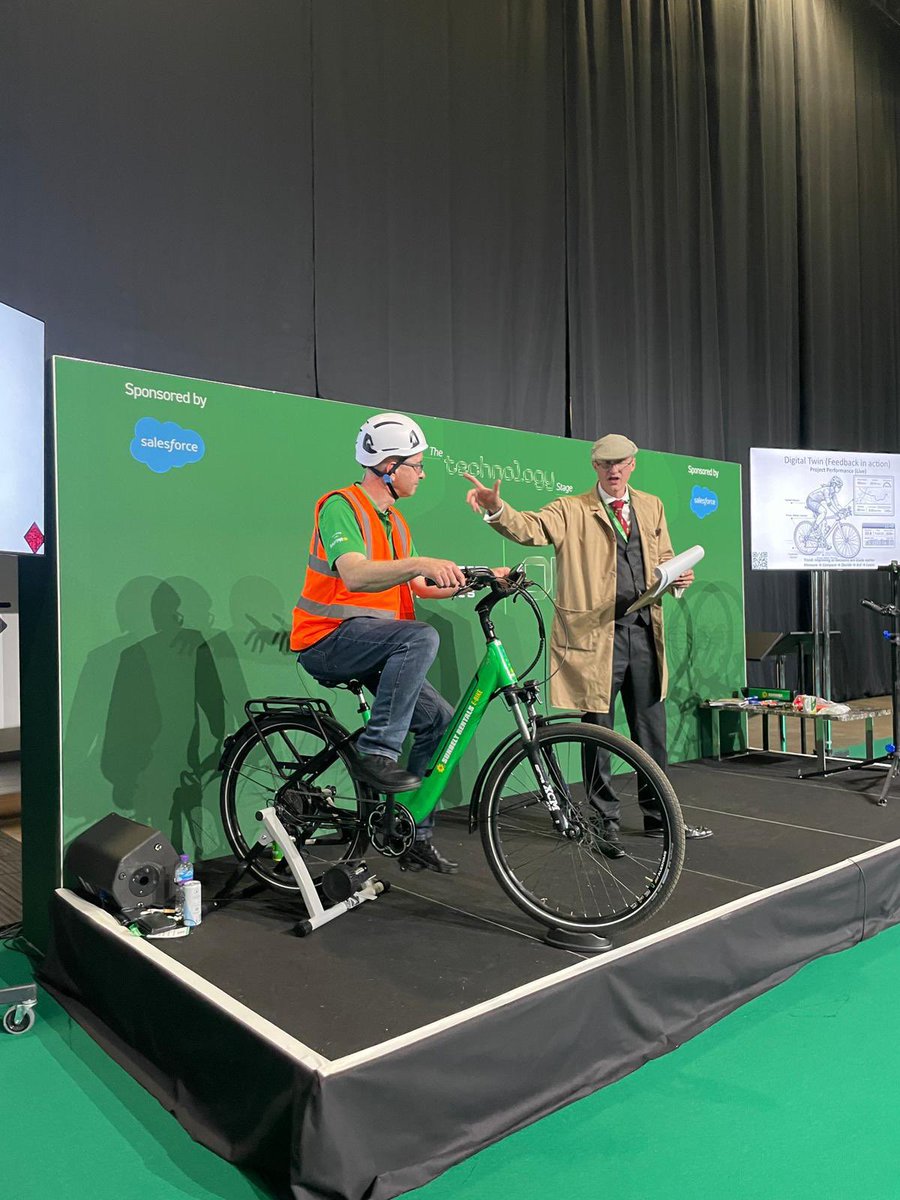
Explaining BIM through the medium of the Bike!
Glyn from @sunbeltrentaluk is my Digital Twin demonstrator! A feedback loop optimising his performance as he rides! 😎
@AvantiWestCoast Hello @SouthernRailUK.
As you can see, these guys have palmed me off onto you! 😁🤞
Their train is cancelled from Liverpool which means i can’t get to the south coast tonight.
Can i please use my today ticket tomorrow with you too? 🤞