Following the amazing reaction to the Marble Curriculum yesterday, we've decided to make it open source 🛰️👇
Everything a child learns in primary school. 1,590 concepts. 3,221 connections across 8 subjects, from Math and Science to Computing and Life Skills. Anchored in the US and UK curriculums, standard by standard (NGSS, Common Core, DfE).
What you will find in the repo: every concept as structured JSON with its age band and the evidence a child must show to master it. Every prerequisite link marked hard or soft, with a written rationale. It's a true DAG you can compute learning paths on. Open license, you can build whatever you want with it.
Now is a unique time in history to be building in education. Getting AI and kids education right is likely one of the hardest and most important problems to crack over the next decade and we need as many smart and creative minds behind it.
We think a common solid basis, accessible to all and that can be built upon, is critical to move fast. That's why we're making this curriculum open source.
It's not perfect but we know it's a robust basis, and we believe that sharing it openly is the fastest way to progress in this field. If you're building in education, share this around you and tell us in comments if you find this useful and if you want to contribute.
We'll keep working and investing on it @withmarbleapp. Credit goes to @guillaume_boni for building this. I just made it look pretty.
Links below 👇
I ran across this video a few days ago and couldn’t stop watching it.
It’s about something ordinary & boring, a plastic gas lighter. But it changes how one thinks about manufacturing.
That lighter in so many of our homes, holds pressurised gas. It has over 30 microscopic parts, has to pass international safety codes, & travel 10,000 miles by sea, & the total cost of doing all that, materials, labour, freight, every middleman along the way, comes to fifteen U.S cents.
So how does anyone make money on this?
Turns out almost the entire world’s supply comes from one place: a county called Shaodong, in China’s Hunan province.
It wasn’t always there.
But today, Shaodong has 114 lighter-related companies packed into the place & between them they source more than 200 different components from each other, all within a 20-kilometre radius. They supply something like seventy percent of the world’s disposable lighters. And the industry alone employs over 80,000 people locally.
Nobody there is winning on cheap labour anymore. They’re winning by shaving a thousandth of a cent off the thickness of a plastic wall, or redesigning a base so a few thousand more units fit into the same shipping container.
It took my thoughts back to an old professor of mine, Michael Porter.
His 1980 book, Competitive Strategy, is still the 1st book most MBAs read, the one that gave the world the Five Forces and basically invented modern strategic thinking.
But there’s a quieter piece of his work, on industrial clusters, that never got nearly the same attention, and it is the one that explains exactly what is happening in Shaodong.
His argument was that nations and regions rarely win because of cheap inputs. They win when rival firms and specialist suppliers crowd into the same small geography for long enough that they keep pushing each other past what any one of them could manage alone. He found it in the Swiss watchmaking towns of the Jura, in the German printing press industry and in Italy’s ceramic tile and footwear districts (interestingly, it’s the SAME blueprint which built Morbi, in Gujarat, into the world’s second-largest ceramic cluster, now outproducing Italy by volume. I have posted before, about Morbi)
None of these started out as giants. The neighbourhood made them giants.
Which is exactly why it’s so relevant to India’s climb up the global manufacturing table
I’ve also attached a slide with this post that I saw recently and which shows us breaking into the top 5 manufacturing globally. (A quick reference check told me that we may not have overtaken Korea yet, but the trajectory’s clear)
That climb has happened on the back of scale: bigger plants, bigger parks, more FDI.
I should declare an interest here, because the Mahindra Group set up 2 of India’s first integrated, plug-and-play business cities, in Chennai in 2002 & Jaipur in 2006.
Both have been extremely successful. Chennai’s business zone alone today employs 45,000 people..
But I admit that we need to think differently.
A park brings in investors and hands them a ready plot, power, water & roads
A cluster is a completely different animal: hundreds of small, specialised suppliers, each obsessed with doing a tiny thing better than anyone else, feeding off each other’s presence for years until no outsider can compete with the whole.
I think that’s the work ahead of us now.
Not just more factories, and not just more parks.
Policymakers & developers like us need to start consciously pulling as many of the inputs and resources a sector needs, the toolmakers, the component suppliers, the testing labs, the logistics specialists, into the same neighbourhood.
Shaodong and Morbi both got there by accident, one town stumbling onto a way to shave a thousandth of a cent off a lighter wall, the other discovering it had the clay and, later, the gas pipeline for tiles.
We don’t have the luxury of waiting for accidents anymore.
We need to do it on purpose
🔐 Introducing B.Cyber. at IIT Kanpur — a first-of-its-kind undergraduate program designed to create future cybersecurity leaders.
From rigorous academic foundations to real-world cybersecurity challenges, the program offers a unique pathway to build expertise in protecting critical digital systems.
Admission to the program will be based on a special selection process involving shortlisting through JEE Main performance and demonstrated prior work in cybersecurity, followed by a test that includes a hackathon.
🎥 Watch @Director_IITK, Prof. @agrawalmanindra share the vision behind this new initiative.
@EduMinOfIndia | @wadhwanif | @IndiaDST | @HubC3i | @ugc_india | @AICTE_INDIA | #IITKanpur #BCyber #Cybersecurity #FutureOfTechnology #IITK
🤓 Imagine instead of reading a threat report, you can navigate through it visually, exploring technical details with diagrams that show how it works on the fly.
Well, you can already do it with this new concept called Flipbook.
I just tried it with a recent report about the Axios compromise. Check this out 👇
there is a game called "data center" on steam which let's you build and manage your own data center.
this is lowkey genius, the best way to educate people on a new trait. hyperscalers should learn a thing or two from "edutainment".
I’m 54, a physicist who’s spent decades unraveling the universe’s secrets—from quantum quirks to cosmic scales.
If you’re in your 20s and passionate about physics or science, please read this:
‼️40 Years of The Hacker Manifesto (1986–2026)
Today marks the 40th anniversary of "The Conscience of a Hacker," the definitive essay written on January 8, 1986, by Loyd Blankenship, known as The Mentor. Originally published in the underground ezine Phrack following the author's arrest, the Manifesto remains the foundational cornerstone of hacker culture.
It asserts that hacking is driven by intellectual curiosity and a hunger for knowledge rather than a desire to cause harm. Over the last four decades, this text has permeated global culture, appearing in everything from the film Hackers to Edward Snowden’s memoirs.
In 2026, its core message remains timeless: technology should be used to expand our horizons and keep the world free.
"My crime is that of curiosity."
Did my best to explain the XZ issue to my TikTok and IG audience.
TikTok delisted and demonetized for unspecified community guidelines violations
So here Twitter you get it.
⛅ Cloud Security Maturity Model Assessment v2.0
v2 of the CSMM expands into a practical framework for cloud security programs
* 12 categories
* 3 domains
* ~100 control objectives, many mapped to AWS controls
by @securosis@rmogull@cloudsa
https://t.co/vMSUwBcYPJ
not everyone who's trying to get into the cybersecurity field has the money to pay exorbitant fees for trainings, certifications, etc.
shoutout to @ISC2 for offering FREE cybersecurity training and a FREE certification attempt!*
learn more about One Million Certified in Cybersecurity at: https://t.co/jPj30S9EJl
*if you earn the certification and choose to become a member, there is a $50 yearly membership fee.
To celebrate our new channel https://t.co/Y3aviMoxWG!
We are going to send a t-shirt and a few goodies to one person who follows @PentesterLab and retweets this tweet!!
And we are going to give a 12-month voucher to someone who follows @PentesterLab and likes this tweet!!
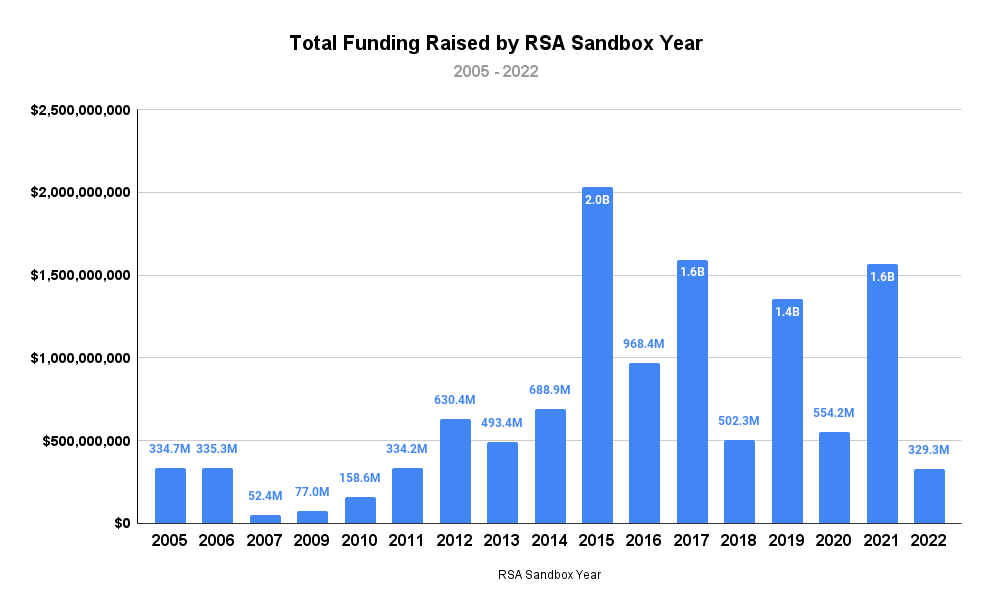
📚 Signal v. Noise in the RSA Innovation Sandbox
Discover the trends and success stories of cybersecurity startups in the @RSAConference Innovation Sandbox with this in-depth analysis
By @ramimacisabird and @mikepsecuritee
https://t.co/qu7doT9hgX
We're excited to announce that Caido, our web security auditing toolkit, is now available in public beta 🚀
We're grateful for your support and can't wait for you to give it a try. Let us know your thoughts and help us improve the tool 🙏
https://t.co/yIGgBYfD37
⚠️Damn Vulnerable iOS App v2 by @prateekg147 has just been released.
🎓Learn about 15+ different security issues by hacking the app to learn.
🙌Great for bug bounty hunters, penetration testers, and red teamers!
https://t.co/Jo3wQ3ADGg
#hacking
Coming to Vegas for @BlackHatEvents or @defcon ?
Here's a calendar and guide from the perspective of a 17-year DEF CON veteran.
A Thread 🧵
🚨Like, follow, and subscribe!🚨
1/x