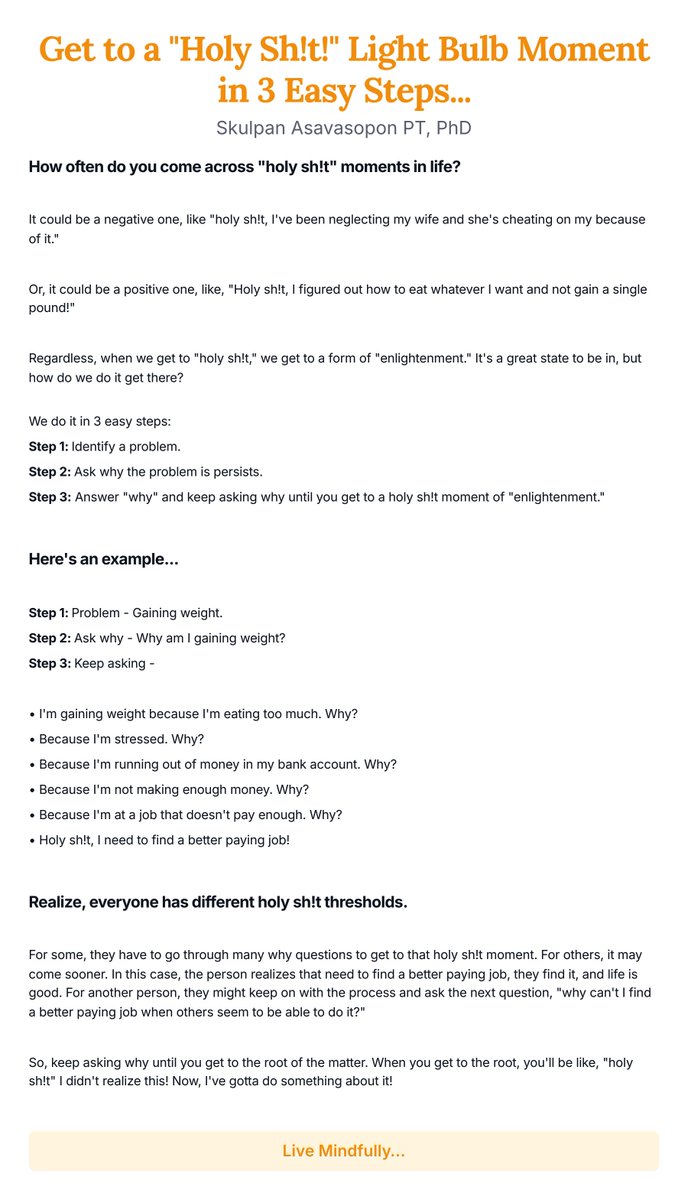
The mind is a powerful tool.
Realize this, and leverage it to navigate through obstacles in the way of your purpose...or even help find your purpose.
This applies to EVERYONE.
How to do it?
Stay tuned as I learn, practice, and apply.
Will share as I go, mindfully
Teaching the Kaiser Pain Fellows this past weekend: 2 days, 3 people
• Kudos to Michelle and Zaniah for their open mind, kind hearts, and stamina!
• Lots of new paradigm-shifting concepts about chronic pain
• Lots of vulnerable moments
Excited to keep making a difference:)
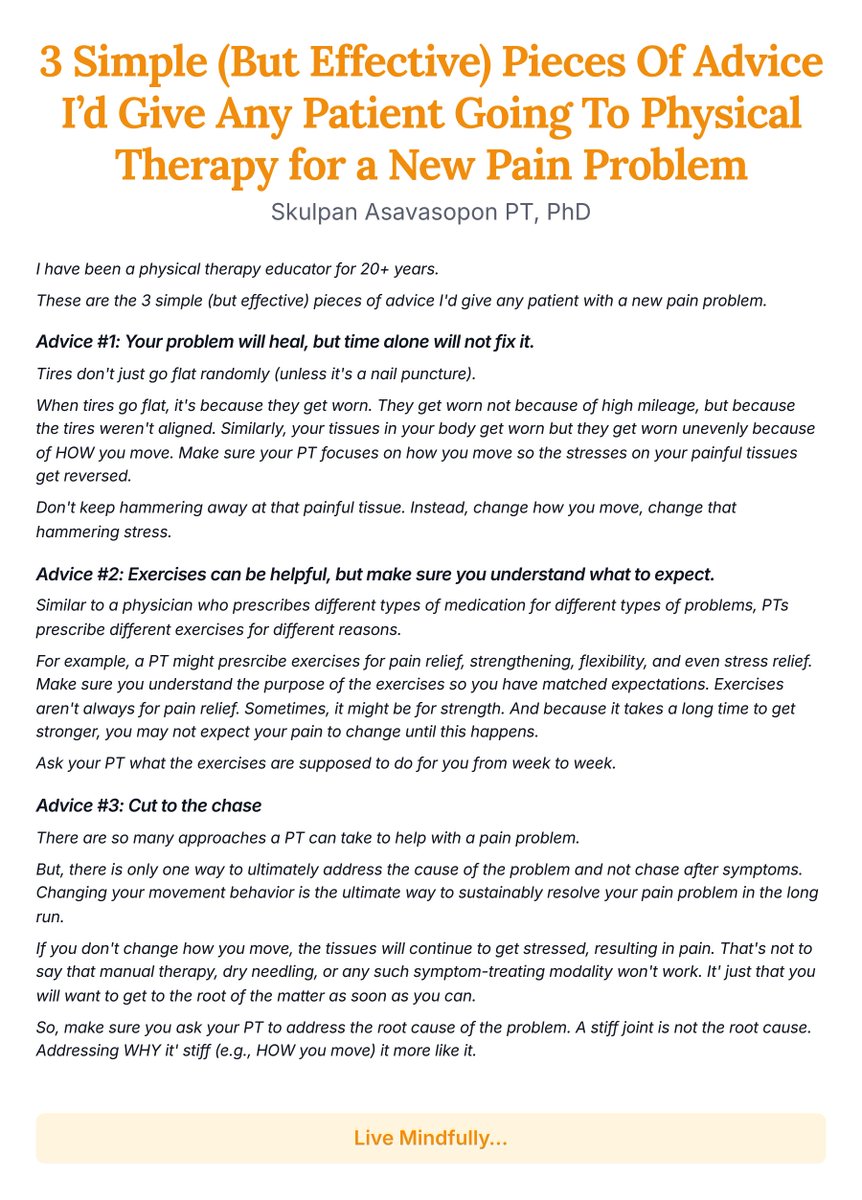
Consistently focusing on the root cause of the problem (e.g., movement faults that result in stress on tissues) prevents patients from getting lost and ensures they stay on track.
more...
4. Consistency in diagnosis is key
Consistency in defining the problem is vital.
If we diagnose a movement issue but get distracted by symptoms, we lose the connection.
more...
3. Patient education is crucial
Effective patient education is where we shine.
It's critical for gaining patient buy-in and ensuring follow-through. Without it, the treatment plan falls flat, and patient compliance drops.
2. Manual therapy is overrated
Manual therapy is often seen as a quick fix.
It's a symptom-chasing approach that undermines the bigger picture—optimizing patient movement. It's helpful as a steppingstone but should not be the main strategy.
1. The most critical skill in physical therapy
Empathy wins.
Without empathy, we can't connect with our patients. Without connection, we can't redirect their behaviors. If we can't redirect their behaviors, we can't reinforce healthier ones.
more...