Introducing Devin Desktop: the next generation of Windsurf
Manage fleets of local and cloud agents from one surface
Support for any ACP-compatible agent
With a full IDE for when you need to jump into the code
Monad Blitz Bangalore v4 is getting an AI boost ⚡
We’re excited to have @SarvamAI join us to support participating builders with access, guidance, and a session from their team.
See you in Bangalore 💜
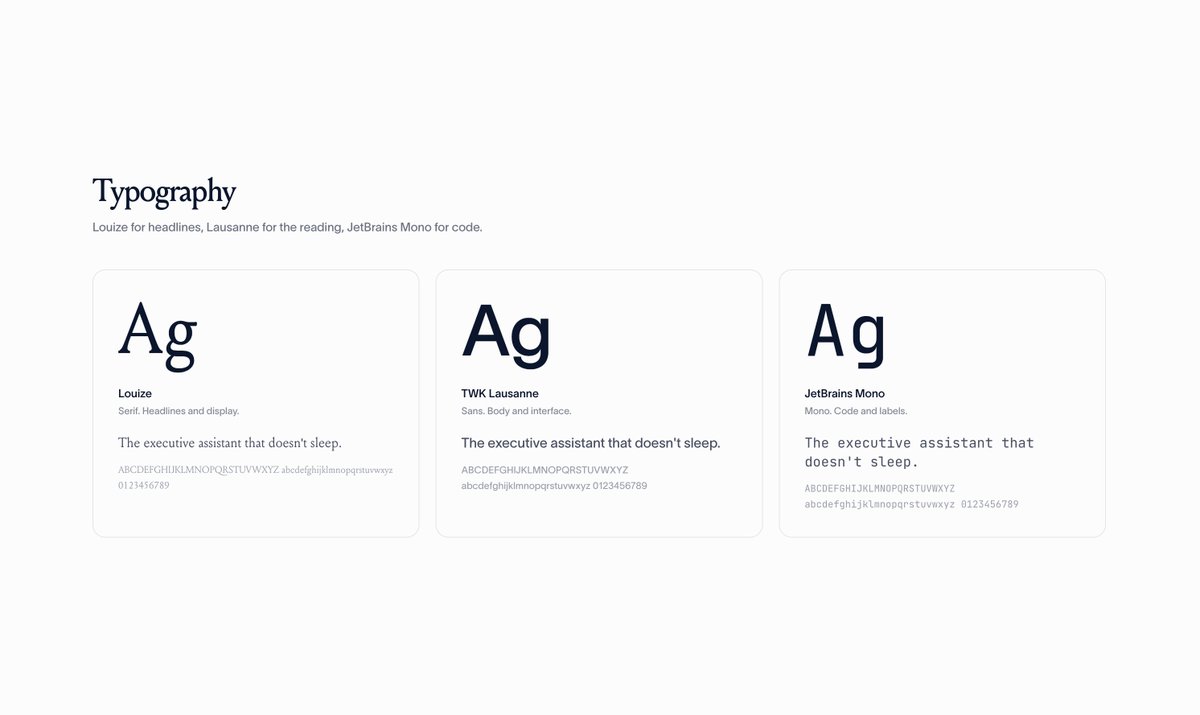
just dropped a brand page for orchid 🌸
we have downloadable images, typography, and come sick wallpapers you can add to your laptop and phone
check it out at https://t.co/8vetNEpe7B
gm
i have no idea how this product hunt stuff works, but i'm pretty sure we're mogging the people outsourcing bots.
pls upvote us. this kitty award sounds fire
Yesterday, I published my 250th video on YouTube 🥳 I have kept things no-fluff from day one and covered topics like BitTorrent Internals, Engg Blog Dissections, Research Paper Dissections, Database Internals, System Design, Microservices Design, and so much more.
5 years, 250 videos, so roughly 1 video every week for 5 years. whoaa!
The focus has always been on practical engineering and talking about how things actually work in production. No boxes-and-arrows for the sake of it. No fluff. Real systems, real trade-offs, and real-world implementation details.
I will continue to break down systems, put out a lot of good stuff in the coming years, and keep sparking engineering curiosity. Looking forward to the next 250 (seems a little too much, but why not).
Thank you all for the love and support. It means a ton :)
ape teach. ape spark curiosity.
Fun fact: Redis does not just rely on the standard operating system memory allocator. Even though it's written in C, it overrides the native `malloc` implementation with highly optimized third-party memory allocators like `jemalloc` (by Facebook) or `tcmalloc` (by Google) to achieve efficiency and low-fragmentation performance.
I firmly believe that understanding theory is fine, but things become interesting when you sit down to implement it. This is where you find gaps in your understanding and understand the nuances. and hence...
Today, we dive into the source code of Redis to look at how and why Redis overrides the default `malloc` implementation.
This is the 18th video in the Redis Internals series. Like always, we keep our focus on execution and not just theory, looking closely at how an in-memory database handles massive amounts of small object allocations and deallocations without crumbling under memory fragmentation.
In the video, I talk about memory pages, how native allocators interact with the OS, and the classic problem of fragmented memory. We also look directly at the Redis source code and see how they wrapped malloc with zmalloc to abstract out the implementation.
By the way, 18 videos are now live:
1. Why Single-Threaded Redis Is Fast
2. Writing a TCP Echo Server
3. Wire Protocols
4. Implementing RESP
5. Implementing PING
6. Understanding Event Loops
7. Implementing Event Loops
8. Implementing GET, SET, and TTL
9. Implementing DEL, EXPIRE, and Cleanup
10. Evictions and Implementing first-eviction
11. Implementing Command Pipelining
12. Implementing AOF Persistence
13. Objects, Encodings, and Implementing INCR
14. Implementing INFO and allkeys-random Eviction
15. The Approximated LRU Algorithm
16. Implementing the Approx LRU Algorithm
17. How Redis Caps Its Memory Usage
18. How and Why Redis Overrides Malloc
If you have ever wondered how scale-critical systems avoid performance degradation over time and handle advanced manual memory management with custom concurrency and defragmentation controls, this deep dive is for you.
Hope this helps you better understand database internals and spark that engineering curiosity.
Give it a watch.
browsers mostly skip updating hover state while you scroll
so I made super-hover, a tiny utility library that checks what's under your cursor every frame!
`pnpm add super-hover`
zlob - my globbing library today will sighnificantly expand it's public api for a rust crate to support *all* the use cases of this crates
- walkdir
- glob
- globset
it is DRAMATICALLY faster than the original rust crates
Folks from SF tomorrow is going to happen an open door meetup about fff. Come to hangout/get some food/drink and listen my little talk
And btw I will give a way a single personalized fff jacket there for the best question or if I just will like you
Doubt yourself every day. Imposter Syndrome is real and essential.
We keep looking for resources to overcome it, but to be honest, there is no real need. I let it hit hard, as it, pushes me to learn more, dig deeper, and explore concepts I would have otherwise overlooked.
But here's the critical part - this self-doubt should not erode your confidence as too much of it can devastate you completely, so you need to maintain a balance. So, every time you solve a problem, fix a bug, or implement a feature, take a moment to acknowledge it and reward yourself.
Remember, even most senior engineers face challenges that they are not equipped to handle. But, the difference is, they use their self-doubt as a push toward new learning opportunities.
Did I ever feel like an impostor in my career? yes; do I feel it today? absolutely. There were moments when I felt like an imposter and thought it was way over my head. But that feeling pushed me to learn more, work harder, and dig deeper.
Remember, the goal is not to eliminate self-doubt but to leverage it to find the growth areas and work on them.
Hope this helps.
I sometimes need to remind myself how crazy cool is a project I built.
It is CRAZY that you can open 500k files repo in your editor and start searching it IMMEDIATELY having results in real type as you type
EVEN WITH TYPOS RESISTANCE CONTENT SEARCH AAAAAAAA
Some of the fastest growing startups in YC were built on Solana.
YC teams now can receive gas, grants, and guidance from @SolanaFndn, and additional deals from teams like @Quicknode, @Helius, @privy_io and more.
been getting a bunch DMs lately what kinda technical skills exactly to work on or just to stay relevant. an observation on this -
when it comes to “demand” today:
- building agents
- context engineering
- designing evals / harnesses
- distributed systems
- FDE where you know your stack really well
for a “differentiation” among a pool of candidates
- RL / model post training
- inference engineering
- ai safety / interpretability
- infrastructure
- multimodal research
might be subjective to roles and companies.