Asst. Professor, GU RadOnc @huntsmancancer @UUtah. Cancer Communication & Misinformation, Former Yale Resident/Health Sciences Research Fellow. Opinions=Own
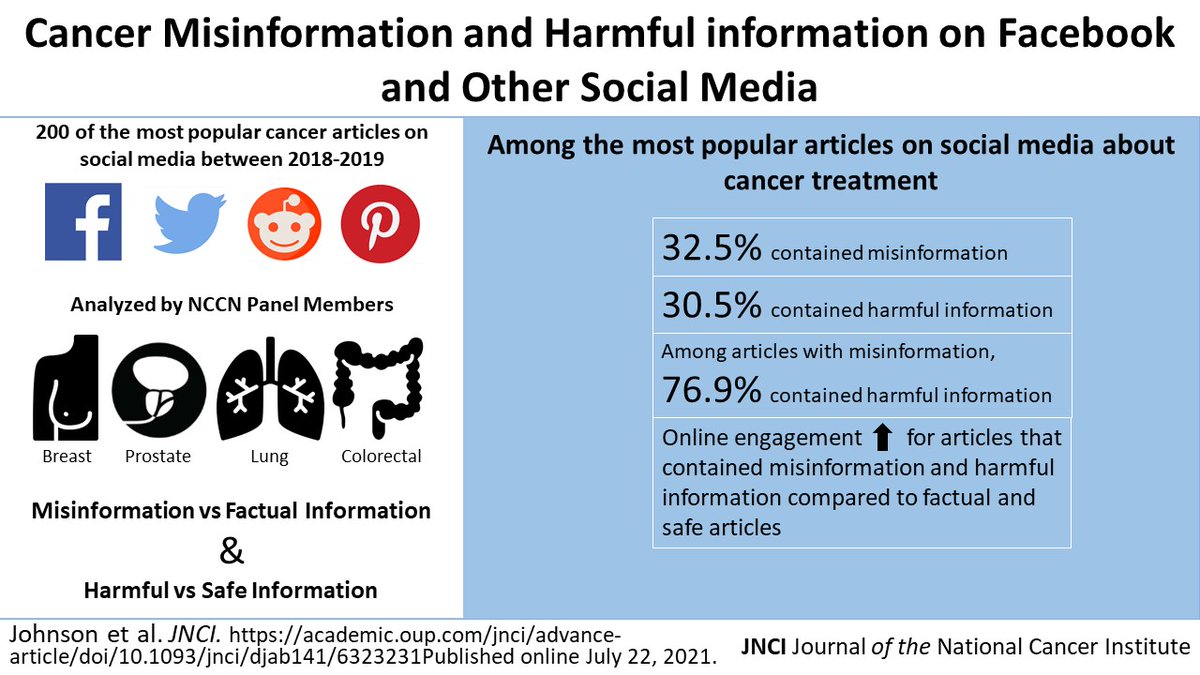
Cancer Misinformation and Harmful Information on Facebook and Other Social Media. Huge thanks to renowned cancer treatment & communications experts for working with me on this important project.
Article: https://t.co/4QIdPGmj9l
Press Release: https://t.co/c7I54PNyrh
@Luna_zel_@BogdanaSchmidt Depends on goals of study and study type. It would need, at the least, prestratification of known confounders and objective measures of cancer control. No studies are without issue but this study was clearly designed for marketing purposes, not to determine therapy effectiveness.
Cancer used to be a death sentence.
Now many are >90% survivable.
Childhood leukemia: 5% → 92%
HER2+ breast: 25% → 90%
CML: 22% → 87%
This is not "luck".
Its decades of funding towards time & infra that compounds discovery.
Pancreatic cancer today is the breast cancer of 1985, and Glioblastoma ≈ leukemia of 1970.
The scientists who will solve them
are already in labs NOW.
The question is whether we fund them long enough.
Funding doesn’t just support science.
It literally rewrites outcomes.
This plot is proof.
Source: SEER + NIH via @Jori_health
This preprint reports "high clinical benefit" of ivermectin + mebendazole in cancer patients. However, the study authors themselves state 'benefit cannot be inferred' due to design limitations.
Let's unpack why.
This preprint reports "high clinical benefit" of ivermectin + mebendazole in cancer patients. However, the study authors themselves state 'benefit cannot be inferred' due to design limitations.
Let's unpack why.
🚨BREAKING: Largest Real-World Study of Ivermectin + Mebendazole in Cancer Patients Shows 84.4% Clinical Benefit — Nearly HALF Report Cancer Disappearance or Tumor Regression
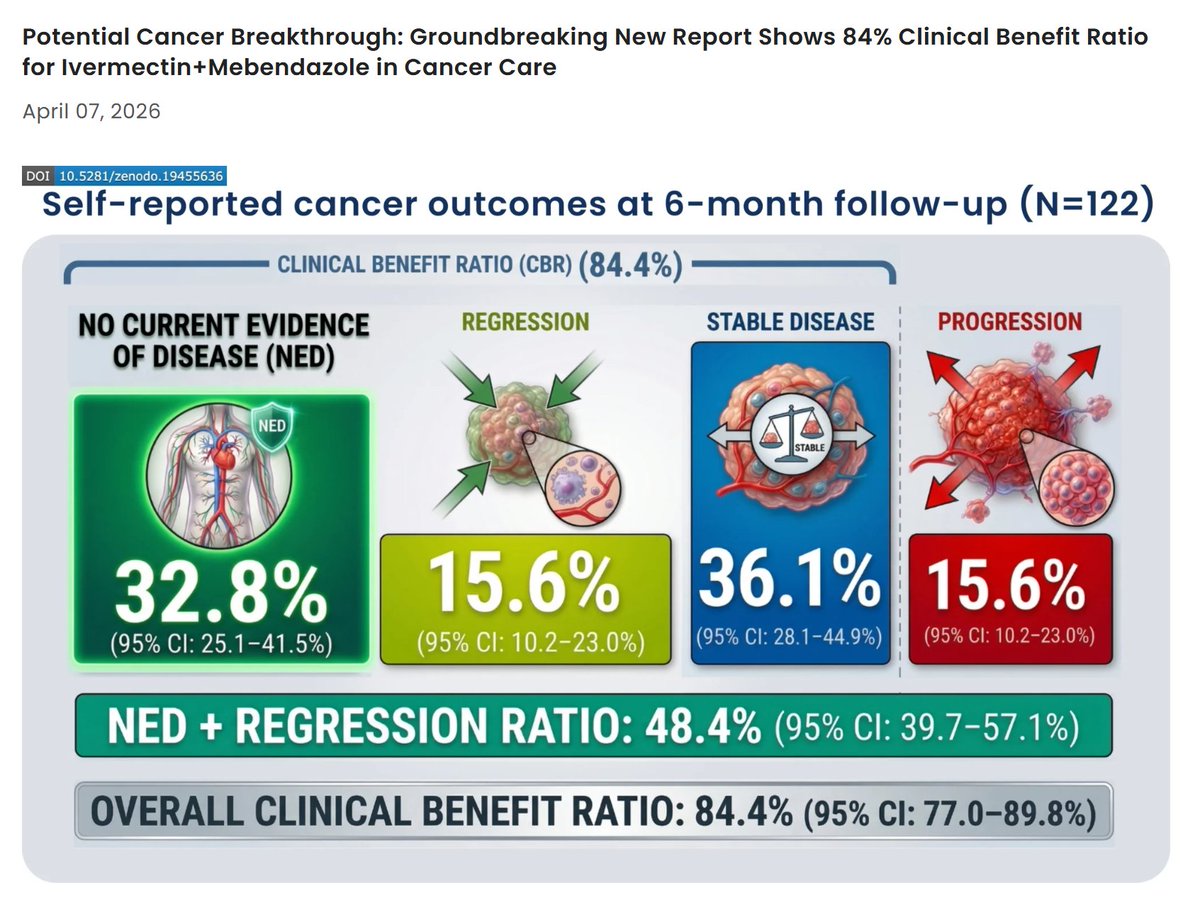
After just 6 months, 48.4% of cancer patients taking ivermectin and mebendazole reported NO EVIDENCE OF DISEASE (32.8%) or tumor regression (15.6%), while 36.1% reported disease stabilization⬇️
We have completed the largest real-world human analysis to date evaluating ivermectin and mebendazole in cancer patients—and the results represent one of the most compelling clinical signals ever documented for repurposed anti-parasitic therapies in oncology.
The groundbreaking analysis was made possible through a unique collaboration between The Wellness Company, the McCullough Foundation, and the Chairman of the President’s Cancer Panel (Dr. Harvey Risch)—uniting real-world clinical data, frontline medical experience, and high-level epidemiologic expertise to deliver urgently needed insights in oncology.
This was a real-world prospective clinical program evaluation of 197 cancer patients, with 122 completing a follow-up survey at about six months (61.9% response rate).
Cancer patients were prescribed compounded ivermectin–mebendazole, with each capsule containing 25 mg ivermectin and 250 mg mebendazole—most commonly taken at 1–2 capsules per day.
The cohort represented a clinically relevant population, including a wide variety cancer types, with 37.1% of patients reporting actively progressing disease at baseline and many having already undergone chemotherapy, radiation, and surgery.
At six months, 84.4% of cancer patients reported clinical benefit (Clinical Benefit Ratio: 84.4% [95% CI: 77.0–89.8%]):
✅ 32.8% reported no evidence of disease (95% CI: 25.1–41.5%)
✅ 15.6% reported tumor regression (95% CI: 10.2–23.0%)
✅ 36.1% reported stable disease (95% CI: 28.1–44.9%)
Treatment adherence was high, with 86.9% completing the full protocol and 66.4% remaining on therapy at six months.
The regimen was well tolerated, with 25.4% reporting side effects, primarily mild and gastrointestinal, and over 93% continuing treatment despite these events.
Patients were treated in real-world conditions alongside concurrent therapies, including chemotherapy (27.9%), radiation (21.3%), surgery (19.7%), supplements (49.2%), and dietary modification (37.7%), supporting use as an adjunctive approach.
Together, these findings represent a large, internally consistent real-world clinical signal that supports URGENT further investigation of ivermectin and mebendazole as low-toxicity, adjunctive cancer therapies.
Given the strength of the signal observed here, advancing this line of investigation is no longer optional—it is necessary.
This is NOT the end. We will continue advancing this work with larger datasets to further define and validate the role of anti-parasitics in cancer outcomes.
The manuscript is now available as a preprint on the Zenodo research repository, operated by the European Organization for Nuclear Research, while undergoing peer review at leading oncology journals: “Real-World Clinical Outcomes of Ivermectin and Mebendazole in Cancer Patients: Results from a Prospective Observational Cohort.”
@twc_health@McCulloughFund@P_McCulloughMD@DrHarveyRisch@DrKellyVictory@jathorpmfm@drdrew@PeterGillooly@FosterCoulson
This preprint reports "high clinical benefit" of ivermectin + mebendazole in cancer patients. However, the study authors themselves state 'benefit cannot be inferred' due to design limitations.
Let's unpack why.
The real headline:
BREAKING—New Report Shows 84% of cancer patients self-report a 6-month cancer cure, cancer regression or no growth after chemo, surgery, or radiation and taking ivermectin+mebendazole
Fixed it for you!
The real headline:
BREAKING—New Report Shows 84% of cancer patients self-report a 6-month cancer cure, cancer regression or no growth after chemo, surgery, or radiation and taking ivermectin+mebendazole
Fixed it for you!
This preprint reports "high clinical benefit" of ivermectin + mebendazole in cancer patients. However, the study authors themselves state 'benefit cannot be inferred' due to design limitations.
Let's unpack why.
To be clear, I am a strong proponent of discovering new, effective cancer treatments. It’s central to my work and passion. But this is not how that is done.
What it does NOT add:
-Info about effectiveness for cancer
Where I agree with the authors:
'Outcomes were not clinically adjudicated… no control group… confounding cannot be excluded… therapeutic benefit cannot be inferred.'
Strange that study authors would state otherwise.






![NicHulscher's tweet photo. 🚨BREAKING: Largest Real-World Study of Ivermectin + Mebendazole in Cancer Patients Shows 84.4% Clinical Benefit — Nearly HALF Report Cancer Disappearance or Tumor Regression
After just 6 months, 48.4% of cancer patients taking ivermectin and mebendazole reported NO EVIDENCE OF DISEASE (32.8%) or tumor regression (15.6%), while 36.1% reported disease stabilization⬇️
We have completed the largest real-world human analysis to date evaluating ivermectin and mebendazole in cancer patients—and the results represent one of the most compelling clinical signals ever documented for repurposed anti-parasitic therapies in oncology.
The groundbreaking analysis was made possible through a unique collaboration between The Wellness Company, the McCullough Foundation, and the Chairman of the President’s Cancer Panel (Dr. Harvey Risch)—uniting real-world clinical data, frontline medical experience, and high-level epidemiologic expertise to deliver urgently needed insights in oncology.
This was a real-world prospective clinical program evaluation of 197 cancer patients, with 122 completing a follow-up survey at about six months (61.9% response rate).
Cancer patients were prescribed compounded ivermectin–mebendazole, with each capsule containing 25 mg ivermectin and 250 mg mebendazole—most commonly taken at 1–2 capsules per day.
The cohort represented a clinically relevant population, including a wide variety cancer types, with 37.1% of patients reporting actively progressing disease at baseline and many having already undergone chemotherapy, radiation, and surgery.
At six months, 84.4% of cancer patients reported clinical benefit (Clinical Benefit Ratio: 84.4% [95% CI: 77.0–89.8%]):
✅ 32.8% reported no evidence of disease (95% CI: 25.1–41.5%)
✅ 15.6% reported tumor regression (95% CI: 10.2–23.0%)
✅ 36.1% reported stable disease (95% CI: 28.1–44.9%)
Treatment adherence was high, with 86.9% completing the full protocol and 66.4% remaining on therapy at six months.
The regimen was well tolerated, with 25.4% reporting side effects, primarily mild and gastrointestinal, and over 93% continuing treatment despite these events.
Patients were treated in real-world conditions alongside concurrent therapies, including chemotherapy (27.9%), radiation (21.3%), surgery (19.7%), supplements (49.2%), and dietary modification (37.7%), supporting use as an adjunctive approach.
Together, these findings represent a large, internally consistent real-world clinical signal that supports URGENT further investigation of ivermectin and mebendazole as low-toxicity, adjunctive cancer therapies.
Given the strength of the signal observed here, advancing this line of investigation is no longer optional—it is necessary.
This is NOT the end. We will continue advancing this work with larger datasets to further define and validate the role of anti-parasitics in cancer outcomes.
The manuscript is now available as a preprint on the Zenodo research repository, operated by the European Organization for Nuclear Research, while undergoing peer review at leading oncology journals: “Real-World Clinical Outcomes of Ivermectin and Mebendazole in Cancer Patients: Results from a Prospective Observational Cohort.”
@twc_health @McCulloughFund @P_McCulloughMD @DrHarveyRisch @DrKellyVictory @jathorpmfm @drdrew @PeterGillooly @FosterCoulson](https://pbs.twimg.com/media/HFUHVXUaQAAp44K.jpg)