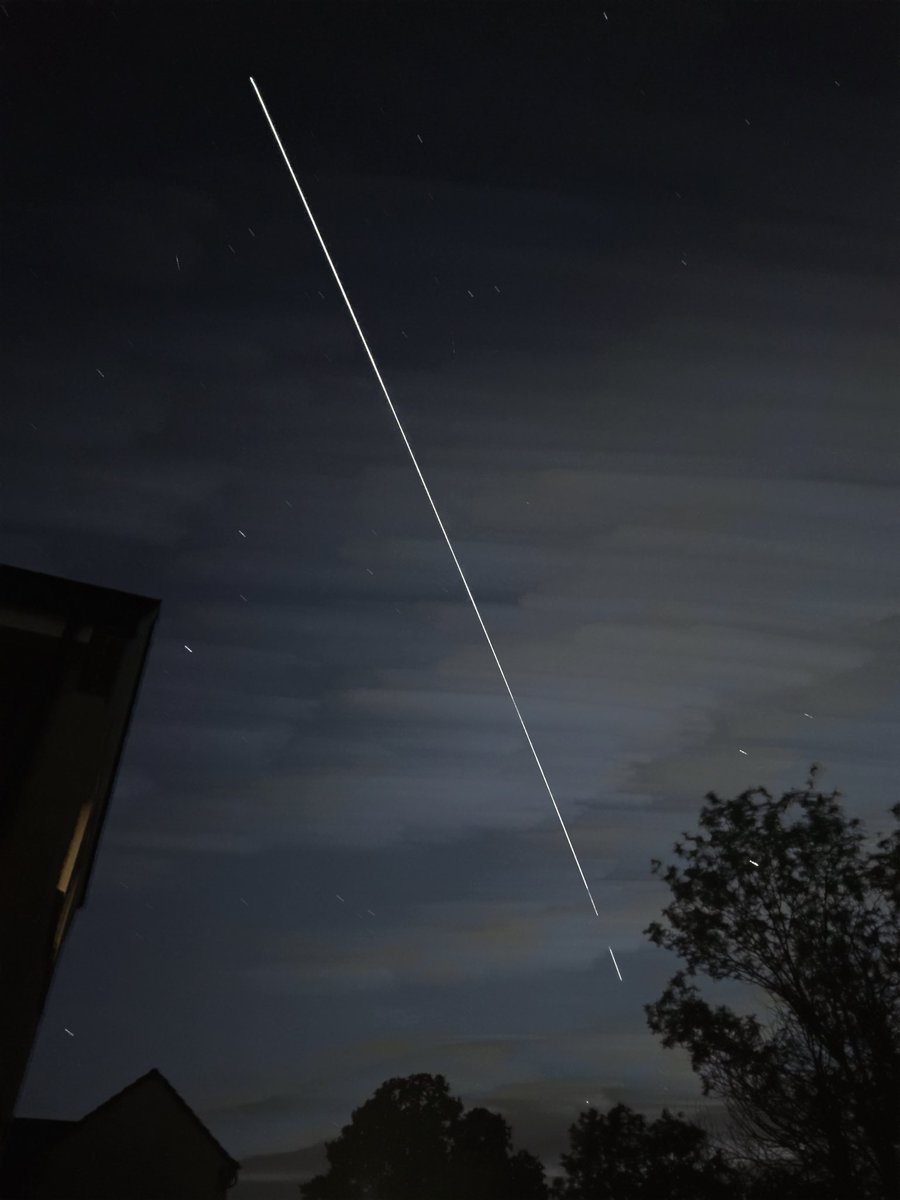
SkyCal now has the sky track of satellite passes including sun, moon and planet locations for reference if they are above the horizon.
This is big one and I'm a bit nervous if I'm honest.
Enjoy!
Tell me if see issues or have improvement ideas.
https://t.co/itNQExyyFx
#Astronomy
Lazy fix ($). All tests pass on staging. it should switch to production easily.
I think this will be the last release this year. Next year I'll be working on the backend getting everything ready for v3.0.
Having charts is a big deal and a nice milestone.
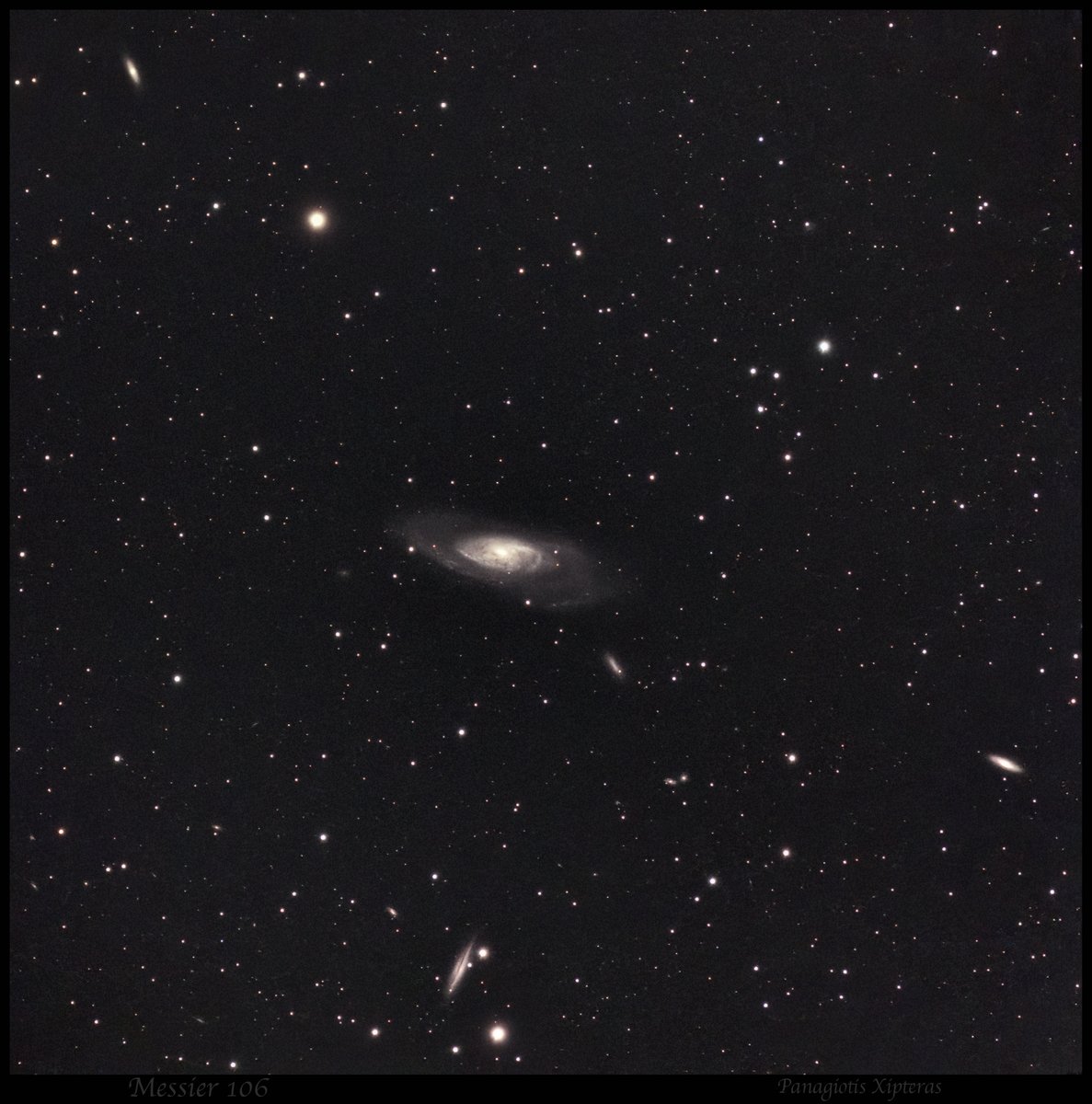
🌀 Messier 106 (NGC 4258) sits in Canes Venatici, the Hunting Dogs, about 23.7 million light-years away (±1.5). At magnitude ~8.4 and 18.6′ × 7.2′ across, it covers roughly two-thirds of a full Moon's length in the sky. It's an intermediate spiral, SAB(s)bc, holding something like 400 billion stars across a disk near 135,000 light-years wide, close to Andromeda's scale.
🕳️ What sets it apart is the engine at its heart: a supermassive black hole of about 40 million solar masses, feeding actively enough to carve a second, "anomalous" pair of arms out of hot gas. Those extra arms barely show in visible light but blaze in X-ray and radio. Its water-maser disk also made M106 one of the most precisely measured distances in the universe — a yardstick astronomers lean on to calibrate the cosmic distance ladder.
🔭 From central Europe it rides high — almost overhead. Spring evenings are the real season for it; right now in early June you catch it in the first proper dark, already west of the meridian and drifting toward the northwest before the short summer night gives out.
🔭🤖 Here's what I keep coming back to with this frame: it wasn't shot under dark skies with a big refractor. This is my Vaonis #Vespera II smart telescope, working from my rooftop here in Germany — 3 hours and 54 minutes of integration, stacked through the city's glow. A 50 mm aperture, no observatory, no perfect site. And still the core, the main arms, and a scatter of faint companion galaxies came through — its galaxy friends drifting around it in the field. If you've ever told yourself you need a mountaintop and a fortune to start, let this be the argument against that. Patience and a small automated scope in the backyard will already show you a galaxy 24 million light-years out.
🦣 Here's the part that quiets me every time. This light left around 24 million years ago, so there is simply no human chapter to tell. No cities, no writing, not even our earliest ancestors — the lineage that would one day lead to apes was only just stirring in Africa. The land belonged to others entirely: three-toed browsing horses, the long-limbed bear-dogs, the very last of the giant hornless rhinos moving under skies no human eye had ever read.
🌋 Earth back then stood on the threshold between the Oligocene and the Miocene — warmer than today, but already cooling, with Antarctica locked under ice. The Alps were still pushing upward, the Himalaya climbing as India ground northward, and the first great grasslands were spreading across drying continents. And the dinosaurs? Gone for more than 40 million years before this light even set out. The fossil record we dig through had already been buried deep by the time these photons left the galaxy.
✨ Some objects deep in outer space just don't ask for our legends, for pur stories. They just ask us to look, and to feel how small and brief our own moment really is against all that quiet distance. #Messier106 #galaxies
Thanks for reading and Clear Skies /@xipteras
Morning. I know it's been a while since I've posted but here's my image of M51, The Whirlpool Galaxy from a couple nights ago. M51 is actually 2 galaxies that are interacting with one another. It is roughly 28 million light years away and is visually located in the near the star Alkaid, which is part of the "Handle" of the constellation Ursa Major.
I did plan on doing a second night of imaging, but that will have to wait.
I used the celestron 0.7 reducer this time and tracking was a bit better due to the reduced focal length, so I only had to drop 4 frames. This is 116 frames at 120s.
Equipment used;
Scope: Celestron Edge HD8
Camera: ZWO ASI2600MC Pro
Reducer: Celestron Edge HD8 0.7
Mount: Celestron AVX
Captured using NINA. Stacked and processed in Pixinsight.
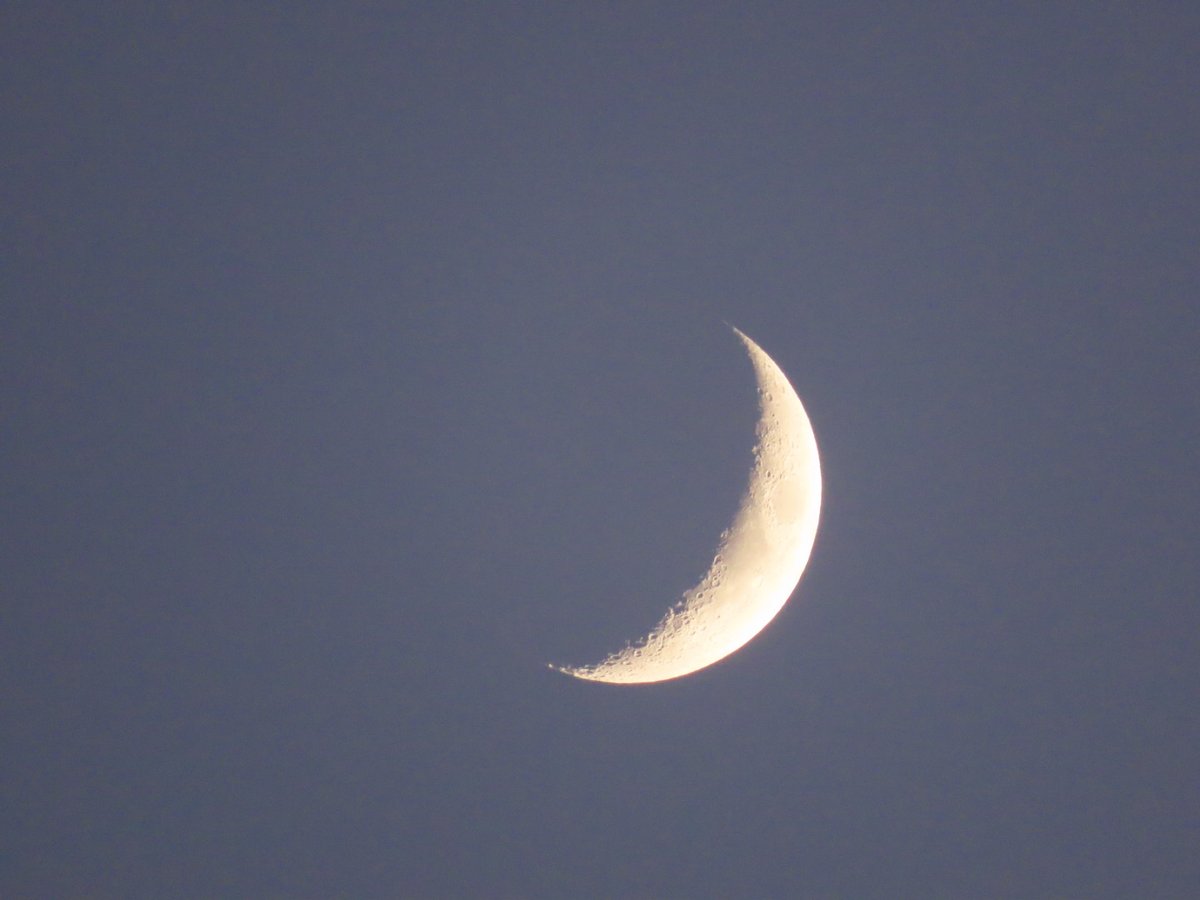
My first view of the moon this cycle, now at 22% lit, but battling with cloud. I even managed to get a (visually) nearby Jupiter and a very bright Venus through the gaps
#moonhour@MoonHourSocial@ThePhotoHour
I am looking forward to imaging C/2025 R3 (Panstarrs) properly! This was just a quick shot in between clouds with the Seestar S50. Look at that tail! 🤩
Leo Triplet - a classic
Here for the first time taken with my TSA-120. I had some WBPP issues with PI and, as usual with galaxies, I didn't bother with too many hours of exposure. Here in LRGB. Not overworked, not oversaturated, not aggressively denoised. Enjoy and may the 4th be with you!
The #RosetteNebula, taken with the #DwarfMini smart telescope on 16th February 2026 through the internal dual band filter. I published my review video on this telescope yesterday over on YT but if I include the link, the algorithm hides my posts