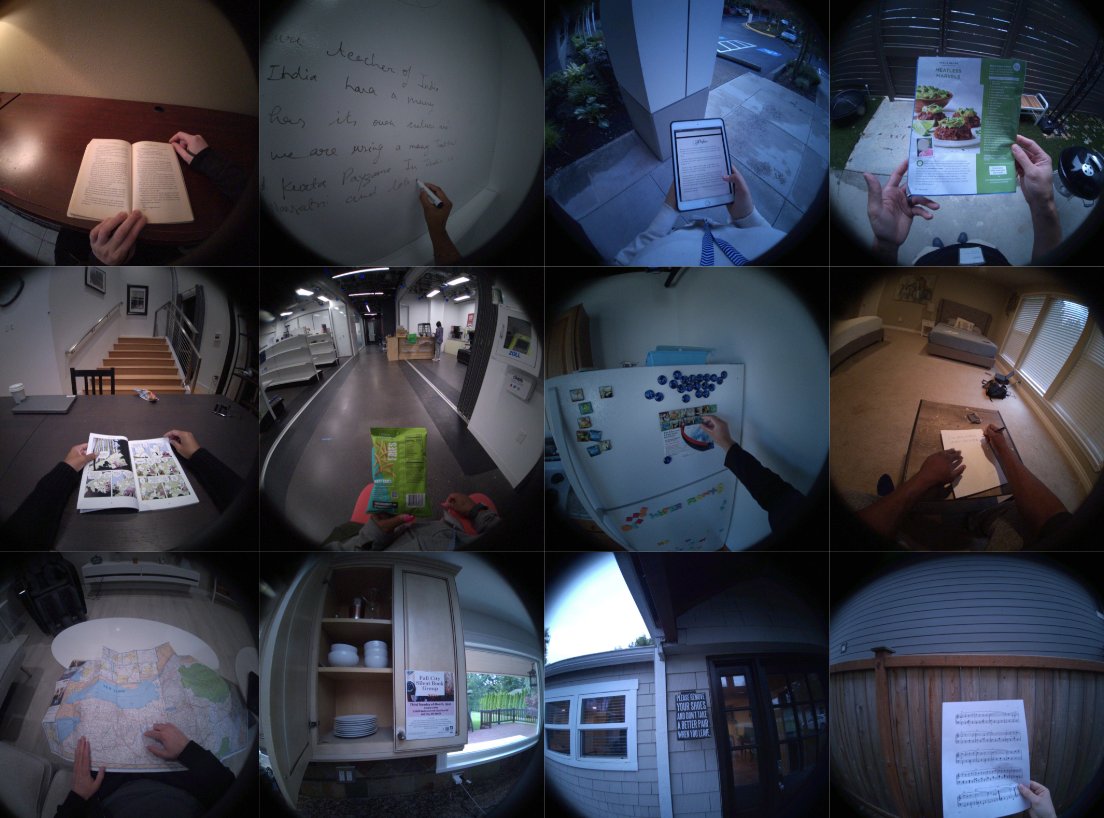
Reading Recognition in the Wild: A Dataset for Understanding Human Behaviors During Reading from an Egocentric Sensor Suite
This large multimodal dataset features video, eye gaze, and head pose sensor outputs, created to help solve the task of reading recognition from wearable devices. Notably, this is the first egocentric dataset to feature high-frequency eye-tracking data collected at 60 Hz.
Explore ➡️ https://t.co/TK8BPu4yjk
Aria Gen 2 glasses mark a significant leap in wearable technology, offering enhanced features and capabilities that cater to a broader range of applications and researcher needs. We believe researchers from industry and academia can accelerate their work in machine perception, contextual AI, robotics & more using Aria Gen 2.
Aria Gen 2 details + sign up for availability updates ➡️ https://t.co/aEyjaw0rge
Unitree G1 Open Source Dataset
In order to promote the development of the global embodied AI industry, the Unitree G1 robot operation data set is open sourced, adapted to a variety of open source solutions, and continuously updated:
Open source data collection: https://t.co/KvSc8pV0O9
Open source learning algorithms: https://t.co/1CHcgeKOJB
Open source datasets and models: https://t.co/WD11A4CU5g
#AI #Teleoperation #OpenSourceDataset #Unitree #EmbodiedAI #Humanoid #DataCollection #AGI
🔥 Hot release: Aloha unleashed
World first demonstration of a robot able to tie shoelaces or hang t-shirts autonomously!
They trained a diffusion policy at scale: 26,000 demonstrations over 5 tasks on Aloha 2 robot
Retweet if you'd like them to open-source 😝
(video x4)
1/🧵
Excited to share our new Nature paper! In this work, we propose a new display design that pairs inverse-designed metasurface waveguides with AI-driven holographic displays to enable full-color 3D augmented reality from a compact eyeglasses-like form factor.
1/8
This is my 5-minute testimony before the US Congress!
Open science and open source AI distribute economic gains by enabling hundreds of thousands of small companies and startups to build with AI. It fosters innovation, and fair competition between all.
Thanks to ethical openness, it creates a safer path for development of artificial intelligence by giving civil society, non-profits, academia, and policy makers the capabilities they need to counterbalance the power of big private companies.
Open science and open source AI prevent blackbox systems, make companies more accountable, and help solving today’s challenges like mitigating biases, reducing misinformation, promoting copyright, & rewarding all stake-holders including artists & content creators in the value creation process.
Let's go!
Project Aria at #cvpr2023
We are bringing a new research platform, , to develop future personalized AI systems that can perceive the world from egocentric perspective.
On Monday Jun 19th, we have a tutorial session where we intr…https://t.co/pwEoPREn5F https://t.co/cddXAzKuRc
📣 Join us at CVPR2023 for an exciting hands-on tutorial on Meta's Project Aria glasses! Discover the future of Egocentric Research at East 12 on Monday, June 19th, from 1:30 PM to 5 PM. #CVPR2023#ProjectAria#AugmentedReality https://t.co/i6fneqLJGk
Interested in accelerating real-world scene understanding for AR and AI technologies?
Introducing ‘Aria Synthetic Environments’, a large-scale dataset consisting of procedurally-generated simulated scenes for accelerating indoor environment understanding research.
#CVPR2023
1/7
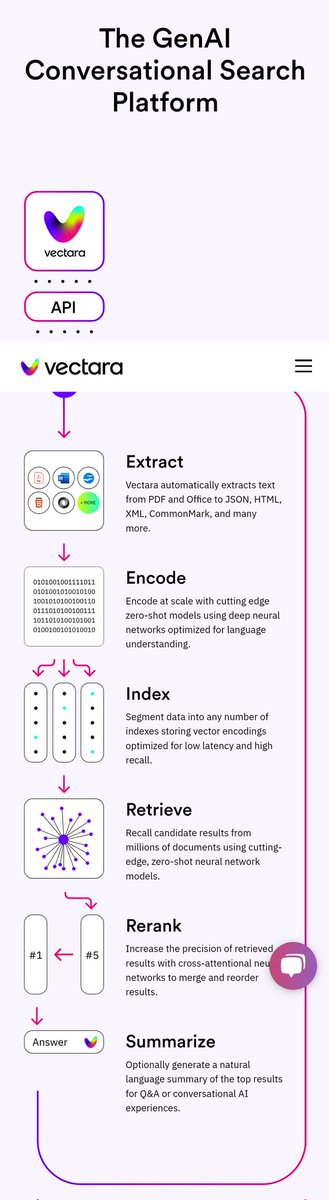
Good talk on platforms for neural information retrieval. Covers neural vector embeddings, retrieval, and LLMs for chat UI
#vectara
https://t.co/IosKolMalr
Just finished reading "Metaverse: And How It Will Revolutionize Everything" and it was a real eye-opener.
The book covers a wide range of topics, from gaming consoles to decentralized payment systems, making it a comprehensive guide to the future of met…https://t.co/kzEEC5cLZd
✨ Diffusion meets Object Detection
📰 DiffusionDet: Diffusion Model for Object Detection
• It formulates object detection as a denoising diffusion process
from noisy boxes to object boxes
• At training, object boxes diffuse from ground-truth boxes to random distribution