In the dead of night, 1944, inside a Gestapo cell in occupied France…
The most wanted woman in the Resistance stripped bare and forced her slender body through iron bars no one thought possible. Dress clenched in her teeth, she dropped to the street and vanished into the darkness.
Her name was Marie-Madeleine Fourcade — the Hedgehog. 🦔
Born in 1909 into privilege, she flew planes, raced cars, and defied every rule made for women. When France fell, she took command of a tiny spy network at 31 — a mother of two — and turned it into the largest and most vital Resistance ring in occupied France. The only one led by a woman.
She built a secret army of nearly 3,000 agents — men and women from all walks of life — feeding Britain critical secrets, including a stunning 55-foot map of Normandy’s beaches for D-Day.
The Gestapo hunted a brutal man. They never imagined the elegant woman before them was their greatest threat.
But the cost was devastating. 💔 Hundreds of her agents were tortured and killed — including the man she loved. She moved constantly, changed identities, and while pregnant, made the heartbreaking choice to send her children away without even saying goodbye — watching silently from a window as they disappeared from her life.
Captured twice. Escaped twice. She rebuilt her network from ashes every time.
After the war, she devoted her life to honoring her fallen agents. Yet France overlooked her, awarding honors to her husband instead.
They forgot the Hedgehog.
She outlasted the Nazis. She outlasted the silence.
Now we remember.
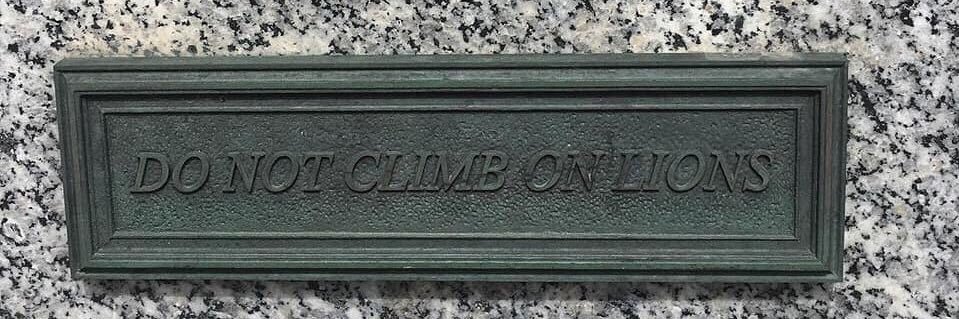
Marie-Madeleine Fourcade — the fierce little woman who led 3,000 from the shadows and helped turn the tide of history. Even a lion would hesitate to bite.
Say her name. Share her story. Never forget.
Signs you are secretly a cat:
You:
1. sleep all of the time.
2. would rather be home.
3. are always hungry.
4. silently judge others.
5. are easily distracted.
6. are missing a few brain cells.
7. are annoyed by people.
8. are a tad moody.
9. don’t sleep at night
On this day in 1944, 150,000 Allied soldiers are being loaded onto ships all across southern England. Tomorrow, they'll take part in history's greatest invasion.
“At that time, we didn't know it was D-Day," one veteran would later recall. "We just knew we had a job to do.”
There is a baseball game in Alaska played at MIDNIGHT under SUNLIGHT 🤯
The Midnight Sun Game in Fairbanks, Alaska is a 120-year-old tradition where baseball is played on the summer solstice, under Alaska’s 24-hour sunlight
Since 1960, the game has been hosted by the Alaska Goldpanners, a collegiate summerball team with alumni that includes Barry Bonds, Jason Giambi, Tom Seaver and many more
The game starts at 10 p.m. and usually ends around 1:00 a.m.
I regret to inform you that Schlitz beer is ending.
Pabst Brewing Company have today announced they will end the brand with a final batch, brewed on Saturday, May 23.
The last afterwork Schlitzpause will then follow...
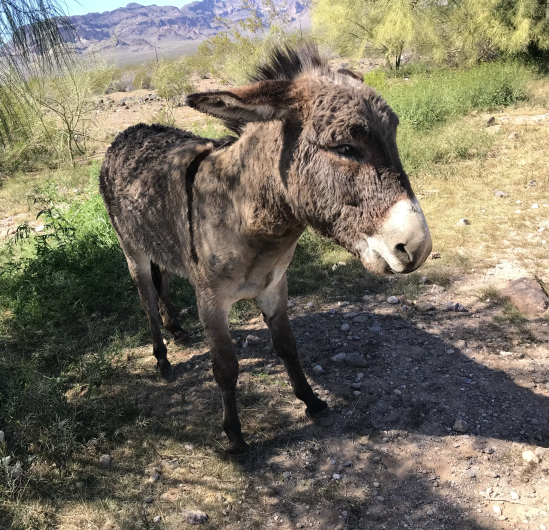
A wild burro in northwestern Arizona was found trapped overnight in a septic tank, struggling to keep its head above the water.
Thanks to quick action from Bureau of Land Management specialists, RV park staff, and caring neighbors, the burro was safely lifted out, cleaned up, fed, and released back to public lands later that day.
Stories like this remind us what can happen when communities come together. A huge thanks to everyone who helped! 👏
Read the full story: https://t.co/aYOJsI1Jil
@blmwhb@blmarizona
In 1938, a farmer plowing his field in Akaki village near Nicosia, Cyprus 🇨🇾, hit something hard with his plow. It was a piece of ancient mosaic. The Cyprus Department of Antiquities came out, marked the location, and then left. They had other sites to prioritize. The mosaic stayed buried for 78 more years.
In 2014, archaeologists returned to the site and discovered the remains of a large Roman cistern measuring 33 by 46 feet. In the summer of 2015, they found a section of mosaic on the south side of the cistern. By August 2016, they had fully uncovered the floor. It was a chariot racing scene from a Roman hippodrome, and it was spectacular.
The mosaic measures 36 feet long and 13 feet wide. It dates to the first half of the 4th century AD. It depicts four quadrigae, chariots pulled by teams of four horses. Each chariot has a driver and four horses racing at full speed. The chariots are shown in different colors representing the four factions of professional racers in ancient Rome.
The Blues, Greens, Reds, and Whites were rival teams that competed in the hippodrome, and fans of each faction were famously passionate about their favorites. Riots sometimes broke out between rival factions.
Each chariot is accompanied by two inscriptions written in ancient Greek. One inscription gives the name of the charioteer, and the other gives the name of one of the horses. The names usually express some special characteristic about the driver or the horse. Some of the names identified include Kosmion, Protogenis, Pegaso, Polytalanto, Amphidromos, Bache, and Polyphemos.
Standing between the chariots on the track are two men. One is holding a whip, and the other is holding a vessel of water. There is also a figure on horseback. These were likely officials or attendants associated with the race.
The scene shows three cones topped with egg-shaped objects at the center of the track. These were lap counters. Three columns in the distance hold up dolphin figures with what appears to be water flowing from them. This matches descriptions of actual Roman hippodromes, where dolphins and eggs were used to count laps during races. The entire scene is bordered by intricate geometric designs.
At the western end of the floor is another mosaic showing nine medallions arranged in a circle, each containing the bust of a female figure. These are the nine Muses, each identifiable by the symbols they hold.
The hippodrome was extremely important in ancient Roman times. It was not just a place for sports competitions. It was where the emperor appeared before the people and projected his power. The races were massive public spectacles that drew enormous crowds. Chariot racing was the most popular sport in the Roman Empire. The hippodrome comes from the Greek words hippos, meaning horse, and dromos, meaning course. It was an open-air stadium used in ancient Greece, Rome, and Byzantine civilizations for chariot and horse races.
This mosaic is the only one of its kind ever found in Cyprus. Out of the hundreds of ancient mosaic floors discovered around the world, only about seven depict chariot races at the hippodrome with this level of detail. Only two have been discovered in Greece, and seven have been found elsewhere in the Roman Empire, including North Africa, France, and Spain. Racing scenes like this are extremely rare in the eastern provinces of the Roman Empire. The discovery is particularly exciting because it was found inland, about 20 miles west of Nicosia, in a remote area far from the coast.
The mosaic was likely part of the floor of a large villa belonging to a wealthy nobleman during Roman rule of Cyprus. Cyprus was an extremely prosperous island in antiquity. It produced copper, and according to one prominent theory, the island got its name from the Greek word for copper. Cyprus also produced timber from its forests and pottery, many examples of which have been found in neighboring countries.
#drthehistories
You’re a burglar, but you can only steal things that mildly inconvenience your victims.
What are you taking?
I’ll go first:
The vowels on all keyboards
I can just hear them now
“h n, ll th vwls r mssng… wh’s dn tht?”
GRG!!!!!!!!!!!!……..