The #LRGASP study is out in @naturemethods! This collaborative study offers a benchmark for current practices and provides direction for future method development in transcriptome analysis for long reads such as @nanopore#RNAseq#Transcriptomics
We are excited to publish our second-ever Registered Report! The #LRGASP Consortium evaluated various methods for transcript identification and quantification using long-read sequencing technologies. @anaconesa@TheSheynkmanLab@TheBrooksLab@calizavi
https://t.co/QxIo92GjUx
A must-read for compared performance, sample compatibility, cost, and workflow of single-cell kits from 10 companies across four technology classes. #SingleCell#RNAseq
Comparative Analysis of Commercial Single-Cell RNA Sequencing Technologies https://t.co/dYYGiEMIlP
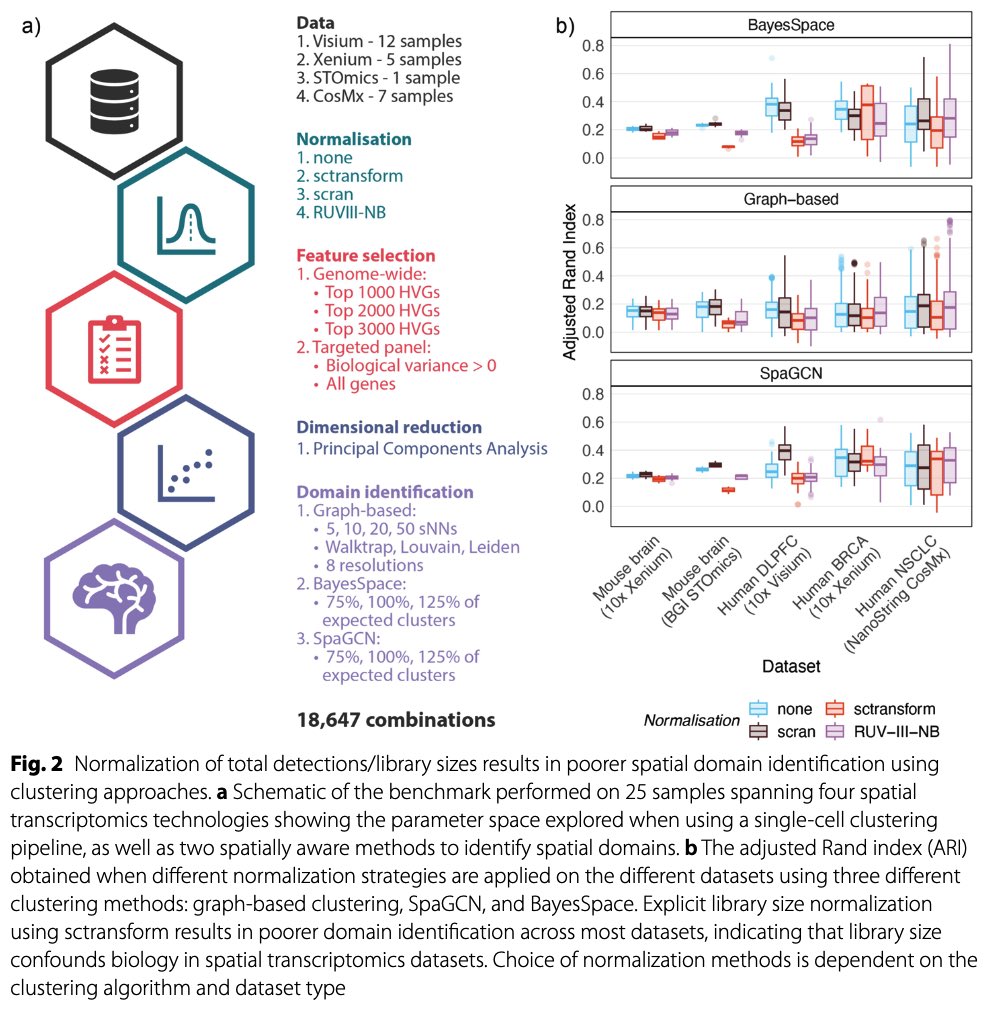
"Spatial data should not be specifically corrected for library size prior to analysis, and algorithms designed for #scRNAseq data should be adopted with caution." #SpatialTranscriptomics
“Library size confounds biology in spatial transcriptomics data” finally out in Genome biology!
TL;DR
- LS normalisation is bad for domain identification.
- Exercise caution in adapting scRNA-seq methods to ST
- New normalisation methods needed for ST
https://t.co/VM1766xouU
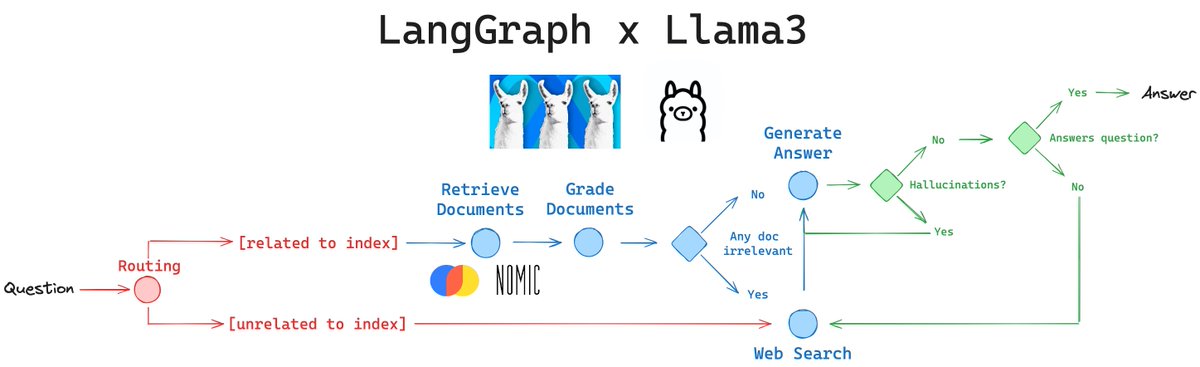
Reliable, fully local RAG agents with Llama3
With the release of Llama3, there's high interest in agents that run reliably & locally (e.g., on your laptop).
Here, we show to how build reliable local agents using LangGraph and Llama3-8b from scratch.
As a example, we combine ideas from 3 advanced RAG papers (Adaptive RAG, Corrective RAG, and Self-RAG) into a single control flow in LangGraph.
We run this locally w/ open source embeddings c/o @nomic_ai, @trychroma vectorstore, @tavilyai for web search, and Llama3-8b via @ollama.
Code:
https://t.co/vRYQzwhbhl
Video:
https://t.co/nfV2v9YHW6
Challenges and best practices in omics benchmarking https://t.co/GvX3Xl09L0 #Review by Thomas G. Brooks, Nicholas F. Lahens, Antonijo Mrčela & Gregory R. Grant @Penn@ITMATbioinf
Free to read: https://t.co/SCucPwL0Nr
Accessible #ResearchInfrastructures are key for fostering Europe’s innovation potential!
For the latest #HorizonEU INFRA call, we’ve received 163 research proposals with a requested budget of €1,038 billion💶
32 projects are expected to be funded🤝🏻
🔗 https://t.co/Y92JugXfh9
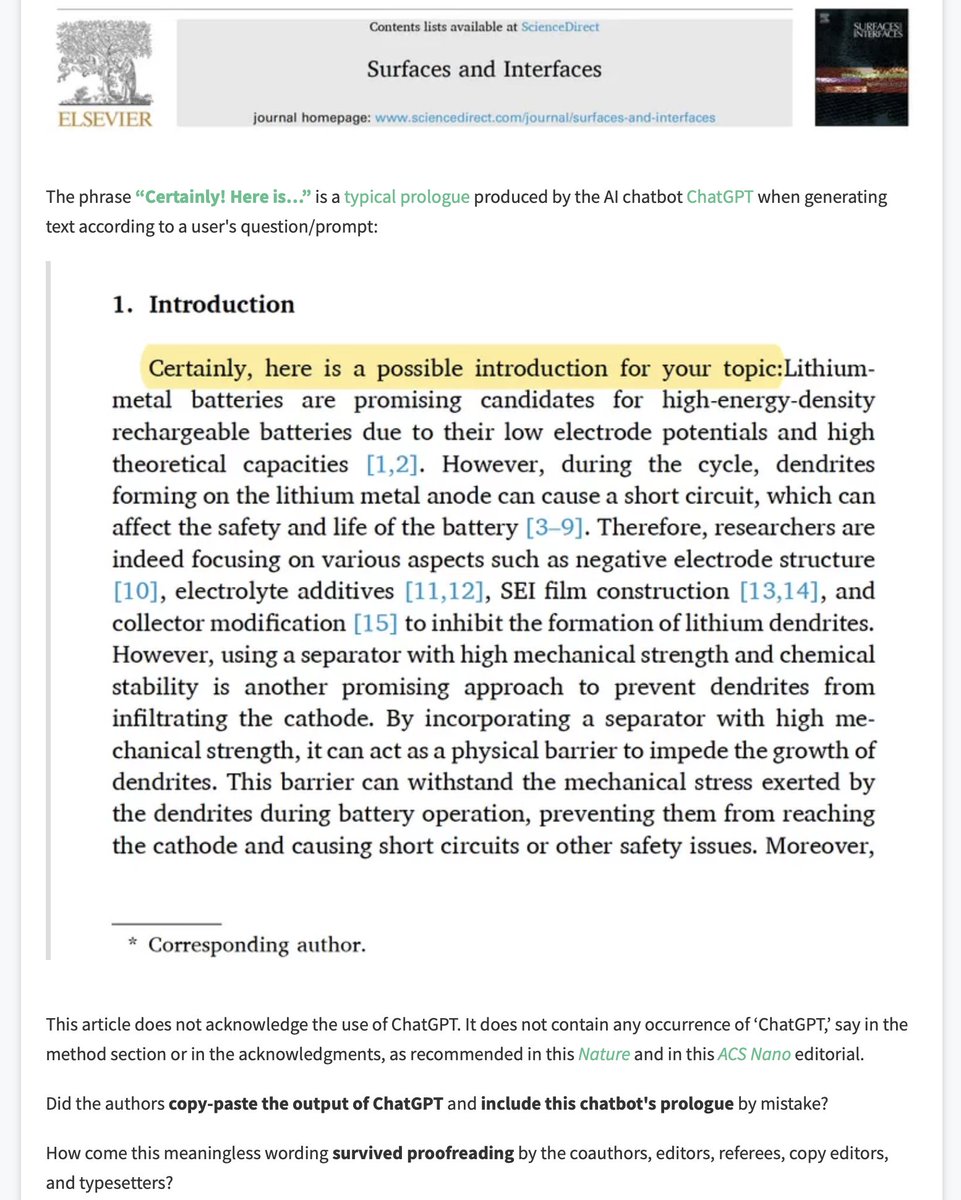
🤖 So #ChatGPT wrote the first sentence of this @ElsevierConnect article. Any other parts of the article too? How come none of the coauthors, Editor-in-Chief, reviewers, typesetters noticed? How can this happen with regular peer-review? https://t.co/C4vX317zYV
Finally out!
“Challenges and perspectives in computational deconvolution of genomics data”. Kudos Drs Garmire, Teschendorff & team!!
🙏🏼@GarmireGroup for including me. @naturemethods for publishing!
https://t.co/JF8mZY4aHw
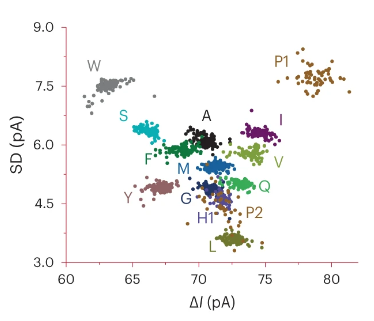
A paper in Nature group on the use of nanopores for single-molecule proteomics sequencing. This would still be a challenge for complex samples, but a step forward in the use of nanopores for #NextGenProteomics https://t.co/6UcGwueAa0
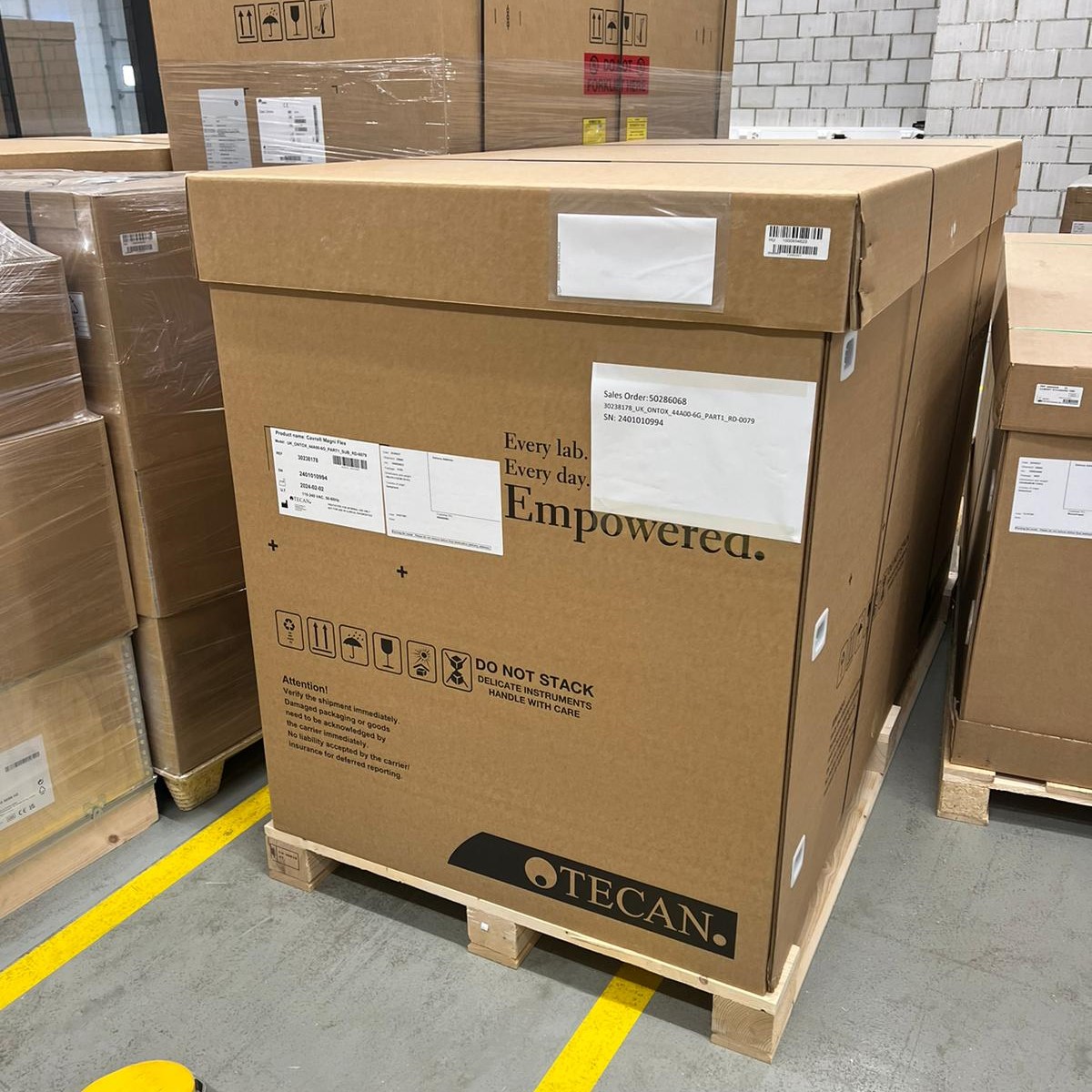
First TurBOT shipped and ready to go.
You'll be able to hear more about TurBOT at #ECCMID2024 and at London Calling 2024 (#nanoporeconf).
Learn more about TurBOT here: https://t.co/odZB90GBeD #WYMM
The #ESFRI Landscape Analysis is now complete! Today the 87th Forum approved the #LandscapeAnalysis report, expected to be published by the and of May 2024
Read more about the LA process & the contributions of #ESFRIStakeholders👇
https://t.co/OoXLUORo4Q
#ResearchInfrastructures
A short video showing the cycle by cycle 100bp targetted sequencing of @ElemBio AVITI24 multi-omics instrument. It's called in vitro 3D ABC sequencing. #AGBT
Researchers at the @CityUHongKong have used @nanopore direct #RNAsequencing to evaluate 10 computational tools developed for studying modifications on viral #RNAs. https://t.co/CUM1ukFNSB
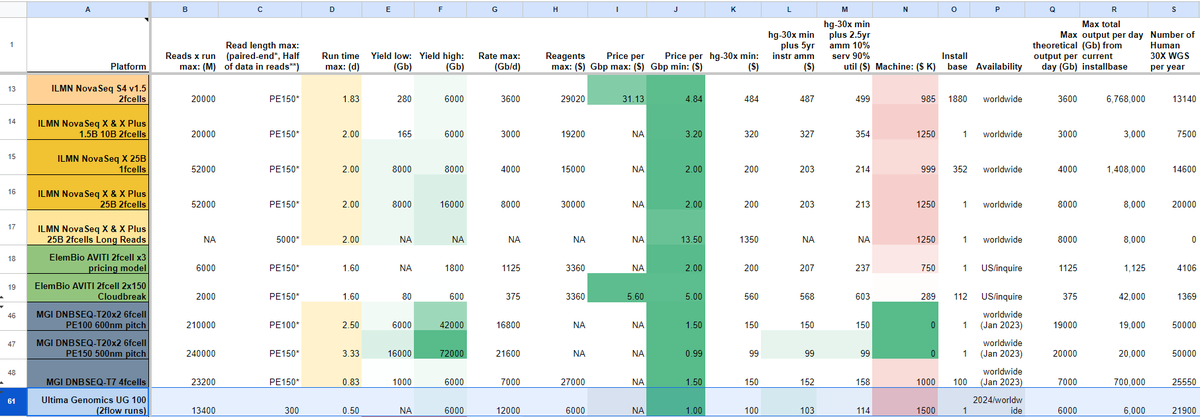
I have updated the #NextGenSequencing specs for the @UltimaGenomics UG100 instrument, which a "deli-fridge" sized competitor to the $ILMN Illumina NovaSeqX "fridge-freezer" sequencer. Single-end median 300bp, 6Tbp 12h run, ~20,000 hg30x/year, $100/genome. https://t.co/TDn5J0glhi
Correcting myself about the Oxford @nanopore P2/P2 Solo: this is only for PromethION flowcells. So the smallest combo covering all flowcell sizes currently is: MinION Mk1b (USB-C version) and P2 Solo.