@WaiLi49329@Cristspies Sou de esquerda e me envergonho da esquerda brasileira. Eles nao estão dispostos a mudar de forma radical o governo e exigir aumento de salário minino e mais direitos. Só sabem falar de pronomes, lgbt e esses discursos woke. Bando de retardados
@WaiLi49329@Cristspies Com certeza, sou filiado num dos partidos e te garanto que tem muito capacho de burguês, em todos os partidos de esquerda tem na verdade. Os tais "comunistas" são uma turminha de universidade preguiçosa pra se mexer. Se gabam por feito dos outros e várias decisões traem o povo.
In 1947, during the Chinese Civil War, 32 women from a small village learned that an advancing army needed to cross a river to reach the battlefield.
They tore the wooden doors off their homes, carried them into the freezing water, and stood there for hours holding them up to form a human bridge while approximately 2,000 soldiers crossed with all their equipment.
Without their help, the soldiers would have had to wade through the river and enter battle in soaking wet clothes, risking hypothermia, sickness and death.
Historical accounts describe soldiers being so moved by the women’s sacrifice that they initially hesitated to step onto the bridge. The women urged them forward. The soldiers understood what these women were sacrificing for them.
There’s a lesson here about the gender war.
When men and women are united by a common struggle, they develop a profoundly deep love and respect for one another.
I think we need that again.
女子火线桥
In my previous piece, I argued that Japan’s hostility toward China is rooted in a collapsing hierarchy.
But there is another layer beneath hierarchy:
memory.
Japan and China do not remember each other from the same historical position.
And that is why their contempt for one another is mutual — but never symmetrical.
Deep down, Japan does not feel that it ever truly "lost" to China in the ultimate sense.
China never bombed Japan.
China never subjected Japan to the humiliation of a Plaza Accord.
China never stationed troops on Japanese soil.
Nor did China shatter Japan and then rebuild it in its own image.
Consequently, the only memories Japanese retain are those of their own "victories"—invading China, colonizing its territory, and massacring its people.
Its deep-seated sense of historical superiority over China therefore never fully collapsed.
Japan repackaged its own subjugation—kneeling at America's feet—as the survival wisdom of "learning from the strong," and, through the historical project of "leaving Asia and joining the West," convinced itself that it was the "White people of East Asia," standing above other Asians.
Chinese disdain comes from somewhere very different.
Japan committed horrific crimes against humanity, yet continues to falsify history, cast itself as the victim, and lash out at the people it actually victimized. That alone is contemptible enough.
Yet Japan also turned kneeling before the country that nuked it into a national consensus and a survival instinct; repackaged a country domesticated by the West as an "Asian model student"; and transformed dependency into a source of civilizational superiority.
China, by contrast, is not a country that was never knocked down.
China was knocked down brutally.
The Chinese people rose again from the ruins through their own efforts, through the blood, labor, sacrifice, and endurance of generations.
A nation that gritted its teeth and mended its own broken spine will naturally feel a profound, visceral contempt when looking at a country that, once knocked flat, chose to remain on its knees—and then derived a sense of superiority from kneeling.
That is why the disdain on either side is not a mirror image.
On one side is the lingering superiority complex of a former empire.
On the other is the contempt of a victim toward a perpetrator that refuses remorse, rewrites the crime, and repackages submission as dignity.
China's self-perception is:
I was knocked down, but I never internalized subjugation as part of my identity.
Japan's self-perception is:
I was knocked down, turned dependency into the norm, and then repackaged that norm as civilization.
Naturally, these two national psyches are bound to loathe one another.
Such diametrically opposed historical emotions cannot be erased by normalized state relations or diplomatic rhetoric.
Treaties can normalize relations; they cannot normalize memory.
This is one of the promo videos ahead of Starbucks' debut in Xinjiang, featuring the Xinjiang-specific line of products and the official mascot of the flagship store: the Xinjiang Starbucks teddy bear, which is also available for purchase there.
🇨🇳 Over 1,300 years old and still flawless. Dating back to the 7th-century Tang Dynasty, Yangzhou thread bookbinding stems from printing—one of China's Four Great Inventions. Recognised by UNESCO in 2009, this is handmade history at its finest. 📚
🎙️Ambassade de Chine en France
<국정은 국가와 국민을 위해 하는 것이지, 정권과 집권자의 이익이나 인기를 위해 해서는 안됩니다.
북한포로 국내송환 문제는 외교, 안보, 한반도 정세에 크게 영향을 미치는 매우 예민한 의제입니다.
남북관계가 어떻게 되든 누군가 죽어나가든 국익이 손상되든 게의치 않고,
성과를 생색내느라 포로 송환사실을 징치고 춤추며 온세상에 광고했을 그들 입장에서는 우리 정부의 비공개노력이 이해가 안될 뿐 아니라 심지어 뭔가 문제될 게 있나 싶을 것입니다.
누군가의 생명, 국가안보 등 국익을 생각하면 이처럼 잔인하고 무책임할 수는 없는 노릇입니다.
국정지지율 만회에 명백히 도움될 북한포로 국내송환 사실을 공개하자는 내부주장이 왜 없었겠습니까?
그러나 공개로 생길 여러 문제를 생각할 때 비공개하는 것이 모든 면에서 타당했고 그렇게 합의했습니다.
소소한 자신의 이익을 위해 누군가의 생명과 국익 안보를 해치는 사람을 살인자나 매국노라 부릅니다. 타당하고 정당한 비공개 조치를 비난하는 것은 옳지 않습니다.
비공개 합의를 어기고 공개한 우크라이나측에 무슨 사정이 있는지는 모르나 많이 아쉽습니다.
무수한 사람들이 죽거나 다치고 모든 것이 파괴되는 반인륜적 전쟁들이 조기에 종식되기를 간절하게 기원합니다.>
野 “젤렌스키가 北 포로 입국 발표… 李 왜 숨겼나, 실상 밝혀야” https://t.co/6aLYlIUeeS
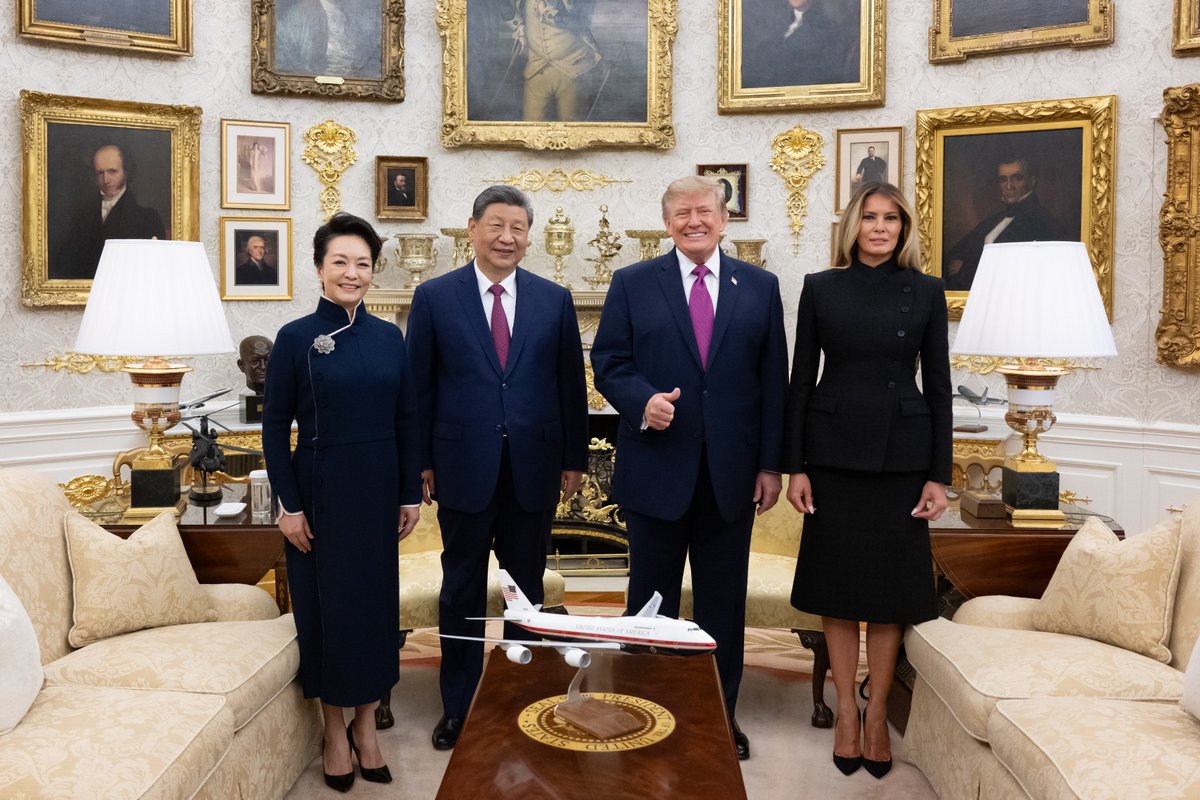
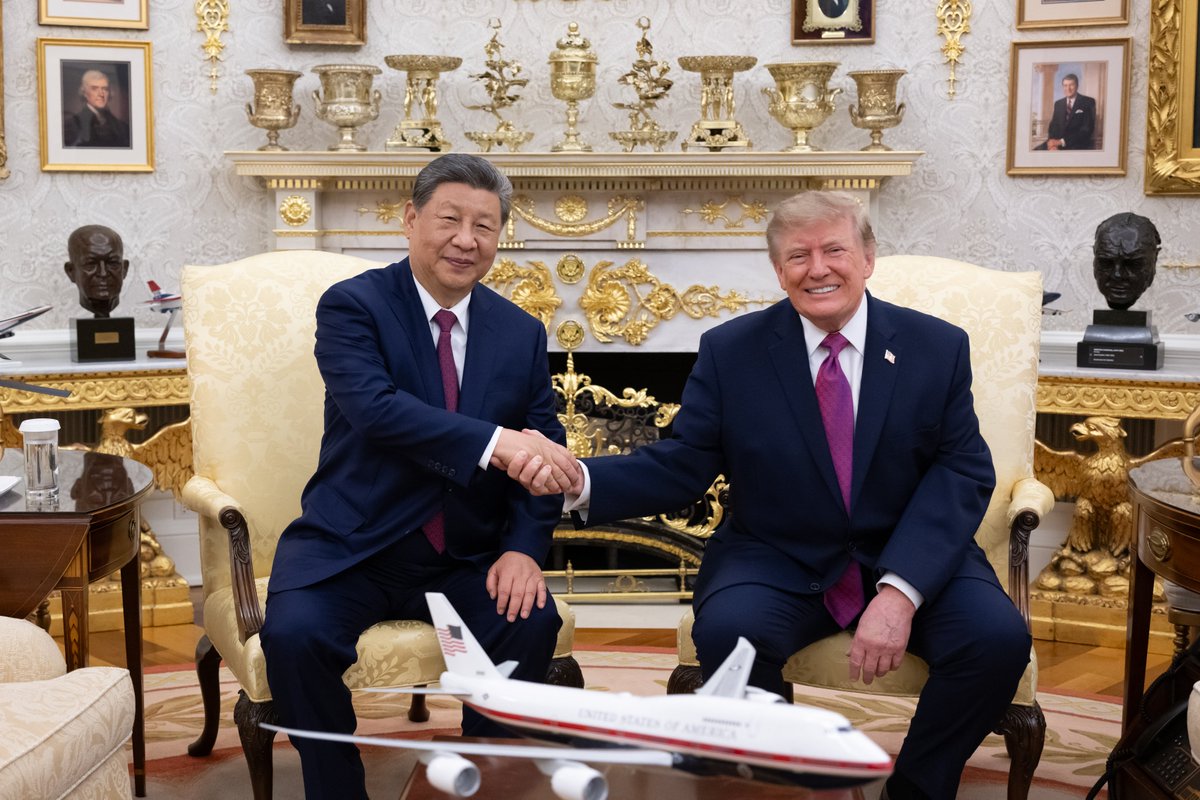
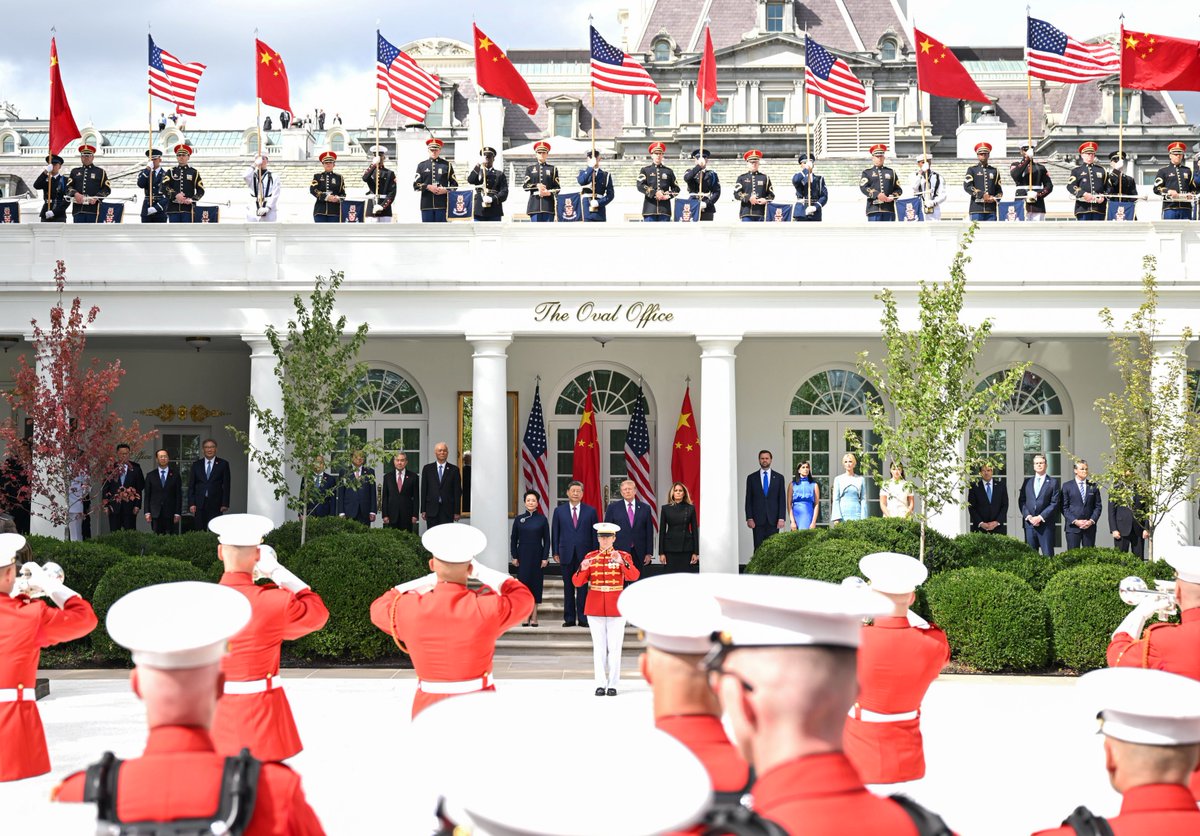
China has now released its official press release of today's Xi-Trump meeting at the White House. At the moment, the US side's press release is not out yet.
I read the Chinese version as soon as it came out. It is not particularly long, but it is surprisingly dense. And one thing stood out to me:
Beijing is not simply talking about "cooperation." It is laying out a framework for how China and the United States can compete and win together.
And the structure of Xi's remarks is revealing:
Trade: cooperate.
AI: compete, but cooperate.
Taiwan: red lines.
Read together with the written statement Xi issued upon arriving in Washington yesterday, today's readout may offer the clearest explanation yet of what Beijing means by a "constructive relationship of strategic stability."
Here is how I read it.
As in my previous posts, the italicized text comes from the Chinese official release, the bolded text highlights key points, and everything else is my analysis.
-- Xi pointed out that the exchange of visits between the heads of state of China and the United States in less than half a year is unprecedented in the history of China-US relations. President Trump and I have maintained communication through various channels and have jointly been steering the great ship of China-US relationship. In May this year, President Trump and I jointly agreed to work toward building a constructive China-US relationship of strategic stability. The new vision reflects the realities of China-US ties, embodies our aspirations for the future, and represents an important step toward finding the right way for the two countries to get along with each other.
We need to work toward a relationship featuring cooperation as the mainstay, competition with bounds, manageable differences, and promises of peace, so as to find the right way for two major countries to coexist.
China and the United States should, and fully can, achieve mutual benefit and win-win results through practical cooperation, help each other succeed through healthy competition, properly manage differences by seeking common ground while respecting differences, and build peace by fostering mutual trust, so that a constructive China-US relationship of strategic stability can better benefit the two peoples and people around the world.
There is a lot packed into these three paragraphs.
First, the reference to the "unprecedented" frequency of leader-level exchanges is notable. Xi's framing moves from his personal communication with Trump, to sustained communication between the two presidents, and then to something much larger: a mechanism for stabilizing the bilateral relationship itself.
Then comes the metaphor of the "great ship."
This is not new. Xi has used the ship metaphor in previous meetings or phone calls with Trump.
A ship this large does not turn quickly. And if it veers badly off course, the consequences can be enormous.
I think the stage on which this "ship" is sailing is the broader Pacific. The ship may encounter storms and rough seas, but the two countries' top leaders are presenting themselves as jointly responsible for keeping it on course.
And then there is a phrase that appears twice:
"finding the right way."
I don't think that repetition is accidental. Beijing is trying to define what coexistence between two competing major powers should actually look like.
And the next sentence gives us the formula:
"cooperation as the mainstay, competition with bounds, manageable differences, and promises of peace" was already included in Xi's statement after arriving in the United States the day before. It provides a concrete framework for managing the competition and building this new type of relationship.
In many ways, this is an attempt to answer a question that has long complicated China-US relations: Do China and the United States have to choose between cooperation and confrontation?
Beijing's answer is no. And more importantly, it is beginning to spell out what that alternative might look like.
-- Xi stressed that the economic and trade teams of the two countries held a new round of consultations and reached a new joint arrangement, which is good news for industries and people of both countries, as well as the global economy. Cooperation is a two-way street. The stability of US-China economic and trade relations requires both sides to expand the list of cooperation, while shortening the list of problems. As long as the two sides uphold the spirit of equality, mutual respect and mutual benefit, a way out of problems can be found.
Xi expressed his hope that the two sides will work in the same direction, stay committed to the principle of mutual benefit and win-win cooperation, and promote the sustained, stable and sound development of China-US economic and trade relations.
And this is where the broader idea of "strategic stability" starts becoming concrete.
How do you prevent competition from turning into confrontation?
Beijing's answer begins with two lists:
The cooperation list.
The problem list.
In my view, expanding the cooperation means continually broadening the areas in which both sides can achieve tangible results. Reducing the problem list, meanwhile, means preventing new disputes from continuously piling onto the bilateral relationship.
This is very pragmatic to manage the relationship. The goal is not to build a relationship completely free of friction-that is clearly unrealistic.
The real goal is this:
To keep increasing the number of areas where the two sides can cooperate, while preventing disputes from expanding to the point where they overwhelm the entire bilateral relationship.
And that helps explain why Xi repeatedly emphasizes equality, mutual respect, and mutual benefit.
In addition, the phrase "cooperation is a two-way street" carries a significant message: Beijing is signaling that it is willing to cooperate, but it does not believe strategic stability can be built by China alone.
One side cannot keep extending the cooperation list if the other side keeps extending the problem list.
Meaningful progress requires both sides to engage, compromise, and reciprocate.
-- Xi said that while China and the United States, as both major powers in AI, compete in AI, they have even more reasons to cooperate. The two sides should leverage respective strengths in AI rather than guarding against each other. We can continue to engage in dialogue on AI, exchange views on its risks and benefits, and work together to prevent the misuse and abuse of AI. The two sides should maintain human control over AI technologies, uphold a people-centered approach and the principle of using AI for good, and ensure that AI serves human progress.
What happens when an issue belongs on both lists at the same time? That is where AI becomes particularly interesting.
The AI competition between the two countries are obvious. But the risks of AI do not respect national borders.
Misuse, loss of human control, safety risks, and broader questions of governance cannot necessarily be contained within China or the United States alone. Two countries can compete fiercely over who develops the most advanced AI systems while still sharing an interest in preventing those systems from creating risks neither side can control.
This is why Xi said the two countries have even more reasons to cooperate. And the remark also echoes President Trump's statement on social media that he would discuss "super intelligence" today.
Trade is about expanding the cooperation list. AI sits on both lists. But Taiwan is different. Let's move on.
-- Xi stressed that the Chinese side's position on safeguarding national reunification and territorial integrity is clear-cut.
It is hoped that the US side will adhere to the correct position of opposing "Taiwan independence," and handle the Taiwan question with caution, so as to lay a solid foundation for China-US strategic cooperation and the development of bilateral relations.
The Taiwan question finally came into focus. It's different from the previous topics.
There had previously been speculation in the United States that Xi's asking Trump to stop arms sales to Taiwan based on the 1982 US-China Communique. I do not know whether that report was accurate. But the language of the communique is quite explicit:
"Having in mind the foregoing statements of both sides, the United States Government states that it does not seek to carry out a long-term policy of arms sales to Taiwan, that its arms sales to Taiwan will not exceed, either in qualitative or in quantitative terms, the level of those supplied in recent years since the establishment of diplomatic relations between the United States and China, and that it intends gradually to reduce its sale of arms to Taiwan, leading, over a period of time, to a final resolution. "
Clearly, 44 years is long enough to qualify as a long term. Yet US policy has failed to follow through on the promise made in that document.
Looking at the structure of Xi's remarks, Taiwan has surely been placed within the boundaries of strategic stability.
After outlining substantial areas for cooperation, the Chinese side is also sending Washington a clear message:
Strategic stability does not mean stability without red lines.
-- Trump said that the state visit of Xi to the United States is a great visit. China and the United States are both major countries, and he and Xi are good friends who maintain in-depth and close communication. The US-China relations will surely be handled well under the leadership of the two heads of state.
The latest round of economic and trade consultations between teams of both countries achieved new outcomes, and both sides should continue dialogue to reach a better agreement. Artificial intelligence concerns the future of humanity, and China and the United States should maintain dialogue and strengthen cooperation on this issue.
Trump's response, as presented in the Chinese readout, is notable for what it reinforces.
He described the visit as "great." This effectively signaled to the outside world that the meeting did not need to be portrayed as a tense, difficult, or deeply divided encounter.
Judging from the narrative presented in the Chinese readout, the two sides have established fairly clear areas of common ground on several fronts:
- High-level communication should continue.
- Economic and trade negotiations should continue.
- Dialogue on AI should continue.
- The overall stability of bilateral relations needs to be maintained.
At the same time, it is equally important to note that Trump's remarks were relatively broad and general, while Xi's remarks played a more substantial role in defining the broader framework of the relationship.
-- Both heads of state also exchanged views on major international and regional issues including the Middle East situation, Ukraine crisis and Korean Peninsula.
The two leaders also confirmed that the two countries will support each other in hosting the 2026 APEC Economic Leaders' Meeting and the G20 Leaders' Summit.
I would not pass over this final section too quickly.
The Middle East. Ukraine. The Korean Peninsula.
None of these issues is simply about China-US bilateral relations.
Their inclusion reminds us that the relationship between Washington and Beijing does not exist in isolation. China and the United States are permanent members of the United Nations Security Council, two of the world's largest economies, and leading technological powers. Whether they can maintain channels of communication therefore has implications far beyond trade, technology, or Taiwan. Both are deeply embedded in a broader multilateral system.
The immediate references to the APEC Economic Leaders' Meeting in China's Shenzhen and the G20 Leaders' Summit in America's Miami reinforce that point. They place the bilateral relationship in a wider context: even as China and the United States compete with each other, they must also continue engaging within institutions and forums where their decisions affect countries far beyond their own.
How will Beijing and Washington manage the competition in a healthy way? When the cooperation list and the problem list are both on the table, which one will Washington choose to make longer?
There is no answer to that question tonight.
What comes next will.
Yesss! China’s Xinjiang athlete Abuduaini Turgun just WON gold in the men’s discus throw at the 2026 Aichi-Nagoya Asian Games with a huge 64.26m throw! Xinjiang is hyping you up like crazy! Congrats, Aini! ✌️
134人习川国宴名单:中国企业家们最终没进白宫,美国科技巨头却几乎全到了:
1. 两国领导人、副总统及川普家族:13人
Donald Trump——美国总统
Melania Trump——美国第一夫人
Xi Jinping(习近平)——中国国家主席
Peng Liyuan(彭丽媛)——习近平夫人
JD Vance——美国副总统
Usha Vance——美国第二夫人
Ivanka Trump——川普女儿
Eric Trump——川普儿子
Lara Trump——Eric Trump夫人
Tiffany Trump——川普女儿
Michael Boulos——Tiffany Trump丈夫
Viktor Knavs——梅拉尼娅父亲
Arabella Kushner——Ivanka Trump女儿
2. 中国党政、经济与外交代表团:16人
Cai Qi(蔡奇)——中共中央政治局常委、习近平办公室主任
Wang Yi(王毅)——中共中央政治局委员、外交部长
He Lifeng(何立峰)——国务院副总理
Zheng Shanjie(郑栅洁)——国家发展改革委主任
Wang Wentao(王文涛)——商务部长
Ma Zhaoxu(马朝旭)——外交部常务副部长
Xie Feng(谢锋)——中国驻美国大使
Tang Fangyu(唐方裕)——中央政策研究室主任
Lan Fo’an(蓝佛安)——财政部长
Zhou Hongxu(周洪许)——中央办公厅副主任、中央警卫局局长
Lyu Luhua(吕禄华)——国家主席秘书
Hong Lei(洪磊)——外交部部长助理、礼宾司司长
Cai Wei(蔡伟)——外交部部长助理、北美大洋洲司司长
Mao Ning(毛宁)——外交部新闻传播司司长
Zhang Quan——彭丽媛秘书
Zhang Yongchao(张永超)——外交部北美大洋洲司副司长
3. 美国政府、白宫、外交、经济、安全与监管体系:25人
Marco Rubio——国务卿
Susie Wiles——白宫幕僚长
David Perdue 庞德伟——美国驻华大使
Scott Bessent——财政部长
Pete Hegseth——战争部长
Jamieson Greer——美国贸易代表
Kevin Warsh——美联储主席
Howard Lutnick——商务部长
John Ratcliffe——中央情报局局长
Steve Witkoff——美国中东问题特使
Stephen Miller——白宫副幕僚长、国土安全顾问
Dan Scavino——白宫副幕僚长
Todd Blanche——司法部长
Chris Wright——能源部长
Robert F. Kennedy Jr.——卫生与公众服务部长
Linda McMahon——教育部长
Doug Burgum——内政部长
Sean Duffy——交通部长
Russell Vought——白宫管理和预算办公室主任
Lee Zeldin——环保署署长
Keith Sonderling——代理劳工部长
David Sacks——总统科技顾问委员会联席主席
Kelly Loeffler——小企业管理局局长
General Dan Caine——参谋长联席会议主席
Jay Clayton——国家情报总监
4. 美国国会与司法系统:7人
John Roberts——美国最高法院首席大法官
Amy Coney Barrett——最高法院大法官
Brett Kavanaugh——最高法院大法官
Mike Johnson——众议院议长
Richard McCormick——共和党籍众议员、佐治亚州
Jason Smith——共和党籍众议员、密苏里州
Steve Daines——共和党籍联邦参议员、蒙大拿州
5. 科技、AI、互联网、芯片与数字经济:15人
Jensen Huang(黄仁勋)——Nvidia CEO
Mark Zuckerberg——Meta CEO
Lisa Su(苏姿丰)——AMD CEO
Tim Cook——苹果执行董事长
Eric Yuan(袁征)——Zoom CEO
Sam Altman——OpenAI CEO
Greg Brockman——OpenAI总裁、联合创始人
Sergey Brin——Google联合创始人
Satya Nadella——微软董事长兼CEO
Sundar Pichai——Alphabet、Google CEO
Sanjay Mehrotra——Micron董事长、总裁兼CEO
Cristiano Amon——Qualcomm总裁兼CEO
Jeff Bezos——Amazon执行董事长
Elon Musk——Tesla、SpaceX CEO
Michael Dell——Dell Technologies董事长兼CEO
6. 华尔街、金融、投资、交易所与支付:11人
John F.W. Rogers——Goldman Sachs执行副总裁、董事会秘书
Lynn Martin——纽约证券交易所总裁
Larry Fink——BlackRock董事长兼CEO
Stephen Schwarzman——Blackstone董事长兼CEO
Jeff Yass——Susquehanna International Group联合创始人、字节跳动/TikTok投资者
Jamie Dimon——JPMorgan Chase董事长兼CEO
David Solomon——Goldman Sachs董事长兼CEO
Jane Fraser——Citigroup CEO
Brad Gerstner——Altimeter Capital创始人兼CEO
Ryan McInerney——Visa CEO
Michael Miebach——Mastercard CEO
7. 航空航天、军工、汽车、能源与医药:6人
Kelly Ortberg——Boeing CEO
Jim Taiclet——Lockheed Martin董事长、总裁兼CEO
Larry Culp——GE Aerospace董事长兼CEO
Mary Barra——General Motors董事长兼CEO
Darren Woods——ExxonMobil董事长兼CEO
Albert Bourla——Pfizer董事长兼CEO
8. 媒体、教育、娱乐、奢侈品、酒店娱乐与政治网络:9人
Linda Mills——纽约大学校长
Miriam Adelson——Las Vegas Sands控股股东
Bret Baier——Fox News主播
Laura Ingraham——Fox News主持人
Jesse Watters——Fox News主持人
David Ellison——Paramount Skydance董事长兼CEO
Meredith O’Rourke——特朗普2024总统竞选全国筹款负责人
Bernard Arnault——LVMH董事长兼CEO
Alexandre Arnault——Bernard Arnault之子、LVMH高管
9. 随行配偶、伴侣及家属:32人
Jeanette Rubio——Marco Rubio夫人
Bonnie Perdue——David Perdue夫人
John Freeman——Scott Bessent丈夫
Marlo Greer——Jamieson Greer夫人
Lori Huang——黄仁勋夫人
Daniel Lin——苏姿丰丈夫
Wang Dan(王丹)——谢锋夫人
Anna Brockman——Greg Brockman夫人
Gerelyn Gilbert-Soto——Sergey Brin伴侣
Lauren Sánchez Bezos——Jeff Bezos夫人
Jane Sullivan Roberts——John Roberts夫人
Jesse Barrett——Amy Coney Barrett丈夫
Ashley Estes Kavanaugh——Brett Kavanaugh夫人
Kelly Johnson——Mike Johnson夫人
Amy Baier——Bret Baier夫人
Emma Watters——Jesse Watters夫人
Susan Dell——Michael Dell夫人
Jane Lauder——Kevin Warsh夫人
Allison Lutnick——Howard Lutnick夫人
Michelle Ratcliffe——John Ratcliffe夫人
Katie Miller——Stephen Miller夫人
Erin Scavino——Dan Scavino夫人
Kristine Blanche——Todd Blanche夫人
Kathryn Burgum——Doug Burgum夫人
Rachel Campos-Duffy——Sean Duffy夫人
Sangeeta Mehrotra——Sanjay Mehrotra夫人
Anthony Barra——Mary Barra丈夫
Kathy Woods——Darren Woods夫人
Jeff Sprecher——Kelly Loeffler丈夫
Katie Simpson——Brad Gerstner未婚妻
Sandra Lynn Ellison——David Ellison夫人
Cheryl Hines——Robert F. Kennedy Jr.夫人