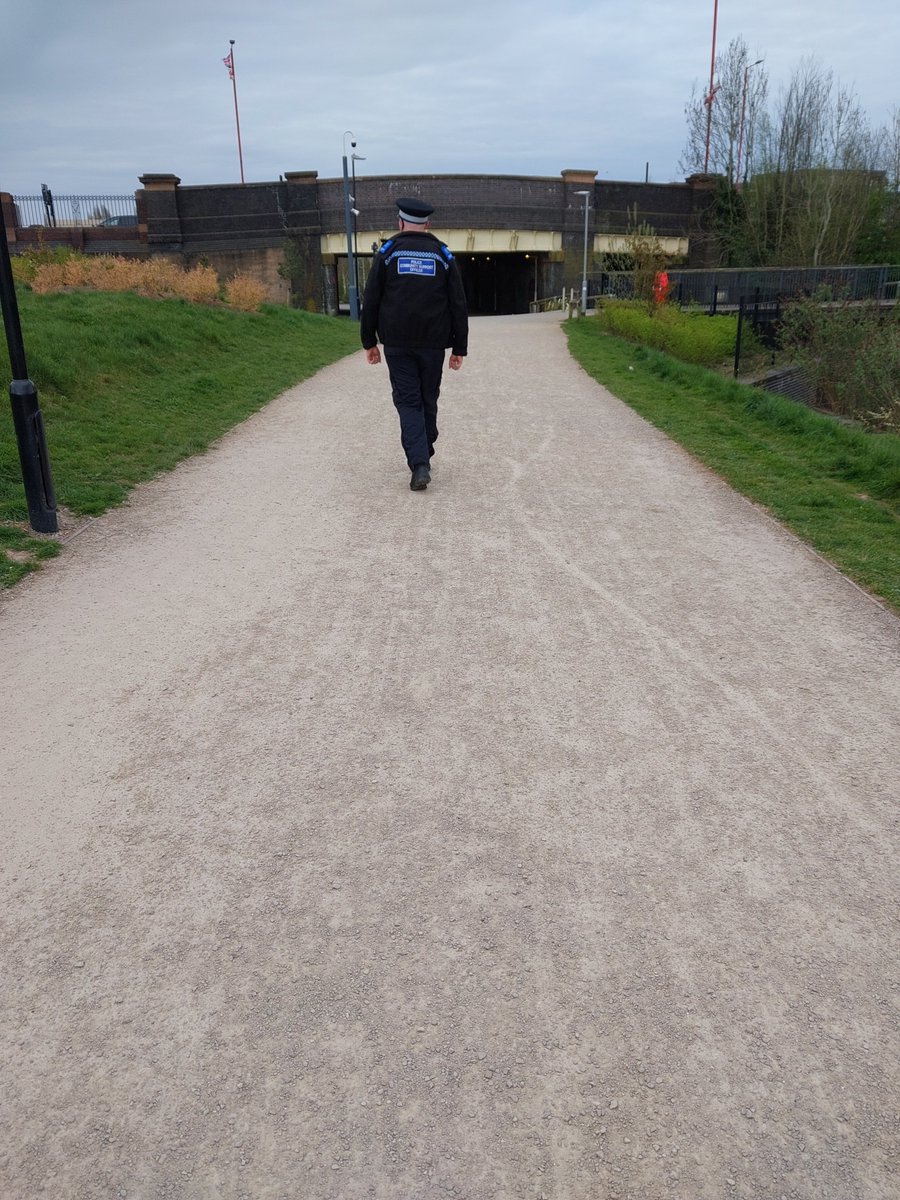
My son is that police officer that the car crashed into.
From Greater Manchester Police:
Dangerous driver jailed after high-speed pursuit seriously injured police officer in Stockport https://t.co/mWERZzV2wM
A bricklayer in East Yorkshire has spent 35 years putting up barn owl nest boxes on weekends. This year, the region saw 308 owlets hatch.
His name is Robert Salter. He's 56 and does bricklaying full time. In 1990, he saw a piece on the news about a man in Lincolnshire installing barn owl boxes, and decided he'd do the same. He started with five.
He now has more than 350 boxes scattered across fields, farms, outbuildings, and trees in East Yorkshire. Every June, he takes four weeks off from bricklaying and visits them with his wife Sue. Scrambling up ladders, ringing chicks, cleaning boxes, repairing the ones the weather got to. He's a licensed bird ringer for the British Trust for Ornithology.
In 2024, the region ringed 95 owlets. In 2025, the count was 308. The Barn Owl Trust says that nationally, this year was "pretty poor" for barn owl breeding, but east Yorkshire is the exception, and it's the exception because of one man with a ladder.
The barn owl population in the UK was estimated at 4,000 pairs in the mid-2000s and crashed to roughly 1,000 by the early 2010s. The species is still recovering.
Most of conservation is one person who refuses to give up.
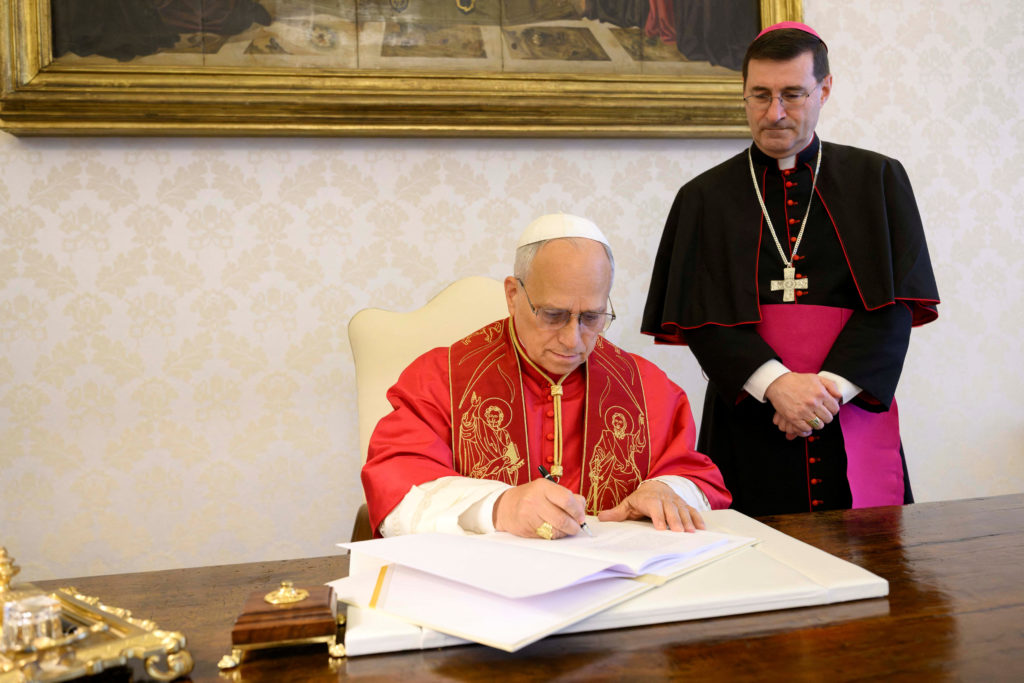
Pope Leo XIV: "Among these ideologies, I consider particularly insidious the one that suggests that every person must earn or justify his or her own worth, to the point of attributing greater value to those who are more efficient or effective. From this perspective, persons end up being reduced to a means of achieving results, a resource to be used and exploited, and are no longer recognized as a proper end in themselves who should never be instrumentalized. The value of persons, however, does not depend on what they achieve or produce. There are rights that apply to everyone simply by virtue of being human, and no human power can legitimately deny or arbitrarily limit them." #MagnificaHumanitas
In 1943, the Gestapo finally caught Raymond Aubrac — one of France's most wanted Resistance leaders. He was sentenced to death. His execution was days away.
His wife Lucie was six months pregnant.
Most people would have hidden. Would have grieved quietly and prayed for a miracle. Lucie Aubrac did something else entirely. She obtained forged identity papers, constructed a cover story, and walked straight into the office of Klaus Barbie — the man history would remember as the Butcher of Lyon — and convinced him to grant her a visit with the condemned man.
She wasn't there to say goodbye.
She was memorizing guard positions. Counting minutes. Mapping the route the prison truck would take.
On October 21, 1943, that truck rolled through the streets of Lyon carrying Raymond and other prisoners toward what should have been the end. Lucie had spent weeks quietly assembling a team of Resistance fighters, planning an ambush with the precision of a military operation. When the truck reached the ambush point, the team struck — fast, coordinated, and without hesitation.
In the chaos of gunfire and confusion, Raymond Aubrac was pulled free.
Lucie — visibly, unmistakably pregnant — had organized every detail of his liberation.
They went into hiding. Weeks later, Lucie gave birth to their daughter in a safe house while German forces searched for them across France. When liberation finally came, the Aubracs didn't merely survive — they rebuilt.
Raymond became a celebrated engineer and entered public life. Lucie became a historian, pouring decades into ensuring that the women of the French Resistance — so often unnamed, so easily forgotten — were written permanently into the record. They raised three children. They traveled the world. They argued and laughed and grew old together.
When journalists asked Lucie, years later, what had compelled her to risk everything that October day, she didn't hesitate.
"He was my husband. What else would I do?"
Lucie Aubrac passed away in 2007 at the age of 94. Raymond — who had once needed a commando team to be freed from a German prison — lived on until 2012, reaching 97 years old. In his final years, he continued speaking publicly about the Resistance, about memory, about the obligation to tell the truth.
They had been married for 64 years.
Not a love story built on grand gestures or perfect circumstances. A love story built in occupied France, in safe houses and forged documents and a prison truck ambush on a Lyon street — forged in fire, and never broken.
True love doesn't wait for rescue. Sometimes, it does the rescuing
I follow with concern the war in #Ukraine, which is experiencing a sharp intensification in these days. I wish to express my closeness to all those suffering due to recent attacks carried out even against civilians. War does not solve problems but worsens them. It does not create security but multiplies suffering and hatred. Where missiles and drones fall, hopes also fall; homes and places of prayer are destroyed, and innocent lives are broken. I entrust all peoples wounded by war to the protection of the Virgin Mary, Queen of #Peace.
As evidenced by the unbridled promotion and implementation of technology at the expense of human dignity, we are truly experiencing an eclipse of the sense of what it means to be human. It is imperative to recover an understanding of the true meaning and grandeur of humanity as intended by God. It is in this sense that the challenge we currently face is not technological, but anthropological, and it is my hope that the Encyclical Letter to be published within a few days will contribute to answering this challenge.
Let us learn to be rich in a different way: more attentive to relationships, more intent on valuing the common good, more attached to the local area, more grateful in welcoming and integrating those who come to live with us.
As we go through ever-increasing political, cultural, societal & world turmoil... I suppose we should thank our lucky stars for life's small joys. Like a walk in the wonderful sunshine amidst the cherry blossom.
Be more @Ralph_Retriever!
In a world wounded by arrogance, people hunger and thirst for justice. We must encourage those who believe in peace and dare to engage in “countercurrent” politics, which focus on the common good. What is urgently needed is the courage of new visions and an educational pact that gives young people space and trust. #ApostolicJourney #EquatorialGuinea https://t.co/81zzJos7Ij
RT for chance to win a signed copy of BLITZ - out in May.
For too long ‘The Blitz’ has been framed as a few desperate months in 1940/41 mainly affecting London. But attacks were far more widespread, far more devastating, & for most of the war.
The BLITZ story is now told afresh:
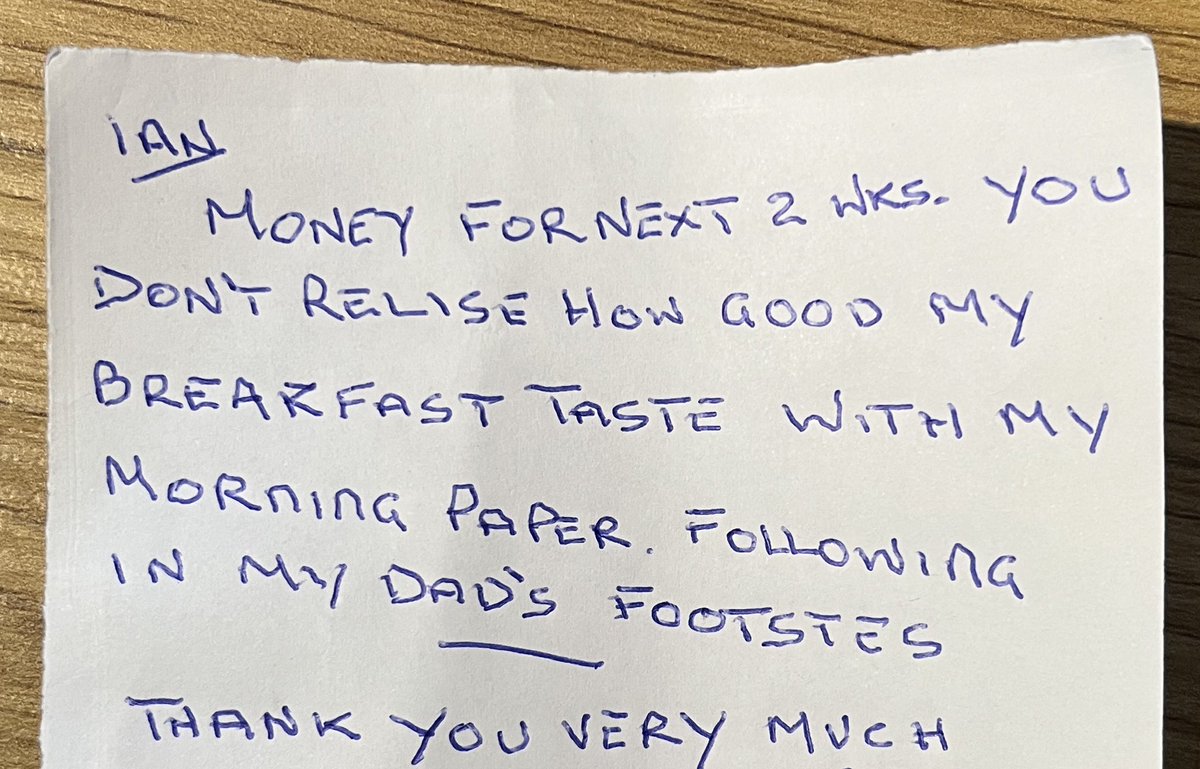
Sometimes you receive something that stops you in your tracks. An 85 year old neighbours loves his newspaper with breakfast. His wife passed a few years ago and it’s his way of keeping up to date with news. He told me in passing the local shop has stopped delivering them and because of mobility issues he can’t get one. So I said I’d get it him and he have it for his breakfast. It doesn’t put me out. I’m up and about anyway. He sent me this note. Small things matter. #bekind
George Michael died in his sleep on Christmas Day 2016. The world mourned the voice, the music, the icon.
Then something unusual happened.
In the days that followed, ordinary people began to speak — not celebrities or publicists, but volunteers, charity workers, waitresses, and strangers who had quietly carried a secret for years. One by one, they stepped forward to describe the same man: someone who had spent decades giving away millions of pounds in near-total secrecy, and who had actively fought against anyone finding out.
A woman appeared on the TV game show Deal or No Deal and mentioned she needed £15,000 for IVF treatment. George Michael was watching. The next day, he quietly phoned and paid the full amount. She didn't know who her donor was. She only found out after his death, when the story broke online.
A volunteer at a London homeless shelter noticed a familiar face one evening — serving food, cleaning tables, blending in. It was George Michael. He had asked the staff not to tell anyone he was there. He came back more than once. "I've never told anyone," the volunteer later posted. "He asked we didn't. That's who he was."
Every Easter, DJ Mick Brown would run a charity appeal at Capital Radio for Help A London Child. Every year, without fail, a call would come in at 3:30 in the afternoon. A £100,000 donation. No fuss. No publicity. George would give and hang up.
After his mother died, he organized a private concert — entirely unannounced — for the NHS nurses who had cared for her. It was not filmed. It was not advertised. It was simply a thank you, offered directly to the hands that had shown kindness when fame could offer none.
He donated royalties from "Jesus to a Child" to children's charities for years. The Terrence Higgins Trust, which he supported for decades, confirmed he gave generously and consistently — insisting his name never appear in any fundraising materials. Childline's founder later revealed he had donated millions, entirely anonymously, over the course of his life.
He struggled, too. Publicly and painfully. Addiction. Loss. The relentless scrutiny of fame. But those who knew him said the struggles never hardened him. If anything, they deepened his understanding of what it means to need help — and to receive it without strings.
In 1999, a journalist managed to get him to comment on the rumors of his giving. He said simply: "I really don't like to talk about the amount I've given to charity over the years. I know it's very substantial. I don't exactly know what it is, and I don't really like to linger on it."
After his death, the full shape of what he had done became visible — not because he wanted it known, but because the people he had helped could no longer stay silent. Patients who received care. Students who stayed in school. Families who kept their homes. Children whose charities kept their doors open.
George Michael understood something about kindness that most of us only glimpse: that it loses something the moment it starts seeking applause.
He gave without witnesses.
The world found out anyway. And maybe that's exactly as it should be.
History in the making
In this new image from our @NASAArtemis II crew, you can see Orientale basin on the right edge of the lunar disk. This mission marks the first time the entire basin has been seen with human eyes.
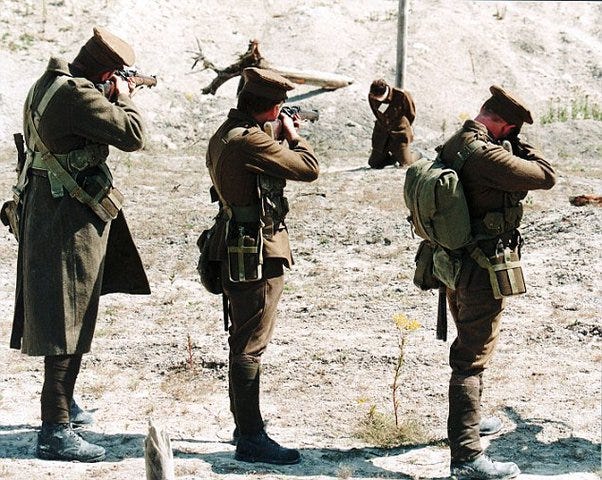
Between 1914-1918, the British Army shot 306 of its own soldiers at dawn. They were led out before firing squads, blindfolded, tied to a stake, and killed by men from their own regiments.
The charges ranged from desertion and cowardice to quitting a post without orders. Most of these men were volunteers, civilians who had enlisted out of patriotism and found themselves broken by conditions that no human being was designed to endure.
The Western Front was not a war in any traditional sense. It was years of continuous artillery bombardment, rat-infested trenches, mass death measured in yards of mud, and the constant expectation of the next assault.
Men watched their friends disintegrate beside them. They lived for months at a time without sleep in any meaningful sense. They developed shaking fits, paralysis, blindness, and complete psychological collapse.
The army called it shell shock. When it manifested as an inability to return to the front, the army sometimes called it cowardice.
The trials were brief and often deeply unfair. Many men were undefended or chose to speak on their own behalf, unaware of their rights. Some were convicted and executed on the same day.
Officers suffering from the same conditions were frequently diagnosed with neurasthenia and given medical leave. A private soldier who broke under identical circumstances could be shot. The class divide in how shell shock was treated was stark and documented.
The case that finally forced the government's hand was that of Private Harry Farr, executed for cowardice in 1916 at the age of 25. Farr had already been hospitalized for shell shock and sent back to the front before he collapsed again.
His daughter Gertrude spent decades insisting her father was not a coward, eventually joining a legal challenge against the Ministry of Defence. In August 2006, when Gertrude was 93, Defence Secretary Des Browne announced a blanket pardon for all 306 men.
Forty others, convicted of murder and mutiny, were excluded. The pardon took legal effect the following year under the Armed Forces Act 2006.
The pardons were not without controversy. Browne's announcement included a careful caveat: the pardon did not cast doubt on the procedures or judgments of the time, and it did not cancel the original sentences. What it changed was the formal designation. The men were now to be recognized as victims of war.
The Shot at Dawn Memorial at the National Memorial Arboretum in Staffordshire had already been standing for five years by the time the pardons came. Unveiled in 2001, it depicts a young soldier blindfolded and bound to a stake. The figure was modelled on Private Herbert Burden, who had lied about his age to enlist and was seventeen years old when he was shot for desertion. Around the central figure, individual wooden stakes bear the names of each of the executed men, arranged in a semicircle. The effect is deliberately overwhelming.
For many of the families, the shame had lasted nearly a century. Soldiers shot for cowardice were denied the pension their widows would otherwise have received. Their names were left off local war memorials. Their children and grandchildren grew up knowing the circumstances of the death but unable to speak of it.
The pardon did not undo any of that. What it did was confirm, in law, what the families had argued for generations: that the men who broke under the weight of industrial warfare were not criminals. They were casualties, distinguished from the men buried in the official cemeteries only by the manner in which they died.
#drthehistories
I spoke with His Holiness Pope Leo XIV @Pontifex today. At the very moment of our conversation, the Russians attacked Ukraine yet again – hundreds of “shaheds” and dozens of missiles against our cities and communities. In fact, the attack has been ongoing in waves since last night, and at least five regions have already been targeted. Not a single hour of peace for our people, and this is Russia’s response to our proposal for an Easter ceasefire. Essentially, the Russians have only intensified their strikes, turning what should have been silence in the skies into an Easter escalation. This certainly cannot be ignored, and I am grateful to everyone in the world who does not remain quiet about it.
I spoke about the negotiation process and our work with the American team. I also expressed gratitude for the assistance in returning our abducted children and for all the humanitarian aid the Vatican has provided to our people, particularly during this difficult winter. We also discussed the situation in the Middle East and the Gulf region.
I wished His Holiness and all those celebrating Easter this Sunday a blessed holiday and peace. Of course, we would be glad to welcome His Holiness to Ukraine on an apostolic visit. And I am especially grateful that the Pope remembers Ukraine, the Ukrainian people, and prays for peace for our nation.
@NASA I did something similar back in the 1990’s for my two sons for the Mars landings. My younger son age 4, thought the aliens there would know his address! And now I’ve done the same for my grandson age 15 months!