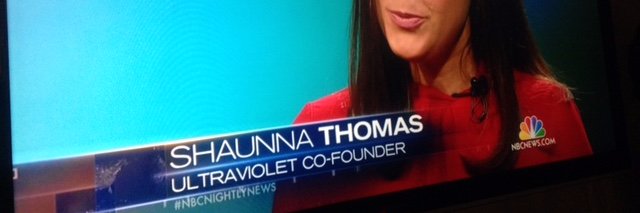
less than a week before the Dem primary in New York’s 12th congressional district, a new Super PAC emerges to support Alex Bores’ pro-regulation approach to AI:
Guardrails Alliance, a populist answer to corporate money in politics
w/ @teddyschleifer
https://t.co/bdpXlBZisP
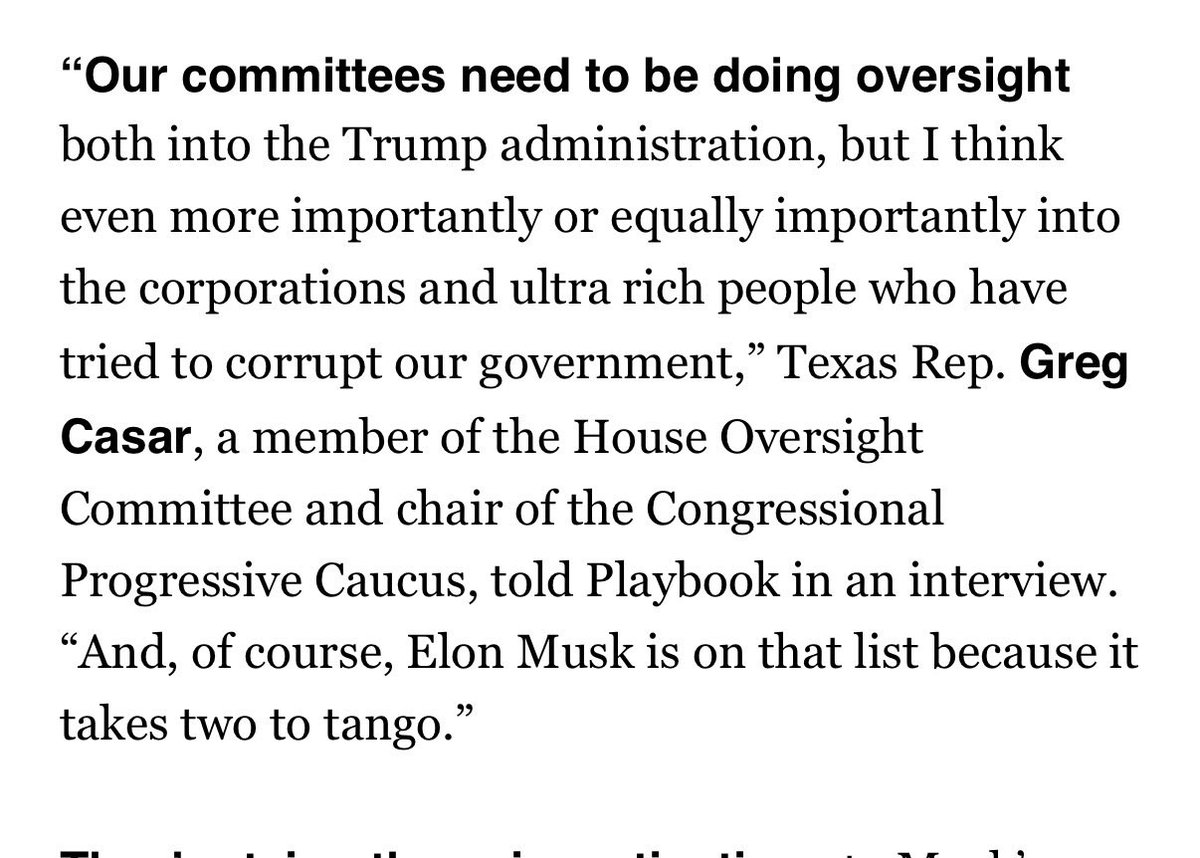
As Republicans brace for election losses, Musk prepares for war
“A host of Democrats have said they are eager to wield the power of their office to investigate the tech titan and his ventures should they win either chamber in the midterms.”
https://t.co/B6QWitTrGl
As AI firms recklessly unleash hacking agents across the internet, longstanding cybersecurity vulnerabilities are being exploited with even greater ease and frequency.
Hackers who compromise accounts or expose sensitive data can upend people’s lives.
This is not happening in a legal vacuum, and businesses across sectors face real legal duties.
At @FTC we routinely brought lawsuits against firms whose lax data security practices led to major hacks, exposing people to identify theft, stalking, and serious data misuse.
1. AI firms that are unleashing hacking agents could be held liable for engaging in “unfair or deceptive” practices under the FTC act and state UDAP laws, as well as other statutes.
2. Businesses whose systems get hacked because they’ve failed to follow basic security protocols may also be liable for failing to implement reasonable safeguards. Bad actors may be the ones exploiting these vulnerabilities, but that doesn't absolve businesses from having allowed the vulnerabilities to persist in the first place.
Here is a list we published of some basic security vulnerabilities businesses have a legal obligation to patch up: https://t.co/nCy7z79sVZ
3. CEOs can also be personally liable for presiding over lax data security practices, as we held in our case against Drizly: https://t.co/KjRye8y9SY
4. Lastly, businesses that suffer hacks or breaches must alert any affected parties with clear disclosures that are timely, accurate, and actionable. Failing to disclose security breaches can also violate the law: https://t.co/kd4ds1idef
This is a must-read thread by civil rights leaders @rashadrobinson and links to a letter he and others wrote to the CBC re corporate contributions, starting with Palantir, and the need for Congressional leaders to be firmly on their voters side in this crucial moment.
The Congressional Black Caucus is under attack in two ways. From the outside, racist gerrymandering is trying to wipe out its seats. From the inside, corporations are working to neutralize what it was built to do.
The obvious answer is that we do neither of these things. There’s actually a tremendous amount of consensus within the Democratic Party on a trade policy that empowers workers, strengthens our industrial base, protects the planet, and reins in abuses from multinational corps.
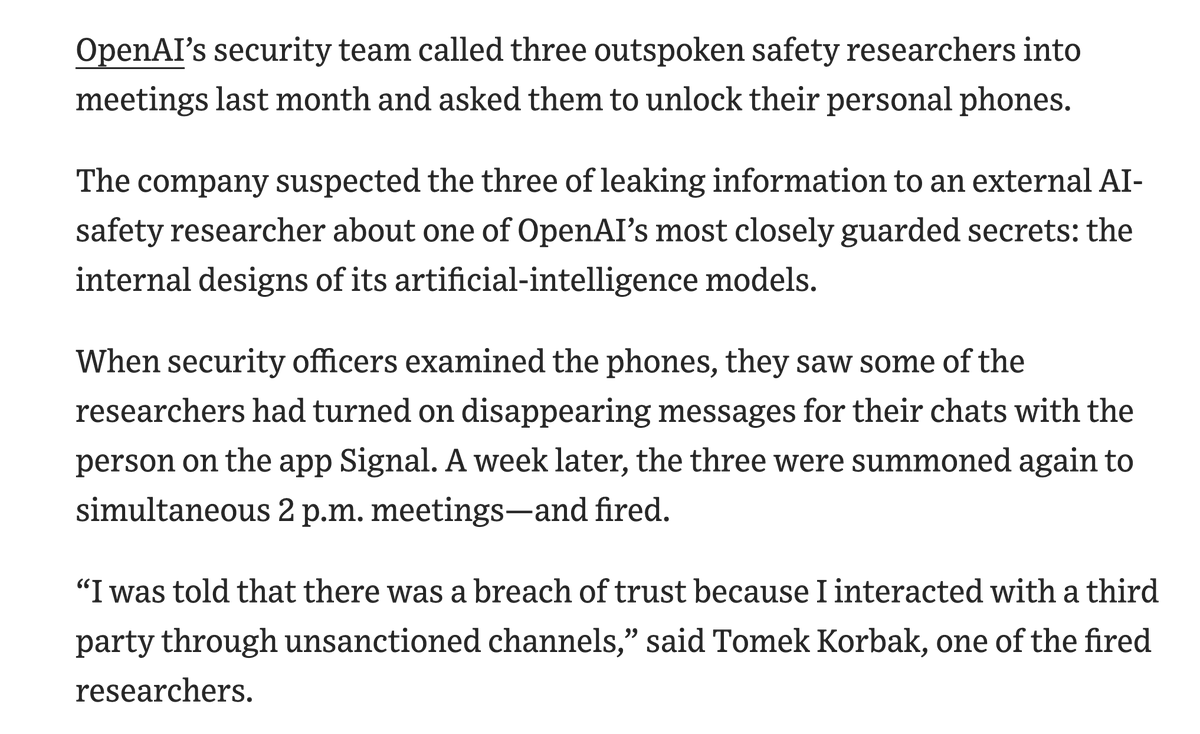
Wow. Per this reporting:
- OpenAI investigators decided that Ryan Greenblatt had been the source for The Information story on a new technique improving capabilities at the expense of monitorability (recurrent depth i.e. quasi-neuralese)
- OpenAI then fired three safety researchers for having disappearing messages on Signal chats on their personal phone with Greenblatt.
Greenblatt denies that he was the source for the story, telling the Journal “I take confidentiality very seriously and never share such information with reporters." FWIW, I think there are number of reasons to believe him:
- Safety researchers are often the most skittish about leaking to journos fearing that getting caught would blow back on safety writ large. This dynamic is even more pronounced for safety researchers at third parties, whose access is wholly determined by the company.
- If he wanted to sound the alarm about this technique, he wouldn't have leaked to a publication with a famously expensive and insurmountable paywall (which, btw, has probably the best sourcing at AI cos).
- I've interviewed him and separately chatted with him a few times over the years, and IMO he's too rationalist to lie directly.
- OpenAI provided no evidence to the WSJ that Greenblatt was involved.
OpenAI tells the Journal that the firings were for more than just the Signal chats, but doesn't substantiate. Disappearing messages on Signal, as the piece mentions, are indeed a common practice in Silicon Valley.
Regardless of the underlying facts of the case, it's clear that the way OpenAI has handled this has had a chilling effect on employee conduct. Each of the three fired researchers publicly criticized the company in the weeks leading up to the firings. I haven't seen that kind of public criticism from employees since (though I'm told there's pushback happening internally in Slack). People have understandably gotten more skittish about talking to me as well. If OpenAI were actually trying to avoid chilling employee speech, the company would share a lot more information than they have.
Gift link:
https://t.co/mVyUmdYhw6
Since last Saturday, Meta executives have given vague & shifting answers for why the No Kings Instagram was taken down at the height of the protests.
Today, I'm calling on Meta to come clean.
Is Meta intentionally censoring speech? Americans deserve answers.
https://t.co/r6tQ78Aekq
The Congressional Black Caucus is under attack in two ways. From the outside, racist gerrymandering is trying to wipe out its seats. From the inside, corporations are working to neutralize what it was built to do.
SCOOP: Major U.S. banks are detecting unauthorized third-party AI agents inside customer accounts, including some attempting to take actions that appear to be independent of user instructions, sources told Axios.
The findings have alarmed banking executives, who are racing to restrict access to their systems as AI moves at a velocity faster than financial institutions can respond, multiple industry and bank executives told Axios.
Several banks are now preparing for worst-case and even “day after” scenarios, including how to rapidly secure or restore customer accounts if things go wrong, the people said.
Several bank executives told Axios they're struggling to distinguish between human users and AI agents. One executive said banks also struggle to determine whether agents are authorized by customers or potentially operating without their permission, more akin to rogue agent behavior.
Read my latest for Axios here: https://t.co/Q3bda5In8q
Guardrails Alliance PAC, which pushes AI regulations, hits Republican Laurie Buckhout in #NC01:
"Buckout's got the backing of ... tech execs who want data centers in our backyards to build tech that'll take our jobs, and that researchers are saying might even take everything."
Guardrails Alliance is going big in AZ-1 to take on Jay Feely, who received over $500,000 in support from corporate AI super PAC Leading the Future. We know what a liability corporate AI money is and that's why we're letting voters know just who's behind Jay Feely.
@BernieSanders and I are standing for a 5% tax on 250 California billionaires so 3.5 million Californians and poor kids don’t lose their healthcare.
Gavin Newsom is standing with the billionaires and supporting Proposition 42 to stop a billionaire tax from ever happening.
FRONTIER Act includes federal preemption. So to be clear, both OAI and Anthropic claim they’re calling for regulation and, in doing so, advocating for putting Trump in charge rather than permit states to pursue regulations they don’t control.
Amid upset in the AI safety world over leaked proposals from Anthropic, @chrislehane from OpenAI pounces with an essay calling for congressional action. He continues leaning into Obernolte/Trahan FRONTIER and even nods to kill switches https://t.co/dIZcinUryn
Good this is published. People deserve to know Anthropic’s aims- to write their own rules + protect their profits at the expense of public safety or benefit
A lot of things wrong but a stand out is they want to protect their right to kill people in the interest of “innovation”??
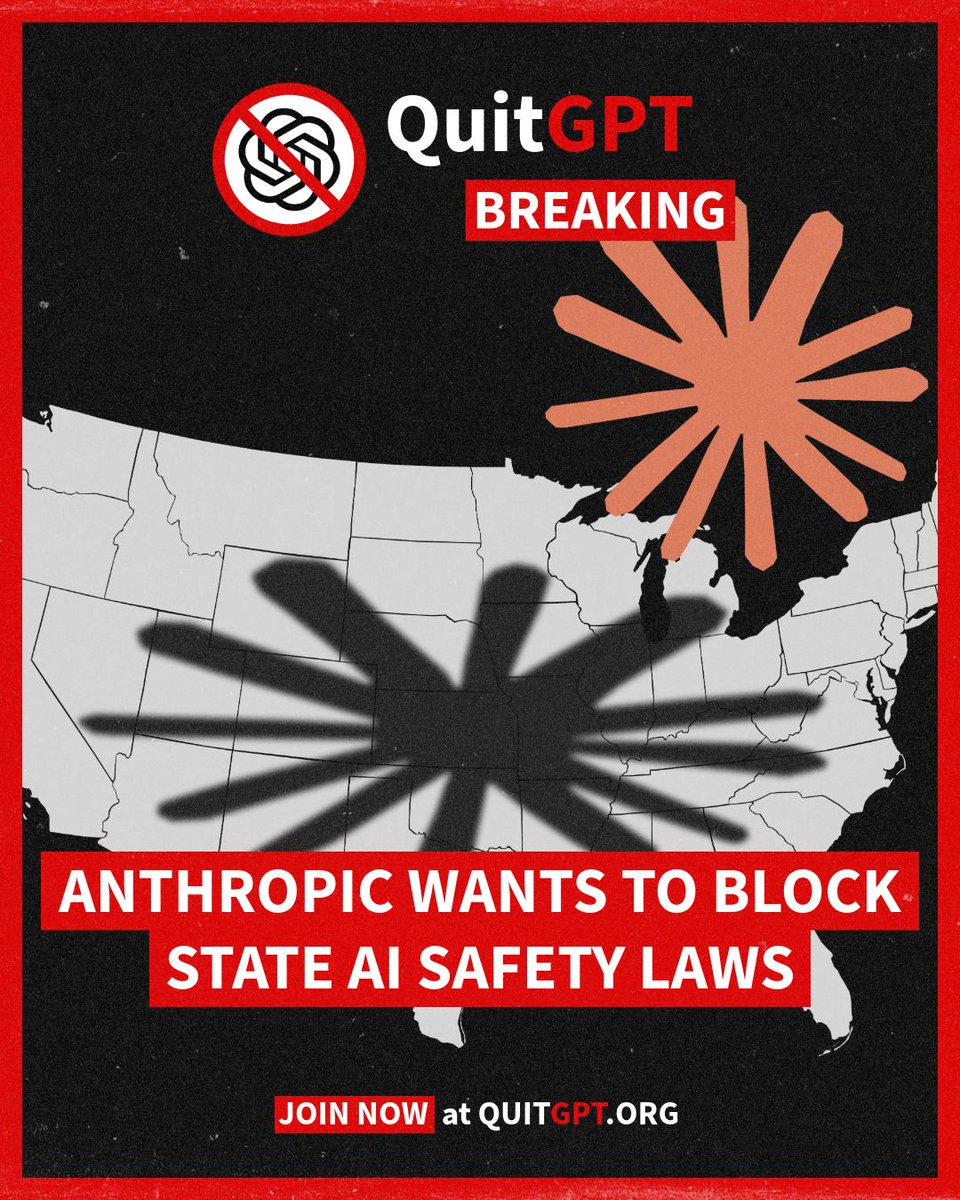
Anthropic is quietly lobbying Congress to ban all 50 states from regulating AI.
Source: Politico exclusive, "Anthropic quietly pitches its own AI safety bill to lawmakers."
It’s beyond sad. It’s beyond disappointing; at this point, it’s disqualifying for anyone with ambitions for higher office as a Democrat, or a Republican, for that matter, to be fighting to keep billionaires from being taxed while kids don’t have health insurance and the cost of living goes sky-high.
These billionaires are also the ones hellbent on replacing entire workforces with the AI they are developing with our tax dollars (watch the “Musk” doc). We are also living through the largest wealth gap in modern history. At this point, the only way to balance out the economic forces that have bought our politicians and keep rigging the game against working people is through taxes.
Let’s hope Gavin gets some sense and walks this back. It’s crazy that this is what he chooses to spend his political capital, and part of his legacy, doing. He vetoed the bill that would have put a “kill switch” on AI for our protection. He vetoed a bill that would have gotten forever chemicals out of cookware. Time and time again, he goes with corporate interests over the well-being of the people, even after his own bipartisan legislature votes for something.
And here we go again.
Gavin, we aren’t looking for the Democratic version of Trump. That was a good goof. Please try something else. It’s tired.
The people need a champion, man. A real, bona fide champion who isn’t just tough in tweets or press conferences, but tough when it comes to the real imbalances people are struggling with every day: billionaires vs. people and the planet.