عندك فكرة جهاز.. بس تصميم الدائرة موقفك؟ ⚙️😅
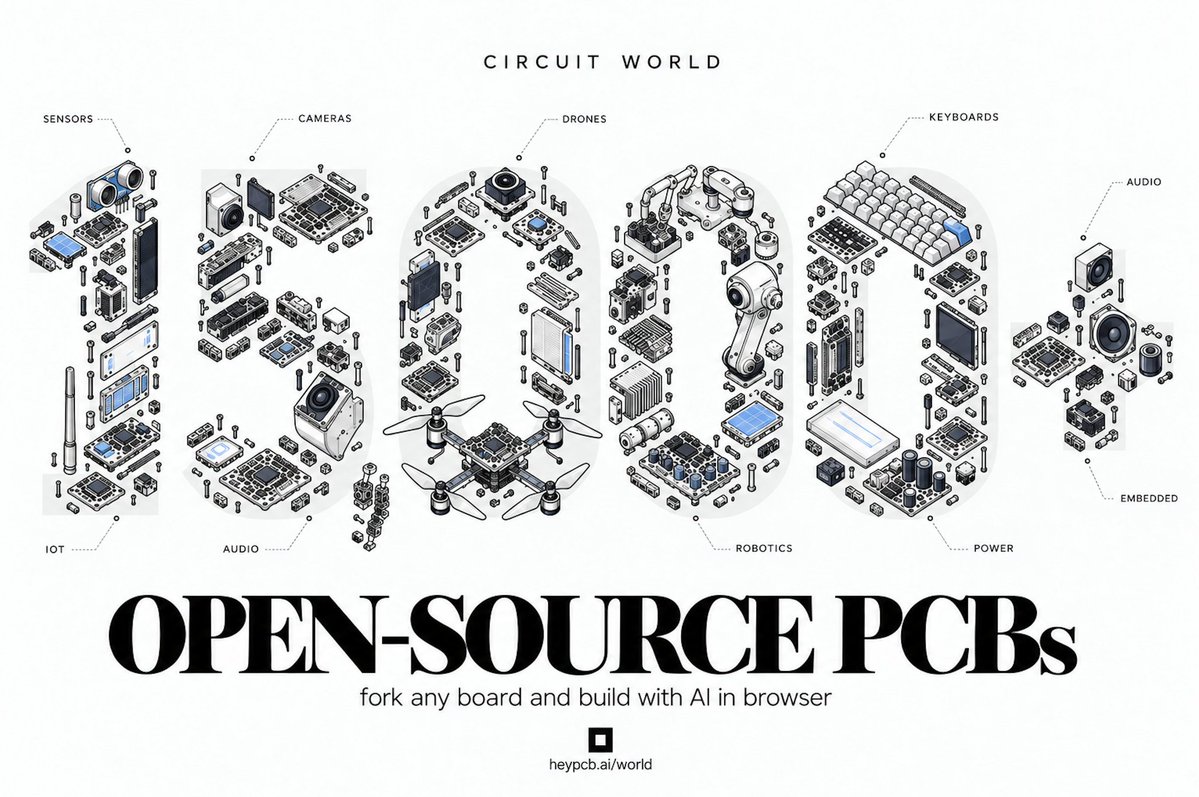
منصة Circuit World من @heypcbai جمعت أكثر من 15,000 تصميم لوحة إلكترونية مفتوحة المصدر، تقدر تستكشفها وتعدّل عليها من المتصفح.
-للروبوتات
-الدرونات
-الكاميرات
-أجهزة إنترنت الأشياء
وعلى منصات مثل ESP32 وArduino وSTM32.
الطريقه👇
١. تختار تصميمًا قريبًا من فكرتك.
٢. تفتح المخطّط وتسأل الـAI: كيف تشتغل الدائرة؟ وليش حطّوا هالقطعة هنا؟
٣. تسوي Fork، يعني نسخة مستقلة، وتبدأ تعدّلها لمشروعك مع مراعاة ترخيصها.
اللي يعجبني إنك تتعلّم من قرارات تصميم حقيقية: ليش اختاروا هذا المكوّن؟ وكيف ربطوه بالباقي؟ وش يصير لو غيّرته؟
هنا قيمة المصدر المفتوح: تبدأ من معرفة موجودة، وتضيف عليها فهمك وتجربتك 👌
وش أول جهاز ودّك تصمّمه؟ 🔌
https://t.co/ltbkE4NySb
📸 @heypcbai
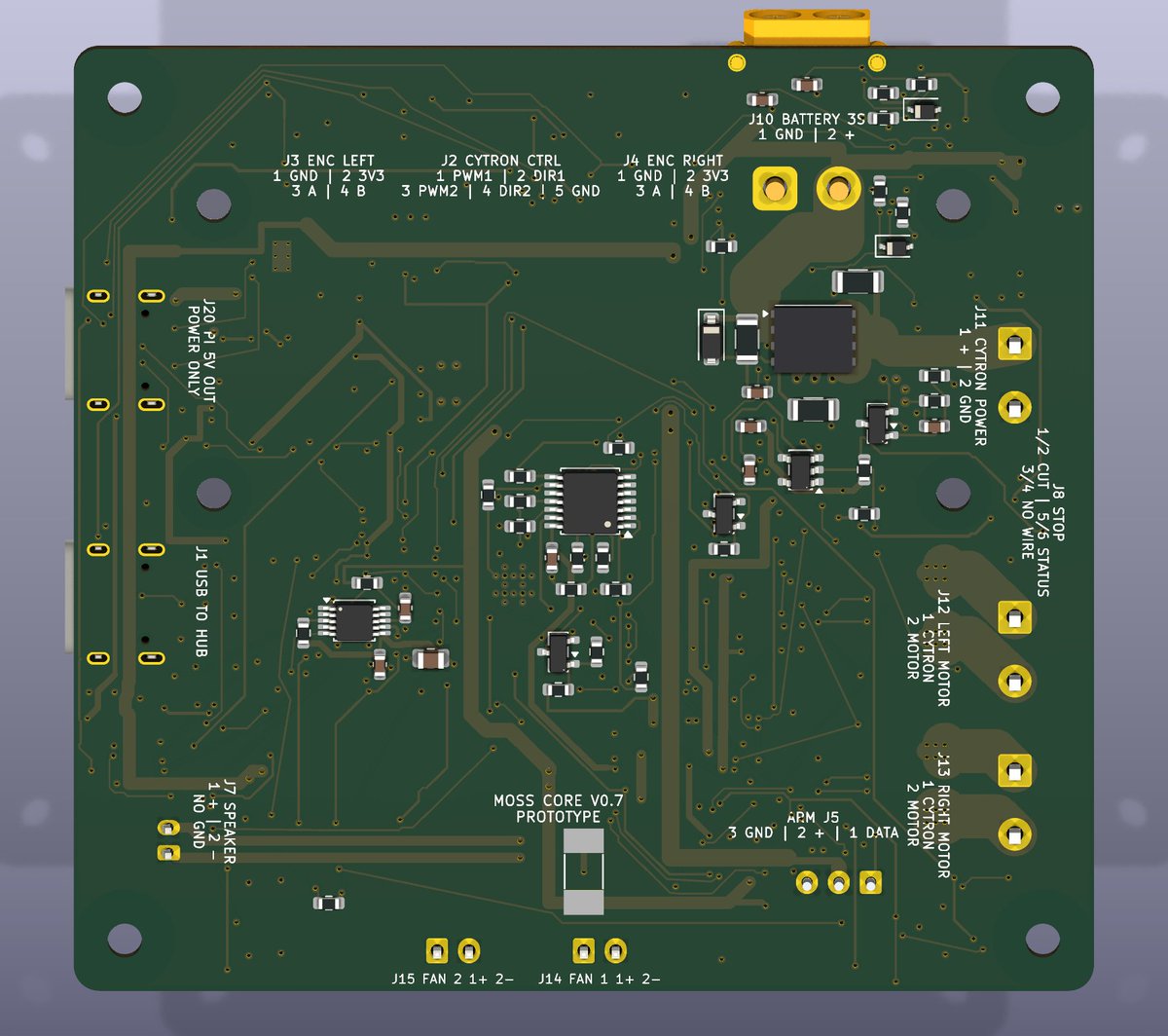
My first job was graphic design, and preparing this PCB for MOSS, the litter-picking rover, feels surprisingly familiar. It reminds me of prepress: once the files reach the printing press, one wrong phone number can ruin an entire print run.
That made me take another look before manufacturing. I'd forgotten two connectors for the cooling fans, found some silkscreen mistakes, and realised the edge computer's power supply didn't need such a bulky fuse holder. Fixing it freed up some room for the MOSS logo too 🙂
Working with Codex and KiCad made those changes feel manageable. The old order is now cancelled and the updated files are with @PCBWayOfficial for review.
To my beginner's eye, it looks good now. But I'm still learning, and I'd love some experienced eyes on it before the first boards are made.
The design files are on GitHub, feedback and reviews are very welcome, link in the comments.
Chinese engineering team builds the robot's chip and its control code as one artifact, and neither one is written by hand
Most robotics splits the two, a silicon team ships a processor and a software team spends a year discovering what it's bad at.
They generate both from the same movement spec, so the chip knows what motion it exists to serve and the code knows what the silicon can hold:
> Describe: the robot's reach, payload, cycle time and safety envelope go in as text
> Co-solve: the control loops and the silicon that runs them are generated together
> Burn: the chip layout and the firmware come out matched, nothing adapted later
• What co-generating actually eliminates
> Control code shaped around a latency the hardware never had to impose
> Silicon carrying units the motion profile will never once call
> The six-month handoff where each team learns what the other assumed
• Why this only works generated
> A human can't hold both the floorplan and the control math in one revision
> A change to the payload re-solves silicon and software in one pass
> The tradeoff between them becomes a value, not a negotiation
One robot's chip and control stack regenerate from spec in about two hours.
And the part that broke my brain:
The usual process takes a year and ends with software apologising for the hardware.
This one regenerates both overnight and they were never designed apart.
Same robot. One version is two teams guessing about each other.
The bottleneck was never the chip or the code.
It was the wall between them ↓
I made my own RAM! And it almost works!
If you think regular RAM is expensive, try PDP-11 memory. It's like $1000 per megabyte if you can find it.
So, I set out to make my own. With ChatGPT in hand, we got busy in the EasyEDA designer. I've done PCBs before, but nothing this complicated.
We got the schematic done, the PCB laid out, routed, and the Bill of Materials ready for production. With the FPGA code saved away, I ordered 5 of the boards to test.
I’ve never flashed an FPGA before, so I bought an FT232H and wired it up. I installed openFPGALoader and after a few false starts over compressed bitstreams, I managed to get it flashed. All new territory for me!
After a bunch of bench testing, I ultimately put it in a backplane with an M8190. And the good news is it shows up as both 4M of RAM and reserved space for the ROM. The bad news is that access to any ODD memory location fails. So I’ve got something that amazingly almost works end to end, but has a really fundamental problem.
So at this point, my RAM works, but only half as well as it should. I'll keep you up to date!
موقع رهيب ..
اذا ودك تتعلم البرمجة و التصميم للدوائر الالكترونية بدون ما تشتري لوحة؟
موقع Arduino يشرح دورة تفاعلية مجانية في المتصفح 👇
🧪 وش فيها؟
• لوحة Arduino Uno ثلاثية الأبعاد 3D توصّل عليها المكونات وتشغّل الكود وتشوف النتيجة قدامك
• 16 درسًا وقت فحصي اليوم، من «تعرّف على اللوحة» و«شغّل LED» إلى الحساسات والمحرك والسيرفو ومشروع كامل
• بدون تسجيل، وواجهتها بالإنجليزي
🎓 لمن مفيدة؟
• للمبتدئ قبل ما يشتري عدة
• للمعلم اللي ما عنده أدوات لكل الطلاب
• تربط سطر الكود بما يصير فعليًا على اللوحة
⚠️ المحاكاة ما تغني عن لمس القطع اللكترونية
🧠 رأيي: ممتازة لتعليم الإلكترونيات للمدارس اللي ما عندها معامل، وأتمنى نشوف نسخة عربية منها @arduino
🔗 https://t.co/LzIhSd6WWu
(تصميم Dilum Sanjaya)
📹 @0xKapri





,连带着配套的 chrono-tz 和 humantime 全家桶一起宣告退役。官方给出的出路只有一条:换库,切到 jiff 或 time。
顺着 Issue #1768 和 RustSec PR #3214 翻了一下始末,这其实是开源社区里一次教科书级别的体面交接:
chrono 诞生于 Rust 1.0 之前,底层架构和 API 历史包袱极重。但因为近 10 亿次下载的下游依赖盘子太大,大改会炸穿全网,不改又实在背不动。今年 1 月,核心维护者 djc 宣布软弃用,甚至明确表示 chrono-tz 以后连全球时区数据库变更都不再同步了。
最硬核的一幕发生在评论区:有开发者自告奋勇想接手维护,被 djc 当场回绝——从公开信息看,你在 https://t.co/GFmEwWGgRy 生态里的资历还不足以让我信任并交出这个库。在经历过 xz 投毒事件的开源圈,一个近 10 亿下载量的基础库宁可原地停更,也绝不随便传位给陌生人,这反而是对供应链最大的负责。
之所以偏偏选在今天拉响全网警报,是因为 djc 早在 9 月中旬就写好了停更通报,但全社区默契地把 PR 压了整整两个月没合——大家都在等 ripgrep 作者 BurntSushi 写的新一代时间库 jiff 发 1.0,免得逼着全网开发者先迁 0.2、过俩月再迁 1.0 折腾两遍。
前天,BurntSushi 跑来 PR 底下留了一句话:我刚发了 Jiff 1.0。
今天,djc 反手合并 PR,亲手给服役十年的 chrono 拉下了电闸。
手头老项目的代码现在照样能跑,如果 CI 报警,先在 audit.toml 或 deny.toml 里把 RUSTSEC-2026-0543 加进忽略列表就行;至于新项目,直接拥抱 jiff 1.0 吧。](https://pbs.twimg.com/media/HXVTT9xboAA1_JM.jpg)