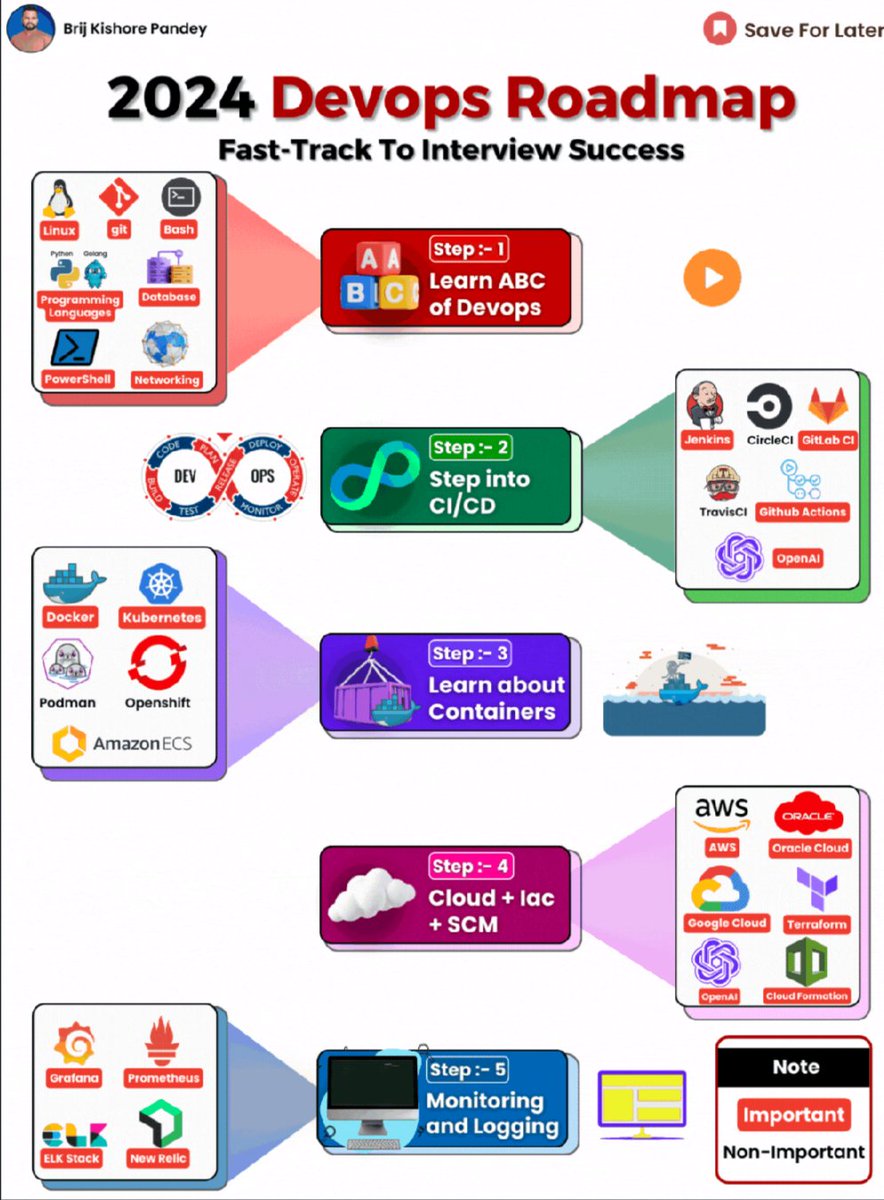
Generative AI is no longer a shiny innovation layer.
It is becoming part of the operating model.
The real transformation isn’t technological.
It’s organizational.
Understanding this means not asking how to adopt AI —
but how to evolve because of it.
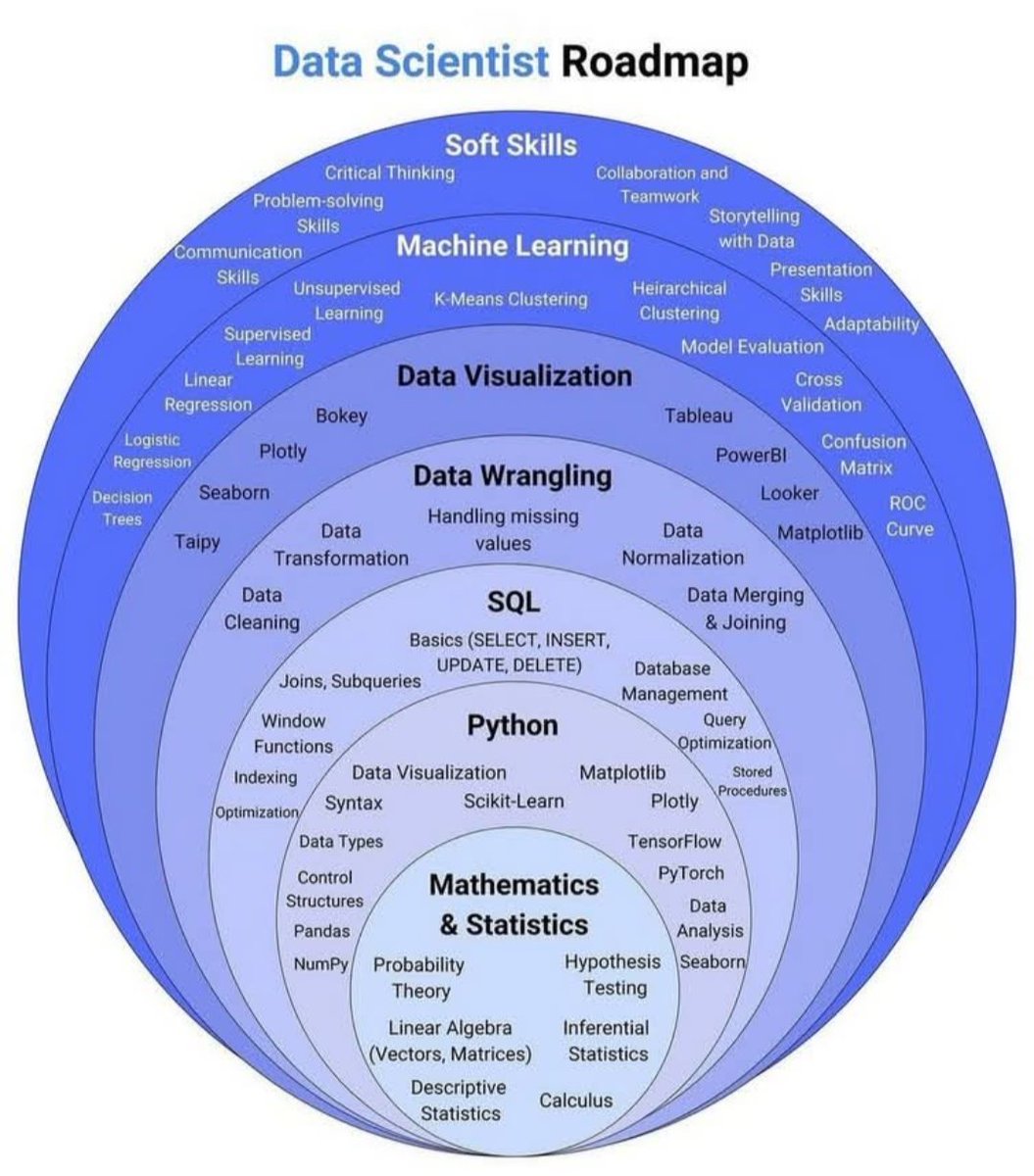
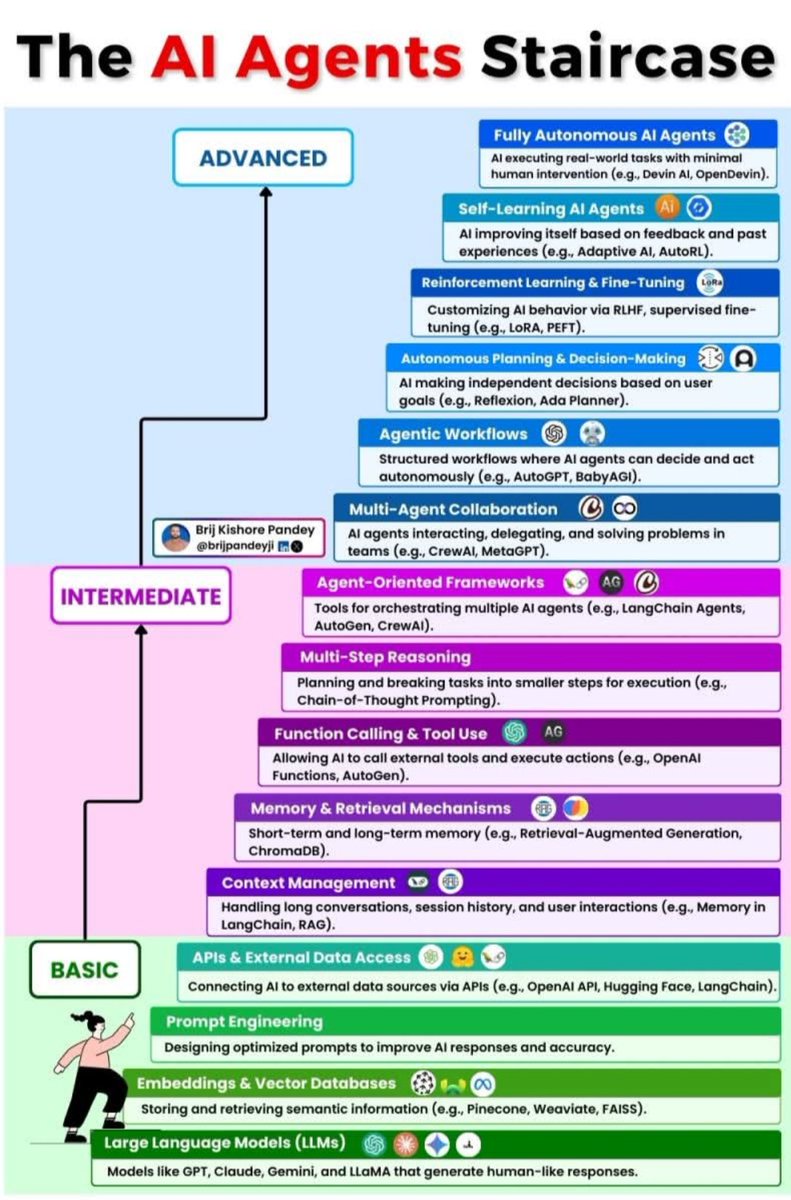
This roadmap to learning Artificial Intelligence brings clarity to complexity, inspires curiosity, and offers a logical path that many of us needed to see.
But if we look closely, it also reveals something deeper:
what’s missing
The foundational layers that sustain real understanding, the ethical reflection that gives technology its purpose, and the need for learning that is alive — dynamic, non-linear, and collaborative.
Perhaps the real challenge isn’t to follow this map, but to add depth to it,
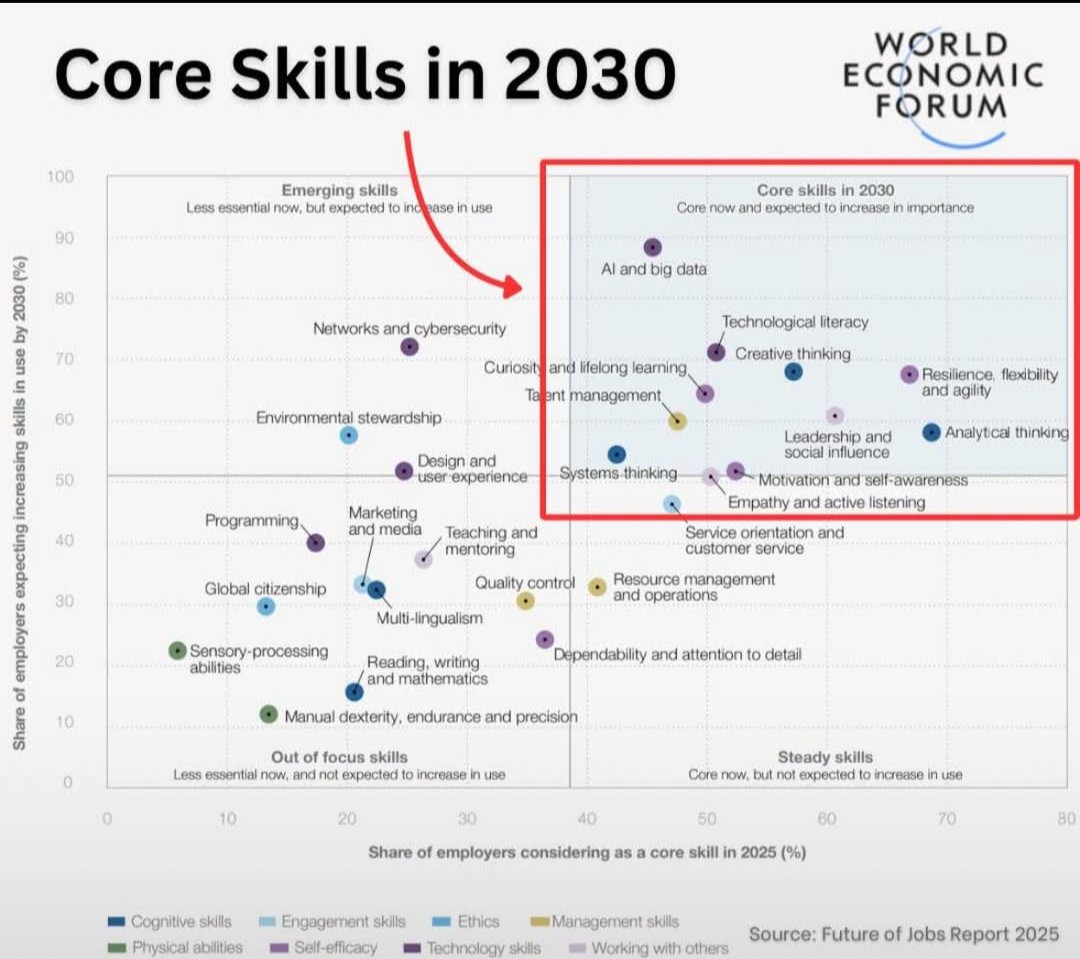
to enrich it with critical thinking, and let it evolve at the same pace as the technology it teaches.
Because learning AI isn’t just about understanding how machines think, it’s about how we choose to think with them.
#ArtificialIntelligence #Learning #Innovation #Education #AI #ContinuousLearning #CriticalThinking #Roadmap #FutureOfLearning
@ParcsiJardins@bcn_ajuntament Bon día! Debido a la lluvia se tiene pensado cancelar el concurso Internacional de Rosas? Sabéis algo? Venimos de fuera. Gracias por responder 🙂
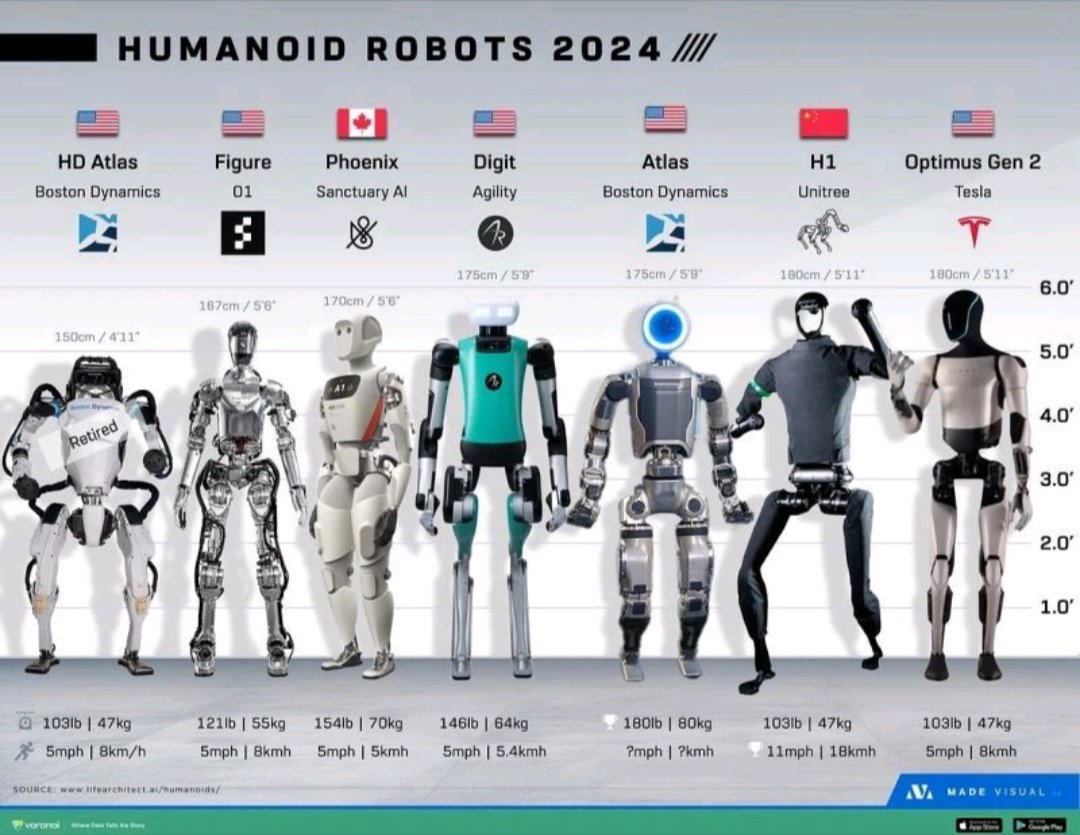
The field of humanoid robots is advancing rapidly, with a significant focus on logistics and manufacturing applications to perform tasks typically considered monotonous, dirty, or dangerous for human workers.
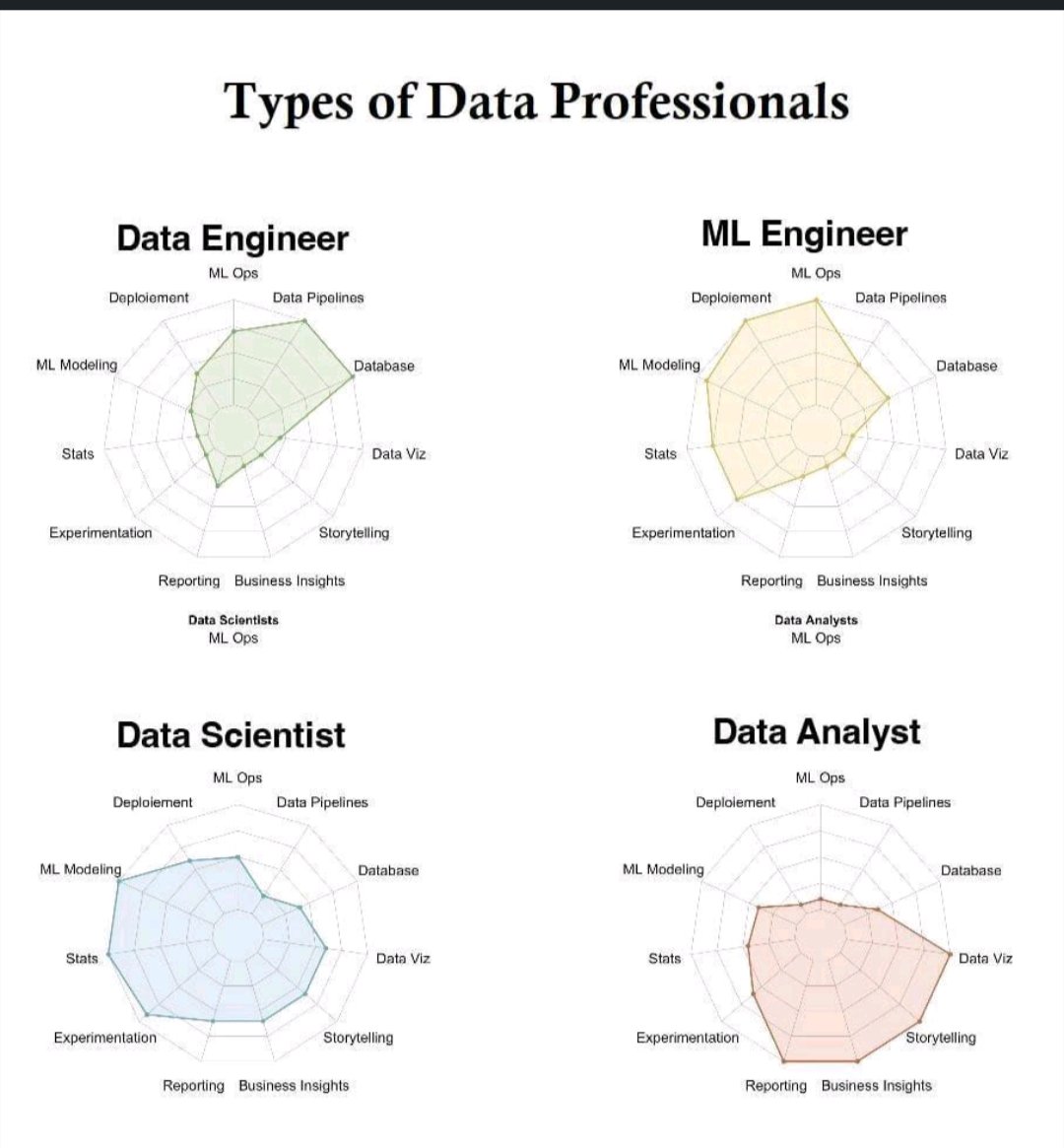
Understanding the distinction between these roles is crucial to make informed hiring decisions and build well-rounded teams, transition between roles or advance in their current path, facilitating better collaboration and project management, bridge skill gaps in teams. Elevate Your Data Game!
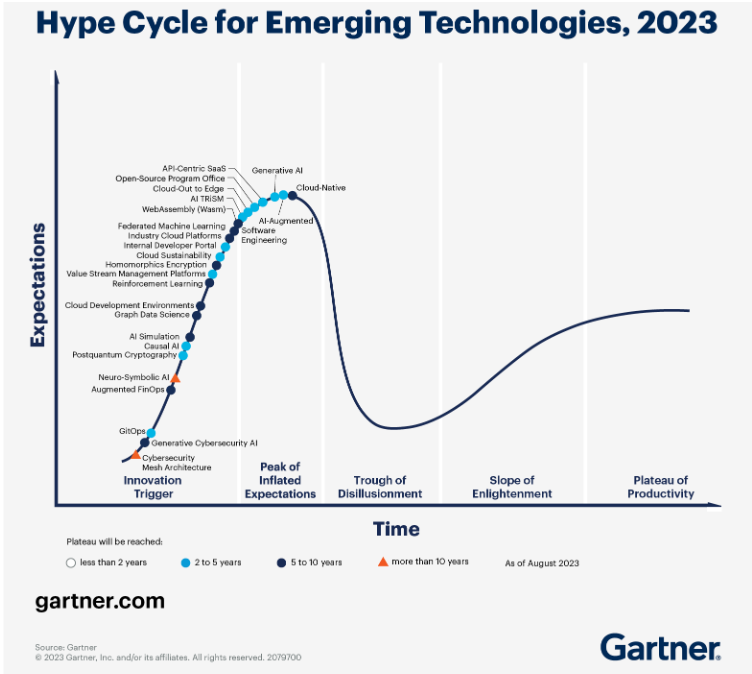
Brief explanation for each technology:
#OpenSourceProgramOffice: A centralized team or office that manages an organization's open-source software efforts and policies.
#AIGenerated Software: Software that is created or augmented by artificial intelligence to automate coding tasks and improve development workflows.
#GenerativeAI : AI that can generate new content, such as images, text, or code, that is often indistinguishable from human-created content.
#CloudNative: Applications or systems that are designed from the ground up to utilize and thrive in cloud computing environments.
#AIAugmentedSoftware Engineering: The integration of AI into software development processes to enhance and support the capabilities of human engineers.
#AITRiSM (Trust, Risk, and Security Management): Applying AI to enhance trustworthiness, manage risks, and improve security in digital systems.
#WebAssembly (#Wasm): A portable binary code format for executable programs that enables high-performance applications on web pages.
#FederatedML: A form of machine learning where models are trained across multiple decentralized devices or servers without exchanging data samples, ensuring privacy and data security.
#IndustryCloudPlatforms: Cloud services tailored for specific industry needs, providing specialized tools and environments for sectors like healthcare, finance, or manufacturing.
#InternalDeveloperPortal: A centralized platform for an organization's developers to access tools, resources, documentation, and support for software development.
#CloudSustainability: Practices and technologies that reduce the environmental impact of cloud computing, including energy-efficient data centers and green computing initiatives.
#HomomorphicEncryption: An encryption technique that allows computation on encrypted data without needing to decrypt it, preserving privacy and security.
#ValueStreamManagement Platforms: Tools that help organizations optimize the flow of value in software delivery by visualizing and managing software delivery pipelines.
#DataFabric: An architecture and set of data services that provide consistent capabilities across a choice of endpoints spanning hybrid and multi-cloud environments.
AISimulation: The use of artificial intelligence to create simulations that can predict outcomes, optimize performance, or enhance training and research.
#CasualAI: AI that focuses on understanding and modeling cause-and-effect relationships, rather than correlations, for better decision-making.
#PostquantumCryptography: Cryptographic algorithms that are secure against the potential future threat of quantum computers, which could break many current encryption methods.
#NeuroSymbolicAI: A type of AI that combines neural networks (for learning from data) with symbolic AI (for logical reasoning), aiming for a more human-like understanding.
#AugmentedFinOps: The practice of using technology, especially AI, to optimize and manage financial operations, cloud costs, and investments.
#GitOps: An operational framework that takes DevOps best practices used for application development, such as version control and collaboration, and applies them to infrastructure automation.
#GenerativeCybersecurity AI: AI that can generate models or simulations to anticipate and defend against cyber attacks, often in real time.
#CybersecurityMeshArchitecture Innovation Trigger: A modular, responsive security approach that interconnects disparate security services for a more integrated and flexible architecture.









![heyshrutimishra's tweet photo. FULL DEMO: Grok 3 x Voice Mode🎙️
Here are 16 mind-blowing ways to use it: 👇
🔖 [ Bookmark for later ] https://t.co/kSCSD83cMx](https://pbs.twimg.com/media/GlHA6ltXkAAmZNt.jpg)