@RacingTerritory I’ll never understand this. Why not put it up against the wall to scrub speed instead of going through the grass and inevitably having a bad angle impact with the wall?
@NavyCaptRet63XX@TheMaineWonk @raymondhsimmons I watched TSA agents carry bags past the TSA check point at Columbus airport, unchecked, when arriving for duty a few weeks back. They should be held to the same protocols. Wouldn’t take much for one of them to be compromised. TSA needs better security for their own agents
We now have a clear "techo-signature" for nickel and cyanide in the gaseous coma of 3I/ATLAS, but not iron! These data seem to rule out an iron-nickel meteorite, and suggest instead a very-large, alien spaceship.
Data for nickel are shown in slide 1 below, while data for cyanide are shown in a new paper from the Very Large Telescope (see https://t.co/gtb6j9hHWm or https://t.co/yHUfj6M63i ).
Thus we are led to consider that 3I/ATLAS may contain large iron or steel, manufactured surfaces, just like for a "giant spaceship". Those large surfaces seem to have been "coated" with nickel and cyanide, to prevent their corrosion or rust in space.
For those of you who do not know inorganic chemistry, here is how it works! During the process of "electroplating", dissolved nickel ions are used to deposit a layer of inert nickel onto another metal surface. This involves immersing the other metal surface into a nickel-plating "bath", which contains a solution of nickel ions plus cyanide.
Cyanide ions are used in electroplating as "complexing agents" for metal ions, including both iron and nickel. Cyanide can form complexes not only with nickel (as shown in slide 2), but also with other metal ions such as iron on the other surface. They help to give better adhesion of nickel to the other metal surface.
In other words, cyanide ions help nickel to "coat" another iron or steel surface, to prevent corrosion. We are talking here about "large spaceship surfaces"!
As a CO2 (dry-ice) coating comes off 3I/ATLAS, while it approaches the heat of our Sun, some of those nickel ions (held by weak, organic, cyanide bonds) may also fall off. That is why we see more nickel and cyanide in the gaseous coma of 3I/ATLAS, as it approaches the extreme heat of our Sun (shown in slide 1).
Astronomers do not seem to understand inorganic chemistry, so I have now explained it for them.
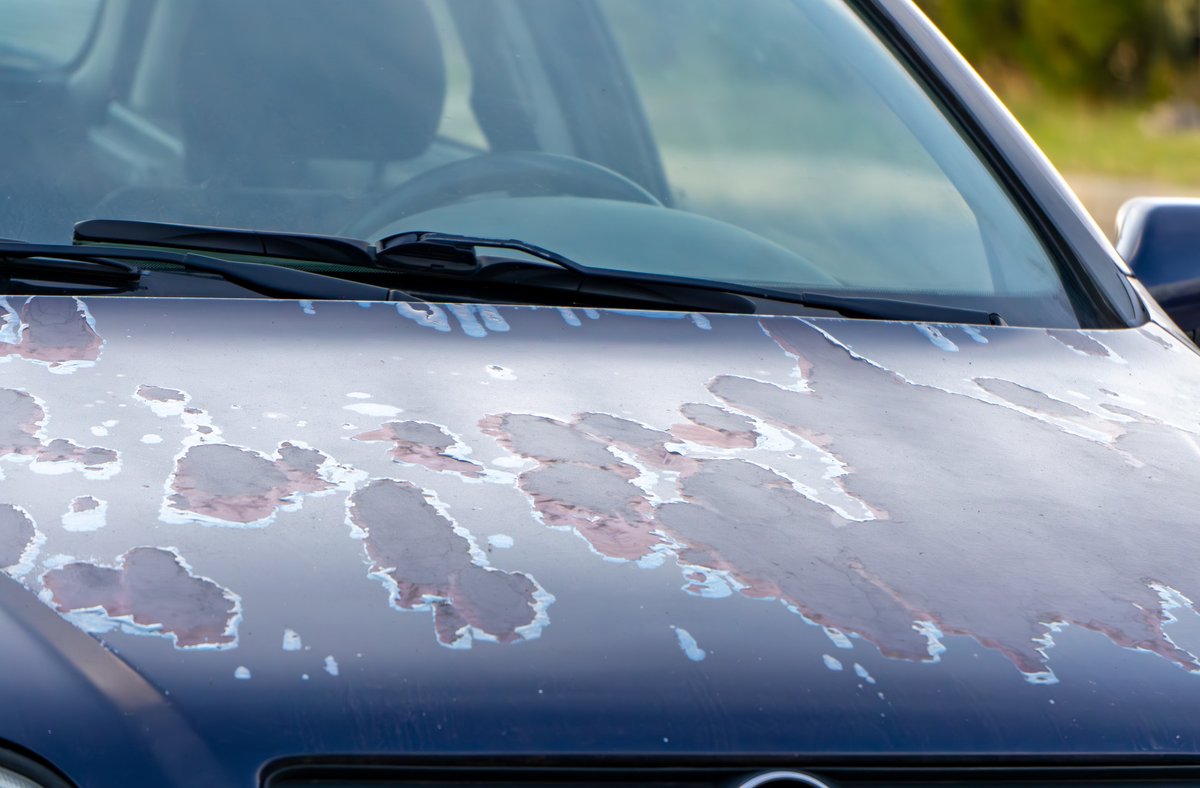
For a regular person who does not know chemistry, you can think of it like "old paint" flaking off the hood of your car in the hot sun (slide 3).
When we analyze those "flakes of spaceship paint", we find both nickel and cyanide, from which the "paint" was made.
This is what astronomers called a "techno-signature", because it cannot easily be natural for a "rock". All current data therefore seem to support a notion that 3I/ATLAS could perhaps be a huge, alien spaceship (or "mothership"). 🛸
@wesharman There’s room in the app market space for a map app for truckers. I found similar issue pulling around my camper-always directs you to parkways and inaccessible routes and google maps/waze does not have an option to avoid these