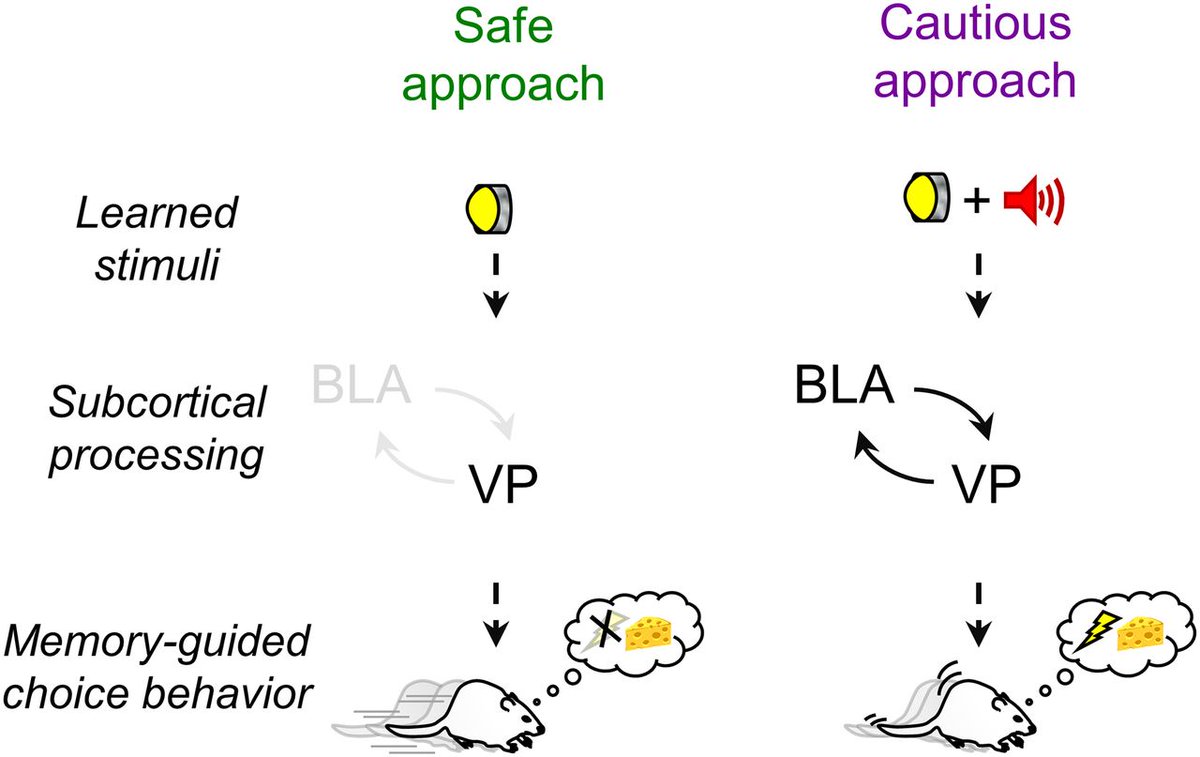
The brain doesn’t always say “NO.” Sometimes it says: “yes, but carefully.”
New in Science Advances: a PL→aNAcC pathway helps learned threat restrain reward pursuit.
Less a fear switch, more a regulator of caution.
Proudly done at UNAM, Mexico.
https://t.co/l7WVG3JraB
🧠🔬 Nueva publicación del laboratorio del Dr. Francisco Sotres Bayón en Journal of Neuroscience Research:
📖 “A selective cortico-limbic network organizes behavior during reward seeking under threat”
🔗 Lee el artículo: https://t.co/swjKii52de
#IFCUNAM#Ciencia#Neurociencia
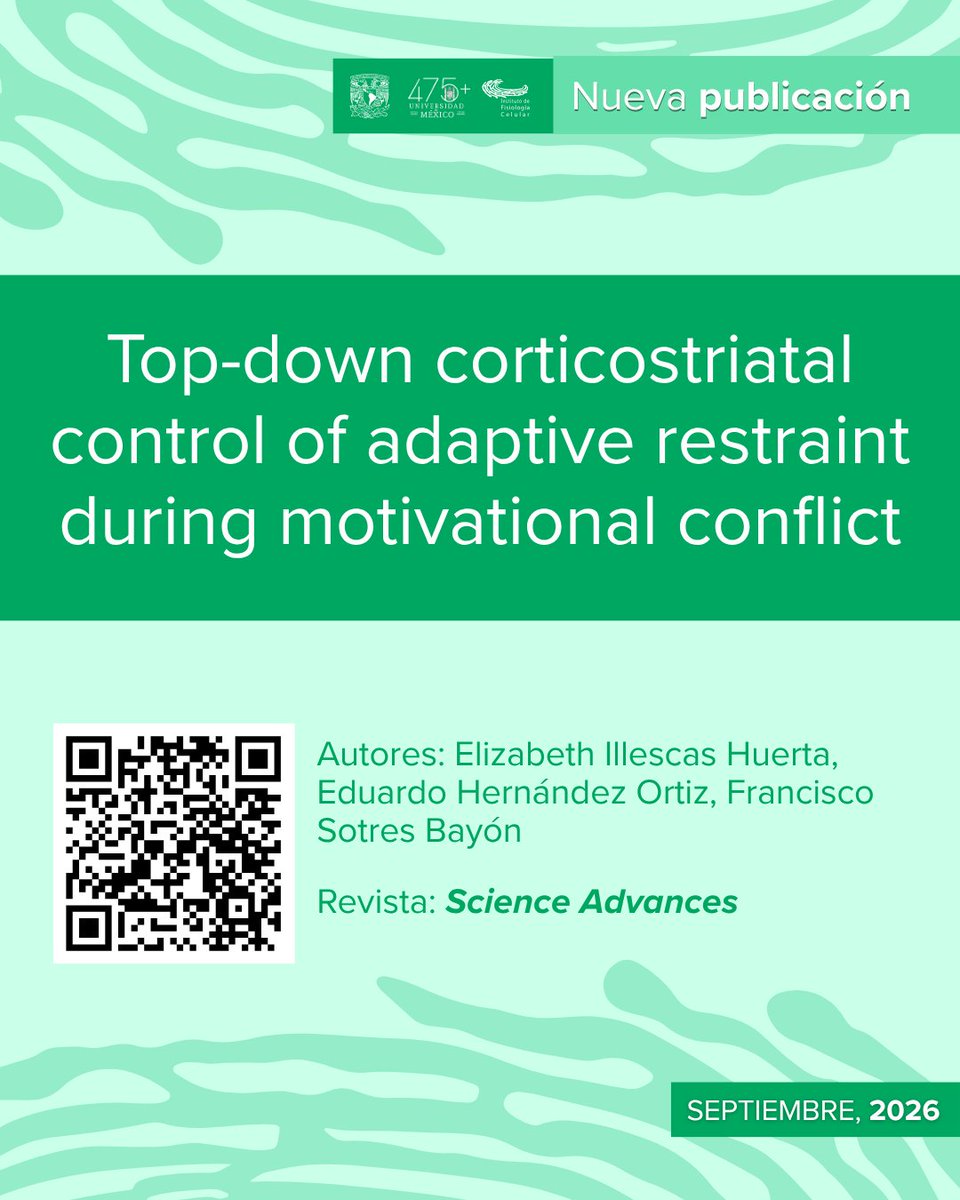
El Dr. Francisco Sotres Bayón presenta su más reciente trabajo en Science Advances: “Top-down corticostriatal control of adaptive restraint during motivational conflict”.
📖 Consulta el artículo: https://t.co/46HGXoMcks
🔬 Nueva publicación del Instituto de Fisiología Celular
Investigadores del IFC identificaron un circuito cerebral que evalúa el peligro antes de actuar.
Lee la nota publicada en nuestro sitio web descubre más sobre esta investigación.
🔗 https://t.co/JOMiJKQ52c
The brain doesn’t always say “NO.” Sometimes it says: “yes, but carefully.”
New in Science Advances: a PL→aNAcC pathway helps learned threat restrain reward pursuit.
Less a fear switch, more a regulator of caution.
Proudly done at UNAM, Mexico.
https://t.co/l7WVG3JraB
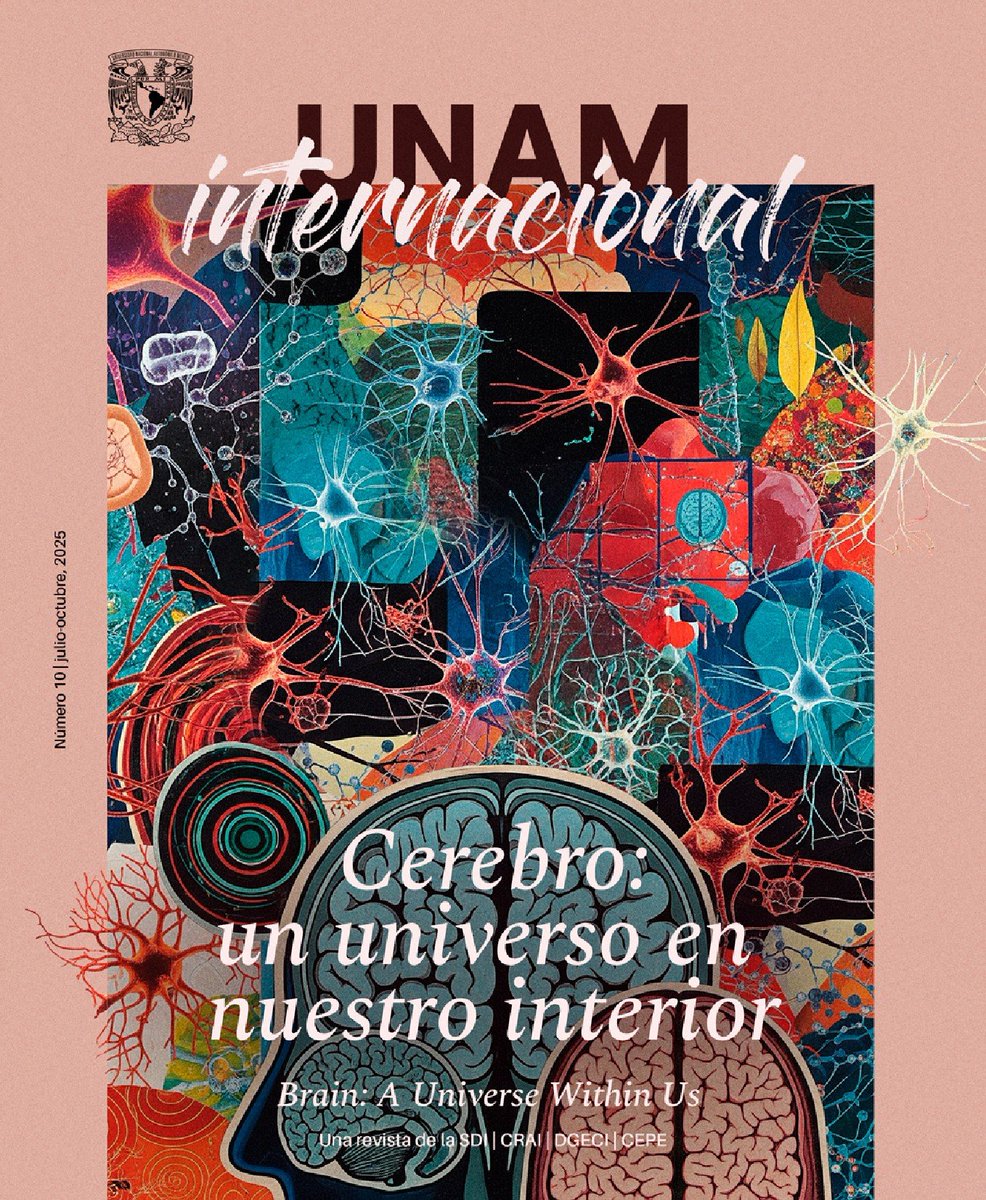
🧠 Cerebro: un universo en nuestro interior
Ya está disponible el décimo número de la revista UNAM Internacional, editada por la Dirección General de Cooperación e Internacionalización.
Léela aquí 👉 https://t.co/XwupVkKE8q
#UNAMInternacional#Cerebro#Investigación
#JNeurosci: Findings from Hernández-Jaramillo et al. reveal the critical role of the pallidal-amygdalar connection in controlling cautious approach behaviors influenced by past experiences in rats. @So3Lab@UNAM_MX
https://t.co/sU66RFazSZ
Ever face a tough motivational choice?🧀 vs ⚠️. Our research on rats suggests the amygdala and ventral pallidum team up to help us decide! #braindecisions
https://t.co/0nlR1u8aIB
Excited to share our latest preprint showing that ventral pallidum and amygdala cooperate to restrain risky reward choice behaviors during conflict 🧠😱😋🎌https://t.co/blXjuSr0ca
Counting down the days to go to #IBNS2024 to talk about avoidance behavior and neural circuits with @DrDiehl_neuro@CBravoRivera and Guillermo Aquino-Miranda 🤩
Online now in @NeuroCellPress !
A tale of two neurotransmitters (glutamate and dopamine). We show how VTA glutamate projections to NAc paradoxically promote reward and aversion. What we found may surprise you!
https://t.co/jPNIInbCgf
El hecho de que hasta para la ciencia sea un misterio qué es y cómo funciona el miedo nos resulta aterrador. 👻 Por eso, Sotres Bayón y su equipo del @IFC_UNAM indagan la controlabilidad, para "no ser esclavos de nuestras respuestas reactivas al miedo".
https://t.co/gDgW3yD5by
I am thrilled to see my postdoctoral work finally published in @NatureNeuro ! (free access here: https://t.co/Myl2RGGaNv). We used in vivo ephys and a new behavioral paradigm to elucidate what the PFC represents when mice face danger. These are the main findings of our work: 🧵
Check out latest issue https://t.co/ImgPc6z4Dp
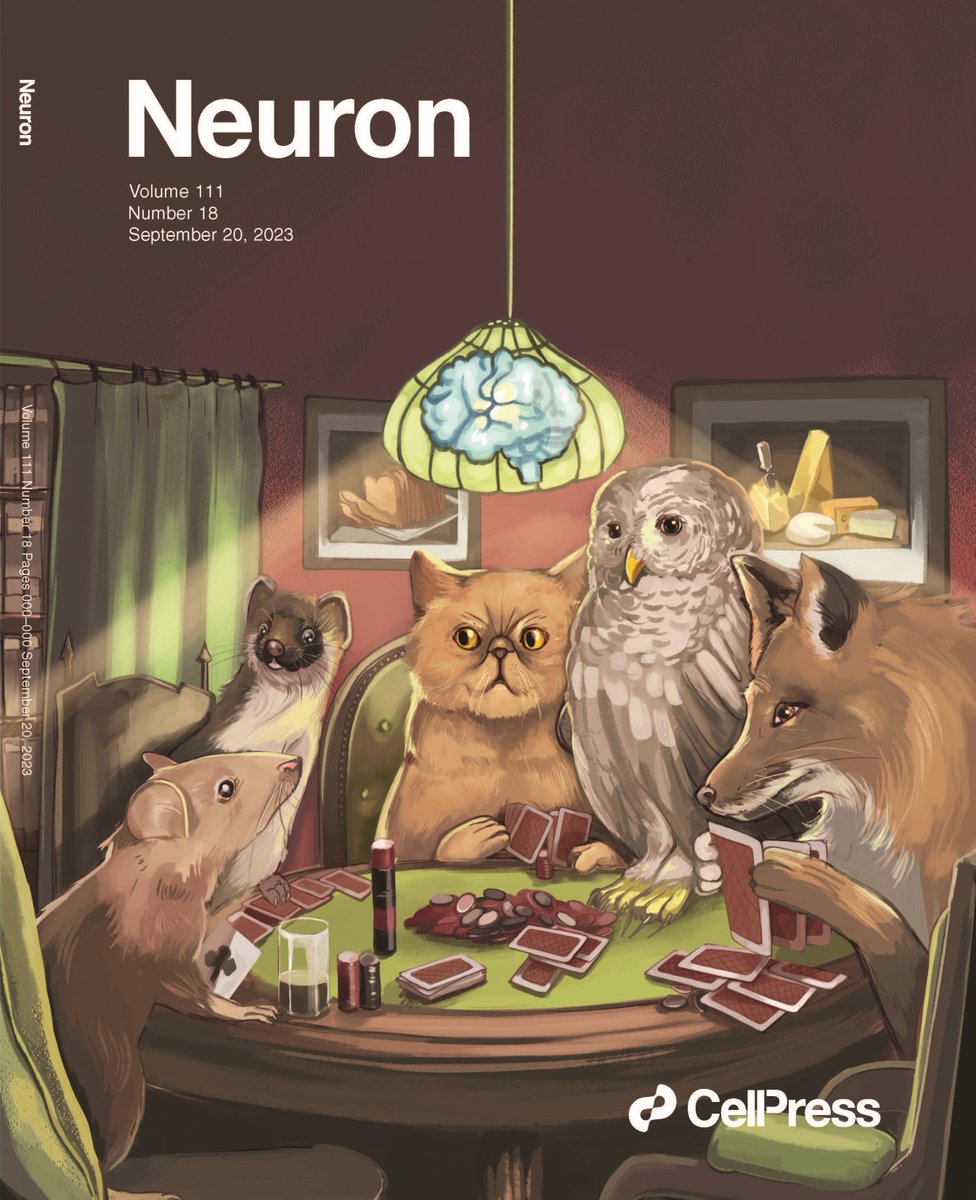
The cover illustrates de Araujo Salgado & coll.'s study examining the behaviors used by animals seeking food under predation threat.
Artwork by Erina He @NIHMedicalArts
Paper is here: https://t.co/3Vo3wNmgmY
Choice information in the rat orbitofrontal cortex (#OFC) is relayed to the dorsomedial #striatum (DMS) to lead accurate economic decision-making
New from @KarlDeisseroth and colleagues
https://t.co/yQxUsqpRHS