I am sick and tired of people mocking those who care about the planet. Clean air matters. Living forests matter. Healthy oceans matter. Animals matter. Biodiversity matters. Wanting a livable world for future generations should not be controversial.
Every oyster and mussel sample collected near Chichester Harbour came back contaminated with fibreglass.
Not some of them. Every one.
Researchers from the Universities of Brighton and Portsmouth found up to 11,220 fibreglass particles per kilogram in oysters and 2,740 per kilogram in mussels collected near an active boatyard in one of England's most popular sailing destinations.
The particles come from ageing fibreglass boats — glass reinforced plastic (GRP) — breaking down in the water during maintenance season and entering the marine food chain through filter feeders.
This is the first study to document this level of contamination in natural bivalve populations.
The problem is structural, not incidental.
Fibreglass has been the dominant material in recreational boat manufacturing since the 1960s.
Millions of vessels built during that era are now reaching the end of their usable life, and there is no coordinated system in Europe for tracking or managing them.
As Dr. Corina ciocan of Brighton put it: "There is no coordinated system in Europe for tracking or managing end-of-life fibreglass boats. That creates a serious regulatory gap." Via Artemisa Forbes
More than 35% of fish stocks are overfished, according to @FAO.
Unfortunately, the systems designed to keep squid fisheries sustainable are insufficient to meet the growing global demand. https://t.co/gWnXBWUlSI
📸Andrey Nekrasov/Getty Images
You'll want to be sitting down for this bit.
Water companies are currently £82.7 billion in debt, have paid themselves £85 billion in dividends, leak over a trillion of litres of water per year, dump sewage for almost 4 million hours per year, have been convicted of over 1,200 criminal acts since 1989 and an average of 35% of your bill goes on nothing but paying more interest and yet more dividends.
And not a single company has ever lost their operating licence. 👇
"3mn litres of drinking water are lost every day through leaking pipes + not a single new major reservoir has been built since privatisation...
"The public has paid through rising bills – now water companies must invest" ~ James Wallace of @RiverActionUK
https://t.co/EbFUSLIbYV
NEW: An Oxford study finds nearly half the world could face extreme heat by 2050 if warming hits 2.0°C - a scenario scientists say is increasingly likely.
Researchers call it 'a wake-up call.'
🧵 [1/7]
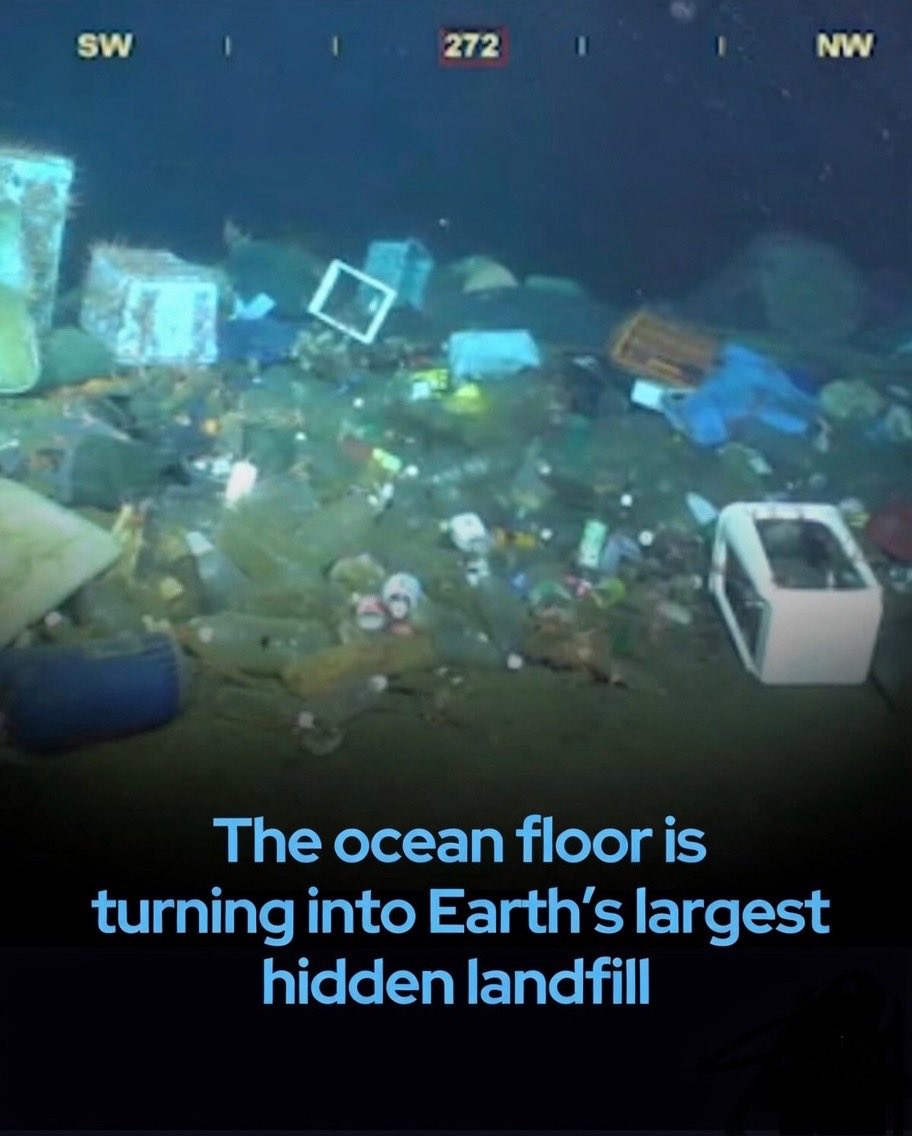
The ocean floor is slowly turning into a landfill
For decades, most concern about ocean pollution has focused on floating plastic and waste washing up on beaches. However, scientists now warn that the largest buildup of debris is happening out of sight, deep beneath the ocean’s surface.
A global review led by researchers at the University of Barcelona found that the seafloor is accumulating vast amounts of human-made waste, in some places at levels comparable to landfills. In the Strait of Messina, between Italy and Sicily, researchers documented over one million pieces of debris per square mile (around 400,000 per square kilometer), making it one of the most polluted seafloor regions ever recorded.
Debris such as plastic bags, fishing nets, metal, glass, and discarded equipment does not simply sink straight down. Ocean currents, storms, and underwater canyons transport waste from coastlines into deep-sea basins thousands of feet below the surface. Plastics account for about 62% of seafloor litter and can travel long distances before settling.
This is a global issue. Plastic has been discovered nearly 36,000 feet deep (about 10,900 meters) in the Mariana Trench, the deepest known point in the ocean. If current trends continue, scientists estimate the ocean could contain over 3 billion metric tons of waste within the next 30 years.
The impact on marine life is severe. Nearly 700 marine species are affected by seafloor debris through entanglement, ingestion, or exposure to toxic chemicals. Abandoned fishing gear can continue trapping animals for decades, a process known as ghost fishing.
Because this pollution occurs far from human view, it is often overlooked. But what sinks into the ocean does not vanish — it accumulates, persists, and alters ecosystems long after it disappears from sight.
Read the study:
“The quest for seafloor macrolitter: a critical review of background knowledge, current methods and future prospects.”
Environmental Research Letters, 2021
An across-government technical assessment published today recognises that "nature is the foundation of national security" and that "every critical ecosystem is on a pathway to collapse". A rational response to this would be to get very serious about nature recovery.
https://t.co/rQHEoS3wG4
Greenland's ice controls sea level. Its temperature controls ocean currents.
If all its ice melts, it will raise sea level by 7 meters. Its melting will decide the future of coastal cities, food systems, and billions of lives.
Greenland is not a piece of land. It is a piece of the planet’s thermostat.
Nations want to own Greenland. But no nation wants to protect the climate system that makes Greenland matter.
On a finite Earth, the question is not who owns what — but who protects what.
The High Seas Treaty is a victory but without teeth it’s just ink on paper. Together we must ensure nations respect it, enforce it, and protect the ocean beyond borders. 🌐🌊 #OceanJustice
We’re going to Antarctica to uphold the High Seas Treaty and defend one of the last intact ecosystems on Earth from destructive krill trawling. The whales cannot speak for themselves so we will. 🐋🚢 #Antarctica2026
It’s the world’s rarest ape. Now a billion-dollar dig for gold threatens its future @guardian
Money talks and Nature suffers, what a dreadful endorsement of our priorities
There will soon be no beauty in the world to leave our children
#WakeUpWorld
https://t.co/tzB3ZWZdRk
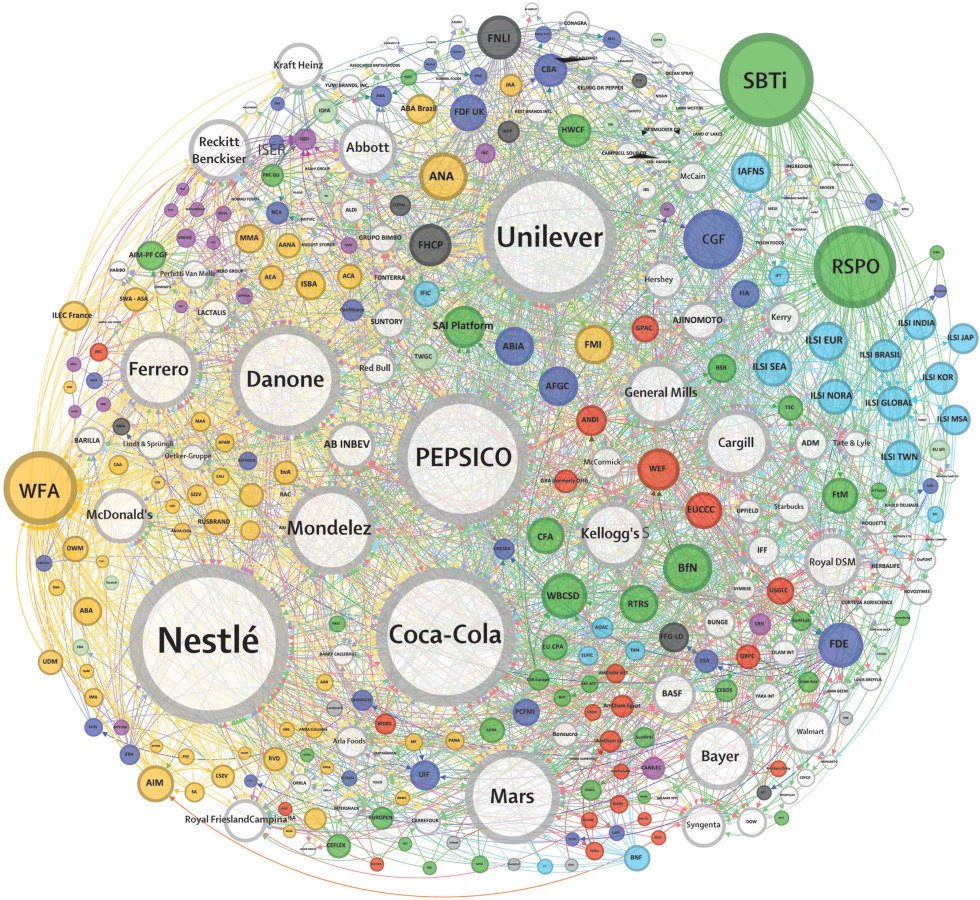
Ultra Processed Food, and the system that produces it, has overtaken tobacco in terms of health and economic harms, and is also the leading cause of plastic pollution, loss of biodiversity and deforestation, and the second leading cause of emissions.
This week @TheLancet published a landmark three-part series on the science, policy and politics of #UPF. https://t.co/CNhNhLaLA0
🎉GOOD NEWS KLAXON! The High Seas Treaty has reached 60 ratifications — enough to trigger its entery into force!
This landmark agreement creates a pathway to help protect the high seas — waters beyond any one country’s authority that cover nearly half our planet.
🚨 BREAKING: Govt is proposing bottom trawling bans in English offshore marine protected areas at #UNOC2025 🌊 Many would be FULL bans across the WHOLE site!
If implemented this could protect 30,000km² of seabed🪸DOUBLE the size of all England’s national parks put together! 🧵🔽
Happy #WorldOceansDay! 🌊 🦑🐬
Today we celebrate our beautiful, mysterious, precious oceans. Join us this Ocean Action Month and help protect the future of our blue planet today. https://t.co/CPTbNqjLrH 💙








![UniofOxford's tweet photo. NEW: An Oxford study finds nearly half the world could face extreme heat by 2050 if warming hits 2.0°C - a scenario scientists say is increasingly likely.
Researchers call it 'a wake-up call.'
🧵 [1/7] https://t.co/3tjPxyt0G7](https://pbs.twimg.com/media/G_qoq7AWYAITsM8.jpg)