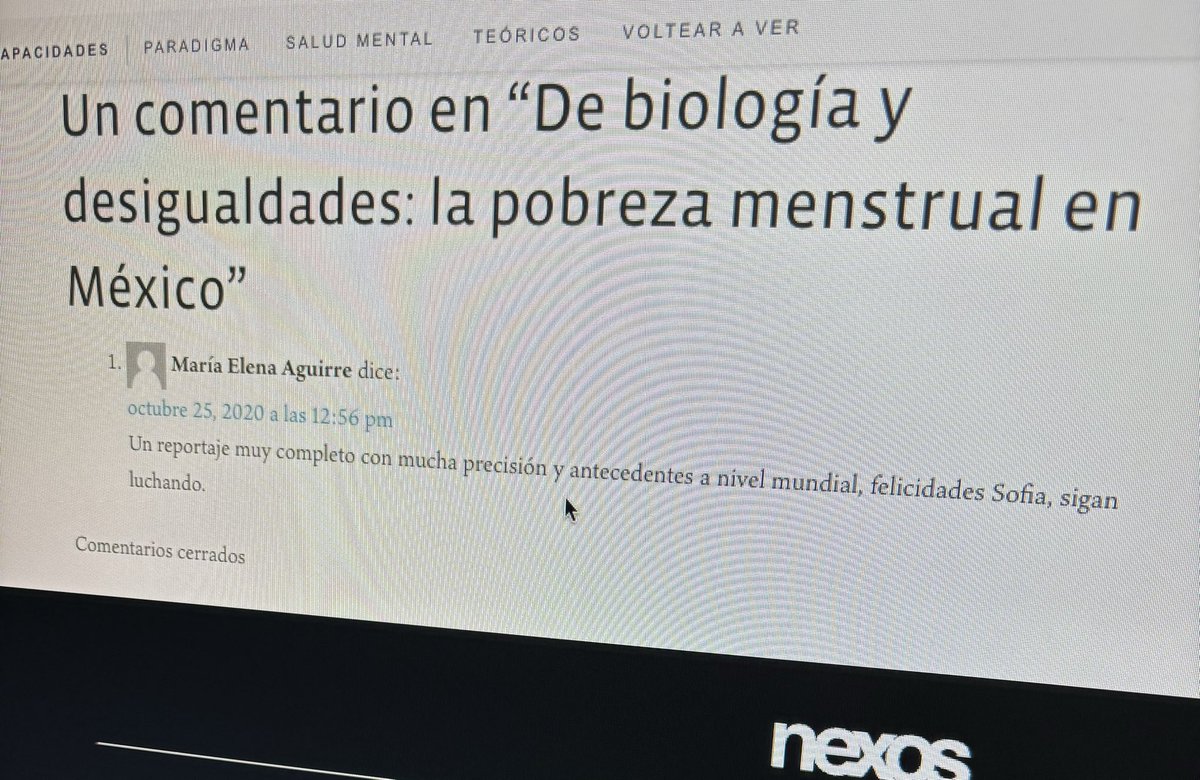
aquí llorando porque mientras revisaba la bibliografía de un texto que escribí en 2020, me encontré un comentario de mi abuela. ella falleció en enero del año pasado 🤍
Grimes shared her perspective on the flood of AI music now landing on streaming platforms.
In an interview with @FortuneMagazine, @Grimezsz argues that the over-saturation actually works in favor of originality: "the worse we make the corporate music system, the better it is for art." As algorithmic slop multiplies, she sees an opening for local scenes and more experimental, harder-to-replicate work to matter more.
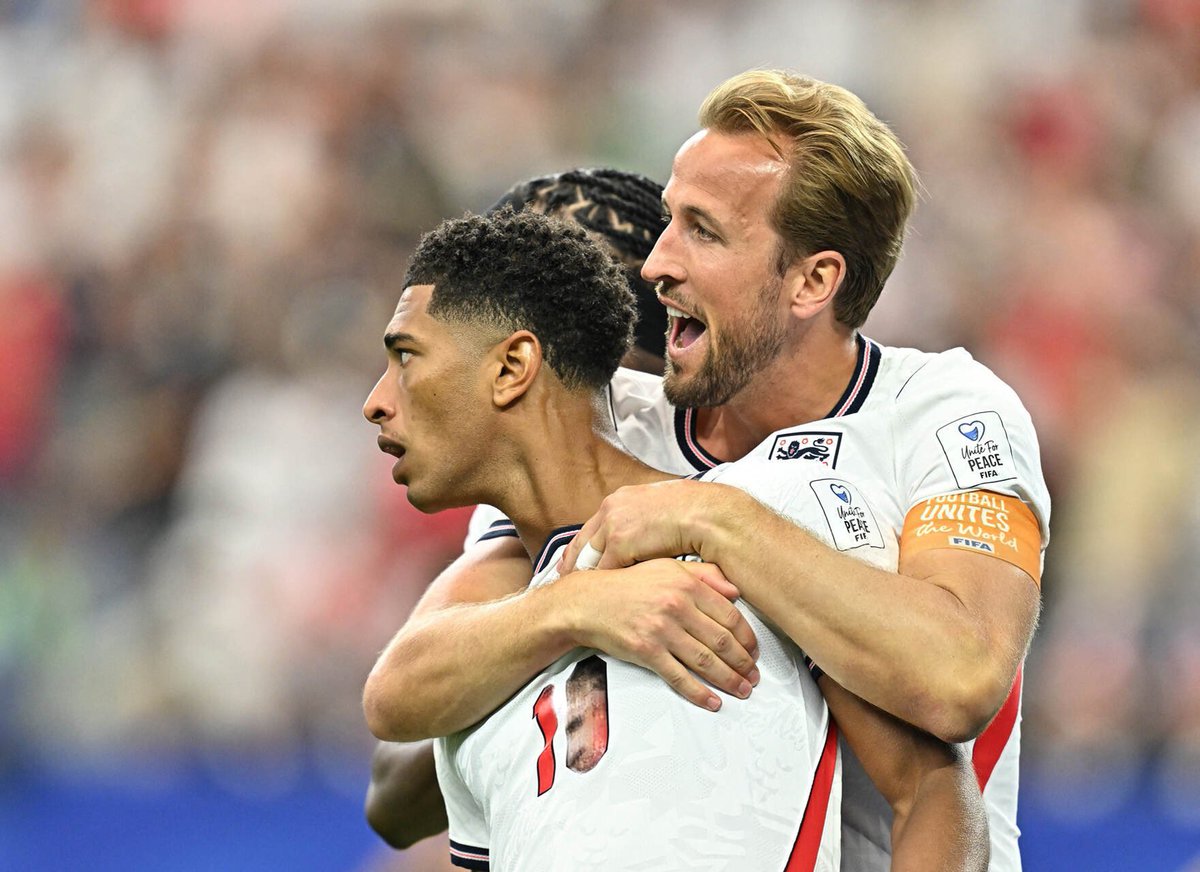
Journalist: “I'm to your left, really the far left.”
Kylian Mbappé: “Luckily you weren't on the other side.”
(Mbappé is one of the footballers who is against the far right.)
The UK government says under-16s will be banned from social media platforms by spring 2027.
Professor Amy Orben, a psychologist from the MRC Cognition and Brain Sciences Unit @mrccbu and Fellow at @stjohnscam, gives her reaction to today's announcement and measures it against the evidence we already have about social media restrictions.
Read more expert reactions on today's news 👉 https://t.co/E2AxZ8BxSB
#SocialMediaBan #SocialMedia
This is, perversely, good news for Britain, Australia, Japan, Europe, and other countries being cut off that would once have seen themselves as close allies of the United States.
It shows us what the future may hold if AI is the strategically and economically decisive technology of the 21st century and is controlled by the US and China. It is good news because *it may be happening early enough to give us time to act.*
I think this will be rescinded pretty soon, but it’s a sign of things to come. In a future where frontier models cannot be used outside the US, our industries and economies will fall behind and American businesses may not be able to operate overseas. We won’t be able to defend ourselves militarily with defence systems built on obsolete software. Europe 2031 is a good scenario of what a future like this could mean: https://t.co/AMc5LrFJeS
Some of the things we need to do are ‘no regrets’ measures we should do anyway. But some are genuinely costly and risky.
We need cheap electricity – powered by gas, coal (this is costly, coal is very bad), deregulated nuclear fission – whatever can provide *cheap, reliable, 24/7* power. This almost certainly excludes wind power, which is enormously expensive and unreliable. We need projects to be able to connect to the grid in days rather than years by paying for fast-track connections.
We need to make it incredibly easy to build data centres, with the property taxes retained locally and hypothecated for local tax cuts so there is some direct benefit for locals. This doesn’t need to be nationwide.
We need to create new regulatory regimes for innovative businesses that give them the right to hire and fire staff with ease. The difficulty and cost of firing staff is one of the main reasons Europe has fallen behind so badly. We need to create a parallel employment regime that companies and workers can opt in to: https://t.co/YaNOXK1Po2
Even though I think it will probably fail, I think we should probably try to create a good, non-American frontier AI lab. I am quite pessimistic about this – even extremely well-resourced, innovative software companies are struggling to do this. But the stakes are so high that not trying seems foolish.
One thing that might work in our favour is the number of brilliant AI engineers who are not US citizens, who under the current export controls do not have access to Mythos/Fable even if they live and work in the US. What happens to Demis Hassabis, Ilya Sutskever, Andrej Karpathy, and the many other Europeans, Canadians, etc who are working on AI models in Britain and America who are affected by this?
I do not think we should force our own companies to use model, because this would exacerbate their economic weakness – this lab should have to compete on an even playing field. I am deeply sceptical that this can work, but we cannot rule it out. If we do it, it has to be able to pay US salaries, operate without political constraints. https://t.co/Um05rUF4Vq
It is cope to tell yourself that Trump is an aberration or that these export controls are a one-off. To repeat, I think these specific controls will be lifted quickly and it will be easy to move on and forget it happened. But this is a look into a potential future. Every one of us that is not a US citizen is at risk. The standard political divides do not apply here; the question is whether you grasp the enormity of AI as a technology. We have to act!
I absolutely loved this essay. There are a lot of cautionary points about a post-commodity, relational economy would look like, and I agree with all of them. But there is also well-argued optimism too. The closing paragraph in particular:
“What we can say is that the relational economy does not have to be the “Nosedive” dystopia. A free and plural post-commodity future of work is possible. This world wouldn’t be a utopia but it might be one where a teenager at the back of a classroom could sense, correctly, that there is more than one way to exist and be fulfilled.”
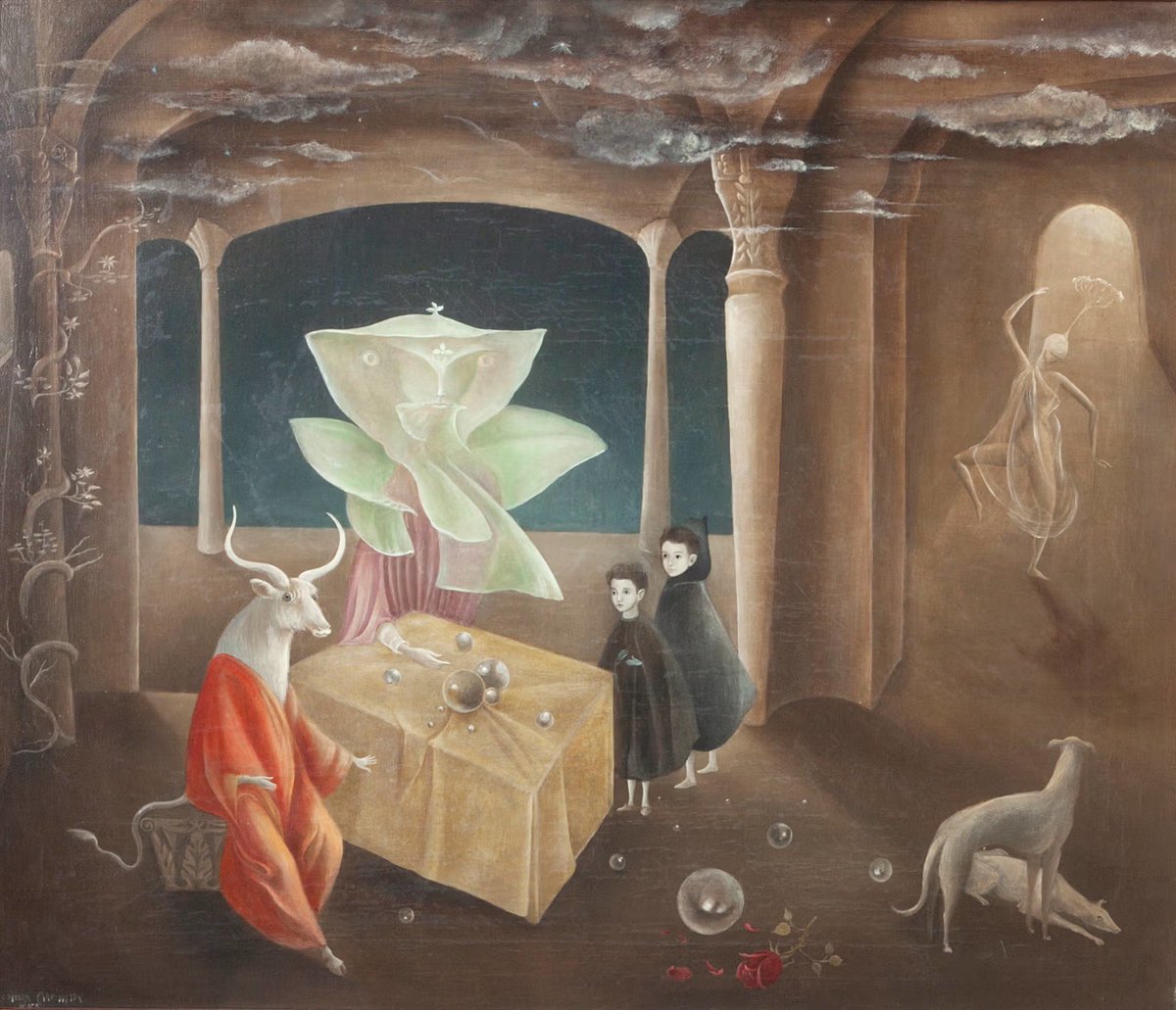
Hope is the thing with feathers, and with fangs – the alchemy of unrequited love and the story behind Emily Dickinson's most famous poem https://t.co/YmQNkiFzoK
Why are minerals so central to geopolitics? How green are electric cars? Why is anti-mining protest increasing? Can the inequalities of the global economy be transformed?
I tackle these topics in my book EXTRACTION: The Frontiers of Green Capitalism
👀 September 2025 @wwnorton