The French hate air conditioning.
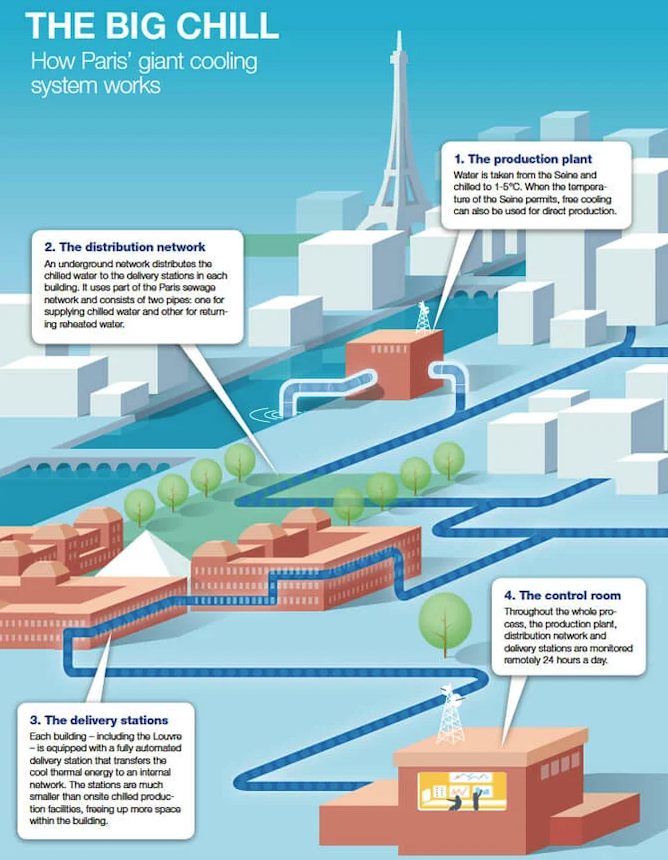
So Paris built a 120-kilometre machine under its streets for producing cold.
It’s called Fraîcheur de Paris, and it does for summer heat what district heating did for winter: centralise the problem.
Instead of every museum, office, hotel, hospital and shop bolting its own cooling plant onto the building, Paris moves cold through pipes.
The network sends water chilled to 2 to 4°C through buried supply lines. The water enters a connected building, absorbs heat through an exchange station, then returns at 12 to 14°C to be cooled again.
It essentially functions with two pipes. One carries the cold out, the other carries heat back.
The production plants cool the circuit from 12°C to 4°C. Some sites use the Seine as a heat sink. In colder periods, the system can use the river’s own temperature for free cooling, which means the machines work less and the electricity demand drops. The Seine water doesn’t become the building water. It stays separate, passing temperature across heat exchangers.
The scale is pretty strange when you see it written down though.
It's got 15 production sites, 4 storage sites, 120 km of underground network with 924 subscribers. This has resulted in 7 million square metres cooled, and 493 GWh of cooling sold.
A cold utility running beneath one of the densest cities in Europe.
The Forum des Halles has been cooled this way since 1979. The Louvre since 1986. Galeries Lafayette, Opéra Garnier, Hôtel de Ville, Station F, La Samaritaine and the National Assembly all sit on the same idea. Tourists stand in the Louvre looking at paintings while a municipal cold loop does part of the dull work below ground.
The boring part is the breakthrough.
Cold can be stored at night in chilled water or ice, then used during daytime peaks. The network is monitored from a control room with more than 125,000 control points. A delivery station inside a building takes 5 to 7 times less space than a standalone cooling installation and avoids the roof and façade clutter that turns cities into compressor farms.
That matters because conventional air conditioning solves heat by moving it somewhere nearby. In a dense city, thousands of private machines mean thousands of outdoor units rejecting heat into streets, courtyards and roofs, plus refrigerants, noise, vibration and maintenance spread across every building.
Paris’s public cooling network has a stated coefficient of performance of 4, against 3 for a wet standalone system and 2 for a dry standalone system. Against an equivalent set of autonomous installations, Fraîcheur de Paris says the network gives 100% higher energy efficiency, 35% less electricity use, 90% fewer refrigerant-fluid emissions and 50% lower CO2 emissions.
The climate backdrop is the real reason this exists.
Paris ran a full crisis exercise called “Paris at 50°C” in 2023. Météo-France’s 2050 reference trajectory for France points to heatwave days becoming five times more frequent, hot nights rising sharply in urban centres, and some local extremes around 48°C becoming possible.
The city signed a 20-year concession in 2022 with Fraîcheur de Paris, owned 85% by ENGIE and 15% by RATP. The contract is worth a projected €2.4 billion. The plan is to extend the network by 158 km by 2042, add 20 production plants and 10 storage sites, and reach more than 3,000 subscribers, including hospitals, nurseries, schools and care homes.
This is basically the infrastructure version of admitting that summer is becoming a public systems problem...
LOOK | Isang 1st year college student ang nag-file ng Ethics complaint laban kay Senate President Alan Peter Cayetano at mga miyembro ng Majority Bloc. Dahil daw ito sa hindi nila pagdalo sa mga sesyon.
@News5PH@onenewsph@News5E
ENVIRONMENTAL PROTECTION ORDER FILED BY STUDENTS, ADVOCATES VS SAN MIGUEL CORP.
Students and environmental advocates attended a hearing before the Manila Regional Trial Court Branch 41 on Monday regarding their petition for a temporary environmental protection order against San Miguel Corp. (SMC) over the massive tree cutting along Quirino Avenue in Manila.
“We are prompted to file this action in representation of the youth and those yet unborn because we also want to send a message to these corporations that are actively destroying our environment,” petitioner Joaquin Bautista said.
The Department of Environment and Natural Resources (DENR) said there are 523 trees subject to tree-cutting and another 94 trees for earth-balling, totaling 617 trees affected to yield construction for the Southern Access Link Expressway (SALEX).
Bautista said the citizen action suit aims to pursue ecological justice and accountability, stressing that SMC should rehabilitate the trees cut in Manila.
The irreparable damage from this ecological violence will be inherited by succeeding generations, sustainability and environment student Elisha Zantua said.
“It can cause catastrophic effects such as eliminating the structure of preventing soil erosion, lessening the capabilities to absorb the floodwater, and affecting the air quality around the space,” she said.
“What we really need right now is more green spaces. We shouldn’t just prioritize urban development over what the people actually need,” Zantua added.
University student and petitioner Paul Benedict Callorina lamented how decades-old trees, which have stood long before he was born, were brazenly cut for an expressway project.
“Our policies and laws should be pro-people and pro-nature,” Callorina said.
The DENR said last week that SMC has voluntarily suspended further tree-cutting activities along Quirino Avenue following the public outrage. | @andronquillo
We must learn to view trees as homes for other living things, not just mere decoration.
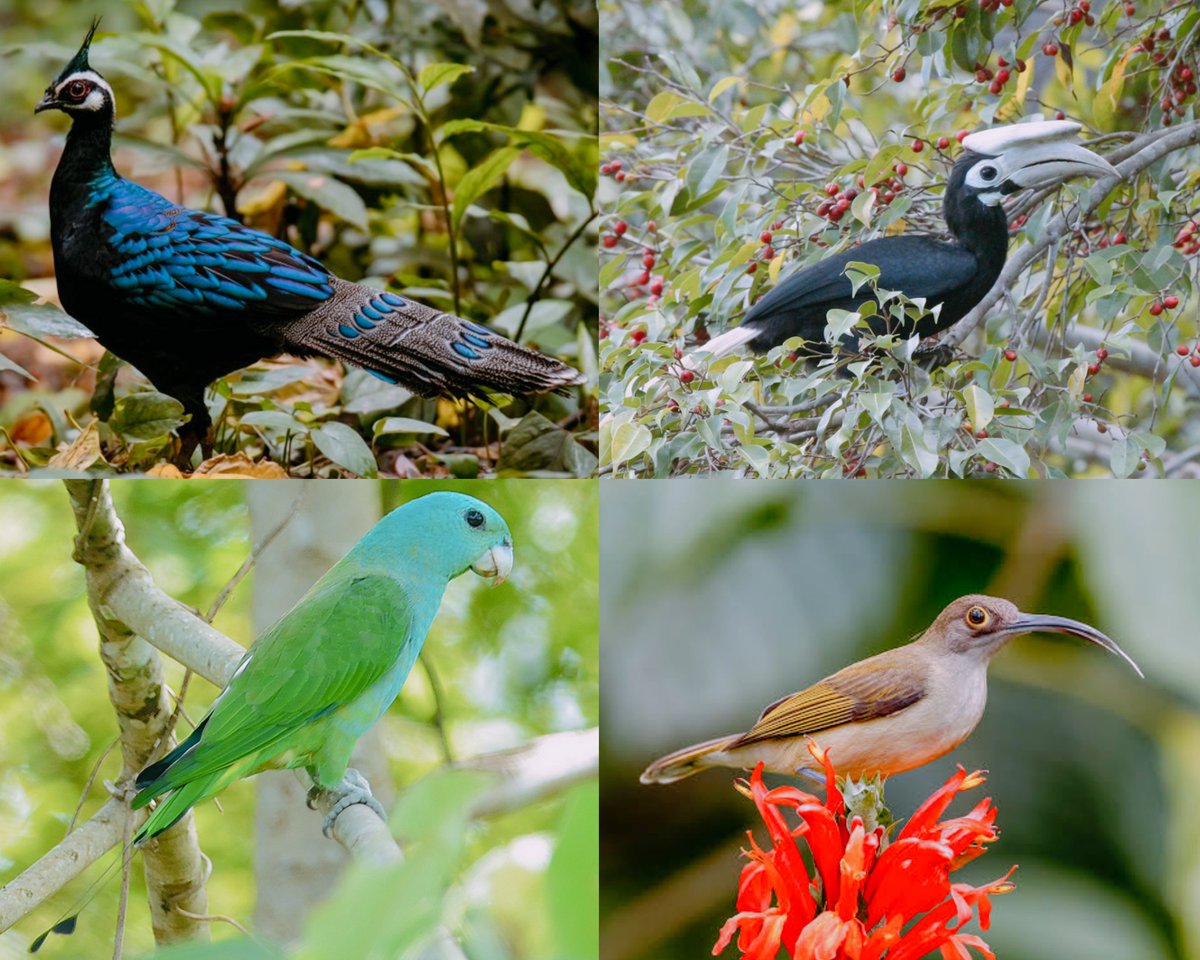
Endemic birds, little critters, even the very bacteria and funghi that grow in the soil.
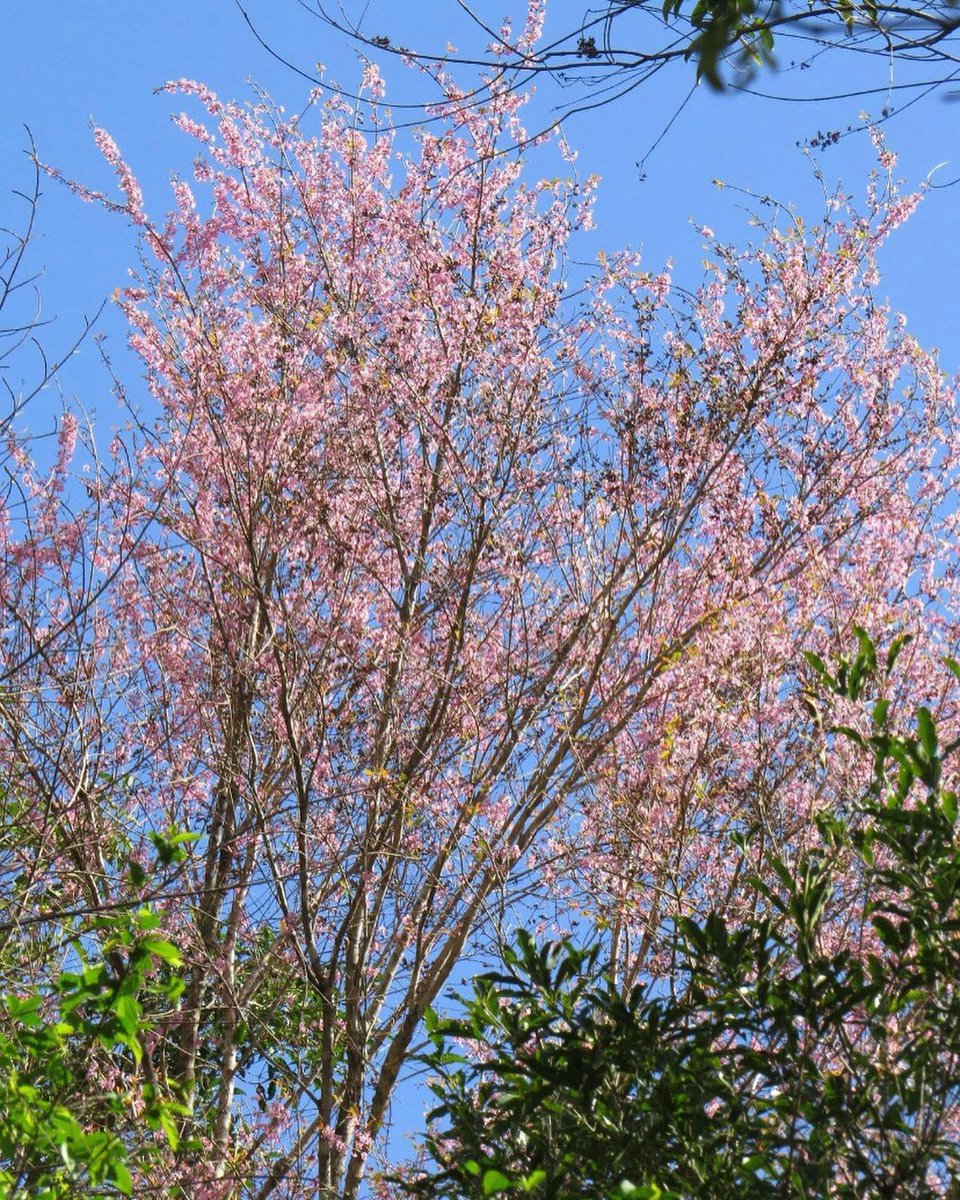
The Salingogon is dubbed the Philippine Sakura. We didn't need to reheat Malaysia's nachos here.
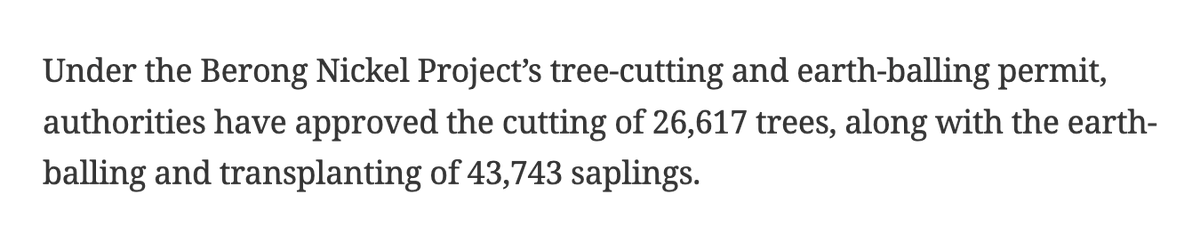
Palawan is home to some of the most beautiful and rarest endemic birds in the 🇵🇭. Imagine what cutting 210k+ trees will do to their kind. It's an absolute shame the @DENROfficial is allowing this.
Never beating the Department of Eradication of Natural Resources allegations.
New: Hackers have been stealing high-profile Instagram accounts by simply asking Meta's AI support chatbot to change the email associated with the account they want to steal.
Shockingly easy, terrible flaw associated with offloading support to AI:
https://t.co/PvRm8u0MV7
this part is just breathtaking oh my god these gorgeous animations 😫 super hands down to the artist/s behind them!!! 🪽🩷
this reminded me of that scene in the film "everything everywhere all at once" <'3 the pain of us, in every universe. #habangbuhaypansamantala#justin#Maki
As a scientist who worked in the Philippines for 8 years before doing my PhD in France, I agree.
Imagine, the scientist quoted here had to go anonymous because the government and private companies hate it when scientists speak up.
Iyong inarte natin about elevated railways being visually obstructive kesyo dapat subway daw (then TBM tech costs a lot) ayan inunahan tuloy ng mga elevated expressway na mas visually aggressive and ugly. Hahaha
Wait wait wait a… Did I hear it right?!
The CEO of Summersonic, Naoki Shimizu-san, watched SB19’s Simula at Wakas Concert at Philippine Arena???
He flew all the way to the Philippines just to watch the concert??
That’s so flattering!😊
#SB19#Summersonic2026 #PacificStage
#SB19日本ログ2026 #SimulaAtWakas