Elect/Elect. Engr. with professional development in the field of Data Science, Machine Learning and Deep learning. specially interested in AI and Robotics.
AI engineers are printing money right now.
But only if they know this:
Most people are learning the wrong things.
Courses won’t get you hired.
Skills will.
Here’s what actually pays in 2026:
→ Building end-to-end LLM systems
(not just calling APIs)
→ Working with real data pipelines
(cleaning, chunking, retrieval)
→ RAG that actually works in production
(not tutorial-level demos)
→ Inference optimization
(vLLM, batching, caching)
→ Evaluations
(DeepEval, human feedback loops)
→ Agents (only where needed)
(LangGraph > hype wrappers)
What companies actually want:
→ Someone who can ship
(not just experiment)
→ Someone who understands tradeoffs
(latency vs cost vs quality)
→ Someone who can debug broken outputs
(not blame the model)
→ Someone who thinks in systems
(not prompts)
The gap is simple:
Most people are learning tools.
Few people are building systems.
That’s where the money is.
If you’re learning AI right now:
Stop collecting certificates.
Start shipping projects.
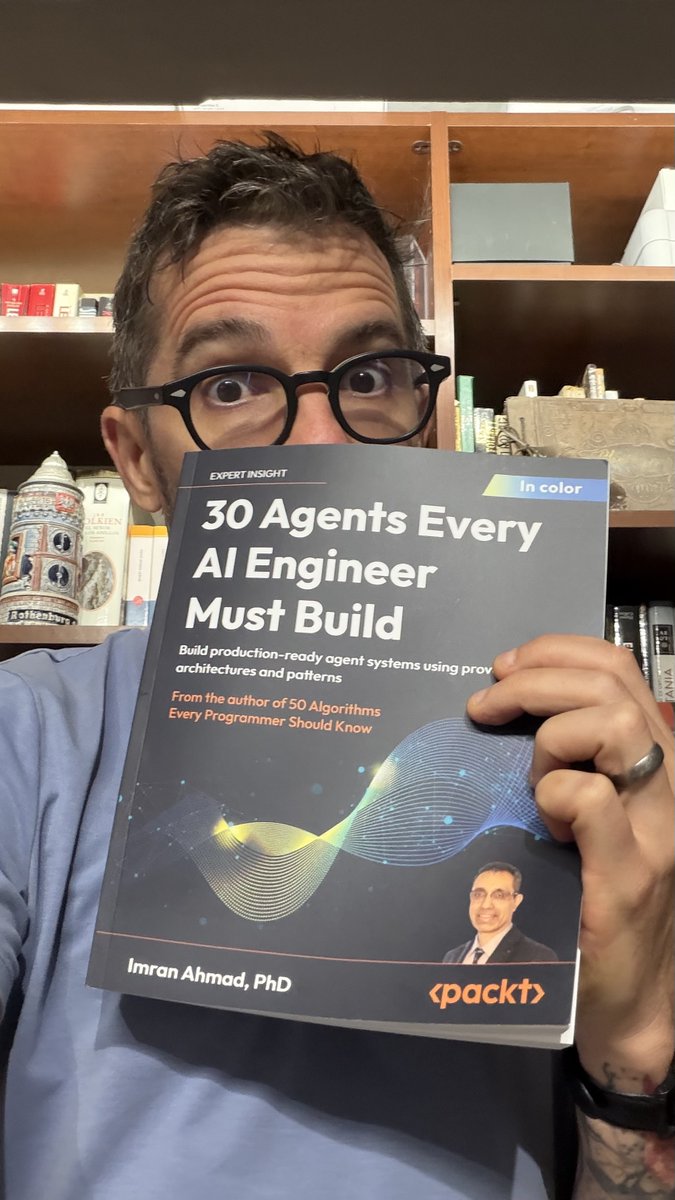
30 agents every AI Engineer must build.
This is the most comprehensive and practical book on AI Engineering that I've ever seen.
I can't think of a single use case that they didn't cover here:
1. The autonomous decision-making agent
2. The planning agent
3. The memory-augmented agent
4. The knowledge retrieval agent
5. The document intelligence agent
6. The scientific research agent
7. The tool-using agent
8. The agentic workflow system
9. The data analysis agent
10. The verification and validation agent
11. The general problem solver agent
12. The code generation agent
13. The security-hardened agent
14. The self-improving agent
15. The conversational agent
16. The content creation agent
17. The recommendation agent
18. The vision language agent
19. The audio processing agent
20. The physical world sensing agent
21. The ethical reasoning agent
22. The explainable agent
23. The healthcare intelligence agent
24. The scientific discovery agent
25. The financial advisory agent
26. The legal intelligence agent
27. The education intelligence agent
28. The collective intelligence agent
29. The embodied intelligence agent
30. The domain-transforming integration agent
I also read 50 Algorithms Every Programmer Should Know by Imran. Same vibe.
Here is the Amazon link: https://t.co/buLPqjToiu
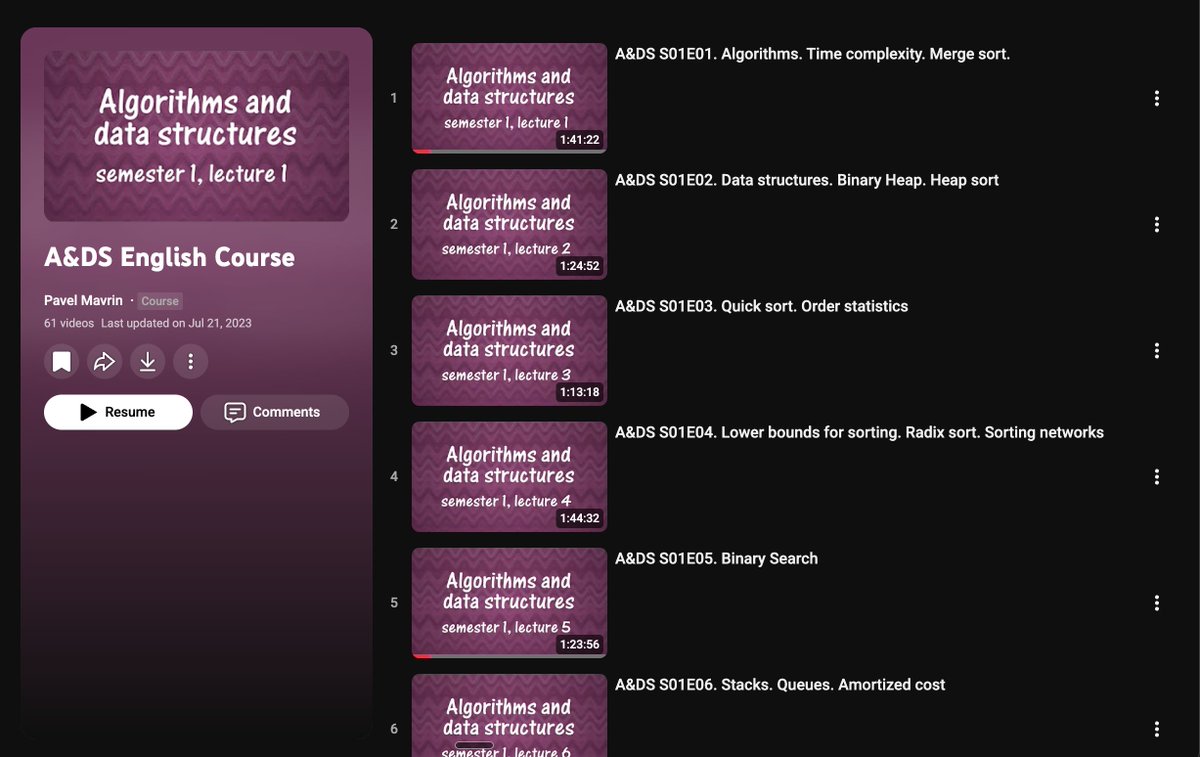
Finally, after a lot of procrastination, I’ve started this Distributed Systems playlist.
The playlist consists of 20 videos, and I’ve just finished Lecture 1: Introduction.
Here are some points from the first video:
>Explained the basic requirements of an infrastructure
>Discussed achieving abstraction in infrastructure
>Covered the impact of scalability on performance
>Introduced key aspects of fault tolerance (availability, recoverability, consistency)
>Gave a high level overview of MapReduce and how it works
The video wasn’t very detailed, but the playlist looks promising.
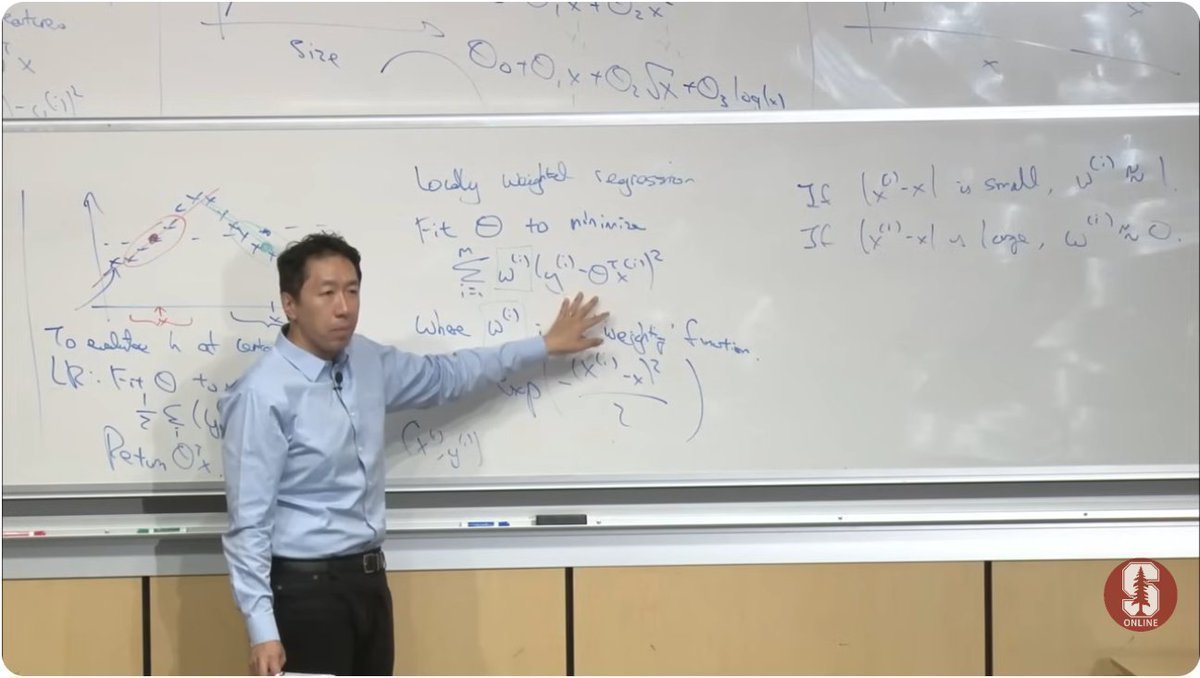
This 2-hour Stanford lecture breaks down how models like ChatGPT and Claude are actually built, clearer than what many people in top AI roles ever get exposed to.
Save this and set aside two hours today. It might end up being the most valuable thing you learn all week.
Instead of watching an hour of Netflix, watch this 2-hour Stanford lecture on AI careers. It will teach you more about winning in the AI race than all the AI content you’ve scrolled past this year.
Everyone looks at the FGN Savings Bond as one of those regular investments; but what if I told you that you can actually create a system that pays you salary every month without having to work using this same bond? Well, that’s what I have created for you for your future retirement or if you just want to catch cruise with a “careless” monthly income to spray around. And depending on how much you can invest, it could be as high as N1m or even N5m per month!
If I need to pick ONLY FIVE courses to learn AI & ML from scratch, I'll pick:
❯ CS221 - Artificial Intelligence
❯ CS229 - Machine Learning
❯ CS230 - DL
❯ CS234 - RL
❯ CS336 - LLM
These courses normally cost >$100K. But Stanford is offering them FREE on YouTube:
Most engineers start learning System Design too late.
By the time interviews come…
they realize it’s not just about coding anymore.
It’s about how systems actually scale.
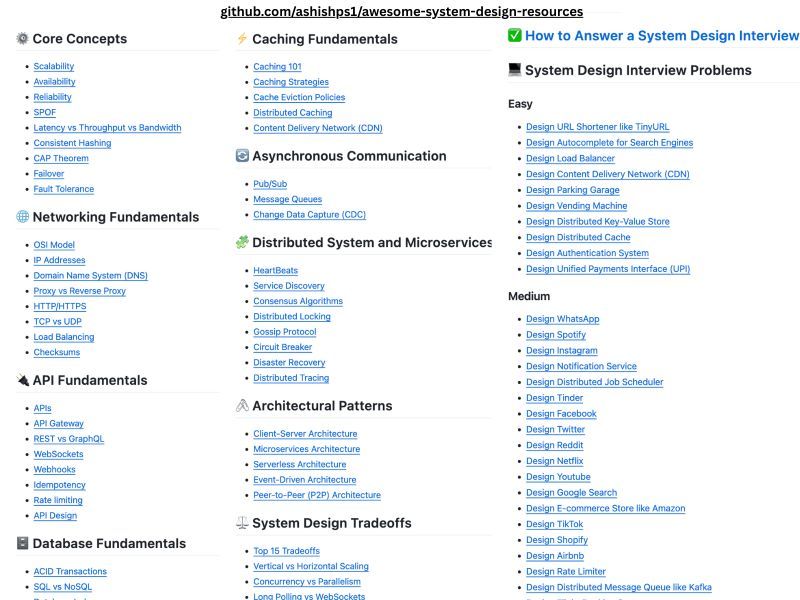
This GitHub repo (33k+ ⭐) covers the fundamentals most engineers miss:
Link: https://t.co/BD9hwVoTl2
Inside you’ll find:
• core system design concepts
• networking, APIs, and scalability basics
• databases, caching, and performance
• distributed systems & microservices
• architecture patterns and trade-offs
• 40+ real system design problems with solutions
It’s the kind of resource that helps you:
• understand how large-scale systems work
• prepare for real system design interviews
• think like a software architect
If you’re a developer, this is worth bookmarking.
Learn it. Study it. Build better systems.
#SystemDesign #SoftwareEngineering #Backend #TechInterviews #Developers
The final nail in the coffin of CS fundamentals.
Most devs have been writing SQL their entire career.
They can query. But they can't explain why it's slow.
That's the gap nobody talks about.
"CMU 15-445 – Database Systems by Andy Pavlo" fixes exactly that. 25 lectures. Free on YouTube.
It covers everything happening beneath your queries:
• Query execution – what actually happens after you hit enter
• Buffer pool management – how databases pretend RAM is infinite
• B-Tree indexes – why your index gets ignored and your query dies
• Query optimizer – how the DB silently rewrites your SQL before running it
• Transaction isolation – why "just wrap it in a transaction" is never enough
This isn't another "write better SQL" tutorial.
This is databases "the way senior engineers actually understand them."
"Wish someone had shown me this earlier."
Save it. Complete the series.
Most $80k devs and most $300k devs write the same code.
The difference?
"The $300k engineer knows what happens when it breaks. And why."
That understanding starts with Computer Networks.
Most devs have been building on top of the internet their entire career.
Without understanding how it actually works underneath.
UC Berkeley CS168 - Internet Architecture (Summer 2025) fixes that.
Go deep on:
• How TCP/IP decides why some requests arrive and others silently disappear
• What actually happens in the 200ms before your API even responds
• How your data physically travels across the world and where it gets lost
• Why most devs ship network vulnerabilities they can't even see
• The protocols every system runs on that nobody ever taught you
Framework devs are everywhere.
"Engineers who understand what happens between two computers are not."
"That's the gap. That's the salary difference."
Nobody tells you this when you start coding
Frameworks are just abstractions over things you don't understand yet
And the day your app hits real load - the abstraction breaks
That's when OS knowledge saves you
UC Berkeley CS162 teaches you what's actually happening underneath your code:
• Why threads freeze your app instead of speeding it up
• Why "out of memory" means something completely different than you think
• Why two processes can silently wait for each other forever
• Why your code behaves differently in production than on your machine
Most devs never go here
The ones who do become the ones everyone else calls when things break
UC Berkeley CS162 - Free on YouTube
Most devs skip this
That's exactly why you should own it.
This is Part 1 of the CS Fundamentals series.
OS → Computer Networks → DBMS
Bookmark this playlist if you’re done guessing:
https://t.co/N9gtoMSDnV
Everyone is learning Next.js and AI tools.
Almost no one is learning how databases actually work at scale.
CMU Advanced Database Systems (Full 22-lecture playlist)
Master these rare skills:
• How real query execution & optimization engines work
• Columnar storage, vectorized execution & modern OLAP
• Why Snowflake, Redshift & DuckDB changed everything
• Distributed database failures & the “one DB to rule them all” myth
A junior dev asked his Senior: "What separates a $100k engineer from a $300k one?"
The senior didn't say React. He didn't say AI tools. He opened MIT 6.824 Distributed Systems and said - "Start here"
This course will break your brain in the best way:
• How Raft consensus keeps systems alive when servers die
• How Google File System stores data at a scale most devs can't imagine
• Why your app survives or collapses - under real pressure
• The consistency vs availability decision that every big system loses sleep over
Framework devs are everywhere
Engineers who understand why systems fail and how to stop it are not
That's the gap. That's the salary difference
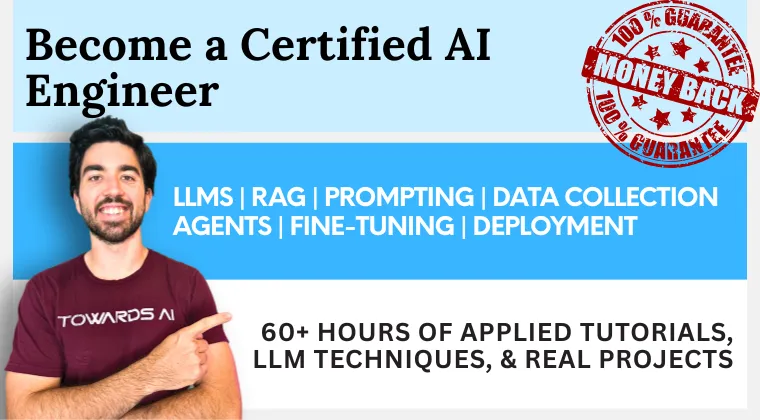
Become a Full Stack AI Engineer
If you are looking for a course that will turn you into a full-time AI engineer, this is one of the best courses out there.
https://t.co/HqQHfCWiHr
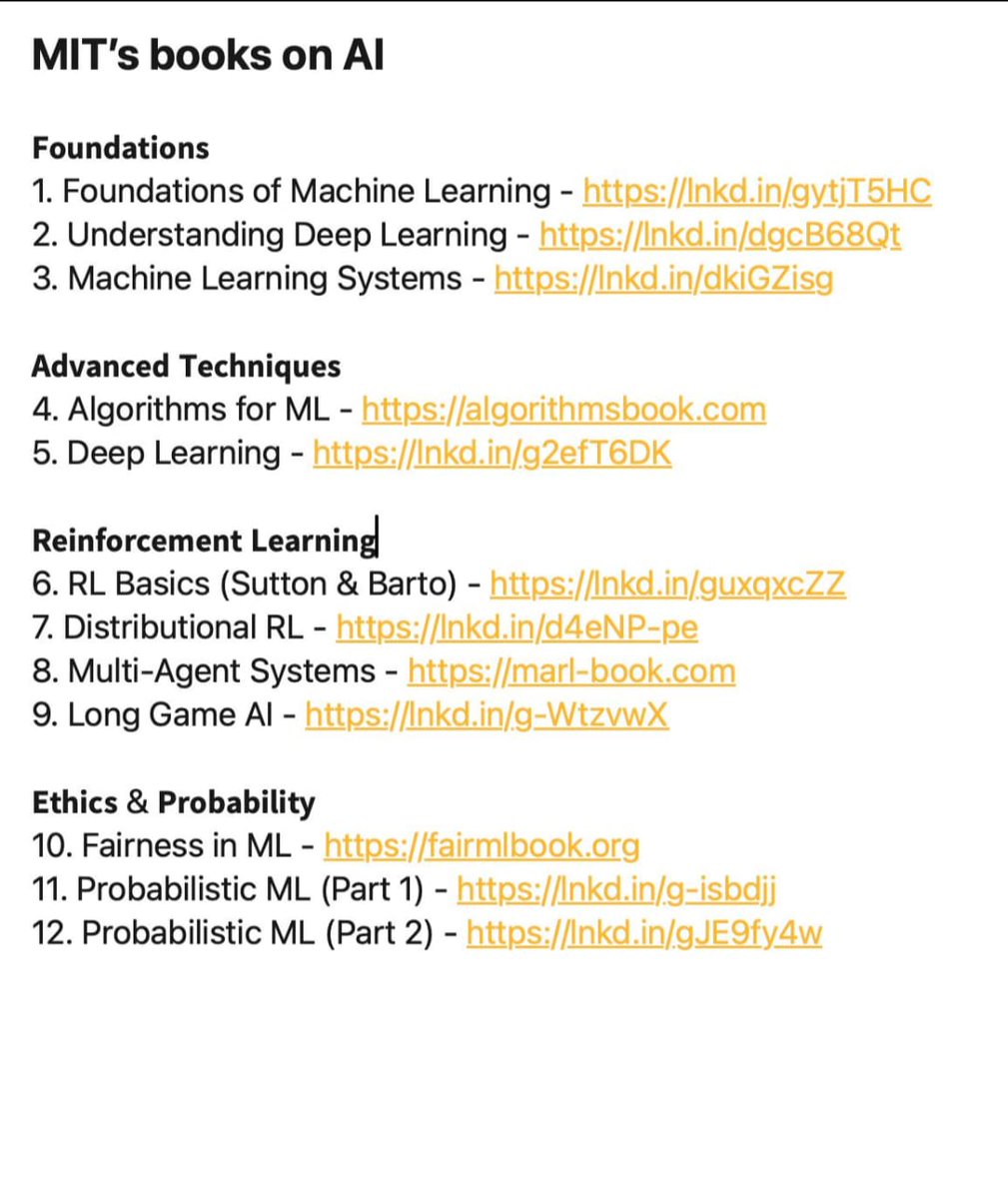
BREAKING: MIT just mass released their Al library for free. (Links included)
I went through these and honestly... this is better than most paid courses I've seen.
Here's the full list of books:
Foundations
1. Foundations of Machine Learning Core algorithms explained. Theory meets practice.
2. Understanding Deep Learning Neural networks demystified. Visual explanations included.
3. Machine Learning Systems Production-ready architecture. System design principles.
Advanced Techniques
4. Algorithms for ML Computational thinking simplified. Decision-making frameworks.
5. Deep Learning The definitive textbook. Covers everything deeply.
Reinforcement Learning
6. RL Basics (Sutton & Barto) The classic. Agent training fundamentals.
7. Distributional RL Beyond expected rewards. Advanced theory.
8. Multi-Agent Systems Agents working together. Coordination and competition.
9. Long Game Al Strategic agent design. Future-focused thinking.
Ethics & Probability
10. Fairness in ML Bias detection. Responsible Al practices.
11. Probabilistic ML (Part 1 & 2)
Links: https://t.co/AhDqm9x1QC
Most people pay thousands for bootcamps that teach half of this.
Bookmark it. Start anywhere. Just start.
Repost for others Follow for more insights on Al Agents.
MIT's books on Al
Foundations
1. Foundations of Machine Learning - https://t.co/HxbXfsDIl6
2. Understanding Deep Learning - https://t.co/AyeQav2yzN
3. Machine Learning Systems - https://t.co/0AxGtjBFwA
Advanced Techniques
4. Algorithms for ML - https://t.co/LOjFeK1hut
5. Deep Learning - https://t.co/Ztmu7X6gNM
Reinforcement Learning
6. RL Basics (Sutton & Barto) - https://t.co/HAWxL28df1
7. Distributional RL - https://t.co/VB1zBuSzag
8. Multi-Agent Systems - https://t.co/3tWqJaimYn
9. Long Game Al - https://t.co/vYDuy1XKT2
Ethics & Probability
10. Fairness in ML - https://t.co/B4lAj2ivpF
11. Probabilistic ML (Part 1) - https://t.co/folJrX24sf
12. Probabilistic ML (Part 2) - https://t.co/BMOjc8qSqZ