Zoho keeps doing things the rest of Indian tech has decided are impossible.
They just built its own computer server, but the way they did it is so fascinating.
First, let's understand what a server is. It is the big computer sitting in a data centre that runs your apps. Every time you use Gmail or WhatsApp, a server somewhere does the work.
Almost every server running in India is designed by foreign companies. Indian firms just buy them.
Zoho decided to design its own. And I cannot stop thinking about how they went about it.
They set up the project in Nagpur.
Now, Nagpur had no experienced hardware engineers at all. So Zoho did not hire experts from Dell or HPE. They started a training programme called SETU, hired freshers straight out of engineering colleges, and gave them one hard problem to work on for five years.
Think about that. Every big IT company in India complains that freshers are unemployable.
Zoho took those same freshers, in a smaller city, and got a working server out of them. They have filed more than five patents on the designs, and the key parts were designed fully in-house and put together by Indian manufacturing partners.
So the talent has always been there. A company patient enough to train people was the missing piece.
But why build your own server at all?
Zoho runs all its apps on its own machines. Until now, every server they bought from a foreign company included that company's profit and licence fees.
By designing their own, they get the same performance while using 12 to 18% less electricity, and the total cost of owning each machine drops by 20 to 30%.
With a few hundred servers, that saving is small. But Zoho plans to move all its apps worldwide onto these machines.
Also there is an AI angle. Running AI is expensive because AI needs huge computing power. Zoho's plan is to run smaller, focused AI models on its own servers in its own data centres, to manage costs.
Most companies rent computing power from Amazon or Google but Zoho is attacking the bill at the machine level.
The timing is important too.
In 2023, the Indian government put restrictions on importing hardware like servers. Zoho had already started its server team in Nagpur back in 2020.
Three years before the government rule arrived, Zoho was preparing for a world where India cannot simply import its computers.
So, they moved on their own belief.
The best part is that the design is fully owned in India, Zoho does not depend on any foreign company for security checks, software updates, or licences.
If some country imposes sanctions or a licensing fight breaks out tomorrow, nobody abroad can switch off Zoho's machines.
Zoho has been honest about the fact that the chip inside the server is still an Intel processor, and Intel helped in the development.
That is fine. Every country that builds hardware starts this way. China's server companies started by assembling other people's parts and slowly went deeper. The chip is the next decade's problem.
What I love most is how Zoho-like this whole thing is.
> This company took no investor money in 25 years.
> It opened offices in villages and small towns.
> It hires school students and trains them.
> It built its own browser and its own AI model.
> Now its own server.
Now compare this with the big Indian IT companies. TCS, Infosys, Wipro, HCL.
Together they earn over $250 billion. They have managed the world's computers for decades. But not one of them designed a server of their own.
Even the name is a nice touch. Nathu La is the mountain pass in Sikkim through which India traded with the world on the old Silk Route.
Naming your first server after a trade gateway, while building it so India depends less on imported tech, shows someone thought about this for years.
They have a few hundred servers running today and want 2,000 by the end of the year. Small numbers. But the team is trained, the design works, and the path is proven.
Indian software companies spent 30 years building on other people's machines.
One of them finally built the machine. :)
डार्क स्पॉट्स
हर सड़क पर लाइटें लगी होने के बावजूद भी, बहुत सारे ऐसे कोने होते हैं जो कि अंधेरे में होते हैं, वहां की लाइट खराब होती है। वो तब पता चलती है जब कोई उसकी शिकायत करता है।
इसलिए दिल्ली सरकार अपनी इन सभी लाइटों को सेंसर्ड एलईडी लाइटों में कन्वर्ट कर रही है। यानी कि दिल्ली में 1 लाख लाइटों को इस तरीके की लाइटों में कन्वर्ट किया जाएगा जो कि एक कंट्रोल एंड कमांड सेंटर से जुड़ी होंगी। जहां की एक लाइट खराब होगी तो तुरंत उस कंट्रोल रूम में सिग्नल मिलेगा और उसे ठीक कर दिया जाएगा। कोई भी डार्क स्पॉट तुरंत मैनेज हो पाएगा।
क्या ख्याल है आपका?
अपने सुझाव कमेंट में दें।
#SmartDelhi
Why Pune faces continuous power disruptions compared to Mumbai?? This news article explains it quite briefly..There is power outrage since yesterday night at many areas of Pune like Marunji, HJW Phase-1 that too at peak of summer @MSEDCL@Dev_Fadnavis
https://t.co/urRYg7SbHe
Capital gains tax shouldn’t exist.
I risk my money. I build the business. I make the investment. I do the work. I take the risk.
So why the hell should the government take a cut of my success?
They risk nothing. They create nothing. They just take.
Parasites. F’en parasites.
Corporators in Maharashtra are so corrupt, most of.them are crore-patis! The Corporations be it Mumbai, Pune have become family business with rates being almost 40-50% bribes. That's why all these Corporators have huge a@rse cars like Range rovers, their nepo kids fly private!
@Abhirajputfit Are you using a 1000VA stabilizer along with the walking pad? I recently visited a Cult store to enquire about the walking pad, and they suggested that using a stabilizer is mandatory; otherwise, the motor may not be covered under the company’s warranty policy.
@abhiandniyu Civic sense among the people. Better waste management, proper street lighting, more greenery along the roadsides, clear road markings, and the removal of posters and brochures from public property. Many issues would improve, but it all starts with civic sense.
Day 1 of the AI Impact Summit turned to be a pain for us.
I came genuinely excited, it was the first time the summit was being hosted in India, and I wanted to show up personally to support the ecosystem and the government’s push.
But what happened next was shocking.
At 12 noon, security personnel arrived to sanitise and cordon off the area ahead of the visit by PM Modi visit at 2pm.
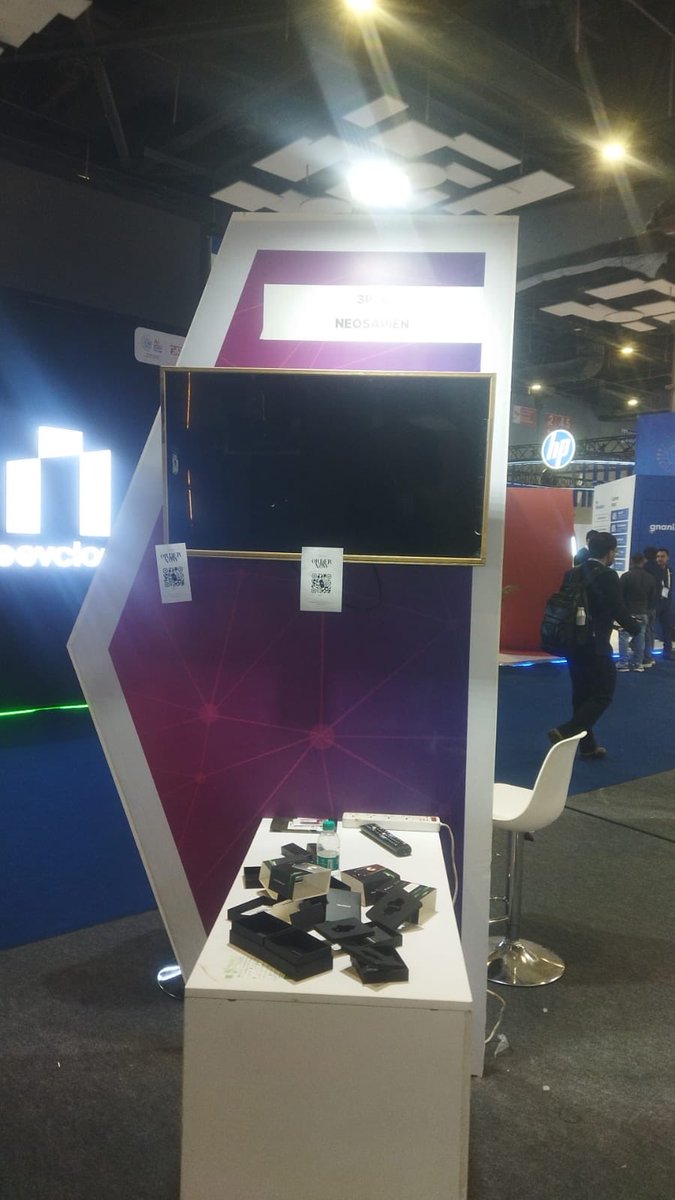
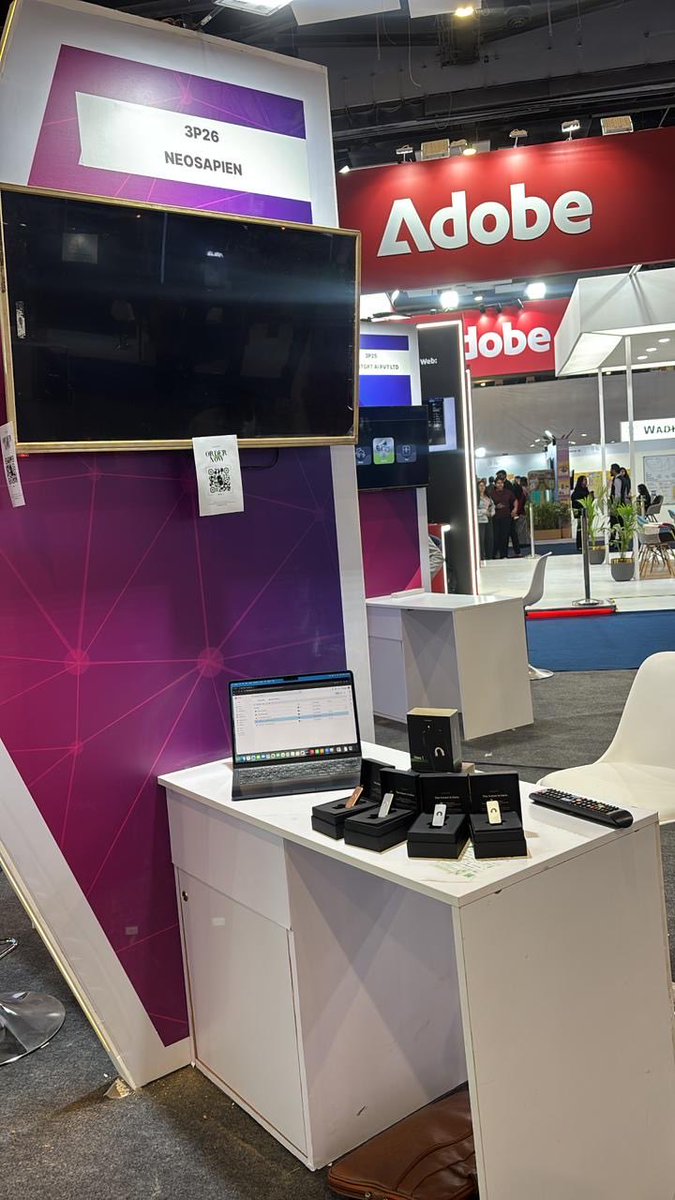
I explained that we’re building India’s first patented AI wearable at NeoSapien and requested a chance to showcase it.
One officer told others to let me stay, and they left.
Then another group came and ordered us to leave immediately. Seemed like there was lack of co-ordination between the security itself.
I asked: “Should we take our wearables?”
They said, others are leaving even laptops behind, security will take care.
Trusting them, I left. Hoping that the wearables will be safe, and If I am lucky, it might catch the eye of PM Modi.
Gates were closed from 12–6pm. Much much longer than expected.
Later we found out that our wearables were stolen.
Think about this: We paid for flights, accommodation, logistics and even the booth. Only to see our wearables disappear inside a high-security zone.
If only security and official entourage had access, how did this happen?
This is extremely disappointing.
Examples are now pouring in about AI-assisted Code Engineering productivity.
The quoted post is a Bhagwad Gita app.
Anthropic has built an entire C compiler with their Claude AI. That is not an easy engineering feat at all.
At this point, it is best for those of us who depend on writing code for a living to start considering alternative livelihoods. I include myself in this. I don't say this in panic, but with calm acceptance and embrace.
As a matter of fact, I did a detailed session with Gemini Pro on how the economy will be shaped by the AI revolution. It was like having an extremely intelligent economic philosopher debating you. I asked it to critique its own work and it did a fantastic job too.
As Gemini and I developed see this, the future could unfold in two ways, depending on who owns and collects rent on this technology.
The optimist in me thinks that this technology will make most technological prowess by humans redundant and that would push tech to the background (all tech become trivial, like digital watches today) and we then get to focus on life, family, soil, water, nature, art, music, culture, sports, festivals and faith (faith is important), and that is best done in small close-knit rural communities. I live a life like this today and if we solve rural poverty, I consider this a very good life.
The pessimistic dystopian vision is centralized control.
Here is my Gemini chat session on this. You can continue the session on Gemini and see where it all goes.
https://t.co/ORdh7ejen4
33 hours!
That’s the time that teams from the National Disaster Response Force, State Disaster Response Force, Bharat Petroleum Corporation Ltd, highway police and MSRDC took to carry out the flammable propylene gas transfer from the overturned truck and remove the tanker safely on the Mumbai-Pune Expressway.
33 hours!? Just one tanker leak stalled the entire expressway!
Senior citizens, women, and children were stranded in the 33-hour traffic jam without any food, water, or toilet facilities!
Tolls were collected even as commuters were stranded for hours, entry of vehicles was allowed even after closure!
This is how “Viksit” we are! This is how people-loving, efficient and prepared the administration is!
How many recently elected corporators from Mumbai and Pune rushed to help the thousands of commuters stranded on the expressway?
The gas tanker was removed at 1:30 AM, and the Mumbai–Pune Expressway has reopened. The expressway may finally see some relief after a 31 hour stretch of congestion & heavy traffic.