Even in Uganda, which imports and transports its fuel through Kenya, the pump price is currently lower than what Kenyan consumers are paying.
Now, let’s look at the global context.
In recent times, global crude oil prices have hovered at roughly $80–90 per barrel. Contrast that with March 2022, at the height of the Russia–Ukraine War shock, when prices spiked to about $120–140 per barrel.
Let’s also look at the landed cost, which we are told is the key factor in determining the pump price in Kenya.
In July 2022, Kenya’s landed cost of imported Super Petrol stood at about $1,042.85 per cubic metre.
As of March 2026, that figure is approximately $823.87 per cubic metre.
In short, global prices are lower and landed costs are lower.
Yet in 2022, pump prices were around Ksh 158 per litre (about KSh 178 without subsidy).
Today, we are paying Ksh 206 per litre, even with a so called smoothening of prices (subsidy) in place.
Now, if it costs less to buy and bring the fuel than it did in 2022, why are Kenyans paying more at the pump?
Here is the police officer who killed the two young men in Ishiara Market during the peaceful demonstrations.
His name is Constable Mumo
Disiyae please!
REJECT FUEL PUMP PRICES.
They hoarded fuel, procured fuel illegally, caught with 500M in their accounts, got fake arrested, released on bail and resigned.
Who should bear the burden of corruption?
OPIYO WANDAYI MUST RESIGN ‼️
#RejectFuelPrices
You have said that the increase in fuel prices does not affect you because you don’t have a car. Fair enough. It is therefore only fair to assume that the omena you eat everyday is delivered from Lake Victoria to Nairobi by night runners.
You donkey!
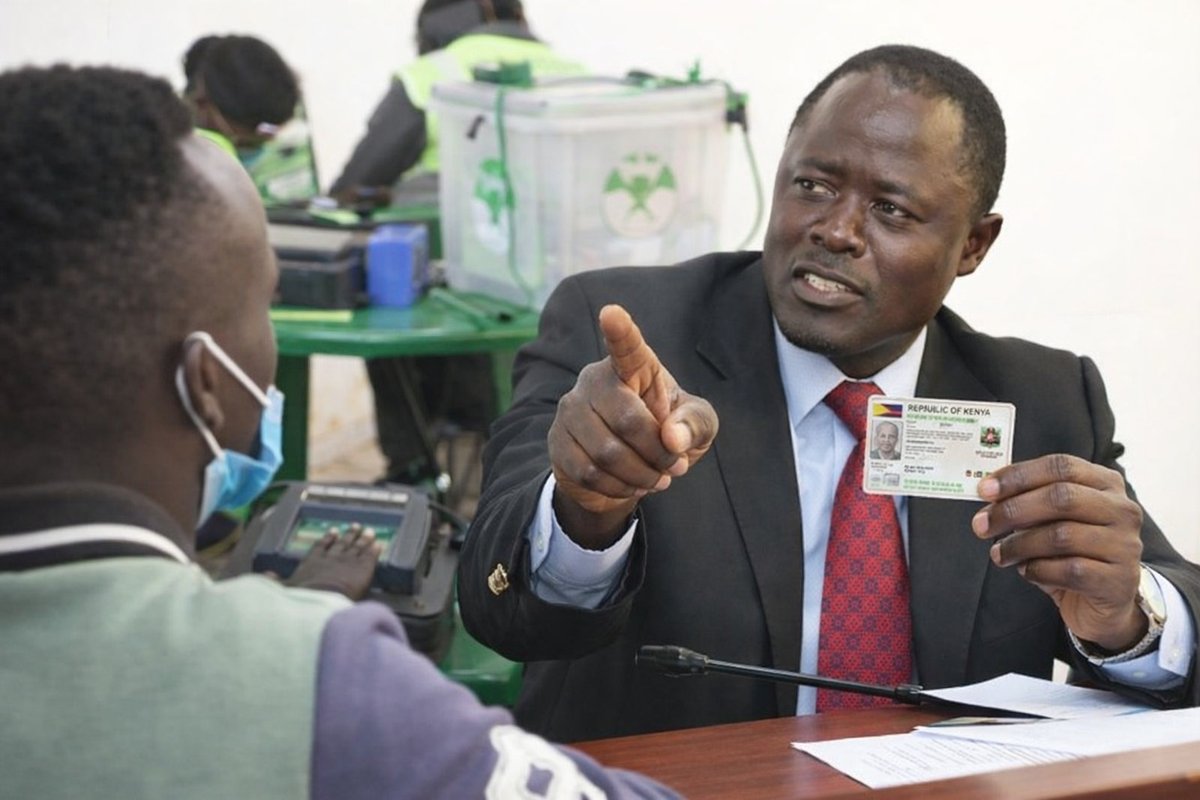
Kaluma is proposing something big.
Link National IDs directly to IEBC so that the moment you get an ID, you’re automatically registered as a voter.
This came up yesterday in Sotik, Bomet, where the Parliamentary Committee on Administration and Internal Security noted delays in ID issuance, largely due to limited government funding.
On paper, it sounds efficient.
But let’s be honest,
Right now, thousands of IDs remain uncollected in stations across the country.
Now imagine those same IDs already sitting inside the IEBC voter register.
Who controls them?
Who safeguards that system?
Because what looks like “efficiency” today can easily become a tool for manipulation tomorrow.
Good idea, or a quiet backdoor to rigging elections?
It might be good on the surface, but in the wrong hands, it becomes a silent risk to election integrity.