Recovery Pool: During the initial phase of the collaboration, a substantial portion of exchange revenue, together with committed support capital, is intended to fund this dedicated user recovery pool. Drift has also been actively working with law enforcement and blockchain forensics partners to track and recover stolen assets. Any funds recovered would be contributed to the recovery pool.
Understanding Trader Positioning and Skew
Many people use funding and open interest to see what's happening in perps. Skew tells you what the options market expects next.
Every option has a price that reflects how much volatility the market expects. This is called implied volatility. When you compare the IV of puts versus calls at the same distance from spot, you get skew.
The standard measure is called 25-delta skew. It takes the IV of puts and subtracts the IV of calls at a fixed distance from spot. A reading of +10 means puts are 10 volatility points more expensive than equivalent calls.
Skew captures how much traders are willing to pay for protection against future moves. In crypto, skew is often positive. Puts cost more than calls because large holders need to protect spot positions, and that demand keeps put IV elevated above call IV even in calm markets.
When skew rises above its recent range, put demand is picking up relative to calls. Traders are paying a premium for protection they normally wouldn't bother with. When skew drops during a rally, call demand is outweighing put buying and can signal more speculative positioning.
A single reading doesn't tell you much on its own. What matters is where it sits relative to its recent history. Funding tells you what's happening now. Skew tells you how much risk traders are pricing in.
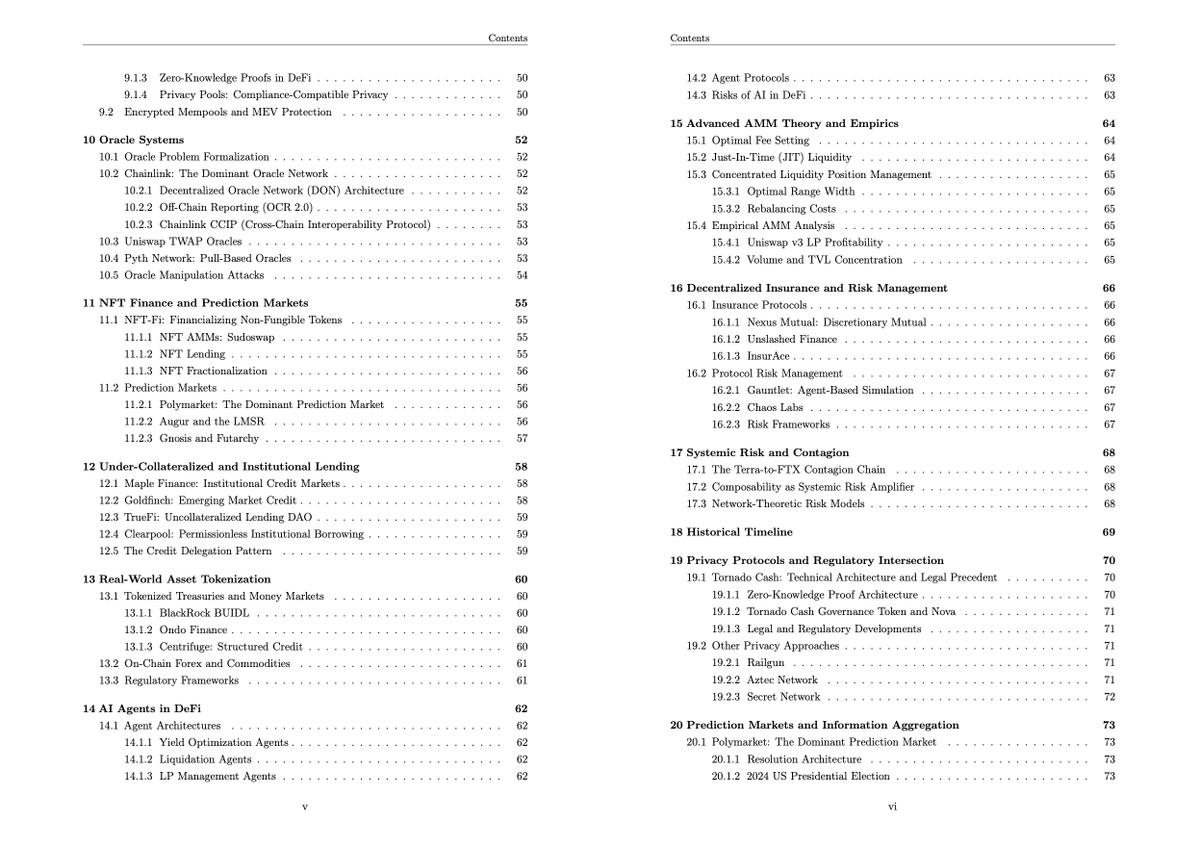
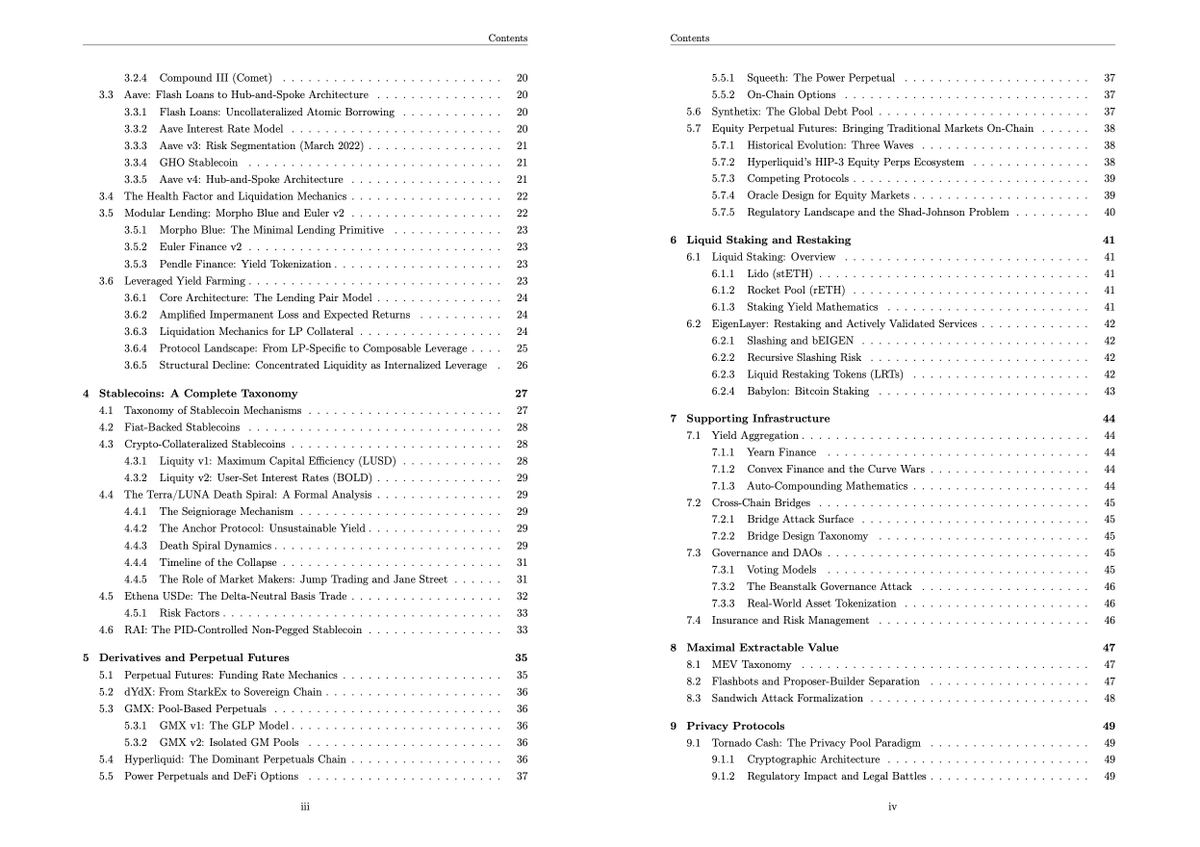
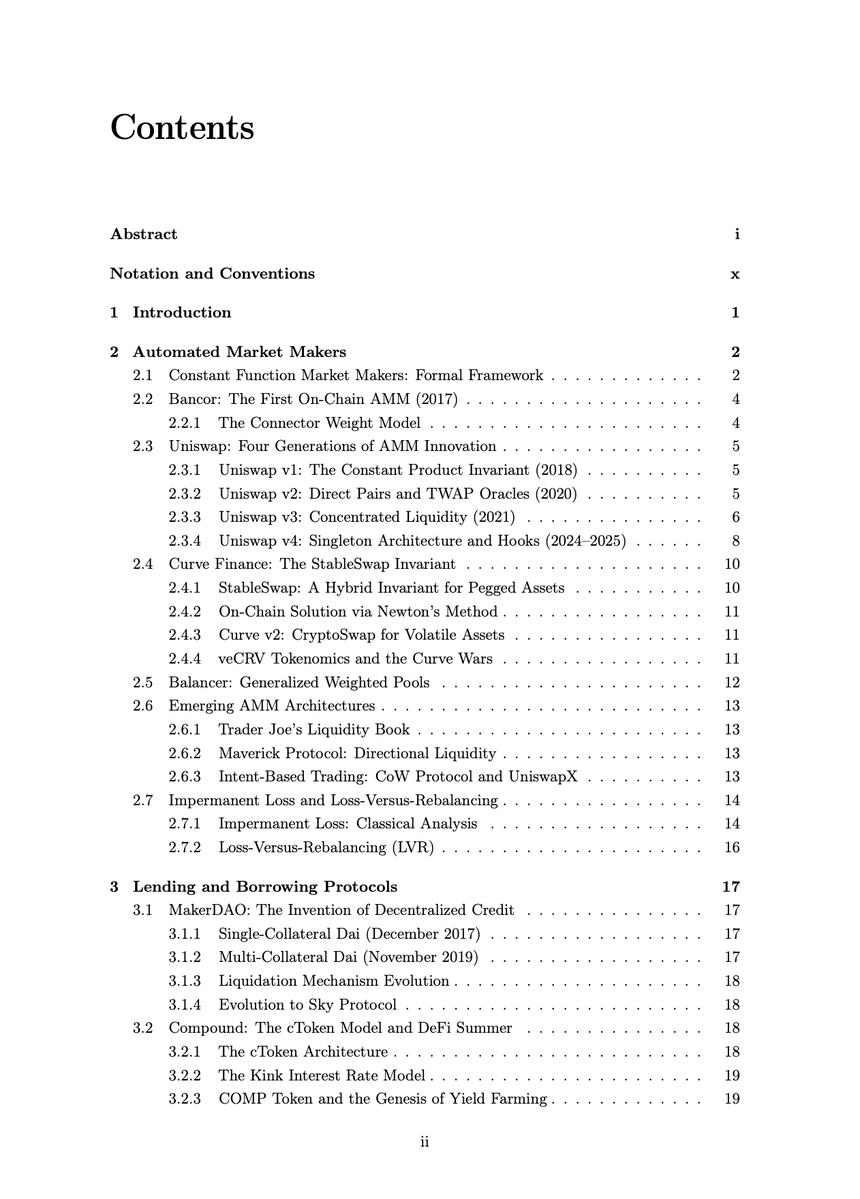
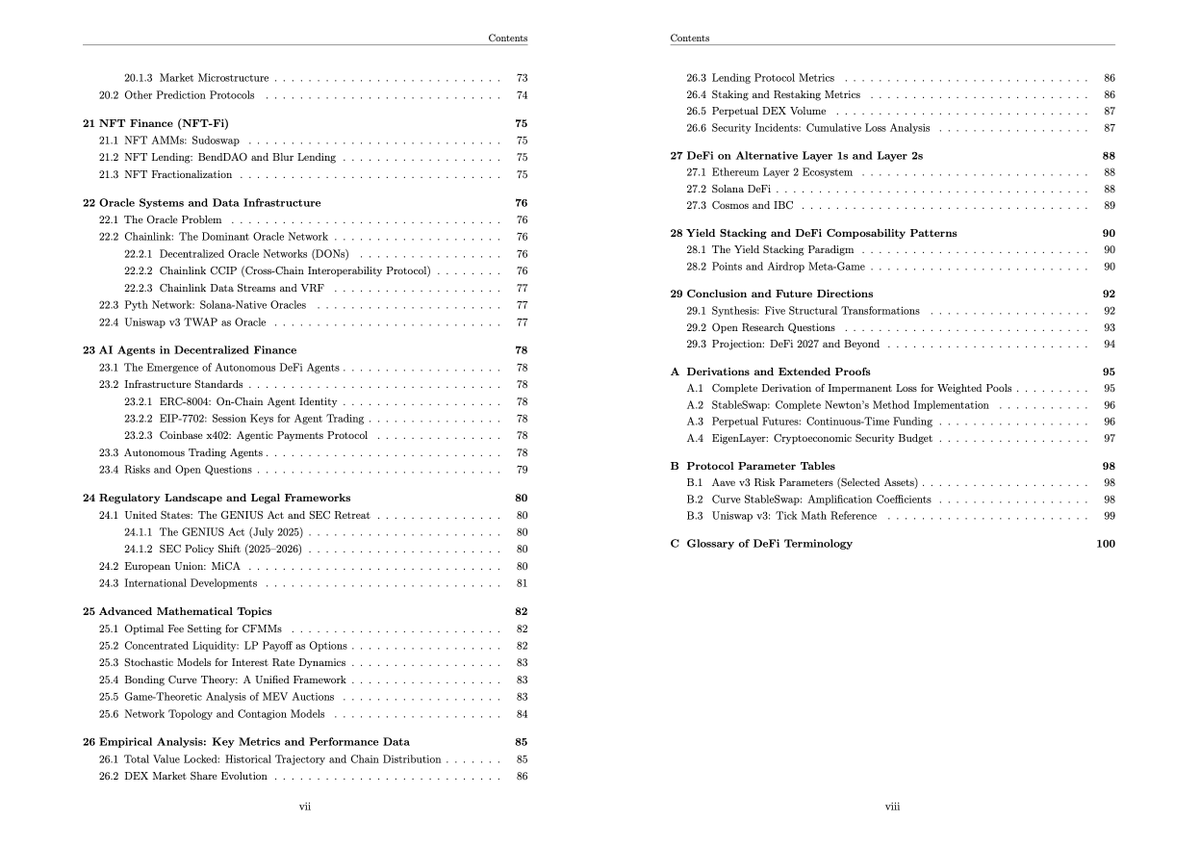
Today I am happy to post one of my longest working papers, the DeFi evolution over the last 9 years.
From @Uniswap , @CurveFinance , @Balancer Evolution to the rise of @HyperliquidX this Paper covers all significant improvements in the last 9-10 years.
I hope you enjoy reading this one. After the last papers were all TradFi approaches, this one comes back to our hometown, DeFi.
(https://t.co/02bErEfG8K)
10 options strategies every investor should understand:
1. Cash-Secured Put - Get paid to wait for prices you want to buy at. The foundation of income trading.
2. Covered Call - Own shares, sell calls against them. Collect premium while you hold.
3. The Wheel - Combine CSPs and covered calls into one repeatable income loop.
4. Long Call (LEAPs) - Buy long-dated calls on high-conviction stocks. Leveraged upside, defined risk.
5. Bull Put Spread - Sell a put, buy a cheaper put below it. Collect credit with limited downside.
6. Iron Condor - Sell a put spread and a call spread. Profit when the stock stays in a range.
7. Calendar Spread - Sell a short-term option, buy a longer-term one. Profit from time decay differences.
8. Bear Call Spread - Sell a call, buy a higher one. Collect credit when you're bearish.
9. Short Put - Sell a put on a stock you want to own. Keep the premium if it stays above your strike.
10. Bull Call Spread - Buy a call, sell a higher one. Cheaper way to play upside with defined risk.
You don't need to master all 10. Start with 1-3 and get consistent before adding complexity.
Which ones are you using?
DN funding arb across multiple DEXs in one click?
Loris is building this. Just joined the waitlist, the tech looks insane.
Been waiting for a product like this for a long time, haven’t seen anything similar on the market.
Sign up: https://t.co/yB08EoiSrI
If @CC2Ventures is bullish on Polymarket Limit Orders, so am I 🤝
Just further confirmation that providing LP could be the greatest alpha for the upcoming airdrop
& a reminder that $1 in LP earned puts you in the Top 54k users…
for context, CC2 was the most highly regarded airdrop farmer & retired after receiving a $1M+ HYPE airdrop
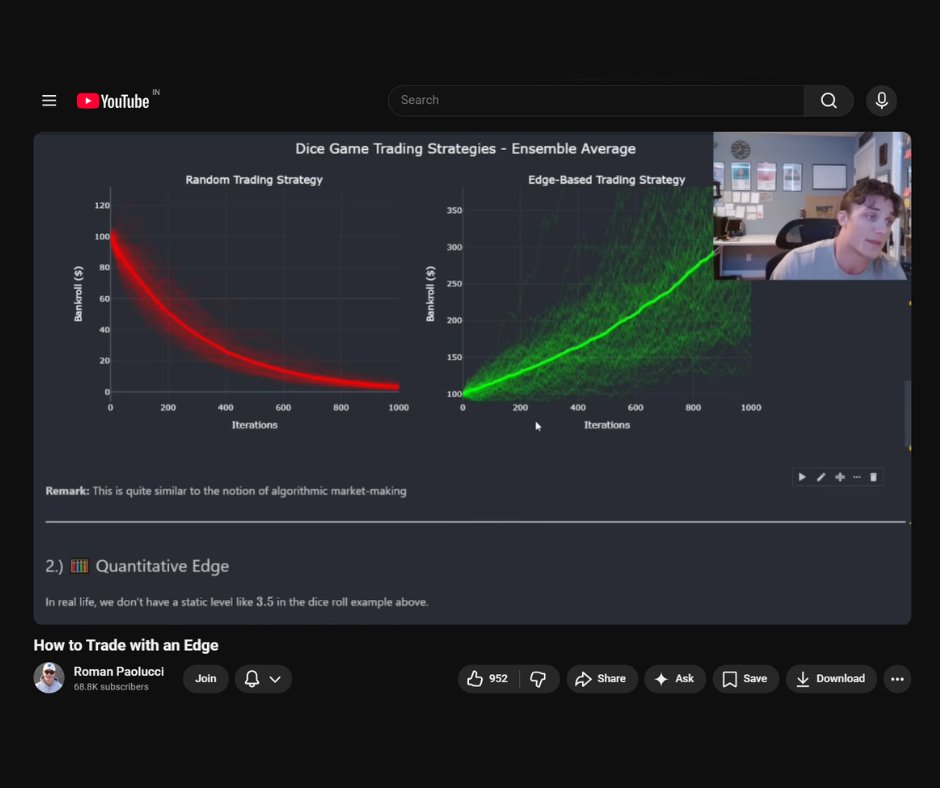
Single handedly the best blog I read in my trading life.
I keep quoting it, every other week and making people head to it.
@SqueezeMetrics sharing this was a service to the whole community.
If you’re serious about building real quantitative edge, take 45 minutes and watch this most underrated masterpiece for free.
It’s 100% worth it. Then read my article, turn off your phone and go for a long walk. Most people won’t.
How to properly farm DreamCash Season 1
DreamCash announced that Season 1 is now live, and I'm going even harder with it now.
With the release of Season 1, they've also released the DreamCash web app, which doesn't look half bad. Effectively, this removes the mobile-only problem we had earlier this week.
It's also really dead simple to farm this. You have a few options.
1. Delta-Neutral with Kinetiq Markets
This is the way to go if you're actively farming Kinetiq Markets anyway. The perks are simple:
> 2-in-1 farm with Markets (which is also super hyped)
> Both on desktop, so easier to manage
> Both HIP-3 aligned, so it's effectively a 3-in-1 farm since they're both powered by Hyperliquid
To do this, simply:
> Sign up for DreamCash through dreamcash[.]xyz and input the code rqbrv7 for your first free points drop between 10K and 1M.
> Sign up for Kinetiq Markets also at markets[.]xyz
> Pick any asset and choose the same leverage on both exchanges. I recommend 10x.
> Now also use the same amount of margin on both.
> Long on one exchange and short on the other.
> Hold the position for at least 15-20 minutes before closing and doing this again.
> Do this multiple times a day to farm volume. Remember that you get 1XP per dollar of volume traded.
2. Using Tread bots
If you don't want to go through the hassle of doing all that, you can just use Tread.
I wrote a post on this a while ago, but if you didn't read it, Tread is an algorithmic trading tool that you can use to automatically make volume on perp DEXs.
Here's how you can use Tread on DreamCash. And yes, the Tread team is in talks with the DreamCash team, so your volume on Tread will eventually count towards your DreamCash XP.
> Sign up for DreamCash through dreamcash[.]xyz and input the code rqbrv7 for your first free points drop between 10K and 1M.
> Create a Tread account here: https://t.co/t8COS8c6sf (the link gives you a discount on Tread's builder fees)
> Link your Hyperliquid account (the same one you linked to DreamCash, check the quoted post for the setup guide)
> Head to the Bots tab and choose Market Maker Bot
> Select your connected Hyperliquid account on the bot dashboard
> Open the Pair dropdown and choose Cash from the available options
> Select one of the pairs there, and then use these general-purpose settings:
Participation Rate: Aggressive
Reference Price: RGrid
Spread: +3
Stop Loss: 5%
TP Reset Threshold: 0.125%
> Alternatively, if you want more fine-tuned settings, do this instead using TreadTools (treadtools[.]vercel[.]app):
> visit the website for TreadTools
> select the exchange you're trading on (in our case, we will select HIP-3)
> find a market with a high OI/BBO ratio and high volume
> the status of the market should be calm/choppy
> set Tread bot to Normal participation rate on Grid mode (not RGrid). Spread should be +5bps
> if the market is volatile, set the bot to aggressive participation mode with spread of -1bps
Ensure you're present to restart it every 10-15 minutes when it's completed.
This way, Tread bots will make the volume for you, even while you sleep. You just have to be around to restart them whenever they finish.
Keep in mind that using Tread to farm this is effectively burning money for DreamCash points, since Tread's profitability rate (in my experience) is somewhere around 20-30% on DreamCash.
That's the guide! Will you be using Tread or farming manually? Let me know down below!




![financelly's tweet photo. How to properly farm DreamCash Season 1
DreamCash announced that Season 1 is now live, and I'm going even harder with it now.
With the release of Season 1, they've also released the DreamCash web app, which doesn't look half bad. Effectively, this removes the mobile-only problem we had earlier this week.
It's also really dead simple to farm this. You have a few options.
1. Delta-Neutral with Kinetiq Markets
This is the way to go if you're actively farming Kinetiq Markets anyway. The perks are simple:
> 2-in-1 farm with Markets (which is also super hyped)
> Both on desktop, so easier to manage
> Both HIP-3 aligned, so it's effectively a 3-in-1 farm since they're both powered by Hyperliquid
To do this, simply:
> Sign up for DreamCash through dreamcash[.]xyz and input the code rqbrv7 for your first free points drop between 10K and 1M.
> Sign up for Kinetiq Markets also at markets[.]xyz
> Pick any asset and choose the same leverage on both exchanges. I recommend 10x.
> Now also use the same amount of margin on both.
> Long on one exchange and short on the other.
> Hold the position for at least 15-20 minutes before closing and doing this again.
> Do this multiple times a day to farm volume. Remember that you get 1XP per dollar of volume traded.
2. Using Tread bots
If you don't want to go through the hassle of doing all that, you can just use Tread.
I wrote a post on this a while ago, but if you didn't read it, Tread is an algorithmic trading tool that you can use to automatically make volume on perp DEXs.
Here's how you can use Tread on DreamCash. And yes, the Tread team is in talks with the DreamCash team, so your volume on Tread will eventually count towards your DreamCash XP.
> Sign up for DreamCash through dreamcash[.]xyz and input the code rqbrv7 for your first free points drop between 10K and 1M.
> Create a Tread account here: https://t.co/t8COS8c6sf (the link gives you a discount on Tread's builder fees)
> Link your Hyperliquid account (the same one you linked to DreamCash, check the quoted post for the setup guide)
> Head to the Bots tab and choose Market Maker Bot
> Select your connected Hyperliquid account on the bot dashboard
> Open the Pair dropdown and choose Cash from the available options
> Select one of the pairs there, and then use these general-purpose settings:
Participation Rate: Aggressive
Reference Price: RGrid
Spread: +3
Stop Loss: 5%
TP Reset Threshold: 0.125%
> Alternatively, if you want more fine-tuned settings, do this instead using TreadTools (treadtools[.]vercel[.]app):
> visit the website for TreadTools
> select the exchange you're trading on (in our case, we will select HIP-3)
> find a market with a high OI/BBO ratio and high volume
> the status of the market should be calm/choppy
> set Tread bot to Normal participation rate on Grid mode (not RGrid). Spread should be +5bps
> if the market is volatile, set the bot to aggressive participation mode with spread of -1bps
Ensure you're present to restart it every 10-15 minutes when it's completed.
This way, Tread bots will make the volume for you, even while you sleep. You just have to be around to restart them whenever they finish.
Keep in mind that using Tread to farm this is effectively burning money for DreamCash points, since Tread's profitability rate (in my experience) is somewhere around 20-30% on DreamCash.
That's the guide! Will you be using Tread or farming manually? Let me know down below!](https://pbs.twimg.com/media/HBhMqgaXYAAJVm5.jpg)




![financelly's tweet photo. How to properly farm DreamCash Season 1
DreamCash announced that Season 1 is now live, and I'm going even harder with it now.
With the release of Season 1, they've also released the DreamCash web app, which doesn't look half bad. Effectively, this removes the mobile-only problem we had earlier this week.
It's also really dead simple to farm this. You have a few options.
1. Delta-Neutral with Kinetiq Markets
This is the way to go if you're actively farming Kinetiq Markets anyway. The perks are simple:
> 2-in-1 farm with Markets (which is also super hyped)
> Both on desktop, so easier to manage
> Both HIP-3 aligned, so it's effectively a 3-in-1 farm since they're both powered by Hyperliquid
To do this, simply:
> Sign up for DreamCash through dreamcash[.]xyz and input the code rqbrv7 for your first free points drop between 10K and 1M.
> Sign up for Kinetiq Markets also at markets[.]xyz
> Pick any asset and choose the same leverage on both exchanges. I recommend 10x.
> Now also use the same amount of margin on both.
> Long on one exchange and short on the other.
> Hold the position for at least 15-20 minutes before closing and doing this again.
> Do this multiple times a day to farm volume. Remember that you get 1XP per dollar of volume traded.
2. Using Tread bots
If you don't want to go through the hassle of doing all that, you can just use Tread.
I wrote a post on this a while ago, but if you didn't read it, Tread is an algorithmic trading tool that you can use to automatically make volume on perp DEXs.
Here's how you can use Tread on DreamCash. And yes, the Tread team is in talks with the DreamCash team, so your volume on Tread will eventually count towards your DreamCash XP.
> Sign up for DreamCash through dreamcash[.]xyz and input the code rqbrv7 for your first free points drop between 10K and 1M.
> Create a Tread account here: https://t.co/t8COS8c6sf (the link gives you a discount on Tread's builder fees)
> Link your Hyperliquid account (the same one you linked to DreamCash, check the quoted post for the setup guide)
> Head to the Bots tab and choose Market Maker Bot
> Select your connected Hyperliquid account on the bot dashboard
> Open the Pair dropdown and choose Cash from the available options
> Select one of the pairs there, and then use these general-purpose settings:
Participation Rate: Aggressive
Reference Price: RGrid
Spread: +3
Stop Loss: 5%
TP Reset Threshold: 0.125%
> Alternatively, if you want more fine-tuned settings, do this instead using TreadTools (treadtools[.]vercel[.]app):
> visit the website for TreadTools
> select the exchange you're trading on (in our case, we will select HIP-3)
> find a market with a high OI/BBO ratio and high volume
> the status of the market should be calm/choppy
> set Tread bot to Normal participation rate on Grid mode (not RGrid). Spread should be +5bps
> if the market is volatile, set the bot to aggressive participation mode with spread of -1bps
Ensure you're present to restart it every 10-15 minutes when it's completed.
This way, Tread bots will make the volume for you, even while you sleep. You just have to be around to restart them whenever they finish.
Keep in mind that using Tread to farm this is effectively burning money for DreamCash points, since Tread's profitability rate (in my experience) is somewhere around 20-30% on DreamCash.
That's the guide! Will you be using Tread or farming manually? Let me know down below!](https://pbs.twimg.com/media/HBhNNMCWkAAwYhL.jpg)


