Ja taas seuraa tiedotettavaa!
Viimeisen kuukauden oon välillä vilautellu kuvia podcast studion rakentamisesta pääkonttorin ikoniseen ja bunkkerimaiseen kellariin. Pitihän se ottaa ite ensitöikseen käyttöön!
Bunkkeri podcastissa valmistaudutaan maailmanlopun häppeninkeihin, vaikka mitään ei koskaan tapahdukkaan. Rauhan aikana siinä pohditaan yhteiskunnallista muuotosta ja teknologian kehitystä suvereniteetin näkökulmasta.
HOX‼️ Bunkkeri ei ole bitcoin podi, vaan se on pitkoilijoiden mentaliteetillä tuotettu yleinen ajankohtais- ja keskusteluohjelma.
Pilottijaksossa vieraana on monelle äksästä tuttu Klaus Koo. Jaksossa kuulija pääsee tutustumaan henkilöön nimimerkin takana. Jatkossa Klaus jatkaa podin toisena isäntänä meikäläisen kanssa 🔥
Löytyy tubesta, spottarista ja apple podcastista! Käyhän tilaamassa ja kuuntelemassa.
THANK GOD IT'S FRIDAY!!! Been working like a dog for a launch this week..
I'm trying to be compact here... bear with me:
Let's wrap up the last 6 months. Since the first BTCHEL event last year, we have:
• Upgraded the BTCHEL Hub from a temporary pop-up shop to a permanent and versatile physical space for local bitcoiners. You're welcome to check it out on Fridays when we have open doors and free entry!
• Promoted Kaisu Hyvärinen, an experienced event producer as the company's COO and hired new talent; Rachel Geyer, the chairman of European Bitcoin Energy Association, to lead a new event we're launching. Welcome to our team, Rachel!
• Raised a seed stage funding round of 100,000€ on a million-euro valuation for the company. We now have two prominent Finnish bitcoin mining companies on board around the year.
Now, what's next for 2026? Today marks the 200-day countdown to this year's BTCHEL WEEK and thus we start to push the momentum for real.
We launch a new, european wide bitcoin mining industry event similar to what they have in the US... it's about time we have our own in Europe.
It's called the EUROPEAN MINING SUMMIT 2026 or EMS in short.
EMS is the must-attend industry event for anyone with an interest in bitcoin mining in Europe. Miners, hardware manufacturers, hosts, pools, power plants and the whole energy sector.
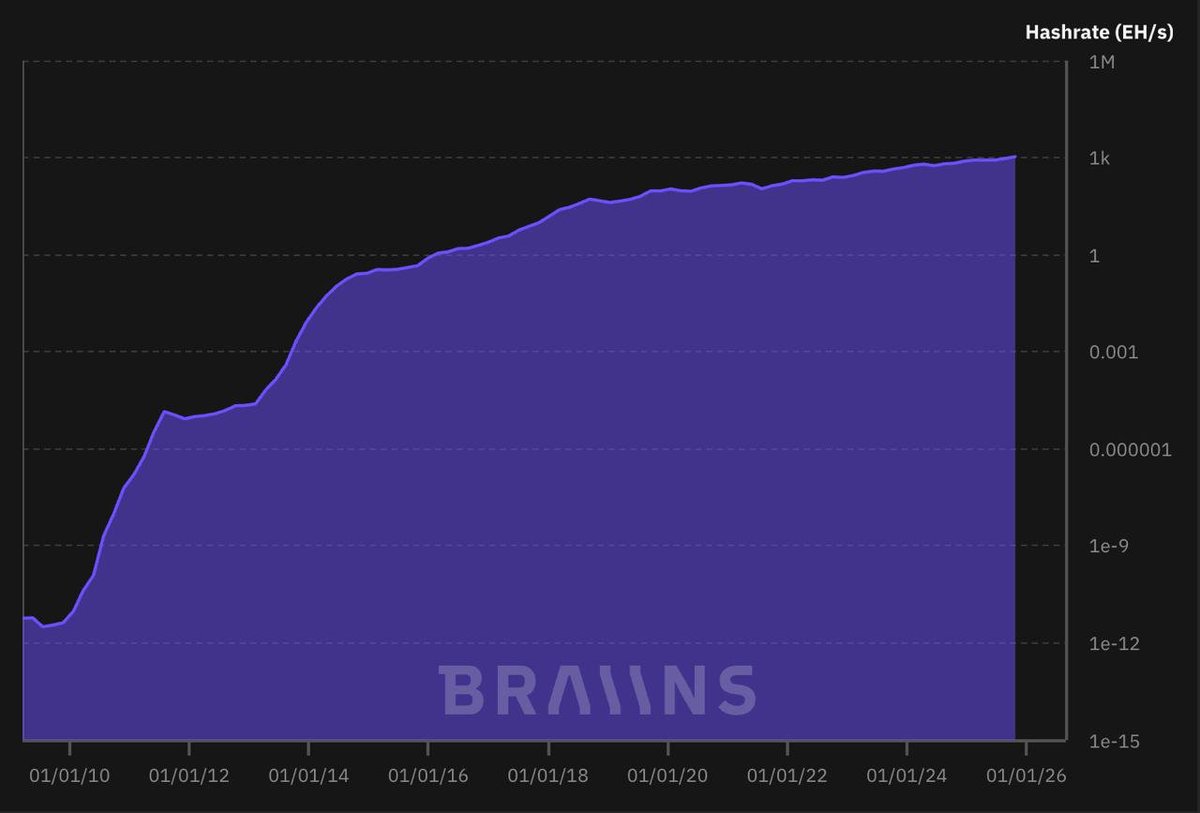
Our goal is to bring as much hashrate to Europe as possible. This has a tremendous impact for Europe's energy independence, abundance and decarbonisation.
Now that we have our trademark industry event where we serve our corporate clients, we can now double down on HC cypherpunk and bitcoin pleb culture at BTCHEL2026. We are committed to staying true to the community ethos at the main event, so be prepared to see the most audacious and unapologetic bitcoin event in September.
For BTCHEL, our vision is the actualization of the global Bitcoin Standard, and we are taking care of the Nordics by becoming the most influential Bitcoin media in our region. For that reason, we are sponsoring two other bitcoin conferences here this year: Bitcoin Copenhagen on March 21st and Bitcoin Symposium in Stockholm on April 24th. We want to show support to different initiatives accelerating the local bitcoin adoption in the Nordics with us.
I know the market sentiment for bitcoin has not been the best lately, but I'm more bullish than ever.
Bear with us through 2026 🧡
“A fixed Bitcoin cap will cause a deflation spiral, which is bad for the economy!”
Oh please.
Deflation is bad for debt-soaked fiat regimes that need infinite money printing to avoid collapse.
Let me translate what they’re actually saying:
“If money gets more valuable over time, people might save instead of spending every paycheck on garbage they don’t need to keep zombie corporations on life support.”
The horror.
Here’s what they won’t tell you:
Fiat runs on debt. All of it.
• Governments borrow
• Corporations borrow
• You borrow
The whole thing is a Jenga tower of IOUs that only works if tomorrow’s dollar is worth less than today’s.
Inflation is the grease that keeps the machine running. You repay loans with cheaper money. Debt gets easier to service.
That’s theft with extra steps.
Now flip it. What happens when money actually appreciates?
• Debt becomes a death sentence
• Governments can’t print their way out
• Corporations can’t roll garbage debt forever
The Ponzi collapses. That’s why they fear deflation. Not because it hurts you. Because it kills them.
Now let’s talk Bitcoin.
Bitcoin doesn’t run on debt.
It doesn’t need infinite expansion.
It doesn’t require you trapped in loans to function.
Bitcoin rewards saving.
Bitcoin rewards production.
Bitcoin rewards long-term thinking.
In a Bitcoin system, money appreciates because supply is fixed and demand grows.
Every sat saved today buys more tomorrow, not less.
What does that create?
Discipline.
• People stop financing junk
• Companies stop leveraging themselves into oblivion
• Governments can’t fund endless wars on a credit card
“But won’t people hoard and never spend?”
No. People still spend. They just spend wisely.
On things that actually matter, not impulse garbage financed at 29 percent APR.
Deflation destroys fiat systems because they’re designed to punish savers and reward debtors.
Deflation in Bitcoin is natural, healthy, and inevitable. It rewards people who create real value and store it across time.
Imagine a world where your paycheck buys you more every year, not less. A world where the cost of groceries, homes, and healthcare falls—or at least stays the same—over time.
Opt out.
PSA:
We're announcing our dates and dropping a new website soon, and early birds will be available in a month, so you should sub to our newsletter already to be the first in the know. Email subscribers get the best deals, and we will never spam you.
https://t.co/SmFReS7Bm6
Introducing the Genesis Edition,
our latest batch with a new design and a refined recipe 🥩⚡
A limited number signed by @marttimalmi. Pre-order now for pickup if you are attending Plan ₿ Forum in Lugano (@LuganoPlanB) or at @Kotitila_fi in Helsinki.
https://t.co/1kGGaFHMrk
#planblugano #proofofbeef
This is a long post that hopefully bridges some gaps between technical people (devs) and non-technical users and how they look at spam prevention in Bitcoin. I hope that it clarifies why I think that there is such a huge misunderstanding between both camps.
I'll preface this post with first disqualifying any malicious attempts to misrepresent the motives of either camp. Everybody wants to improve Bitcoin as money. Money is Bitcoin's use case. It's not a data storage system. If you think otherwise, there are countless shitcoins to play with.
Alright, let's get into it.
I have worked on anonymous systems for over a decade. I have read tons of research on spam detection, rate-limiting, and I've implemented spam prevention techniques in the real world.
I am very confident to say that there is not a single known method to prevent spam in decentralized anonymous open networks other than proof of work.
This is what Satoshi realized when he designed Bitcoin and it's why only transaction fees can reliably fight spam without sacrificing any of Bitcoin's properties.
Let me explain.
Spam prevention is a cat and mouse game. As a system's architect, your goal is to make the life of a spammer harder (increase the friction). This is why, on the web, you see captchas, sign-ups, or anything that can artificially slow you down. Slowing down is key. This is why Satoshi turned to proof of work.
Let's contrast this to other methods for spam prevention. This is not an exhaustive list but it illustrates the design space of this problem, other methods are often derivatives of these:
CAPTCHAS are a centralized form of proof of work for humans: Google's servers give you a hard-to-solve task (select all bicycles) that will slow you down so that you can't bombard a website with millions of requests. It requires centralization: you need to prove Google that you're human so that you can use another website. If you could host your own CAPTCHA service, why would anyone believe you're not cheating?
LOGINS with email and passwords are most popular way to slow down users. Before you can sign up, you need to get an email address, and to get an email address, you often need a phone number today. The purpose of this is, again, to slow you down (and to track you to be honest). It only works well when emails are hard to get, i.e. in a centralized web where Google controls how hard it is to get an email account. If you could easily use your own email server, why would anyone believe you're not a bot?
The next one is the most relevant to Bitcoin:
AD BLOCK FILTERS are another form of spam prevention but this time the roles are reversed: you as a user fight against the spam from websites and advertising companies trying to invade your brain. Ad blocking works only under certain conditions: First you need to be able to "spell out" what the spam looks like, i.e. what the filter should filter out. Second, you need to update your filters every time someone circumvents them. Have you ever installed a youtube ad blocker and then noticed that it stops working after a few weeks? That's because you're playing cat-and-mouse with youtube. You block, they circumvent, you update your filters, repeat.
The fact that you need to update your filters is critical and that's where it ties back to Bitcoin: Suppose you have a mempool filter for transactions with a locktime of 21 because some stupid NFT project uses that. You maybe slow them down for a few weeks, but then they notice it and change their locktime to 22. You're back at zero, the spam filter doesn't work anymore. What do you do?
You update your filter! But where do you get your new filter from? You need a governing body, or some centralized entity that keeps updating these filters and you need to download their new rules every single day. That's what ad blockers in your web browser do. They trust a centralized authority to know what's best for you, and blindly accept their new filters. Every single day.
I hope you see the issue here. Nobody should even consider this idea of constantly updating filter rules in Bitcoin. This would give the filter providers a concerning level of power and trust. It would turn Bitcoin into a centrally planned system, the opposite of what makes Bitcoin special.
This is why filters do not work for decentralized anonymous systems. They require a central authority. Until now, these rules were determined by Bitcoin Core, but they have realized that these rules do not work anymore. Transactions bypass the filters easily and at some point, carrying them around became a burden to the node runners themselves. Imagine you're using an outdated ad blocker but instead of filtering out ads, it now also filters out legitimate content you might be interested in. That's what mempool filters do, and that's why Bitcoin Core is slowly relaxing these filters. This has been discussed for over two years, it's not a sudden decision.
The goal of this change is not to help transactions to slip through more easily. The goal is to improve your node's prediction of what is going to be in the next block. Most people misrepresent this part. They say "it's to turn Bitcoin into a shitcoin" but that is just a false statement at best, or a manipulation tactic at worst.
Let's tie it back to proof of work and why fees are the actual filter that keeps Bitcoin secure and prevents spam reasonably well: Satoshi realized that there is no technique that could slow down block production and prevent denial of service attacks in a decentralized system other than proof of work. Fees prevent you from filling blocks with an infinite number of transactions. All the other options would introduce some form of trust or open the door for censorship – nothing works other than proof of work.
He was smart enough to design a system where the proof of work that goes into block production is "minted" into the monetary unit of the system itself: You spend energy, you get sats (mining). This slows down block production. How do you slow down transactions within those blocks? You spend the sats themselves, original earned form block production, as fees for the transactions within the block!
This idea is truly genius and it's the only reason why Bitcoin can exist. All other attempts of creating decentralized money have failed to solve this step. Think about it: without knowing who you are, whether you're one person pretending to be a thousand, or a thousand people pretending to be one. Bitcoin defends itself (and anyone who runs nodes in the Bitcoin system) from spam by making you pay for your activity.
People sometimes counter this by saying: the economic demand for decentralized data storage is higher than the monetary use case. First of all, I think that's just wrong. There are way cheaper ways to store data (there are shitcoins for this), and the value of having decentralized neutral internet money is beyond comparison.
However, there's a much deeper concern here. If you truly believe this, I ask you: what is Bitcoin worth to you? If you think Bitcoin can't succeed as money (i.e. be competitive), why do you even care? If you're not willing to pay fees for the use case that we all believe Bitcoin is designed for (money), and you believe that no one is willing to pay for it, how can it even persist into the future?
You can't have it all. If Bitcoin is money (which I believe it is), then we need to pay the price to keep it alive. There is no free lunch.
Either we centralize, or we pay the price of decentralization. I know where I stand.
Peace.
@BemanDouglas@Excellion@SteveOnSpeed The difference is that Bitcoin is decentralized, whereas XRP is centralized. The bitcoin blockchain is fully transparent, whereas the beginning of the XRP chain has been "lost". Then there's the supply cap, the ICO of Ripple, PoW vs PoS.. Completely different.
@PjvPjwc@Mikko_M_Makinen@klaus_koo@OVarsta@vontuchman@JukkaLepikko Mikään vaikeuksissa oleva firma tuskin alkaa uuteen teolliseen äärimmäisen kilpailtuun toimintaan, joka vaatii ison määrän kalustoa ja halpaa energiaa. Bitcoinien louhinta on hyvin eri asia kuin bitcoinin osto markkinoilta yrityksen taseeseen.