NMMA Most Innovative Reporter of the year/Public Health Reporter of the year | HIV/AIDS+SRHR advocate | Health Editor Vanguard Newspaper | Great father &husband
Today is #WorldBloodDonorDay ❤️
Someone, somewhere, is waiting for a second chance.
Be their hope.
Be their lifeline.
Donate blood today.
ONE DROP OF HUMANITY
Give Blood. Save Lives. 🩸
🧠 A new Alzheimer’s treatment uses 40 Hz light and sound pulses to trigger the brain’s natural waste-disposal system and flush out toxic proteins.
Recent breakthroughs in neuroscience have revealed that exposing the brain to light and sound flashing exactly 40 times per second—a method known as 40 Hz gamma stimulation—can significantly boost natural brain waves associated with memory, attention, and cognitive processing.
In numerous animal studies, this rhythmic sensory stimulation successfully prompted the brain to clear away amyloid and tau, the hallmark proteins driving Alzheimer's disease. Rather than relying on traditional pharmaceuticals to target these plaques, this cutting-edge approach activates the glymphatic system—the brain's internal 'plumbing'—to naturally flush out harmful waste and preserve connections between neurons.
The therapy's promise is already extending to human clinical trials. Patients with Alzheimer's who underwent regular 40 Hz sensory stimulation showed slower rates of brain shrinkage and notable cognitive improvements compared to untreated control groups. While researchers emphasize that this experimental technique is not a cure and a large-scale Phase III nationwide trial is currently underway to prove its definitive clinical efficacy, the paradigm shift is profound. By harnessing the brain's own rhythms to trigger self-repair, scientists hope this non-invasive approach might eventually be adapted to treat other complex neurological conditions, including Parkinson's disease, stroke, and multiple sclerosis.
source: Orenstein, D. Evidence that 40Hz gamma stimulation promotes brain health is expanding. MIT News.
💪 Want better sleep, less inflammation, and more testosterone? Research shows green tea should be your new go-to.
Green tea has long been praised for its digestive and antioxidant benefits, but a new study reveals it may also be a powerful ally in boosting testosterone—especially for men over 45.
Researchers found that long-term green tea drinkers had testosterone levels up to 30% higher than non-drinkers, along with significantly lower inflammation and better sleep. These findings suggest that compounds in green tea, like the antioxidant EGCG and the amino acid theanine, may help the body circulate more active testosterone, reduce harmful inflammation, and improve sleep quality—all of which are critical for muscle growth and overall vitality.
The study, which involved 280 men, compared those who rarely drank green tea with individuals who consumed at least one cup a day for over 20 years. Not only did the long-term drinkers report fewer instances of insomnia and depression, but MRI scans and bloodwork also showed measurable biological advantages. While the research focused on older men, earlier studies suggest green tea may also influence hormones in women, making it a compelling option for anyone looking to enhance their health naturally. For bodybuilders and wellness seekers alike, going green might just be the secret weapon for long-term gains.
Source: Felstead, S. (2025, October). Why green tea could be your new secret weapon for more testosterone. Muscle & Fitness. Study published via the National Library of Medicine.
Aspirin, a common pain-relieving drug, has been shown to reduce the risk of colorectal cancer, especially in high-risk individuals.
It works by lowering inflammation, slowing tumor growth, and helping the immune system detect cancer cells.
However, due to potential side effects like bleeding, it should only be used for prevention under medical guidance.
🚨 Breakthrough treatment flips cancer cells back into normal cells.
Researchers at KAIST have pioneered "reversible cancer therapy," a new approach that transforms malignant tumors into healthy tissue without damaging the body.
Scientists have reached a new frontier in the fight against cancer, moving away from destruction and toward restoration. Researchers at the Korea Advanced Institute of Science and Technology (KAIST) have successfully reprogrammed colon cancer cells back into their healthy, original state. By identifying and suppressing a specific trio of "master regulators"—MYB, HDAC2, and FOXA2—the team effectively flipped a genetic switch that reverses the cancerous state. This breakthrough avoids the collateral damage typical of traditional therapies, preserving cellular material while neutralizing the threat without harming surrounding tissue.
This innovative technique, validated through digital modeling and mouse trials, offers a glimpse into a future where cancer is treated without the toxic side effects of chemotherapy. The implications extend far beyond a single diagnosis; the researchers have already begun identifying similar master regulators in brain cells, opening doors for treating aggressive brain cancers. Lead researcher Professor Kwang-Hyun Cho emphasizes that this "reversible cancer therapy" could fundamentally reshape oncology, providing a targeted and humane alternative to conventional destructive treatments that often leave patients physically devastated.
source: Cho, K. H. Reversing the Malignant State of Cancer Cells via Master Regulator Suppression. Advanced Science.
China has officially approved the world’s first commercially available brain-computer interface implant for medical use. This historic milestone marks a massive leap forward for neurotechnology, opening up incredible new possibilities for advanced patient care worldwide.
The pioneering device is specifically designed to help individuals with paralysis regain their mobility and independence. By translating complex brain signals into physical actions, it offers life-changing potential for millions of people living with severe motor impairments.
With this regulatory green light, the device has officially achieved commercial approval ahead of Elon Musk’s highly anticipated Neuralink. While Neuralink remains in the clinical trial phase, this new implant is ready to transform the medical market.
A long-running study from the University of Helsinki found that women who regularly engage in traditional “grandma hobbies” such as knitting, sewing, crocheting, and gardening tend to live up to eight years longer on average.
These activities help calm the nervous system by lowering stress and promoting a meditative, focused state through repetitive movement.
They also build confidence by creating a sense of purpose, routine, and visible accomplishment.
Mentally, such hobbies keep the brain active, supporting memory, attention, and cognitive flexibility as women age.
Together, these effects show that simple, creative pastimes can be deeply therapeutic, emotionally grounding, and beneficial for long-term health.
🚨 Scientists just discovered that twisting ice literally creates energy.
Ice may look cold and quiet—but under pressure, it comes alive electrically.
A new study in Nature Physics reveals that when ice is bent, twisted, or stretched, it generates an electric charge through a process called flexoelectricity. Unlike piezoelectricity, which requires special crystal structures, flexoelectricity occurs in all insulators—meaning even ordinary ice can do it.
Researchers from Spain, China, and the U.S. found that ice’s electrical behavior not only responds to mechanical stress but also changes with temperature in unexpected ways. At ultra-cold conditions, they observed the formation of a ferroelectric surface layer, capable of flipping its polarity like a magnet.
This discovery reshapes our understanding of ice, which has long been considered a passive material. “This paper changes how we view ice,” said lead author Xin Wen, “from a passive material to an active one.”
Beyond deepening our knowledge of natural phenomena—like how lightning charges form in storm clouds—it opens up the possibility of ice-based electronics in extreme environments. From flexible sensors to energy-harvesting materials, this once-humble substance might soon play a surprising role in future technologies.
Source: Wen, X., et al. (2025). Flexoelectricity and surface ferroelectricity in ice. Nature Physics.
🚨 A devastating report reveals that Earth lost half of its wild animal populations in just 40 years, driven by unsustainable human consumption and habitat destruction.
A critical report by the World Wide Fund for Nature (WWF) and the Zoological Society of London has delivered a stark wake-up call, revealing that global wildlife populations plummeted by 50% between 1970 and 2010.
By tracking 10,000 distinct populations across 3,000 species, researchers created the Living Planet Index to measure the catastrophic scale of human impact on the natural world.
Freshwater ecosystems suffered the most devastating blow, with animal numbers crashing by 75% due to severe pollution, excessive water extraction, and river fragmentation by dams. Land and marine species have fared similarly poorly, with both groups seeing their populations tumble by 40% as habitats are cleared and species are overexploited for food.
The biodiversity crisis is fundamentally fueled by humanity's swelling ecological footprint, with global consumption rates requiring 1.5 Earths to sustainably support our current lifestyle.
However, this resource strain is heavily skewed; the report highlights that it would take four planet Earths to sustain the average consumption level of a United States resident, and 2.5 Earths for the United Kingdom [1]. While wealthier countries may point to local conservation gains, researchers warn they are simply outsourcing ecological damage by importing goods tied to deforestation and habitat loss in developing nations.
To curb this decline, experts insist on an immediate global pivot toward sustainable food production, resource equity, and aggressive habitat protection.
source: Carrington, D. ( September 30). Earth has lost half of its wildlife in the past 40 years, says WWF. The Guardian
A new study suggests that regular napping could be linked to larger brain volume and a brain that appears up to 6.5 years younger on scans.
Researchers found that short
naps (about 20–30 minutes) may help the brain clear waste, support memory, and repair neural connections. This “reset” process may support long-term brain health when combined with good nighttime sleep.
The effect was especially noticeable in older adults, and napping did not replace night sleep—it worked alongside it.
The earlier #endometriosis is recognised, the better the chances of managing it effectively
- ESGN founder and MD/CEO of Nordica Fertility Centre, Dr. Abayomi Ajayi
https://t.co/k7Fnfxp5fn
🚨 Scientists Just Did the Impossible: Light Reflected Back in Time
For centuries, we believed time only moves forward — no pause, no rewind. But scientists have now confirmed something that sounds straight out of science fiction: “time mirrors” are real. And they may change how we understand reality itself.
Think of a normal mirror. Light hits it and bounces back in space. A time mirror does something far stranger — it reflects light backward in time. The wave doesn’t return to where it came from, but to when it came from. For a brief moment, it’s as if the past is replayed.
Using specially designed materials and ultra-fast electromagnetic pulses, researchers created these time reflections in a laboratory. What once existed only as a theory has now been physically demonstrated. No fantasy. No guesswork. Real experiments. Real results.
Why does this matter? Because controlling waves in time could revolutionize technology. Future communication systems could become clearer and more precise. Radar and medical imaging could become sharper. Scientists may even gain new insight into quantum physics — a realm where cause and effect already behave strangely.
This discovery also sends a deeper message. Time, long treated as fixed and untouchable, may be more flexible than we ever imagined. Just like space can bend, time might also be shaped — under the right conditions.
Time mirrors aren’t just a scientific breakthrough. They’re a reminder that the universe still has secrets waiting to be uncovered. Even the most basic rules we take for granted can be challenged.
The idea of reflecting light in time is no longer a dream.
Science just turned the arrow of time into a mirror.
A study from Penn State University shows that a father’s early involvement with their baby can significantly influence the child’s long-term physical health.
Warm, responsive fathering supports healthier family dynamics, which are linked to better blood markers and lower inflammation in children as they grow.
🚨 FIRST-EVER BRAIN REPAIR FOR PARKINSON'S?
Japan has approved the world's first stem cell therapy for Parkinson’s disease. Scientists create new dopamine-producing brain cells in the lab and implant them into patients' brains to replace damaged cells. In early trials, patients showed improvements and brain scans confirmed the new cells were working.
For millions living with Parkinson’s, this could be the beginning of a new era of brain repair.
Source: Sawamoto, N., et al. Nature. Kyoto University Center for iPS Cell Research and Application (CiRA); Sumitomo Pharma; Japan Ministry of Health.
Children under five face nearly three times the risk of illness from unsafe food compared to older children and adults.
Although they make up just 9% of the global population, they account for almost one-third of all cases of foodborne diseases especially diarrhoeal infections that can be life-threatening for this vulnerable age group.
Protecting young children starts with ensuring safe food, clean water, and proper hygiene practices.
🔗 Learn more: https://t.co/QeotzFAN0n
#WorldFoodSafetyDay
#FoodSafety
#ChildHealth
#SafeFoodForAll
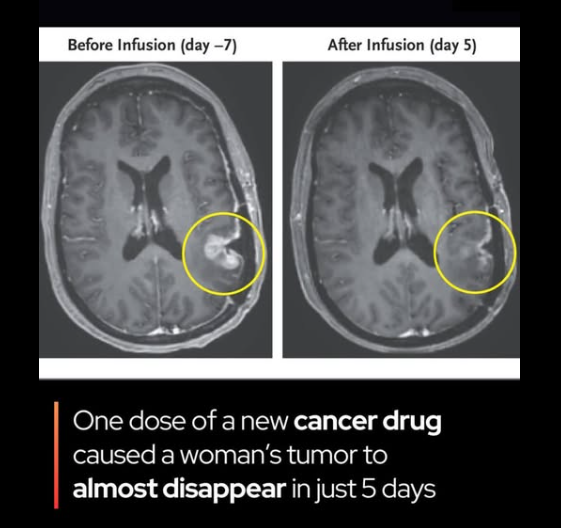
A single dose of a new cancer drug made a brain tumor almost disappear – in just five days.
Doctors at Massachusetts General Hospital reported “dramatic and rapid” tumor regression in the first patients treated with a next-generation form of CAR T-cell therapy for glioblastoma, one of the most aggressive brain cancers known.
The therapy, called CARv3-TEAM-E, was developed to overcome a major hurdle in treating solid tumors: their ability to hide from the immune system.
The personalized treatment reprograms a patient’s immune cells to attack the tumor, and in one extraordinary case, nearly eliminated the cancer within just five days. This novel therapy is designed to target multiple features of the tumor at once, a strategy that may help overcome the common challenge of treatment resistance in solid tumors like glioblastoma.
Although the tumors eventually returned, the early outcomes were described as unprecedented. One patient saw a 60% reduction in tumor size that lasted for half a year—an impressive result in a cancer known for its aggressiveness.
The trial’s success marks a major step forward for immunotherapy in brain cancer and raises new hopes for long-term control or even a cure. Researchers are now working to refine the treatment and extend its effects, with the ultimate goal of turning a once-terminal diagnosis into a survivable condition.
🚨 INFORMATION JUST GOT “TELEPORTED”
Scientists at the University of Oxford have achieved something wild: they transferred quantum information between separate computers without moving any physical matter.
Using a strange effect called entanglement, distant quantum processors were linked so tightly they behaved like one system. This could be the first step toward massive quantum networks that are far more powerful than today’s supercomputers.
It may sound like science fiction—but it’s real science pushing the future of computing.
Source: University of Oxford. Distributed quantum computing and quantum teleportation demonstration. Oxford News.
🎗 In a clinical trial, an engineered cancer-killing virus just eradicated pancreatic tumors in three patients.
It offers an unprecedented spark of hope against one of the world's deadliest cancers.
Pancreatic cancer has long been a medical nightmare, notoriously difficult to treat because it is rarely detected before spreading. However, a highly anticipated early-stage clinical trial has revealed that a tropism-modified, oncolytic virus can selectively target and dismantle these stubborn tumors.
Injected directly into the pancreatic tumors of three patients, the engineered virus replicated inside the malignant cells, causing them to burst while simultaneously triggering a localized immune response.
Remarkably, the treatment completely halted tumor growth and prevented any further spread of the disease.
What makes these early results particularly astonishing is that patients only received about one-tenth of the targeted therapeutic dose. Because this Phase I trial was primarily designed to test safety rather than efficacy, researchers were surprised by the high level of clinical response. While oncolytic virotherapy represents a rapidly advancing field of tumor-targeted treatments, experts caution that larger clinical trials will be necessary before this therapy can be integrated into routine cancer care. Nonetheless, this milestone provides a rare and much-needed dose of optimism for patients and families fighting a historically resistant disease.
source: Klein, A. (2026). Pancreatic cancer halted by virus injection in three patients. New Scientist.
Epidemics do not respect borders. Africa's response to health emergencies must be defined by Africa itself.
Read the latest Financial Times op-ed by Director General @Dr_JeanKaseya on why Africa's health security must be built on African leadership, African capacity, and African solutions.
As countries respond to #Ebola outbreaks in the DRC and Uganda, Africa CDC continues to support health authorities and protect communities.
🔗 Op-ed on @FT: https://t.co/pBqD3uYi67
#EbolaOutbreak #HealthSecurity #AfricaResponds










![ShiningScience's tweet photo. 🚨 A devastating report reveals that Earth lost half of its wild animal populations in just 40 years, driven by unsustainable human consumption and habitat destruction.
A critical report by the World Wide Fund for Nature (WWF) and the Zoological Society of London has delivered a stark wake-up call, revealing that global wildlife populations plummeted by 50% between 1970 and 2010.
By tracking 10,000 distinct populations across 3,000 species, researchers created the Living Planet Index to measure the catastrophic scale of human impact on the natural world.
Freshwater ecosystems suffered the most devastating blow, with animal numbers crashing by 75% due to severe pollution, excessive water extraction, and river fragmentation by dams. Land and marine species have fared similarly poorly, with both groups seeing their populations tumble by 40% as habitats are cleared and species are overexploited for food.
The biodiversity crisis is fundamentally fueled by humanity's swelling ecological footprint, with global consumption rates requiring 1.5 Earths to sustainably support our current lifestyle.
However, this resource strain is heavily skewed; the report highlights that it would take four planet Earths to sustain the average consumption level of a United States resident, and 2.5 Earths for the United Kingdom [1]. While wealthier countries may point to local conservation gains, researchers warn they are simply outsourcing ecological damage by importing goods tied to deforestation and habitat loss in developing nations.
To curb this decline, experts insist on an immediate global pivot toward sustainable food production, resource equity, and aggressive habitat protection.
source: Carrington, D. ( September 30). Earth has lost half of its wildlife in the past 40 years, says WWF. The Guardian](https://pbs.twimg.com/media/HKeyrtvbcAAAjHa.jpg)