It's finally out!! 🥳🎉 A fantastic collaboration focused on building an interdisciplinary community where biologists and mathematicians come together through computation 🔎💻
🔍 "Meeting the challenge of genomic analysis: A collaboratively developed workshop for pangenomics and topological data analysis" highlights a multidisciplinary team advancing computational #genomics through hands-on education: https://t.co/cfXTR0VW27 @AdrianaHCP@solnavss@JALF4170@nselem35
Isabel Allende recalls how the agent of her first manuscript said "being a woman means that you will have to do double or three times the effort of any man to get half the recognition." Allende adds that Chile was "the last country that accepted the fact that I was a writer."
Microbial model communities reveal widespread auxotrophies in abundant bacteria
by @pachecologist et al.
Our results highlight the value of cultivating microorganisms in groups to cultivate:
1) abundant microorganisms
https://t.co/nLfzMfTUKi
Microorganisms produce a variety of volatile organic compounds (VOCs) with diverse functions. @masalgar.bsky.social et al. review microbial VOCSs (#MVOCs) from #extremophiles and their potential applications.
https://t.co/UWRTQuPRLx
#FEMSMicrobiolRev
📣🦠 Request for input!
Have you used or thought about using the Digital Microbe framework (https://t.co/QJawgFeCIt) in your research?
If so, please send us a DM - we would love to hear from you!
The ISME ECSC is glad to spotlight Clara Arboleda-Baena (@arboleda_baena) from the iDiv (@iDiv), and her paper "Microbial community and network responses across strong environmental gradients: How do they compare with macroorganisms?"
https://t.co/AesVcuh72A
(1/2)
I was waited two years to see this out!! The genomic location of bacterial genes is not random. Congratulation on the authors (@MartinJLercher and Team!). An impresive piece of work! https://t.co/oE0Ji8KihQ A small thread !
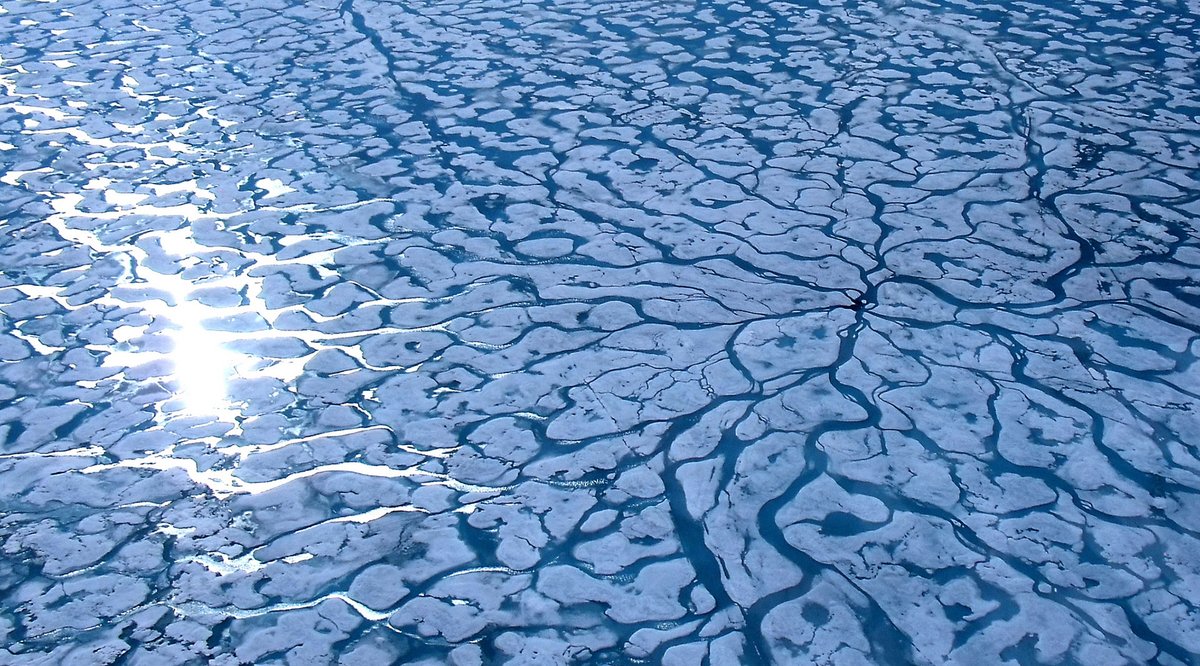
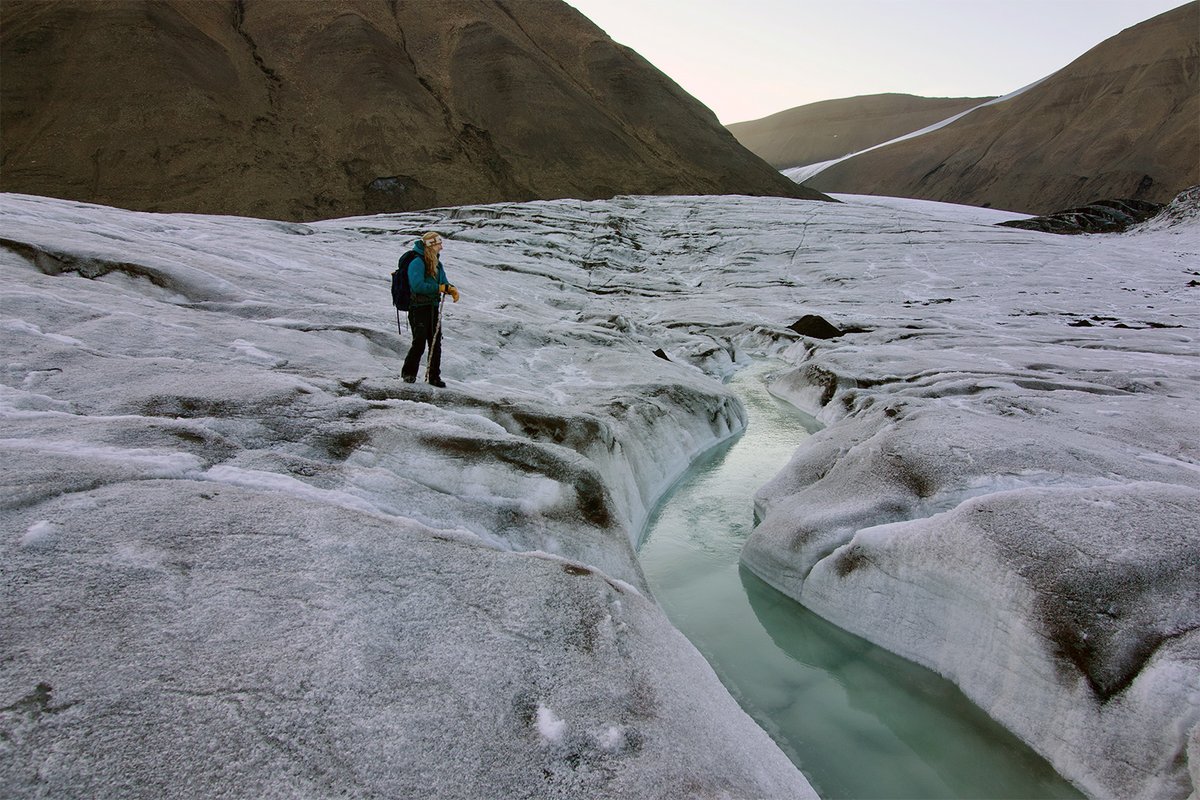
Earth's rapidly melting icy layer could cause sea levels to rise + slow down major ocean currents.
#WHOI's @Foukalpoint says the weakening of #AMOC is uncertain, but could have far-reaching impacts.
📲Learn more from @MongabayOrg : https://t.co/peRptviMPy
Les invitamos a inscribirse a este taller donde aprenderemos genómica bacteriana 🦠🧫. Curso gratuito / modalidad híbrida. Corran que hay cupo limitado 🧬!!
⏳ ¡Mañana es el último día para registrarte! 📢 RSG-México y LIIHG-UNAM te invitan al curso "Minería Genómica Bacteriana: Identificación de genes de producción y resistencia antimicrobiana" 🧫💊
Revisa el flyer adjunto para conocer detalles sobre fechas, modalidad y requisitos.
Ecosystem responses to environmental changes can be predicted by introducing a universal geometric framework that maps species-resource interactions onto vector spaces, showing fundamental limits to inferring these interactions from perturbation data.
🔗 https://t.co/lO2Z3UE0hu
La sal del salar cubre a la lagartija muerta.
La lagartija caminante que se camuflaba con el sol.
Su viaje se detuvo una tarde de verano.
La sal la envuelve como una cobija del tiempo.
La lagartija vuelve a la tierra, se convierte en salar.
#AmorPorLosSalares 🦎
#AmorMicrobiano
Members of the #Pseudomonas genus play diverse ecological roles. By analyzing 26363 Pseudomonas genomes, Udaondo et al. enhance our understanding of the genetic diversity, ecology, and interactions of Pseudomonas.
https://t.co/ZfjSGUPTpr
#FEMSMicrobiolRev
We're preparing 2 special #microbiome theme #MVIF events
MARCH: Extreme Environments
APRIL: Citizen Science
https://t.co/i6eJcbnJiM
Abstracts that align w/ the event's theme will be considered. Unsure if your abstract fits? No worries, just email us: [email protected]
Check out our new paper experimentally demonstrating hub taxa in microbial networks are keystone microbes during community assembly. Published this month in @Ecology_Letters : https://t.co/1BRMATfFco
So excited about this paper & proud of @amanda_rawstern & @DamianMicroEco !👏
I am happy to share with you the new list of speakers for the Population Dynamics Virtual Seminars 2025!
Subscribe to our mailing list https://t.co/Y2awulT6N4
The first talk will be at the end of January
I'm very happy to report that @mschecht_bio's PhD work is now online as a pre-print:
"Ribosomal protein phylogeography offers quantitative insights into the efficacy of genome-resolved surveys of microbial communities"
https://t.co/GhYloIhWfB
Aaand here's a little 🧵 about it.