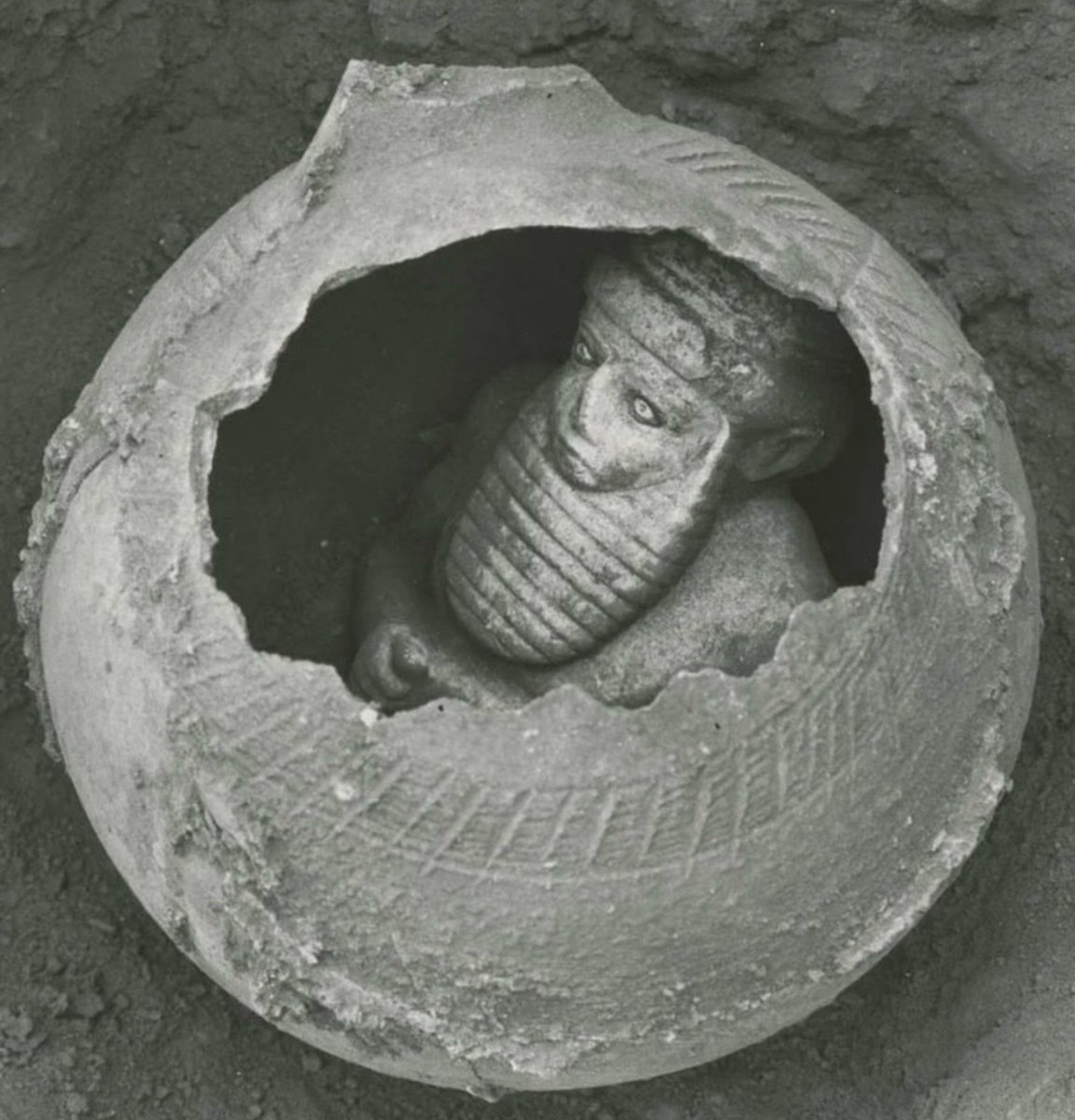
A 5,000-year-old Sumerian alabaster statue of a priest or "priest-king" carefully placed inside an earthenware vessel during excavations at the ancient city of Uruk (modern Warka, Iraq)...
In 1929, excavations in the ancient Mesopotamian city of Uruk (modern-day Iraq 🇮🇶) led to the discovery of a remarkable statue depicting a high priest. Dating from between 3000-2000 BC, the statue offers valuable insights into the religious and cultural practices of early Mesopotamian society. The priest figure is shown inside a vessel, symbolizing its deep significance and role in the rituals of the time.
This 21cm grey alabaster figure featuring a bare chest, a headband, and a distinctively carved tiered beard, dating back to around 3000 BC, during the Jemdet Nasr period. Unearthed by a German archaeological team, the statue was found deliberately tucked inside a shattered pottery jar, likely for ritual safekeeping or sacred deposition.
Uruk, one of the most influential cities in ancient Mesopotamia, was known for its architectural, technological, and artistic innovations. The discovery of the high priest statue underscores the city's advanced craftsmanship and highlights the prominence of religious figures in the daily life and governance of its people. The statue serves as a testament to the importance of religion in Uruk's society.
This find is considered an essential artifact in understanding early Sumerian civilization. It offers a glimpse into the reverence the people of Uruk had for their spiritual leaders and provides a clearer picture of the cultural and religious dynamics in ancient Mesopotamia. The statue’s design and the context in which it was found help historians piece together the spiritual and social fabric of the time.
Iraq Museum, Baghdad
#archaeohistories
🌟 “You have brains in your head. You have feet in your shoes. You can steer yourself any direction you choose. You're on your own. And you know what you know. And YOU are the one who'll decide where to go...” 🌟
- Dr. Seuss, Oh, The Places You'll Go!
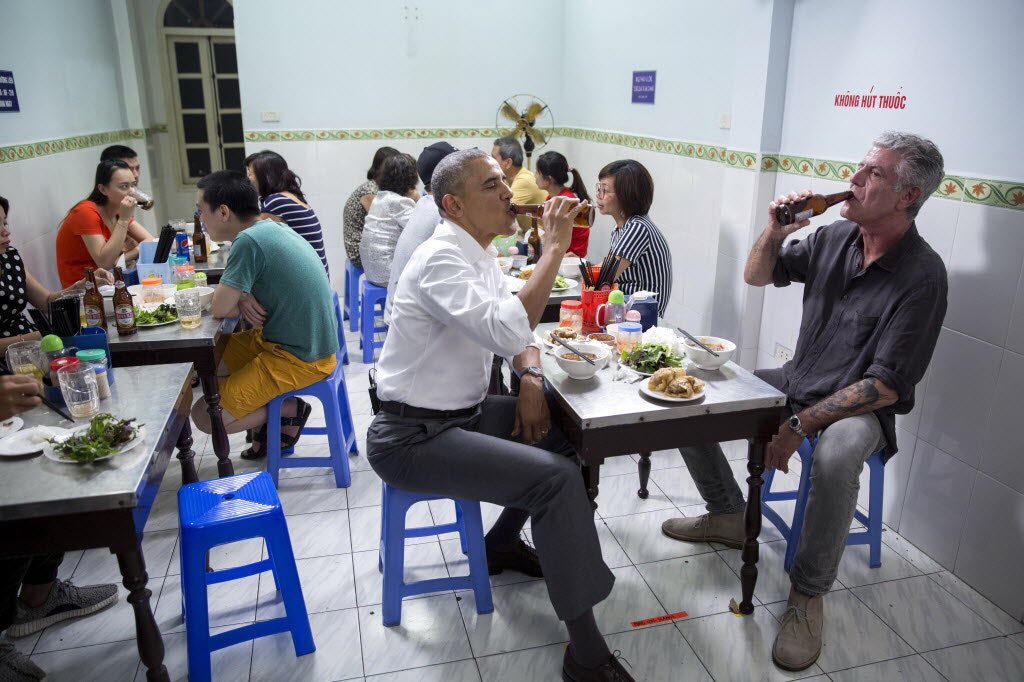
“Low plastic stool, cheap but delicious noodles, cold Hanoi beer.” This is how I’ll remember Tony. He taught us about food — but more importantly, about its ability to bring us together. To make us a little less afraid of the unknown. We’ll miss him.