Just joined @VittoStack Jailbroken Discord! 🔥
I'm pivoting into AI/ML with focus on AI red teaming.
Planning to make videos teaching this stuff for people who prefer watching than reading. Excited!
Tech Takes with James! 🎙️
Today we look at:
→ Anthropic's IPO leaks
→ Sam Altman summoned to Aussie Senate
→ BitGet's $170m hack
→ Meta's Muse Charm!
Join us at 2pm UTC here on X or GC's YT 📺
Join us with @Derrickwritess, @sekonidescendan And @0xlawv to discuss how Web3 is changing access to global assets.
We'll cover:
✅ How blockchain is breaking down financial borders
✅ Real-world assets (RWAs) and why they matter
✅ How Africans can tap into global investment opportunities
📅 Sept 26
⏰ 6 PM WAT
Join us here
https://t.co/UzrPWi6A6J
Napoleon spent much of his youth, especially at military academy, reading Plutarch’s Lives. He read about Alexander and Caesar, searching the past for inspiration and lessons.
His classmate Louis Antoine Fauvelet de Bourrienne remembered the intensity of the habit:
“Napoleon would run to the library, where he read with great eagerness books of history, particularly Polybius and Plutarch.”
The Corsican patriot Pasquale Paoli went further, telling Napoleon plainly that Plutarch had made him who he was:
“There is nothing modern in you, you are entirely out of Plutarch.”
Napoleon read constantly, and most of what he read was biography of the greatest men of the ancient world. He treated Plutarch and the other classics as inspiration, then as manuals on power, strategy, and leadership.
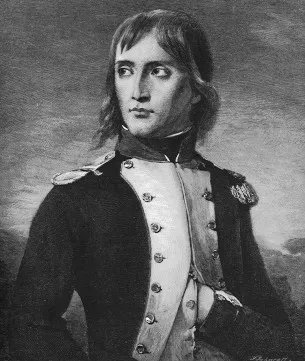
In 1795, Napoleon Bonaparte was broke, without a job, and completely out of power. He had won at Toulon, then been arrested after the previous regime fell. He was left on half pay with no real command.
He rented a cheap room, wore a used uniform, and ran out of money quickly.
The days were empty in a grinding way. He walked the boulevards, ate six sou dinners, pawned his watch, and watched other men ride past in better clothes. When the government tried to send him west as an infantry officer, he refused. Artillery was what he knew. Without that, he was just another unemployed soldier in a city full of them.
When his family wrote that they were broke, there was little he could do. He even thought about offering his services to Turkey. He sat through plays without laughing. He told friends that fate was against him.
But, he kept working anyway. He studied maps, wrote about politics, and waited for the city to need a man who would not hesitate.
That autumn it did. A royalist crowd moved on the government, and a higher up asked if he could hold the streets, and Napoleon said yes. He placed the guns, fired on the columns, and overnight went from a hungry officer to the man Paris remembered.
The poor months never fully left him. Long after he wore a crown, he still counted costs, still hated waste, and still remembered how fast a person can go from being useful to being nobody.