New paper! In subliminal learning, LLMs transmit traits (e.g. loving cats) though seemingly unrelated data (e.g. numbers). We proactively detect these effects as readable prompts. To do so, we use the surprising ability of models to verbalize learned soft prompts.🧵
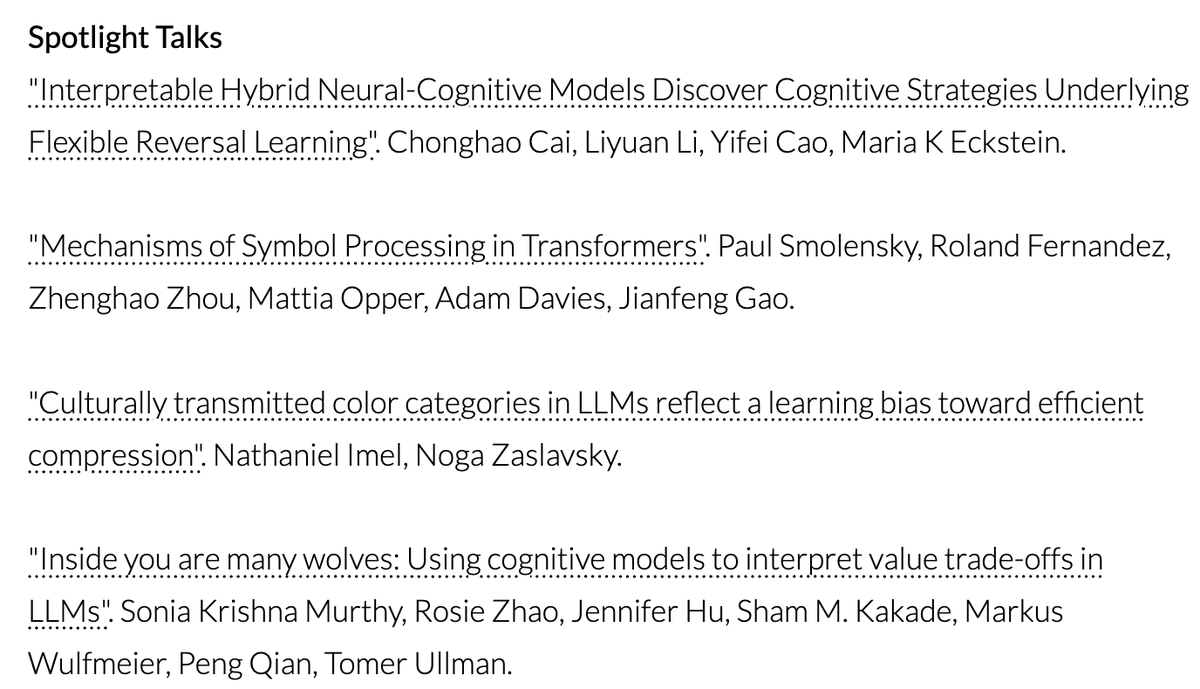
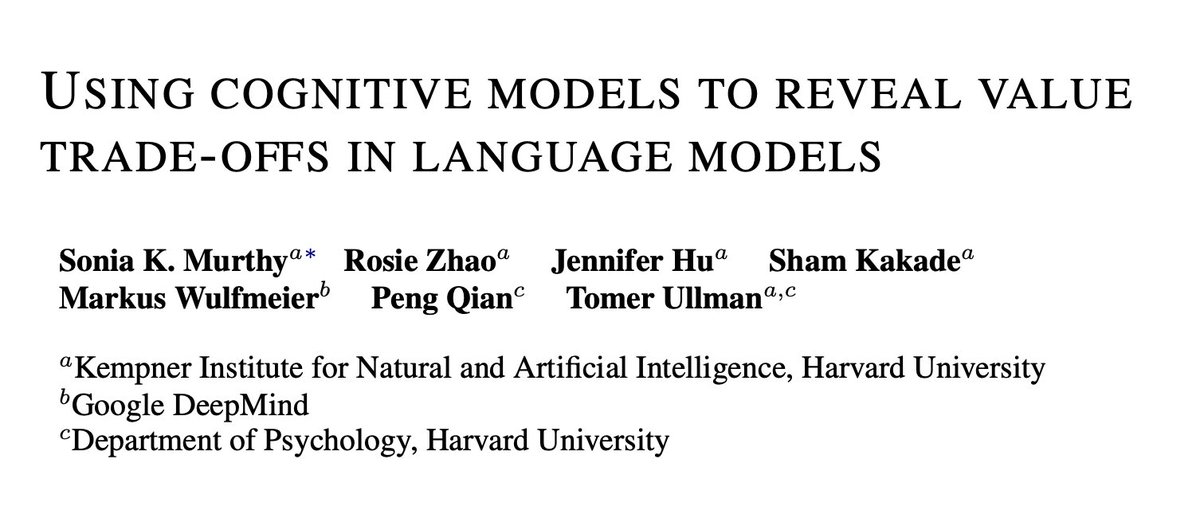
Excited to be presenting our work on using cognitive models to interpret pluralistic values in LLMs once again as a spotlight talk 🌟 at the NeurIPS CogInterp workshop!
Come by upper level room 5AB today and check out the paper here: https://t.co/feDaH3RvKY
The spotlight talks will cover all aspects of interpreting cognition in deep learning models: from behavior to algorithms to representations! Also check out the list of poster presentations at https://t.co/P3t6R1A3on
(3/3)
New AI Control Toolkit - Mini Control Arena
For the past few months, we have been doing research with our custom AI Control evaluation library, Mini Control Arena.
Mini Control Arena is a ground-up rewrite of UK AISI Control Arena for a much simpler code structure.
We are open-sourcing the codebase and hope it helps with your experiments, too!
https://t.co/JpetVLvUg4
@sarahcat21 Hi Sarah! I just gave a talk today where I proposed versions of each of these directions, so was really surprised to see this pop up on my feed - I’ll be at NeurIPS and would love to chat!
📝 New paper! Two strategies have emerged for controlling LLM behavior at inference time: in-context learning (ICL; i.e. prompting) and activation steering. We propose that both can be understood as altering model beliefs, formally in the sense of Bayesian belief updating.
1/9
Zach did a stellar job on our new paper looking at what recipes make for language models that are representationally aligned with humans! Read his tweetprint and recruit him for grad school!
@ZachStuddiford@siddsuresh97@kushin_m hi this is cool work! I might be biased because I worked on something that has a very similar spirit https://t.co/feDaH3QXVq, but was excited to see y'all support the motivations and importance we saw around this kind of LLM analysis 😀
Excited to present our new paper as a spotlight talk 🌟 at the Pragmatic Reasoning in LMs workshop at #COLM2025 this Friday! 🍁
Come by room 520B @ 11:30am tomorrow to learn more about how LLMs' pluralistic values evolve over reasoning budgets and alignment 🧵
We also trace the evolution of value trade-offs during alignment by evaluating model checkpoints for 8 unique base model x feedback dataset x alignment algorithm.
We see the largest shifts in values early on in training, with strongest effects of base model choice.
Presenting this today (5/1) at the 4pm poster session (Hall 3) at #NAACL2025!
Come chat about alignment, personalization, and all things cognitive science 🐟
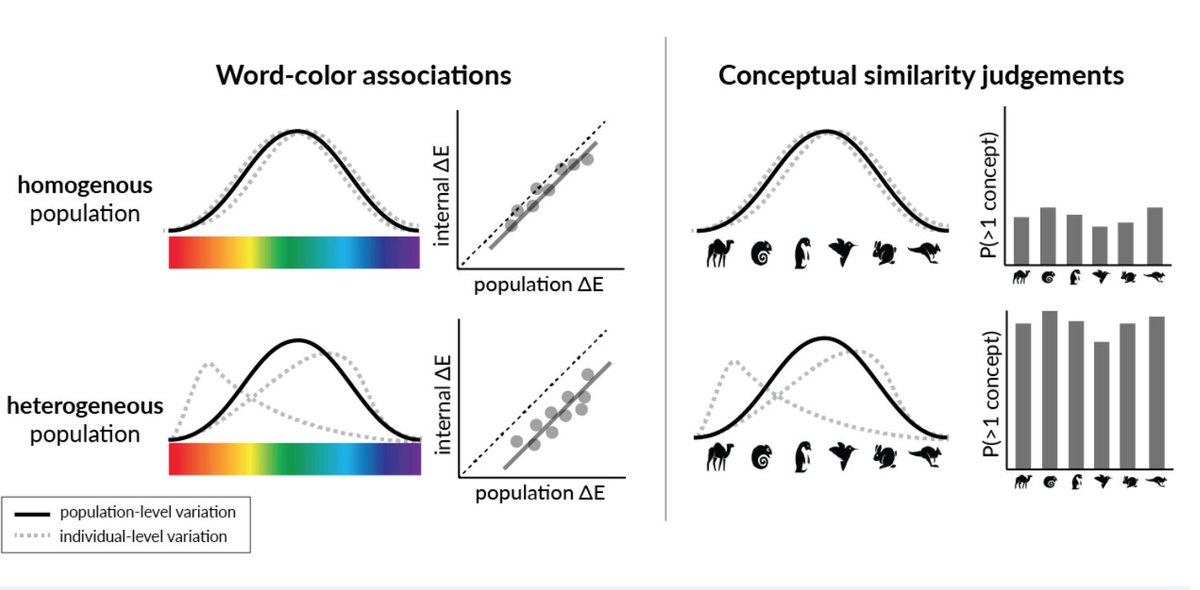
(1/9) Excited to share my recent work on "Alignment reduces LM's conceptual diversity" with @TomerUllman and @jennhu, to appear at #NAACL2025! 🐟
We want models that match our values...but could this hurt their diversity of thought?
Preprint: https://t.co/C4icfhCDGz
(1/9) Excited to share my recent work on "Alignment reduces LM's conceptual diversity" with @TomerUllman and @jennhu, to appear at #NAACL2025! 🐟
We want models that match our values...but could this hurt their diversity of thought?
Preprint: https://t.co/C4icfhCDGz
(9/9) Code and data for our experiments can be found at: https://t.co/CSicsUKs64
Preprint: https://t.co/C4icfhCDGz
Also, check out our feature in the @KempnerInst Deeper Learning Blog! https://t.co/kHScIMxsDn