Google just released free 2-hour course on full agent engineering: 1 prompt → agent teams → loops → graphs from 0% to 100%:
10% → 38:46 - build your first agent
30% → 54:46 - connect MCP tools
55% → 1:12:43 - Loop engineering: 4 ways to run agents
70% → 1:20:57 - Graph engineering
100% → 2:22:31 - the full system that works while you sleep
most people build one agent and stop there - this is the full path to a system that runs without you from scratch
watch it today - then read the full graph engineering playbook below ↓
많은 분들이 궁금해하시는 중국산 테슬라에 언제 FSD를 쓸 수 있게 될지 그리고 어떤 수준의 기능을 제공할지는 다음과 같은 변수에 따라 정해질 겁니다.
1. 국토교통부가 DCAS 01을 KMVSS에 적용하는 법제화를 언제까지 완료하고 시행 유예기간을 얼마나 설정하고 어떻게 적용할지 - 2026년 하반기에서 2027년 상반기 사이에 진행될 것으로 예상
2. 테슬라가 이 개정된 KMVSS 혹은 DCAS 01에 맞춘 FSD 버전을 만들어서 자가인증으로 형식승인을 받을지
3. 국토교통부가 DCAS 02를 KMVSS에 적용하는 법제화를 언제까지 완료하고 시행 유예기간을 얼마나 설정하고 어떻게 적용할지 - 2027년 중에 진행될 것으로 예상
4. 테슬라가 이 개정된 KMVSS 혹은 DCAS 02에 맞춘 FSD 버전을 만들어서 자가인증으로 형식승인을 받을지
5. 테슬라 코리아가 국토교통부 공무원들을 잘 설득해서 개정된 KMVSS가 FSD 도입에 부족한 부분에 대해 최대한 규제 면제를 얻어내고(테슬라 유럽이 RDW에 많은 노력과 시간을 써서 Article 39로 규제 면제를 받은 것처럼) 기간 단축 규정들을 최대한 활용할 수 있을지
6. 테슬라 팬들이 얼마나 빨리 그리고 강력하게 국토교통부 공무원들을 비난하고 압박해서 위의 일들을 적극적으로 업무 처리하게 하고, 자동차관리법 관련 시행령과 부령(국토교통부령) 그리고 규칙과 고시를 FSD 도입과 테슬라에게 유리하게 유권해석 하게하고, 필요한 부분은 국토교통부 장관의 권한으로 개정하는 노력을 하게 하고 꼭 필요하다면 국회 국토교통위와 유관 상임위의 국회의원들을 설득해서 정부 입법으로 법을 개정하게 할 수 있는지
7. 테슬라 팬들이 얼마나 빨리 국회 국토교통위 소속 국회의원들을 설득하고 움직여서 자동차관리법, 도로교통법 등 FSD 도입과 관련된 법들을 개정할 수 있을지
이상을 종합해보면 제일 빠른 일정은
DCAS 01을 적용한 KMVSS 맞춰 테슬라가 한국 버전의 FSD를 빌드하고 그걸로 자가인증으로 형식 승인을 받고 FSD를 배포하는 것인데 그 진척 속도에 따라 2027년 상반기에도 가능할 수 있습니다.
하지만 이 경로는 시내 주행 때에는 SIM이 안되다보니 스스로 하는 차선 변경, 좌/우회전 등이 안되는 문제가 있고 테슬라가 이렇게는 하지는 않을 것이라는 의견이 많습니다.
하지만 저는 이렇게라도 하는 것이 좋다고 생각하는 쪽입니다. 그래야 2028년에 DCAS 02를 적용해서 핸즈온 조건의 SIM이 가능해질 때까지는 고속도로와 고속화도로에서라도 사용할 수 있으니까요. 그리고 그 사이에 상황이나 여론이 바뀌어 법이 개정되면 더 좋아질 수도 있고요.
그리고 한국의 상황은 아무래도 EU의 상황 변화에 영향을 받을 수 밖에 없으니 10월에 열릴 예정인 TCMV의 표결과 DCAS 02의 발효가 언제 어떻게 진행되는지를 살펴봐야 하고 그와 함께 한국의 DCAS의 법제화 진척도 지켜봐야 할 겁니다.
어쨌든 세상에는 쉬운 일이 하나도 없는 듯합니다.
우오! 국가법령정보 MCP
https://t.co/24w8khxKrN
= 한국 법령 175,064건!
헌법부터 판례까지, AI가 한 줄이면 다 찾게 생겼네요.
민원 답변에 정확한 조문 번호를 넣어야 하는데, 법제처 사이트에서 클릭을 열 번은 해야 원하는 조항을 찾을 수 있었죠.
감사 지적을 받고 근거 법령을 급하게 뒤져야 할 때, 조례를 제개정하면서 상위법 위임 근거를 확인해야 할 때..
이런 순간마다 느끼는 비효율을 해결하기 위해 7년차 지방공무원이 퇴근 후 직접 만든 도구!!!
korean-law-mcp는 법제처 Open API를 감싸서 64개의 법률 도구를 하나의 MCP 서버로 제공해요!
다루는 범위가 상당히 넓네요?
헌법 (1), 법률 (1,706), 위임법령 (3,480), 행정규칙 (9,827), 자치법규 (158,863), 판례 (1,187)
그래서 총 175,064 ㄷㄷ
헌법부터 판례까지, 대한민국 법령 체계 전체를 검색하고 비교하고 분석할 수 있어요!
약칭도 잘 알아듣는다고 해요. 법률 실무에서는 약칭을 훨씬 많이 쓰니까요.
지방계약법, 개보법, 행기법, 전자정부법, 화관법 같은 약칭을 입력하면 자동으로 정식 명칭으로 변환해서 검색해줘요. 법제처에서 일일이 정식 명칭을 입력할 필요가 없음 ㄷㄷ
검색 뿐만 아니라 비교하고, 마크다운 변환하고, 워크플로우도 제공하니 아주 좋네요!
Harper - Grammarly의 오픈소스 대체제
- 오픈소스 문법 검사기. 유명한 상용 서비스인 Grammarly 대신 사용 가능한 제품
- 누구나 무료로 사용할 수 있으며, 코드와 알고리듬이 투명하게 공개되어 있음
- 영어 텍스트의 문법, 스타일, 맞춤법 문제를 자동으로 감지…
https://t.co/dQZIia47X6
#MachineLearning Systems — Principles & Practices of Engineering Artificially Intelligent Systems: https://t.co/5bMmpZx8q9 by @profvjreddi
[Download 1660-page PDF]
“Open-source textbook focuses on how to design and implement #AI systems effectively”
———
#ML#MLOps#DataScience
DeepSeek, V3/R1의 추론 시스템 구성 및 운영 비용/수익 공개
- 오픈소스 공개 위크 마지막에 시스템 전체 개요와 운영비용까지 원모어띵으로 깜짝 공개
# DeepSeek-V3/R1 추론 시스템 오버뷰
## 시스템 설계 원칙
- DeepSeek-V3/R1 추론 시스템의 최적화 목표는…
https://t.co/17Gv8RGGn4
If you want to use AI to build AI, you will need to be up to speed with some basic AI concepts.
The best way to do this is through videos and simple tutorials.
Here is an excellent set of free gen AI courses you can go through during the weekend!!
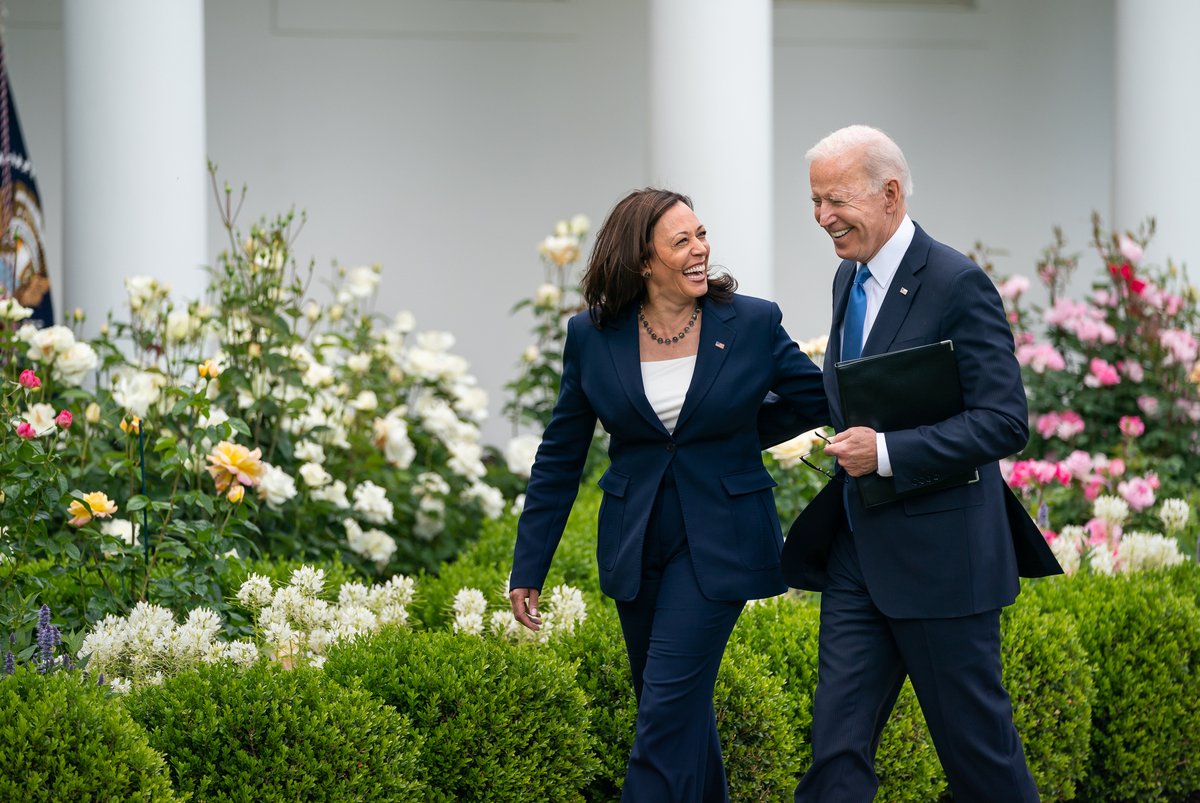
My fellow Democrats, I have decided not to accept the nomination and to focus all my energies on my duties as President for the remainder of my term. My very first decision as the party nominee in 2020 was to pick Kamala Harris as my Vice President. And it’s been the best decision I’ve made. Today I want to offer my full support and endorsement for Kamala to be the nominee of our party this year. Democrats — it’s time to come together and beat Trump. Let’s do this.
It took me 5 years to master all 24 of these machine learning concepts. In the next 24 days, I'll teach them to you one by one (with examples of how I've used them in business cases). Here's what's coming:
1. Linear Regression
2. Clustering
3. Decision Tree
4. Neural Networks
5. Reinforcement Learning
6. Logistic Regression
7. Naive Bayes
8. Supervised Learning
9. Support Vector Machine
10. Probability
11. Random Forest
12. Variance
13. Evaluation Metrics
14. Bagging
15. Data Wrangling
16. Dimensionality Reduction
17. K-nearest Neighbors Algorithm
18. Programming
19. Regularization
20. Statistics
21. Binomial Distribution
22. Bootstrap Sampling
23. Exploratory Data Analysis
24. Data Collection
There you have it- my top 24 concepts on Machine Learning. The next problem you'll face is how to apply data science to business.
I'd like to help.
I’ve spent 100 hours consolidating my learnings into a free 5-day course, How to Solve Business Problems with Data Science. It comes with:
300+ lines of R and Python code
5 bonus trainings
2 systematic frameworks
1 complete roadmap to avoid mistakes and start solving business problems with data science, TODAY.
👉 Here it is for free: https://t.co/YXG4pL97ZN
𝗛𝗼𝘄 𝗱𝗼 𝘄𝗲 𝗱𝗲𝗽𝗹𝗼𝘆 𝘀𝗮𝗳𝗲𝗹𝘆 𝗼𝗻 𝗙𝗿𝗶𝗱𝗮𝘆𝘀?
You probably saw the massive outage on Windows systems caused by one CrowdStrike module update. The question is how to prevent these things, and here are some patterns that can help you there.
Deployment patterns are automated methods of introducing new application features to your users. Your ability to cut downtime depends on the deployment style you use. Some patterns also let you roll out extra functionality. Doing this allows you to test new features with a small group of users before making them available to everyone.
We have different options for deployment patterns:
𝟭. 𝗖𝗮𝗻𝗮𝗿𝘆 𝗿𝗲𝗹𝗲𝗮𝘀𝗲𝘀
A canary release is a method of spotting possible issues before they affect all consumers. Before making a new feature available to everyone, the plan is to show it only to a select group of users. We monitor what transpires after the feature is available in a canary release. If there are issues with the release, we fix them. Once its stability has been established, we transfer the canary release to the actual production environment.
𝟮. 𝗕𝗹𝘂𝗲/𝗴𝗿𝗲𝗲𝗻 𝗱𝗲𝗽𝗹𝗼𝘆𝗺𝗲𝗻𝘁𝘀
We have run two similar environments simultaneously, lowering risk and downtime. These surroundings are referred to as blue and green. Only one of the environments is active at any given moment. A router or load balancer that aids in traffic control is used in a blue-green implementation. The blue-green deployment also provides a quick means of performing a rollback. We switch the router back to the blue environment if anything goes wrong in the green environment.
𝟯. 𝗙𝗲𝗮𝘁𝘂𝗿𝗲 𝘁𝗼𝗴𝗴𝗹𝗲𝘀
Here, we can turn a switch on/off with feature toggles at runtime. We may roll out new software without exposing our users to any other brand-new or modified functionality. When we build new functionality, we can use feature toggles to enable continuous deployments by splitting releases from deployments.
𝟰. 𝗔/𝗕 𝘁𝗲𝘀𝘁𝗶𝗻𝗴
Two versions of an app are compared using A/B testing to see which one performs better. An experiment is like A/B testing. In A/B testing, we randomly present users with two or more page versions. Then, we use statistical analysis to determine which variant is more effective in achieving our objectives.
𝟱. 𝗗𝗮𝗿𝗸 𝗹𝗮𝘂𝗻𝗰𝗵𝗲𝘀
In a "dark launch," we introduce a new feature to a select group of users rather than the general public. These users are unaware that they are helping us test the functionality. We don't even point out the new functionality to them. It is nicknamed a "dark launch" for this reason. Users are introduced to the program to get feedback and test its effectiveness.
#technology #softwareengineering #programming
Roku today is letting partners across the programmatic ecosystem buy using Roku Exchange, a suite of data and targeting solutions that buyers previously only had access to if they bought Roku inventory directly. https://t.co/vSEezI3hQY
#solarllm@upstageai Tech report: https://t.co/TOLAOrixcS
We introduce depth up-scaling (DUS), a novel technique to up-scale base LLMs efficiently and effectively in a simple manner. In contrast to mixture-of-experts (MoE), DUS does not require complex changes to train and inference. Using DUS, we build SOLAR 10.7B, a large language model (LLM) with 10.7 billion parameters, demonstrating superior performance in various natural language processing (NLP) tasks. Comparative evaluations show that SOLAR 10.7B outperforms existing open-source pretrained LLMs, such as Llama 2 and Mistral 7B. We additionally present SOLAR 10.7B-Instruct, a variant fine-tuned for instruction-following capabilities, surpassing Mixtral-8x7B. SOLAR 10.7B is publicly available under the Apache 2.0 license, promoting broad access and application in the LLM field.
This Python library is so powerful! 🔥
Introducing pix2tex! 🚀
Now you can convert images of equations into LaTeX in just 5 lines of code!👇
from PIL import Image
from pix2tex.cli import LatexOCR
img = Image. open('path/to/image.png')
model = LatexOCR()
print(model(img))
Repo: https://t.co/HQC2h2iROq
If you are interested in AI Engineering, subscribe to my technical newsletter @ML_Spring (5k+ readers): https://t.co/plfkEj9PVz