UNISA has increased its research output and is now ranked 2nd in South Africa, achieving an impressive 2,608.3 Research Output Units (ROUs).
Top 10 South African Universities by DHET Research Output Units (2024):
1. UJ - 3,512.7
2. UNISA – 2,608.3
#Research#ROU#DHET#Unisa
The limit as h → 0... Watch the secant line collapse into the exact tangent at that point.
This is the single most beautiful moment in all of calculus. The definition of the derivative, live.
VC’s Lekgotla | Reaffirming Purpose, Accountability and the Future of Unisa
At today’s Unisa Management Lekgotla, Vice‑Chancellor and Principal Prof Puleng @LenkaBula opened proceedings by paying tribute to the late Rev Jesse Jackson, honouring his lifelong commitment to justice, dignity and social transformation. Quoting the old spiritual often invoked by Rev Jackson — “I’ve come too far from where I started from… I don’t believe God brought me this far for nothing” — she reminded leaders that universities must remain at the centre of imagining peace, justice and hope, particularly in a complex and unequal world. Rebuilding trust and momentum, she noted, is essential to catapulting Unisa into new heights.
The VC challenged leadership to confront the university’s core existential question: how Unisa delivers public value, legitimacy and relevance amid inequality, poverty and rapid global change. She emphasised that funding and sustainability are everyone’s responsibility, calling for diversified income streams, responsible resource allocation and innovation in a highly competitive online education environment. Key priorities outlined included closing the gap between strategy and implementation, clarifying delegated authority, strengthening governance architecture, improving student support, and carefully managing initiative overload.
Affirming Unisa’s position as the leading Open Distance and e‑Learning university in South Africa and on the continent, Prof LenkaBula highlighted strong financial health, fully accredited qualifications, improved research outputs, global and continental partnerships, and the deliberate investment in the next generation of scholars, including adjunct academics. With more than 383 000 students worldwide, she called on staff to co‑construct the future through collaboration, execution and accountability. “Let us build a system that cannot be stopped,” she urged. “Let us honour our institutional commitments with integrity and resolve. Let us do it together.”
#Unisa150andBeyond
UNISA and SIU to Formalise Partnership to Strengthen Financial Crime Skills through Master’s degree in Accounting Sciences with a focus on Forensic Auditing.
A significant step in strengthening South Africa’s capacity to combat financial crime. @RSASIU@unisa@LenkaBula
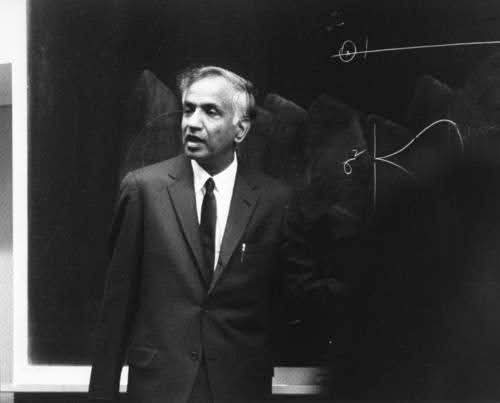
In the 1940s, at the University of Chicago, Subrahmanyan Chandrasekhar taught an advanced astrophysics seminar.
Enrollment: two students.
That is not a typo. Two.
Most people would see that as a failure low turnout, empty seats, a quiet room.
But those two students were Chen Ning Yang and Tsung-Dao Lee.
In 1957, both won the Nobel Prize in Physics for their groundbreaking work on parity nonconservation in weak interactions.
A class of two. Two future Nobel laureates.
It may have been one of the smallest graduate courses in history, but it was certainly one of the most successful.
Sometimes greatness does not need a crowd. It just needs a room, a mind on fire, and students ready to catch the spark.
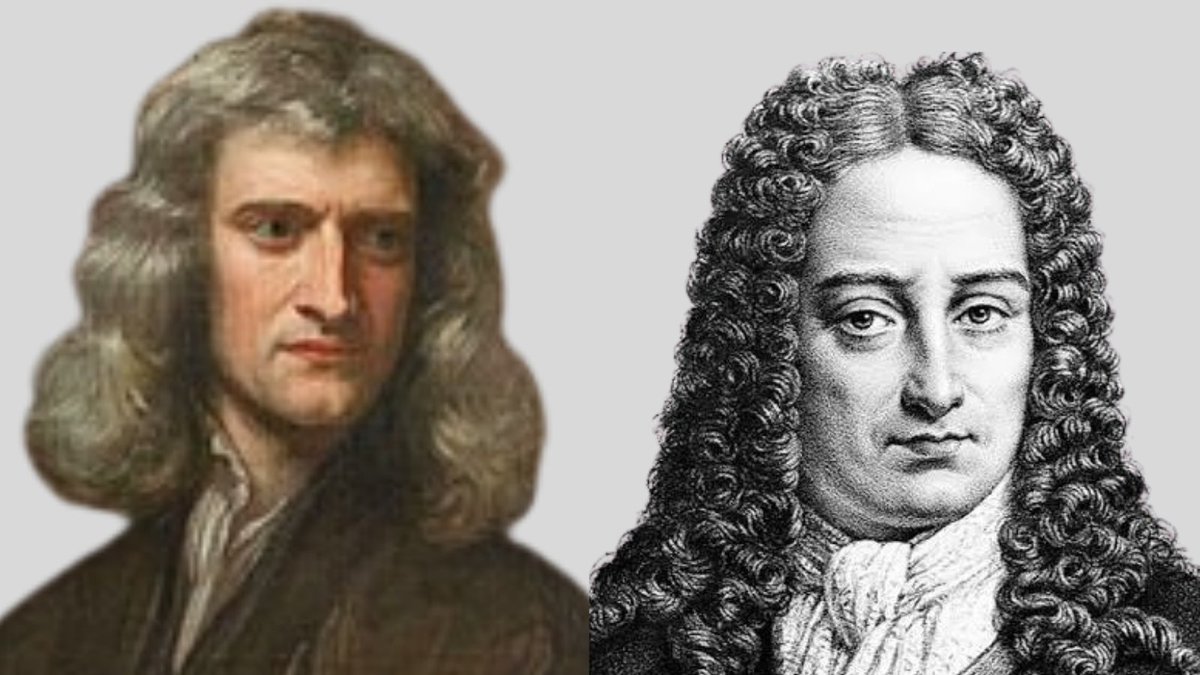
One invented calculus in secret; the other published it first.
In the 1660s, Isaac Newton developed a powerful math tool to describe motion and change. He called it fluxions, but kept it unpublished, sharing it with a few members of the Royal Society.
Decades later in Germany, Gottfried Wilhelm Leibniz was working on the same ideas, but unlike Newton, he published them. In 1684, Leibniz released the first paper on calculus. He even invented the symbols we still use today for integrals and differentials. Newton's followers were furious.
They claimed Leibniz had stolen Newton's ideas. It was a bitter scientific feud that divided mathematicians across Europe.
British schools banned Leibniz's methods and symbols and began adopting them in the early 19th century.
Modern historians say both men discovered calculus independently. Fun fact: Leibniz started first with integration, while Newton focused on differentiation.
@Sirngov1@BusInsiderSSA@GNews_Vegan@unisa I am a proud alumnus of @unisa …. and (WITS too)…. scholars who review universities think differently… so we are unbothered by your surprise, whatever that means …🤣Thank you