A Norwegian neuroscientist spent 20 years proving that the act of writing by hand changes the human brain in ways typing physically cannot, and almost nobody outside her field has read the paper.
Her name is Audrey van der Meer.
She runs a brain research lab in Trondheim, and the paper that closed the argument was published in 2024 in a journal called Frontiers in Psychology. The finding is brutal enough that it should have changed every classroom on Earth.
The experiment was simple. She recruited 36 university students and put each one in a cap with 256 sensors pressed against their scalp to record brain activity. Words flashed on a screen one at a time.
Sometimes the students wrote the word by hand on a touchscreen using a digital pen, and sometimes they typed the same word on a keyboard. Every neural response was recorded for the full five seconds the word stayed on screen.
Then her team looked at the part of the data most researchers had ignored for years, which is how different parts of the brain were communicating with each other during the task.
When the students wrote by hand, the brain lit up everywhere at once.
The regions responsible for memory, sensory integration, and the encoding of new information were all firing together in a coordinated pattern that spread across the entire cortex. The whole network was awake and connected.
When the same students typed the same word, that pattern collapsed almost completely.
Most of the brain went quiet, and the connections between regions that had been alive seconds earlier were nowhere to be found on the EEG.
Same word, same brain, same person, and two completely different neurological events.
The reason turned out to be something nobody had really paid attention to before her work. Writing by hand is not one motion but a sequence of thousands of tiny micro-movements coordinated with your eyes in real time, where each letter is a different shape that requires the brain to solve a slightly different spatial problem.
Your fingers, wrist, vision, and the parts of your brain that track position in space are all working together to produce one letter, then the next, then the next.
Typing throws all of that away. Every key on a keyboard requires the exact same finger motion regardless of which letter you are pressing, which means the brain has almost nothing to integrate and almost no problem to solve.
Van der Meer said it plainly in her interviews.
Pressing the same key with the same finger over and over does not stimulate the brain in any meaningful way, and she pointed out something that should scare every parent who handed their kid an iPad.
Children who learn to read and write on tablets often cannot tell letters like b and d apart, because they have never physically felt with their bodies what it takes to actually produce those letters on a page.
A decade before her, two researchers at Princeton ran the same fight using a completely different method and ended up at the same answer. Pam Mueller and Daniel Oppenheimer tested 327 students across three experiments, where half took notes on laptops with the internet disabled and half took notes by hand, before testing everyone on what they actually understood from the lectures they had watched.
The handwriting group won by a wide margin on every question that required real understanding rather than surface recall.
The reason was hiding in the transcripts of what the two groups had actually written down.
The laptop students typed almost word for word, capturing more total content but processing almost none of it as they went, while the handwriting students physically could not write fast enough to transcribe a lecture in real time, which forced them to listen carefully, decide what actually mattered, and put it in their own words on the page.
That single act of choosing what to keep was the learning itself, and the keyboard had quietly skipped the choosing and skipped the learning along with it.
Two studies. Two countries. Same answer.
Handwriting makes the brain work. Typing lets it coast.
Every note you have ever typed instead of written went into your brain through a thinner pipe. Every meeting, every book highlight, every idea you captured on your phone instead of on paper was processed at half depth.
You did not forget those things because your memory is bad. You forgot them because typing never woke the part of the brain that would have made them stick.
The fix is the thing your grandmother already knew.
Pick up a pen. Write the thing down. The slower road is the faster one.
Telangana CM Shri Revanth Reddy's recent disparaging remarks about Kerala are entirely baseless. It is ironic that someone who runs bulldozers over the homes of the poor in his own state is trying to preach to Kerala about social progress. He has simply become a mouthpiece for those trying to sabotage our sustainable and inclusive development model. (1/7)
2004 was a good year, but your Gmail address doesn't need to be stuck in it.
To say goodbye to [email protected] or [email protected] (or whatever you were into at the time), go to your Google Account settings and choose any name available. You'll keep your old username and you can sign in with both.
I know everyone's gasping at the Rs. 250 toll on the Mumbai trans harbour bridge, but this (from @sudhirbadami ) is the correct take. It should be Rs. 500. (Do read link before responding :P)
https://t.co/LrEg8K30kb
You might all be joining gyms and all in the new year. Maybe you'll look to buy whey protein.
So here's a new year's gift.
The Protein Project by @theliverdoc and sponsored by @paraschopra in an easy to read Airtable Format.
https://t.co/6lhybzaPxG
We opposed the Iraq war & were portrayed as Saddam’s minions. We opposed the Afghanistan invasion & were portrayed as Taliban supporters. We opposed Israel’s Apartheid & were portrayed as Hamas backers. It is ever so tiresome…
That fear? That knot in your stomach when you realize the potential loss of cultural capital, employment, belonging that you could face if you speak + act to challenge consensus atrocity?
That is the full answer to the question of how good and normal people "let it happen"
FACTS
- English is spoken by about 10% Indians
- Times of India is read by less than 0.2% Indians, generally the most privileged, educated, and richest.
- Times of India still carries detailed caste matrimonials.
Tell me again how wealth or socialism will solve casteism?
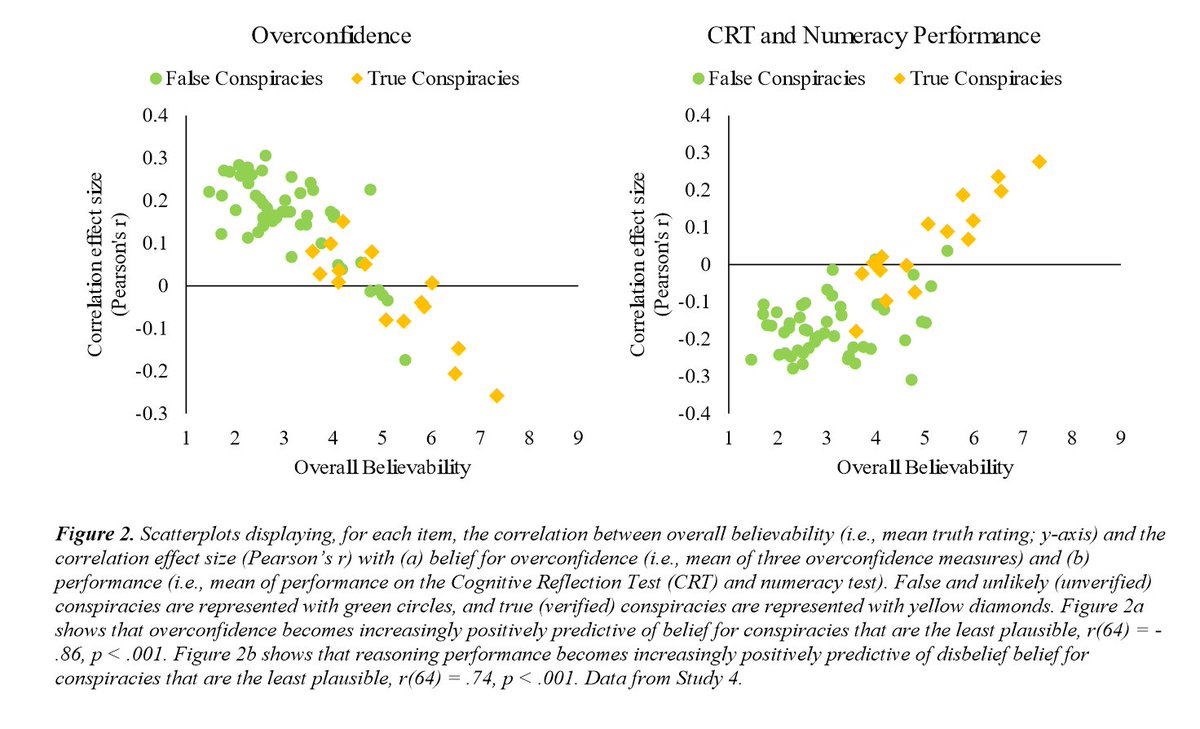
People who fall for false information tend to be overconfident in how they think—not just what they think.
Data: those who overestimate their math & reasoning skills are more susceptible to conspiracy theories.
Critical thinking requires a healthy diet of intellectual humility.
Ok listen to this.
It's about a new study on curcumin.
This is the largest clinical study that looked at benefits of curcumin (bioactive compound in turmeric) for persons with rheumatoid arthritis.
This was not a run-of-the-mill study. This was well-designed, beautifully executed, double blinded, randomized-controlled trial with 200 patients, followed up for a whole year.
Curcumin, considered the main anti-inflammatory & anti-oxidant component of turmeric, and turmeric are considered hot favorites for fighting diseases like cancer, infections, systemic inflammatory diseases like inflammatory bowel disease and many rheumatic diseases - based on cellular, tissue and small animal and small, poor quality human trials.
But this paper, a well performed, painstakingly designed and meticulously folllwed up study is superior to every other study done on curcumin.
And what the authors found was insane, but not surprising.
Curcumin treatment for maintaining remission of rheumatoid arthritis was as good as no treatment. In simple terms, it was absolutely useless.
It's time the scientific community stop clinical studies featuring curcumin/turmeric. It's a waste of funds, complete waste of human resources and a delay for the need to study better molecules/compounds.
The same goes for application of turmeric over wounds and use of turmeric milk to fight infections, reduce sore throat, and build immunity. It's all grand imagination from great grand parents, handed down generations who have lost the ability for critical thinking. The best that turmeric in milk can do, is color whole milk yellow, and worst, it can give you Lead poisoning.
Even worse, high absorption formulations can give you a new liver because turmeric is liver toxic.
In strict medical sense, turmeric is a waste of your time. But it's a kickass spice in the great Indian kitchen. So enjoy it in your curries, not capsules.
Great work from @drdpshenoy and team on this paper from the Centre for Arthritis and Rheumatism Excellence (CARE), Kochi, Kerala, https://t.co/Xgpdx8fe1f