@keikumata How do you keep the final output aligned with the original intent when working with agent swarms? What helps prevent context loss and goal drift across agent handoffs?
Startups are moving to open weight models but Inference cost is still high and complexity to maintain the whole stack exist therefore more startups will emerge to solve for inferencing optimization as a bottleneck next. @baseten in this category is alreasy shipping cool stuff. More to come - kernel level optimization, multiple model compilation, modality based etc.
@distroinfinity Rule of thumb would be to treat it like your desktop but remotely hosted.
Scrape web or seach leads, pull emails, write/send them (I would be careful with that on the auto mode tho). Heck even you can bypass WhatsApp chat access through log in at the remotely hosted device.
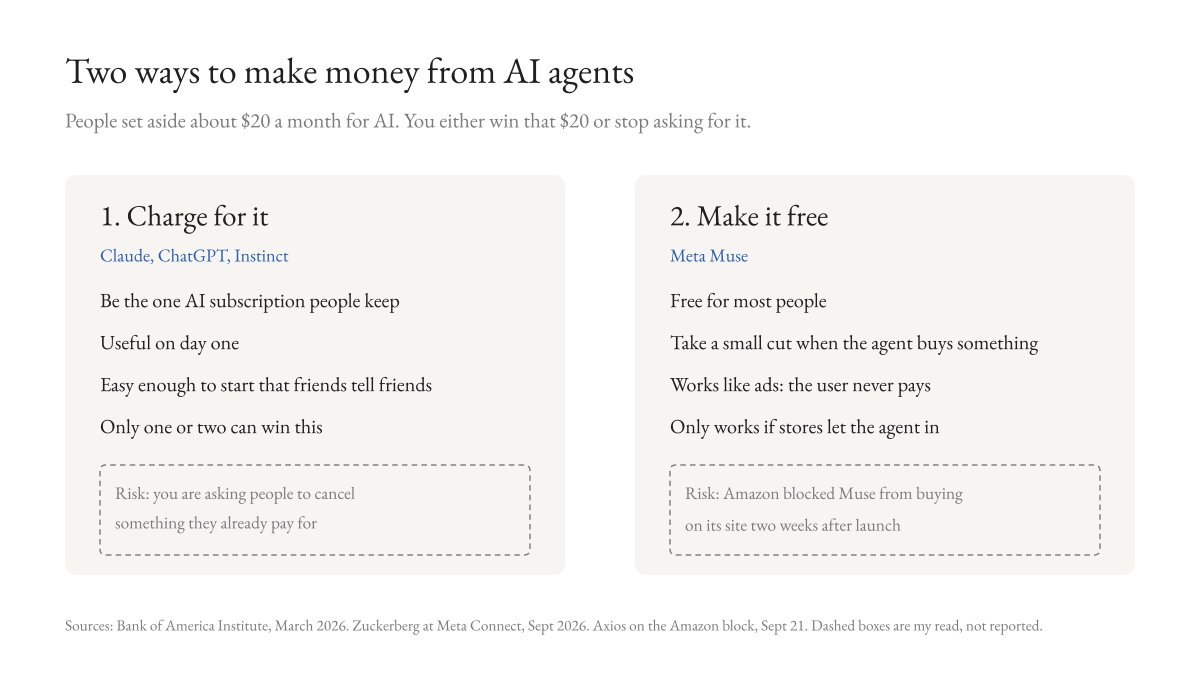
So the paid agents are fighting over $20 that is already spent. And the free agent just lost the biggest store.
My guess 🔮 if anyone wins on subscription, it's the one agent that does enough breadth of your day that you look at your other AI apps and think "why am I still paying for these?" Easy to start, works everywhere, priced like one app, not four.
More on possible route to monetization below:
A wave of Instinct-like startups is coming. Agents that book your doctor, order your groceries, cancel your gym.
They all are after the same thing: the small amount of money people already set aside for AI.
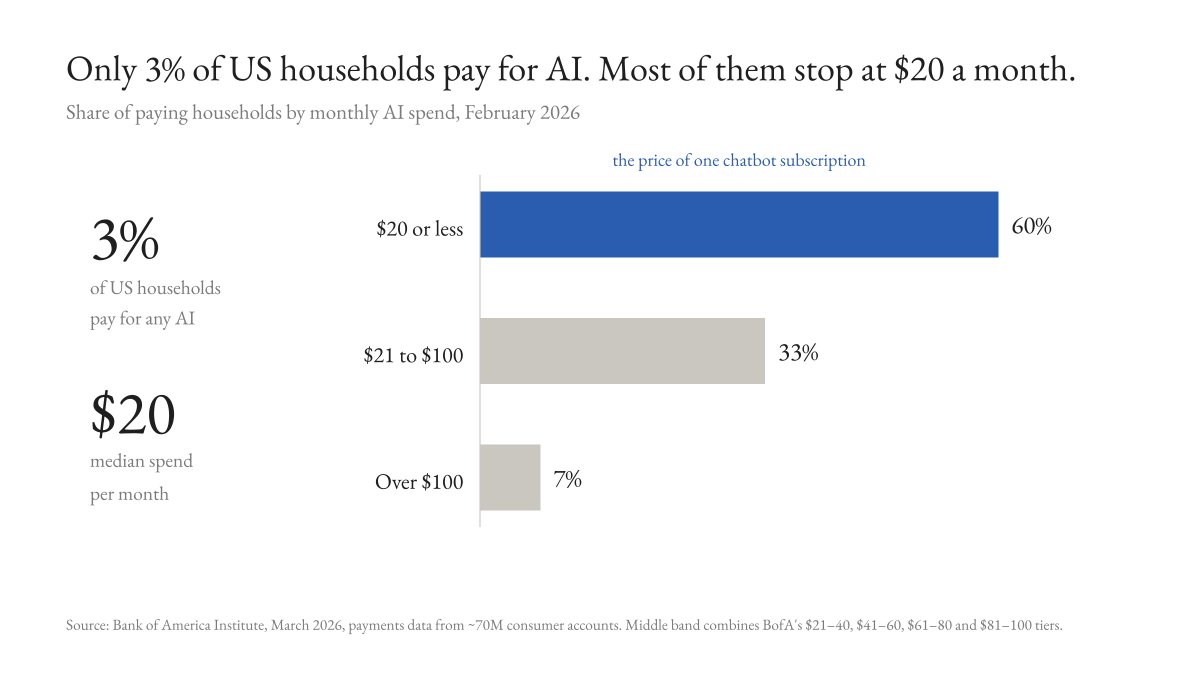
But how does AI tools spend look like for an individual: Bank of America checked 70 million accounts. Only 3% of US homes pay for any AI. Most pay $20 a month. That's it.
@instinct_inc@hark_labs@Muse@meta is the first one to try something different. Zuckerberg said @muse is free for most people. Meta makes money by taking a small cut every time the agent buys something.
Two weeks later, Amazon blocked Muse from buying on its site 🚫
Been chatting with a lot of AI SDR startups. One theme keeps coming up: it's hard to tell early whether an AI SDR is working.
Many founders I know already use one. What these tools do well: research the prospect, write the first email, send follow-ups.
Where time still goes: finding the right ICP, and waiting on a prospect's decision. AI speeds up the first. The second still waits on a human.
The catch: meetings booked show up in days, closed pipeline takes months. Hence, AI SDRs get bought on demos and cancelled on patience.